 Vivek Saini
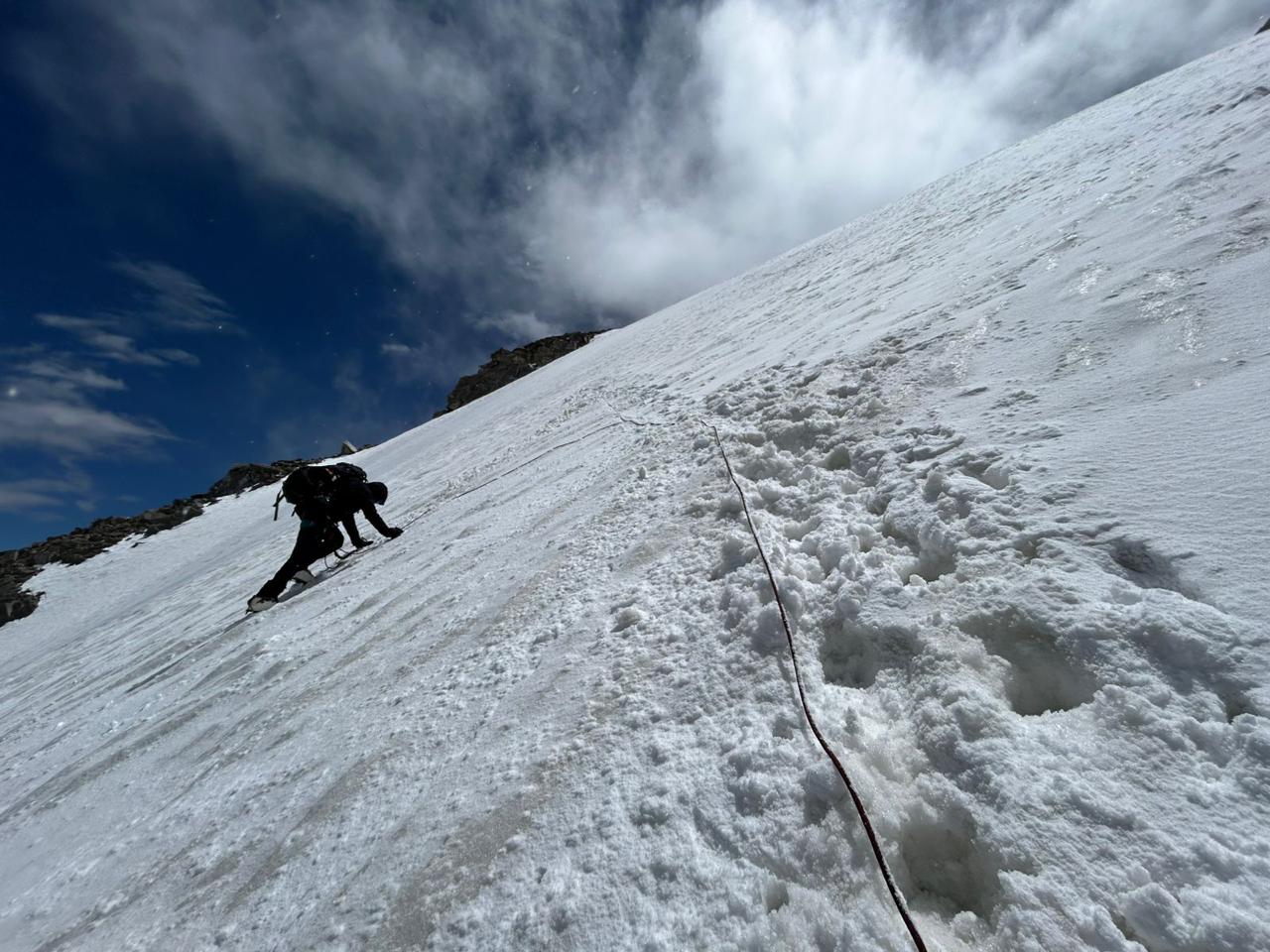
Anyone progressing in their mountain journey eventually thinks about climbing a 6000er.
Everyone wants to know what it feels like to stand that high, push that hard, and test themselves in a way regular treks can’t at least once in their lifetime.
But here’s the truth most people miss:
A 6000er isn’t something you sign up for.
It’s something you prepare for with consistency, time, and structure.
And last year showed us exactly why
In 2025, we led our first 6000m expedition, Kang Yatse II. We were excited, maybe too excited. We wanted people to experience what it truly feels like to climb a 6000er…To push themselves, to taste the altitude, to live through the grind.
The climb went alright.
The team was great.
But somewhere along the way, we realised we didn’t get everything right.
Some of the participants reached base camp and finally saw what a 6000m peak demands, and that’s when it hit us: they weren’t fully ready for it. We took the blame.
Not because they weren’t fit or motivated, but because we hadn’t created the structure to prepare them deeply enough.
We had shared training plans, expected people to follow them, and assumed they’d show up ready.
We were wrong.
You can’t understand a 6000er until you’ve:
- Walked for hours in heavy double boots
- carried a loaded pack through steep terrain
- learned how to breathe uphill without panicking
- moved through the night with no sleep
- Pushed when your mind wants to stop
If someone trusts us with their first 6000er, it’s a shared responsibility. You bring the work and honesty; we get the system, the coaching, and the clarity.
This year, we want to bridge that gap effectively.
We’re changing how we train, mentor, and prepare people for their first real mountain.
We want everyone who signs up for a 6000m expedition with Odyssey to train with us, not for us.
Why We’re Changing How We Prepare for 6000m Peaks
1. Because fitness alone isn’t enough.
A 6000er exposes everything: breath, pacing, technique, fear, and patience. It’s not an extended version of a “difficult” trek.
2. Because preparation is a shared responsibility.
When you trust us with your first 6000er, we owe you structure and not assumptions. You owe us commitment and discipline.
3. Because we don’t want anyone reaching the mountain surprised.
Summit night should and will challenge you, but it shouldn't feel shocking.
4. Because a 6000er tests your whole personality, not just your body.
Emotional control, breathwork, patience, and mental resilience matter more than pace.
5. Because rest and recovery matter as much as training.
Some people think preparing for a 6000er means pushing harder every day.
In reality, you don’t build fitness from training; you make it from recovering from training. We want our athletes to understand that balance.
A Training System That Actually Works in the Real World
As for preparing for a 6000er, we've been there, done that.
We've seen what works, what doesn't and what climbers get wrong. Well-known complicated training plans, unrealistic routines and bombastic advice that sounds impressive but falls apart when you reach high altitude are all part of the landscape.
We've taken all of this into account when building a new training system. We based it on real expedition experience, proven endurance principles, identifying what climbers really struggle with and what we know needs to be done, thanks to what we learned last year.
It's a practical training path that builds you up to the level you need, no matter when you start.
We use a phase-based system because it doesn’t matter when you sign up.
Today, next month, or three months from now, you'll go through the same structure at the right speed for your climb.

PHASE 1 — ONBOARDING & HABIT FORMATION
This phase begins the moment you sign up.
You join the Odyssey 6000m Group (WhatsApp + Strava).
You complete a simple baseline test.
You receive a 10-day starter plan.
This phase is about rhythm, confidence and small wins.
Identity begins here:
“I’ve started training for a 6000er.”
PHASE 2 — BASE BUILDING
This is where the real work begins.
If you stick to the training program, you’ll build:
- aerobic endurance
- strength fundamentals
- mobility
- long Sunday efforts
- breath control
Early joiners spend 4-6 weeks here.
Late joiners spend 2-3.
Everyone builds the same foundation, just adapted to their start date.
PHASE 3 — BUILDER PHASE
Your training now starts to look like mountaineering.
We add:
- Load carrying (8–10 kg)
- elevation gain
- double-boot practice
- pacing strategies
- poles technique
- long-duration movement
- First speed hike OR equivalent city challenge
This phase builds capability, not just fitness.
PHASE 4 — THE TESTER PHASE
This is where things start feeling real.
By this point, you’ve built your base, trained with load, understood pacing, and learned how your body behaves under long efforts.
Now it’s time to test all of that in conditions that resemble the mountain.
You’ll have the option to join any of the speed hikes we’re conducting:
- Hampta Pass– June
- Pangarchulla Speed Hike – April
- Roopkund – May
- Another high-intensity hike – June (we’ll confirm based on weather and access).
The speed hikes are controlled tests, the closest you can get to a 6000m effort without being on a glacier.
They help you learn:
- How to move for long hours
- How to manage breath at effort
- How to steady your mind when you’re tired
- How to pace yourself uphill
- How to recover and go again
But if you can’t travel to the mountains, you’re not at a disadvantage.
We will give you city-based challenges and alternatives that match the intensity of a speed hike, both indoors and outdoors.
Depending on where you live, this could be:
- A steep local peak done twice over a weekend
- A 3-hour stair climbing session with some pack weight
- A long elevation-based trail in your region
- A weighted climb + repeat climb the next day.
- Endurance circuits designed to mimic continuous ascent
The goal is simple:
Match the effort, match the intensity, match the mental grind.
This phase shows you where you stand, what’s working, what needs attention, and what we need to refine in the final weeks before your expedition.
This is also where your confidence begins to take shape.
PHASE 5 — THE CLIMB
By the time you reach base camp, the mountain is no longer a surprise.
You know how to:
- Walk in heavy boots
- Carry a loaded pack for hours.
- breathe uphill
- Move steadily at altitude.
- manage effort
- Stay calm under fatigue.
- Trust your preparation
Summit night becomes an extension of your training.
Not your first real test.
We don't want to compromise on safety or standards.
We meet you where you are and prepare you for where you're going.
You have to show up.
Train consistently.
Stay honest with yourself.
And trust the process.
We’ll guide you, phase by phase, step by step, together.
Our 6000m season begins in June.
Your preparation begins the day you join.
