

Some treks are about summiting peaks.
This one is about meeting people, experiencing the culture and the valley.
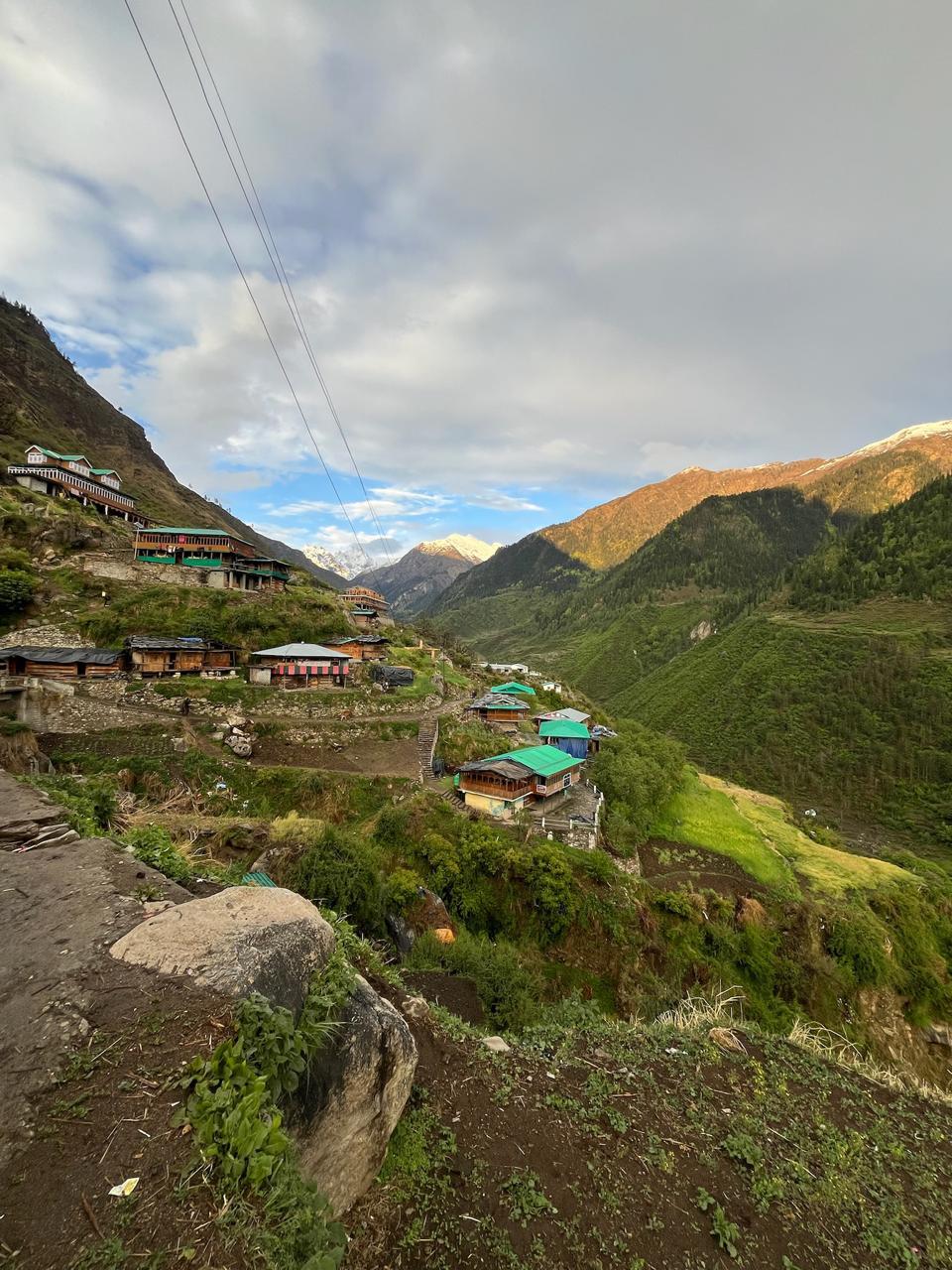
Hidden deep within the Govind Pashu Vihar National Park, the Har ki Dun valley feels like a journey through time. The trail winds through wooden villages like Gangaad and Osla, where life still follows the rhythm of the sun and seasons. Every home tells a story, with carved pillars, slate roofs, and courtyards where generations have gathered to share meals and laughter.
Unlike most Himalayan treks, where you camp in isolation, this one takes you inside the community. You’ll stay in local homestays, eat food cooked over wood fires, and hear stories from villagers who have lived in these mountains for centuries.
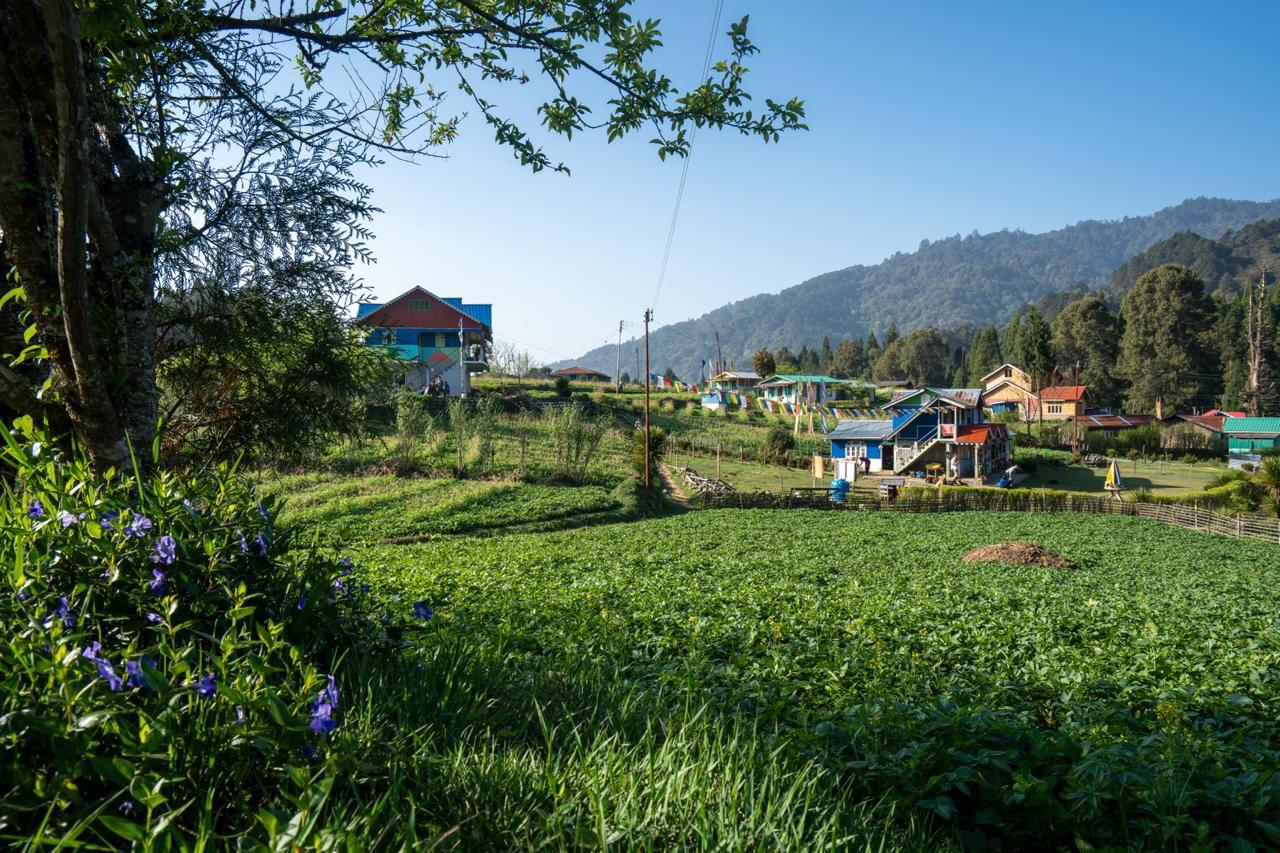
In spring, the fields turn golden with wheat and mustard, and the air carries the scent of blooming rhododendrons. Villagers head to their farms, children chase goats through narrow lanes, and you’re welcome to join in, whether it’s sowing a few seeds or sharing a cup of chai under the sun.
Higher up, the forests give way to vast meadows framed by Swargarohini and Kala Nag, peaks that dominate the valley’s skyline. The mythology here runs deep; locals believe this is the path the Pandavas took on their final journey to heaven.
The Har ki Dun trek isn’t about ticking off a destination. It’s about living slowly, walking gently, and being part of a mountain culture that has stayed untouched for centuries.
Day 1
Arrive in Kotgaon
Drive Distance: ~220 km (Dehradun to Kotgaon)
Time Taken: 9–10 hours
Elevation Profile: 2,800 ft / 850 m → 6,800 ft / 2,070 m
The drive from Dehradun begins early, winding through pine forests, river valleys, and remote Garhwali settlements. As you move deeper into the Tons Valley, the terrain changes, roads narrow, the air turns crisp, and the scent of pine and deodar begins to follow you.
By late afternoon, you reach Kotgaon, a sleepy village overlooking the Govind Pashu Vihar sanctuary. Wooden houses line the slopes, each with carved balconies that catch the last golden light of the day.
The evening is gentle, a warm cup of tea, quiet introductions, and the hum of village life outside. The stars here appear startlingly close, and the stillness of the valley feels like an invitation to slow down.
Day 2
Kotgaon to Osla via Gangaad
Drive + Trek Distance: ~18 km (10 km drive + 8 km trek)
Time Taken: 5–6 hours
Elevation Profile: 6,800 ft / 2,070 m → 8,600 ft / 2,620 m
You leave Kotgaon after breakfast, driving along the turquoise Tons River until the road fades into a narrow trail near Gangaad, a beautiful hamlet where time seems to have paused. Children wave as you pass, women in colourful headscarves tend to their fields, and carved wooden homes glow in the morning sun.
From here, the trek begins. The path winds above terraced farms, past walnut trees and small shrines draped in marigolds. As you climb, the valley narrows, and the sound of the river below follows like a heartbeat.
By afternoon, you reach Osla, a village straight out of a folktale. The wooden houses lean into the mountain, carved with mythological motifs. The scent of woodsmoke fills the air. You stay in a local home, where dinner is cooked on a mud stove and eaten cross-legged on the floor, followed by stories about how the villagers still worship Duryodhana as their god.
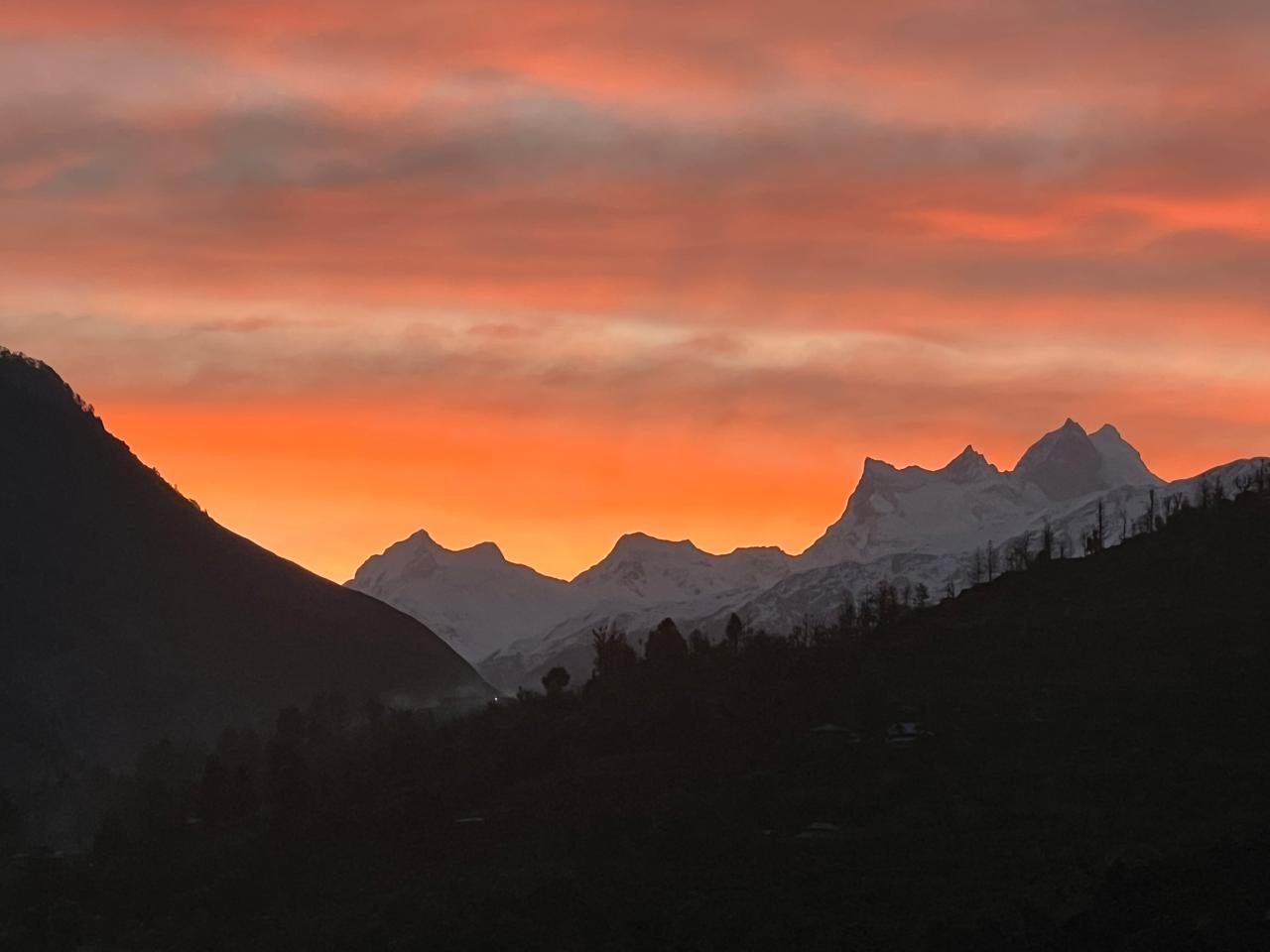
As the sun begins to set, the sky turns molten, shades of orange and rose spilling across the valley. The last light hits Swargarohini, painting its snowy ridges gold before they fade into violet. From the narrow lanes of Osla, it’s one of those sunsets that makes the whole valley pause.
Day 3
Osla to Kalkatiyadhar
Trek Distance: ~10 km
Time Taken: 5–6 hours
Elevation Profile: 8,600 ft / 2,620 m → 9,800 ft / 2,990 m
Morning in Osla begins with the sound of bells, goats being led out to graze. After breakfast, you start walking uphill through fields of wheat and barley, the peaks of Swargarohini glistening far ahead. The trail meanders through pine and rhododendron forests, where sunlight filters in golden streaks, and the smell of damp earth lingers.
Villagers heading to their meadows often pass you on the way, smiling and sharing quiet greetings. As you gain height, the tree line thins, and vast mountain views open on all sides.
By late afternoon, you reach Kalkatiyadhar, a high meadow carpeted with grass and wildflowers. Horses graze nearby, their bells echoing faintly in the distance. The evening sky here burns in shades of pink and orange, and as darkness falls, the peaks around you stand like silhouettes guarding the valley.
Day 4
Kalkatiyadhar to Boslo and Har ki Dun Valley
Trek Distance: ~12 km (round trip)
Time Taken: 6–7 hours
Elevation Profile: 9,800 ft / 2,990 m → 11,700 ft / 3,566 m → 9,800 ft / 2,990 m
You begin early today. The air is cold, the trail still damp with morning dew. As you climb higher, birch trees give way to open meadows, and suddenly the Har ki Dun Valley unfolds before you, wide, green, and ringed by the snowy ridges of Swargarohini, Hata Peak, and Kala Nag.
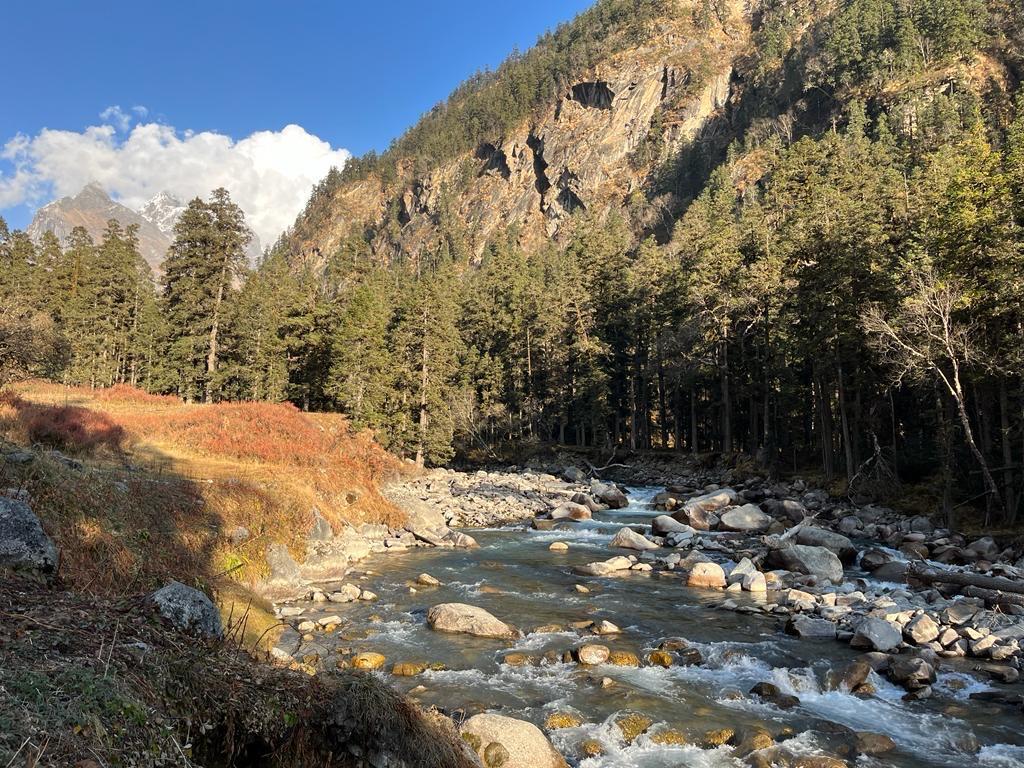
Streams thread through the grasslands, and wooden bridges cross clear glacial water. Wildflowers bloom along the trail, yellow, purple, and white, painting the valley in soft colour.
By noon, you reach the upper basin of Har ki Dun. It’s quiet, except for the wind and the distant whistle of a shepherd calling his flock. You sit down, eat your packed lunch, and let the view sink in, this timeless amphitheatre of peaks and sky.
You return to Boslo by late afternoon, tired but content, the valley light still lingering in your mind.
Day 5
Boslo to Gangaad
Trek Distance: ~14 km
Time Taken: 6–7 hours
Elevation Profile: 9,800 ft / 2,990 m → 7,400 ft / 2,255 m
The descent feels familiar now, through forests alive with birdsong, across bridges that sway gently in the wind. As you near the villages again, the landscape turns green, with terraced fields, haystacks, and distant smoke rising from hearths.
In Gangaad, you return to a local home, a space filled with warmth and laughter. If the season allows, you can join villagers in their fields or dress in Jaunsari attire for an evening of songs and stories.
Dinner is a traditional affair: local red rice, ghee, and saag, all cooked fresh from the garden. The night is filled with quiet conversation, and sleep comes easily.
Day 6
Gangaad to Dehradun Drive
Drive Distance: ~210 km
Time Taken: 8–9 hours
Elevation Profile: 7,400 ft / 2,255 m → 2,800 ft / 850 m
You wake to the sound of the river and the smell of burning wood. After breakfast, you bid farewell to your hosts; there’s always a sense of leaving something behind here.
The drive back retraces the same route, but the valley looks different now, more familiar, almost homely. The mountains fade slowly into plains, but the warmth of Jaunsar hospitality and the quiet rhythm of its villages stay with you long after you’ve left.
Our Expectations from the participants
This trek is as much about people as it is about the mountains.
You’ll be walking through villages that have existed for hundreds of years, places where life moves slowly, traditions run deep, and hospitality is still sacred.
Here’s what we ask from you:
Come prepared, physically and mentally.
Be comfortable walking 10–12 km a day, often on uneven trails and steep ascents.
Train regularly for at least 6–8 weeks before the trek, walk, run, or climb stairs with a backpack to prepare.
But beyond fitness, come ready to adapt to early mornings, rustic stays, and a slower way of life.
Respect the local rhythm.
You’ll be staying in family homes, not lodges built for tourists.
Meals will be simple, cooked on wood fires, and served with warmth.
Be mindful of the space, ask before photographing people, and remember that you’re a guest in someone’s home.
Embrace the experience, not just the destination.
This is a cultural journey, not a race to the valley.
Join in the daily life, help in the fields if invited, learn how to make rotis on a chulha, and try the local dress for an evening.
These small moments are what make this trek unforgettable.
Stay curious and open.
Ask questions, listen to stories, and share your own.
You’ll hear about gods who lived in these mountains, festivals that last for weeks, and customs that have been passed down through generations.
Every conversation is a chance to understand the Himalaya beyond its peaks.
Walk lightly.
This is a fragile ecosystem, and an even more fragile culture.
Please be sure to carry your own water bottle, and take back everything you bring in.
The most excellent way to honour the valley is to leave no trace of your walking in it.
Minimum Fitness Requirement
This trek is suitable for beginners with good basic fitness and a willingness to train.
You’ll be walking an average of 6-8 km a day, often with gradual climbs and descents through forests, meadows, and village trails.
To make the most of your experience, we recommend preparing for at least 6–8 weeks before the trek:
- Cardio training: 3–5 sessions a week of brisk walking, running, cycling, or swimming (aim to cover 5–6 km comfortably).
- Strength training: 2–3 sessions a week focusing on legs, glutes, and core — squats, lunges, step-ups, planks.
- Hiking practice: If possible, do a few local hikes carrying a 6–8 kg backpack to get used to long walking days.
The trail is not technical, but consistency matters. The fitter you are, the more you’ll enjoy the villages, stories, and slow beauty of the valley, without worrying about how far you have to go.
Inclusion
Exclusion
1. Is this trek suitable for beginners?
2. What kind of accommodation can I expect?
Homestays in Osla and Gangaad are comfortable yet straightforward, with clean rooms, warm blankets, and home-cooked food.
For the camping nights, Odyssey provides premium tents, sleeping arrangements, and hot meals, combining comfort with adventure.
3. What is the food like on the trek?
Even at the homestays, our team ensures a balance between local flavours and nutritious comfort food that keeps you energised for the trail.
During the camping nights, Odyssey’s mountain kitchen team prepares hearty meals, soups, curries, rice, pasta, and warm desserts, all cooked fresh.
We also take into consideration vegan, gluten-free, or Jain dietary preferences.
4. What’s the best time to do the Har Ki Dun trek?
Autumn (September to November): Clear skies, golden light, and crisp mountain air, perfect for photography and long walks.
5. How cold does it get?
Nighttime: 0–5°C
In spring and autumn, nights can get chilly, especially while camping. Wearing warm layers and having a good sleeping bag will keep you comfortable.
6. Is there a mobile network on the trek?
But honestly, that’s the best part, six days of mountain quiet, away from screens and notifications.
7. How fit do I need to be?
We’ll share a simple training plan 6–8 weeks before the trek to help you prepare.
8. Can children or families join?
It’s an excellent introduction to the outdoors for teenagers and young adults. We recommend a minimum age of 6 years for children.
9. Will there be toilets and bathing facilities?
At campsites, we set up portable toilet tents that are clean, private, and eco-friendly.
SELECT DATE TO REGISTER
Thank You!
Your form has been submitted successfully. We'll get back to you soon.
On Request
