 vijeet
The season of High Passes in the Indian Himalayas
For many people planning a journey into the Himalayas, the monsoon season is often dismissed without much thought. The rains arrive across much of northern India, and with them come stories of landslides, swollen rivers, slippery trails, and valleys hidden behind thick clouds. Travellers who dream of clear mountain views and predictable travel conditions usually postpone their plans until autumn.
At first glance, the reasoning appears practical. The monsoon does bring heavy rainfall to large parts of the Himalayan foothills and mid altitude valleys. Trails can become muddy, roads occasionally close due to landslides, and cloud cover often conceals the dramatic peaks people hope to see.
Yet for experienced trekkers and mountaineers, the monsoon represents something entirely different. Rather than avoiding the mountains during this season, many of them wait for it. In several parts of the Himalayas, the monsoon quietly opens the most important adventure window of the year.
Understanding this requires looking closely at the geography of the Himalayas and the way the monsoon interacts with this immense mountain system.

The Himalayan Divide: Where the Rain Stops
The Himalayas form one of the most formidable geographical barriers on Earth. When the monsoon winds travel northward from the Indian Ocean, they encounter this vast wall of mountains. As the moist air rises along the southern slopes, it cools and releases most of its moisture as rainfall.
This is why regions such as Uttarakhand, Himachal Pradesh, and parts of Nepal receive significant rainfall during the monsoon months.
Beyond the highest ridges of the Greater Himalaya, however, the landscape changes dramatically.
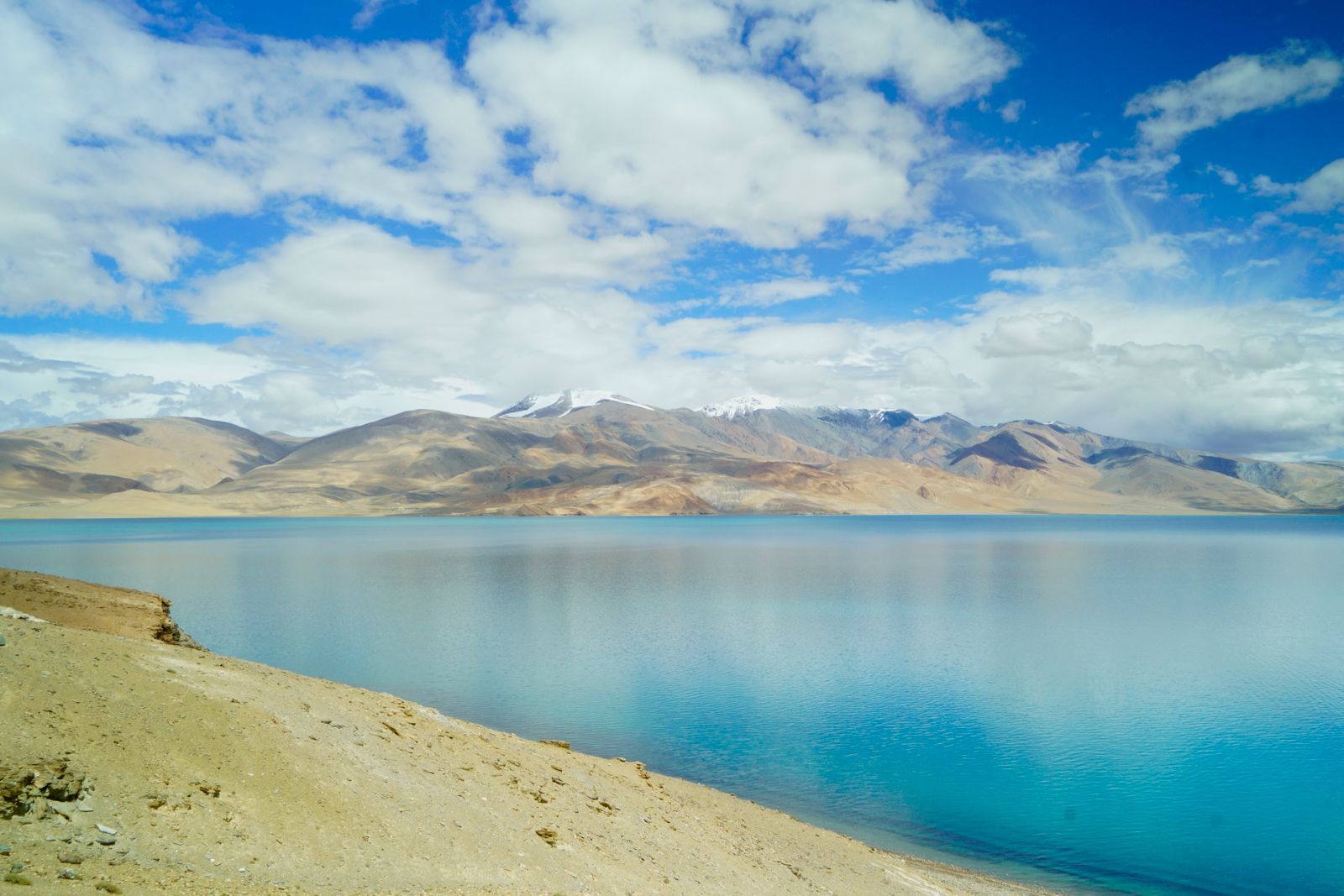
On the northern side of the range lie regions such as Spiti, Zanskar, Ladakh, Kargil, and parts of Lahaul. These areas sit within what geographers describe as the rain shadow of the Himalayas. By the time the monsoon clouds cross the highest ridgelines, they have already released most of their moisture.
As a result, these high altitude regions receive very little rainfall even during the peak monsoon months.
Travellers who journey from the lush Kullu valley toward Spiti or cross the passes from Himachal into Ladakh often witness this transformation unfold gradually. Dense forests thin out, green slopes turn into barren mountains, and the landscape opens into vast high altitude plateaus under clear skies.
In many ways, the monsoon creates two very different Himalayan worlds at the same time. While valleys on the southern slopes receive heavy rain, the trans Himalayan regions remain dry and accessible.
Meadows and Lakes that Awaken in Kashmir
Further west, the mountains present another remarkable transformation during the monsoon months.
The alpine valleys of Kashmir are shaped as much by melting winter snow as by seasonal rainfall. For much of the year, the higher meadows and passes remain buried under deep snow. As spring gives way to early summer, the snow slowly recedes and the mountains begin to open.
By the time the monsoon months arrive, these landscapes reach their most vibrant stage.
Rolling meadows stretch across entire valleys, streams flow through lush pastures, and alpine lakes reveal themselves beneath towering ridgelines. The grasslands turn a deep shade of green and wildflowers spread across the slopes.
For trekkers moving through Kashmir during this period, the experience is unforgettable. Long days of walking unfold across open pastures where shepherds graze their flocks and distant mountains frame the horizon. High altitude lakes rest quietly among the ridges, reflecting changing light as clouds drift across the sky.
Many of these landscapes remain difficult to access earlier in the year when snow blocks the higher routes. It is the warmth of the monsoon months that finally makes these meadows and lakes reachable on foot.

The Warmest Window in the High Himalayas
While alpine valleys turn green during the monsoon, the highest parts of the Himalayas undergo another transformation.
At elevations above five thousand metres, the environment remains extremely harsh for much of the year. Winter storms deposit deep layers of snow, and even during spring many high passes remain sealed under heavy accumulation.
As summer progresses into the monsoon months, however, the mountains slowly begin to open.
Snowfields recede, glaciers stabilise, and routes that were buried earlier in the year become visible again. Temperatures remain cold, but they are significantly more stable than during the months preceding the monsoon.
For a brief period each year, the upper corridors of the Himalayas become accessible.
Trekkers who spend time in these high regions during late summer often notice the subtle changes that signal the opening of the mountains. Snow bridges melt away to reveal flowing streams, old shepherd trails emerge along steep slopes, and distant passes begin to look attainable once again.
The Season of Great Himalayan Crossings
This narrow window allows some of the most remarkable journeys across the Indian Himalayas to take place.
Several legendary high altitude crossings are realistically attempted only during the monsoon months. Passes that remain buried under snow earlier in the year become accessible for a short period once the summer warmth has taken effect.
Routes such as Parang La, Pin Parvati Pass, Bara Banghal, and Kang La in the Miyar Valley represent some of the most compelling trans Himalayan journeys in the country.
These routes do far more than connect two points on a map. They link entirely different mountain worlds.
On one side lie the green valleys shaped by monsoon rainfall. On the other side stretch the vast cold deserts of the trans Himalayan plateau.
Standing on one of these high passes offers a rare perspective of the Himalayas. Behind you lie forests, rivers, and cloud covered ridges. Ahead unfolds a stark landscape of wide valleys, barren mountains, and distant snow peaks rising above dry riverbeds.
Such journeys reveal the scale and diversity of the Himalayan range in a way few other experiences can.

The Window for High Altitude Expeditions
The monsoon season is equally significant for mountaineers seeking to climb high peaks in the trans Himalayan regions.
Many of the climbing objectives in Ladakh and surrounding ranges are best attempted between July and September. During this period, access routes to the mountains remain open, snow conditions become more manageable, and weather patterns often stabilise.
Expedition teams travelling through Ladakh frequently attempt summits such as Yunam Peak, Kang Yatse I, Kang Yatse II, Mentok Kangri, UT Kangri, and Kiagar Ri.
These peaks rise well above the surrounding valleys and provide some of the most accessible high altitude mountaineering opportunities in the Indian Himalayas.
At elevations above six thousand metres, even small shifts in temperature and snow stability can determine whether a climb is possible. The relative warmth of the monsoon months often provides the most reliable opportunity for these expeditions.

A Different Kind of Monsoon Experience
What makes the monsoon particularly fascinating in the Himalayas is the contrast it creates across the range.
Rain clouds gather along the southern slopes, rivers swell through forested valleys, and alpine meadows burst into life. At the same time, the high altitude deserts beyond the mountain barrier remain dry and expansive under open skies.
Trekkers moving through these landscapes during the monsoon encounter a remarkable diversity of environments within a single journey. A route may begin in rain washed forests, climb through flower filled meadows, and eventually lead toward stark high altitude terrain where the sky feels vast and the air carries the dryness of the plateau.
Experiencing these transitions on foot reveals the Himalayas not as a single landscape but as an intricate system of climates, ecosystems, and mountain cultures.
Understanding the Rhythm of the Mountains
The Himalayas follow rhythms that are far older than trekking seasons or travel calendars.
Each period of the year reveals a different character of the mountains. Spring brings alpine flowers and melting snowfields. Autumn offers clear skies and distant views of towering peaks. Winter transforms many valleys into silent landscapes of ice and snow.
The monsoon, often misunderstood from afar, quietly unlocks another dimension of the range.
It opens the gates to remote passes, vast alpine meadows, cold desert plateaus, and high altitude summits that remain inaccessible during the rest of the year.
For trekkers who are willing to understand the geography of the Himalayas and travel with patience, the monsoon becomes one of the most rewarding seasons to explore the mountains.
Seen in this light, the monsoon is not simply a season of rain. It is the time when some of the most remarkable journeys across the Indian Himalayas finally become possible.
