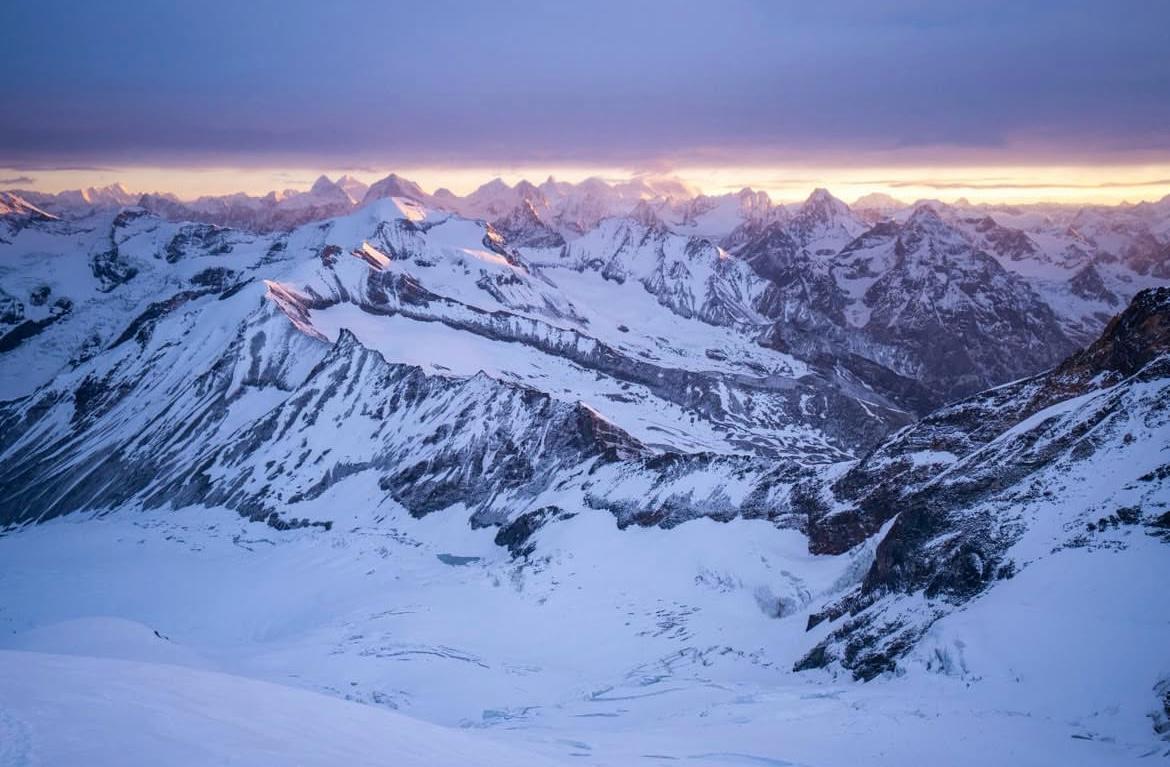
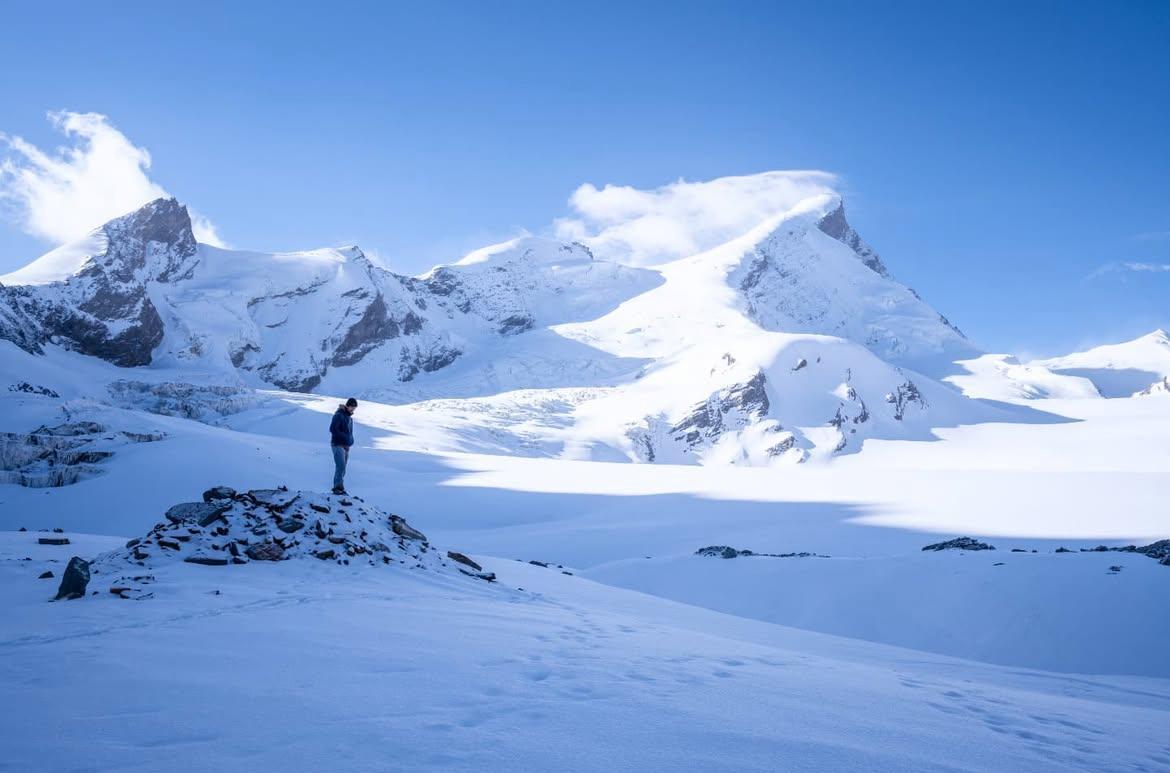


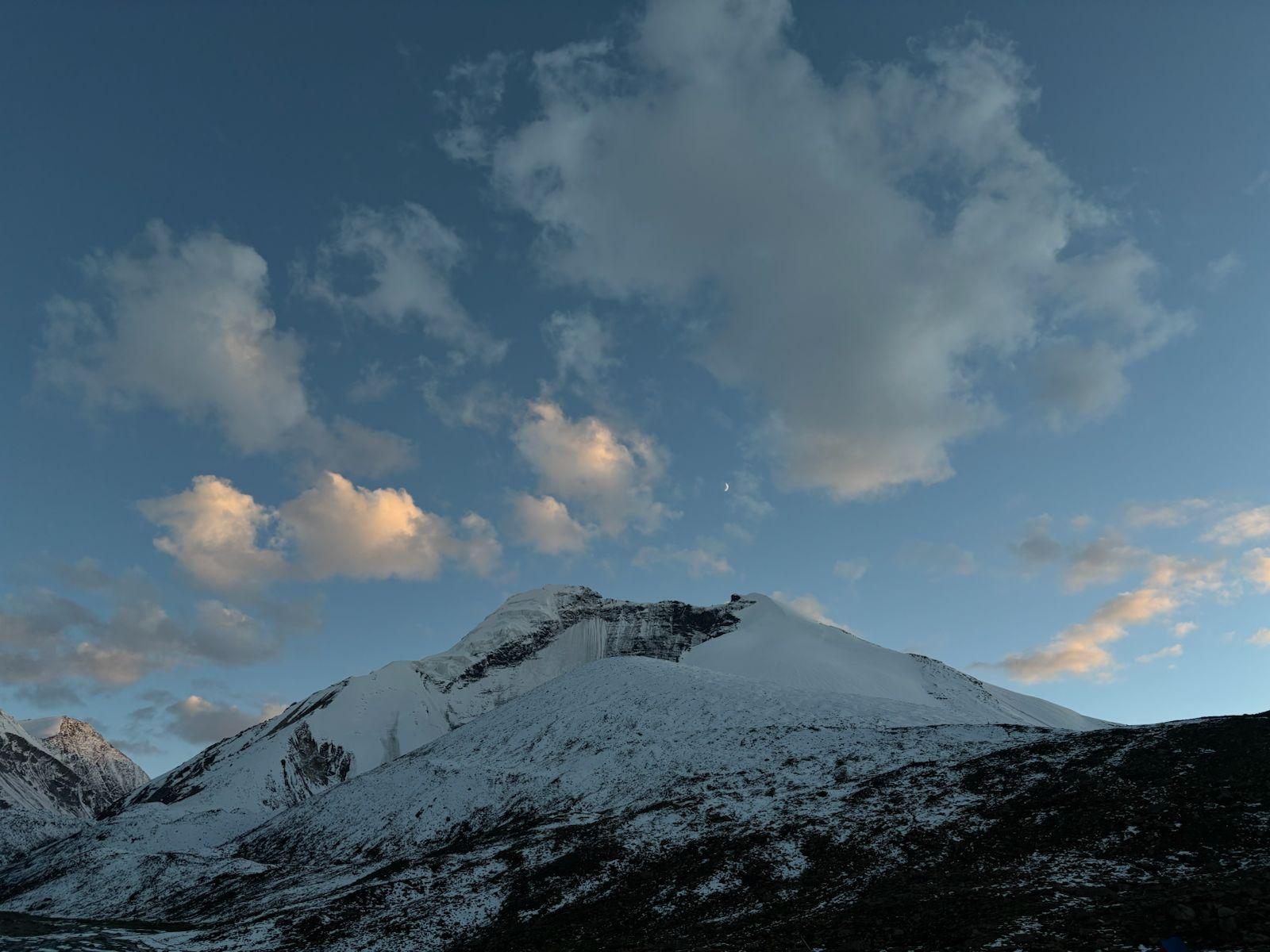
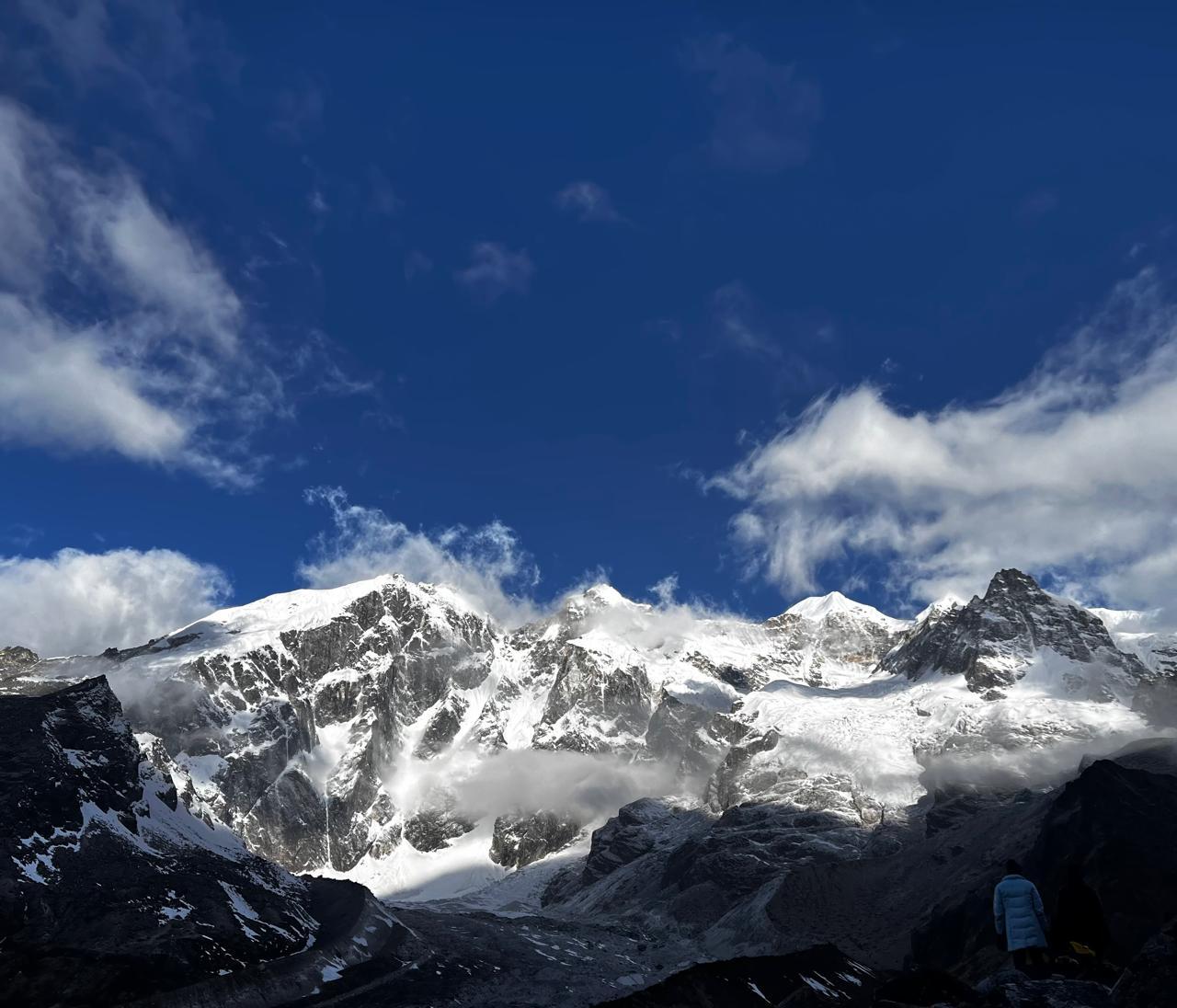
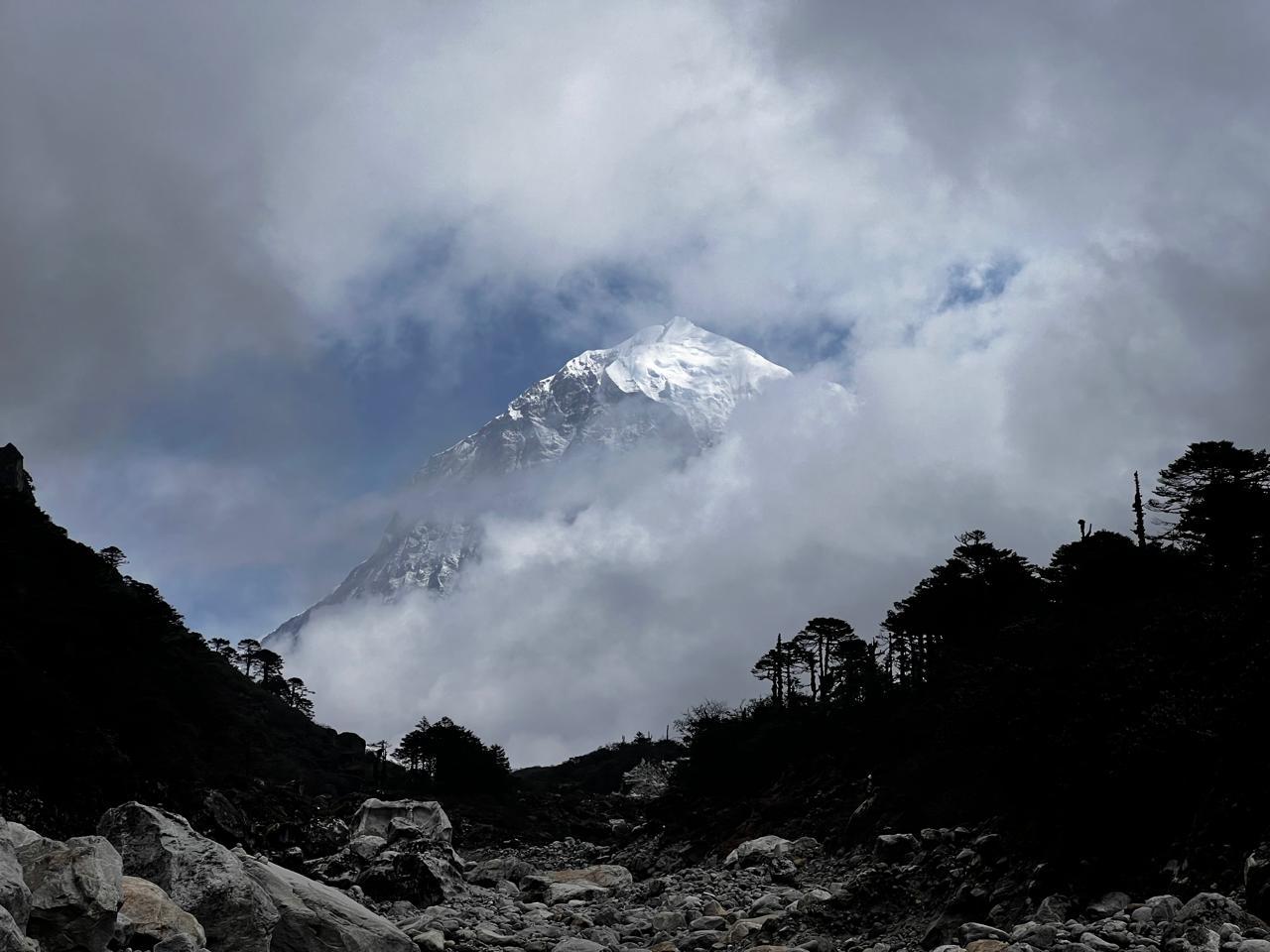
Black Peak, or Kalanag, is one of those mountains that stays with you long after you return. At 6,387 m, it’s the highest peak in the Bandarpunch massif, a long, sweeping pyramid of snow rising above the Ruinsara Valley.
What makes this expedition special isn’t just the summit height; it’s the progression: forest trails, glacial basins, moraine fields, alpine lakes, and finally long snow slopes that take you into the world of true mountaineering.
The approach begins from Sankri, climbs through Devsu Thatch and Ruinsara, and eventually places you deep inside one of the quietest valleys in Garhwal. By the time you reach Kyarkoti, the last of the forests are gone. From Base Camp upwards, the expedition becomes fully alpine, with load ferries, glacier travel, crampon work, and structured acclimatisation days that prepare you for the high camps and the summit push.
This is where the Odyssey comes in.
The idea is to help you understand the mountain you’re climbing. You’ll learn how to pack for upper camps, why we do load ferries, how to move on snow, how to manage layers, how to eat when you don’t feel hungry, and what real pacing at altitude looks like. You’re not just dragged to the summit, you grow into it.
We keep the teams small. Big enough for team spirit, small enough for safety and personal attention. You learn how to rope up, how to walk on a glacier without wasting energy, and how to descend safely after a long summit day. It’s still a fully guided expedition, but one where you participate, not just follow.
Black Peak demands effort, patience, and humility. The load carries take time. The altitude feels real above 5000 m. The camps are cold, and the summit night is long. But if you’ve ever wanted to step into the world of 6000ers with a team that teaches, guides, and takes you through the process with clarity, this is one of the best mountains to begin with.
By the time you stand on the summit ridge at sunrise, with the Swargarohini peaks turning gold on one side and the upper Yamunotri valley stretching into the horizon on the other, you realise why climbers keep coming back to this region. It’s beautiful, demanding, and deeply rewarding, precisely what a first 6000er should feel like.
Day 1
Dehradun to Sankri
Drive Distance: ~190–200 km
Elevation: 2,150 ft / 650 m (Dehradun) → ~6,400 ft / 1,950 m (Sankri)
You leave Dehradun early and follow the Yamuna and Tons rivers deep into the Govind National Park. The drive is long but never dull, with terraced fields, small Garhwali villages, and gradually narrowing valleys as you approach Sankri.
By the time you reach Sankri, you’re in classic trekking country: familiar dhabas, gear shops, and that end-of-the-road feeling. You meet the expedition team, check gear, and sort your load between what you’ll carry and what goes in the standard loads.
Night in a simple guesthouse/homestay.
Day 2
Sankri to Devsu Thatch
Trek Distance: ~8–9 km
Elevation: ~6,400 ft / 1,950 m → ~10,200 ft / 3,100 m
The trek begins with a gentle descent to the Supin River, followed by a bridge crossing and then the first real climb through a mix of forest and open clearings. Pines, oaks, and occasional rhododendrons throw shade on the trail as you zig-zag upward.
After a few hours, the forest suddenly gives way to the wide, green slopes of Devsu Thatch, a long meadow hanging high above the valley. On a clear evening, you get your first proper views of Swargarohini and the surrounding ridges.
This is your first campsite. Tents on soft grass, water from a nearby stream, and the first night of proper expedition life.
Day 3
Devsu Thatch to Ruinsara
Trek Distance: ~10–12 km
Elevation: ~10,200 ft / 3,100 m → ~11,500–11,800 ft / 3,500–3,600 m
The trail drops gently from Devsu and then follows the valley upstream. You walk through mixed forest, sections of old landslides, and occasional flat patches where shepherds camp in summer.
As the day progresses, the valley opens and you begin to see snow peaks closing in around you.
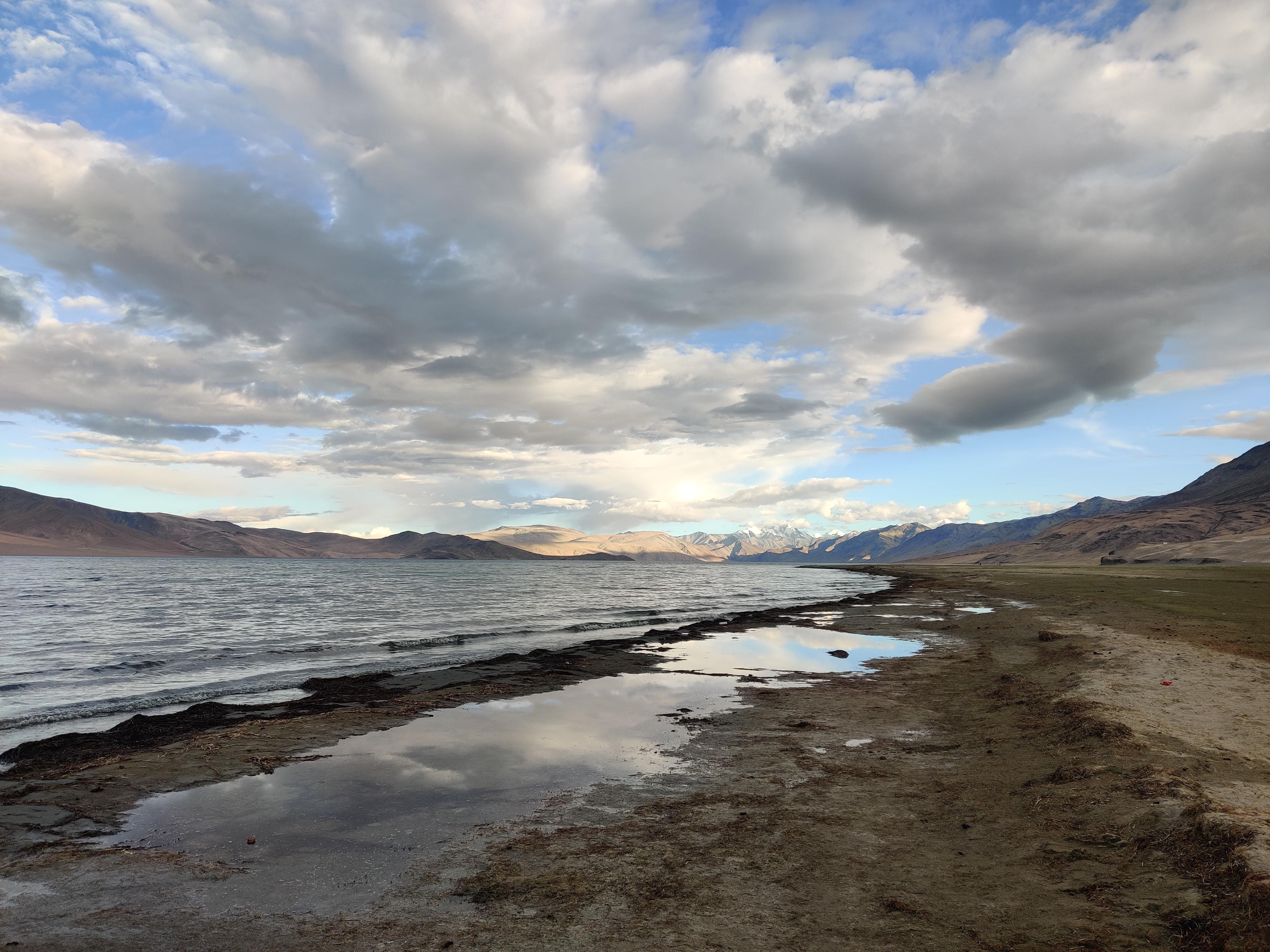
By afternoon, you reach the quiet, reflective waters of Ruinsara Tal, a glacial lake sitting in a natural bowl of ridges, birch trees, and stone. Black Peak, Bandarpunch, and Swargarohini play hide-and-seek in the gaps.
Camp is usually set a little away from the lake on flat ground. This is your second significant acclimatisation step, quieter, colder, and more serious than Devsu.
Day 4
Ruinsara to Kyarkoti (Base Camp Zone)
Trek Distance: ~9–11 km
Elevation: ~11,500–11,800 ft / 3,500–3,600 m → ~12,500–13,000 ft / 3,800–4,000 m
Today, the terrain starts to feel more like an expedition approach and less like a trek.
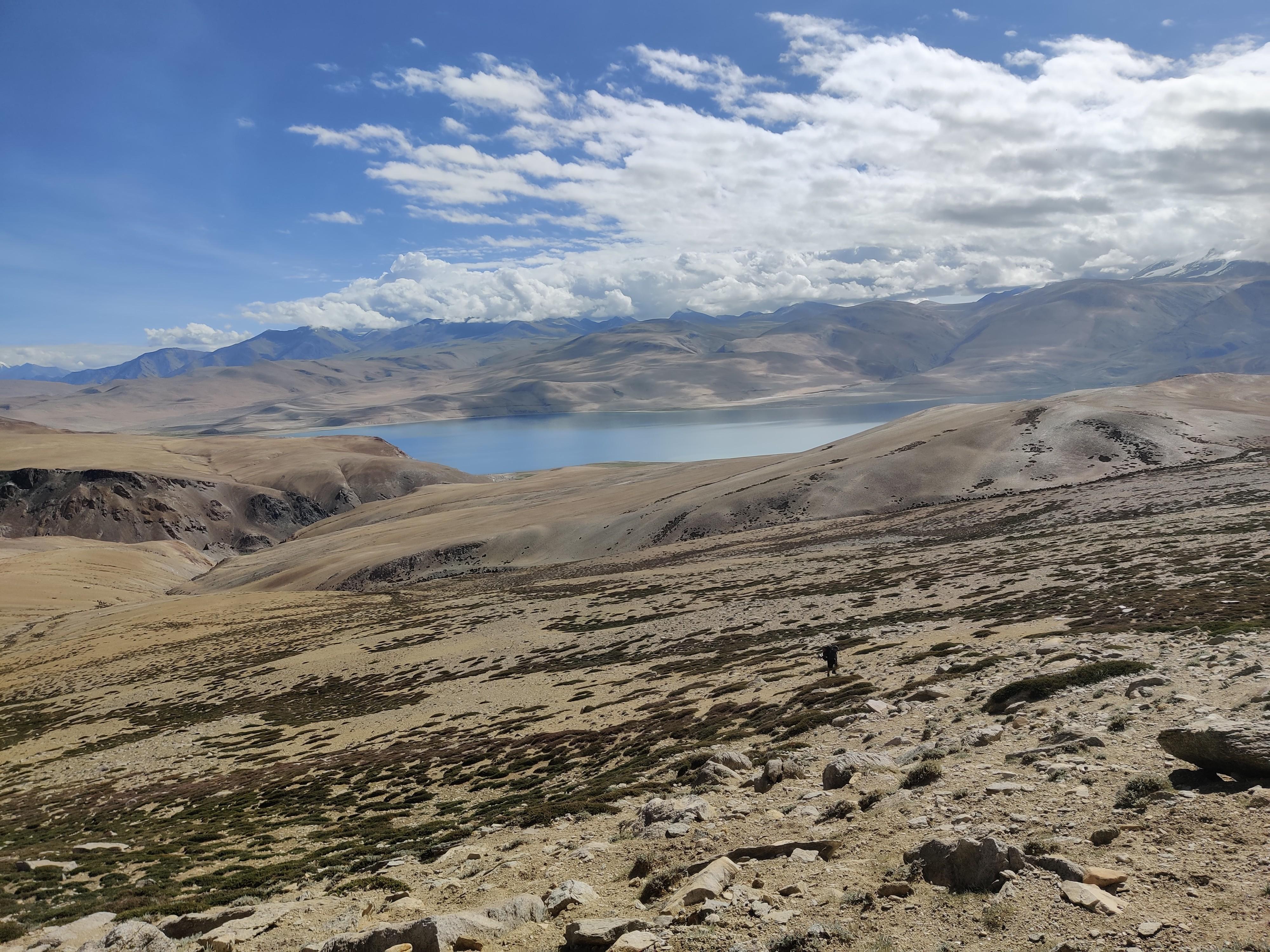
You leave the calm of Ruinsara and follow a rougher trail up-valley. The path narrows, becomes more bouldery, and crosses multiple streams. Trees thin out and finally vanish, replaced by scrub, rock, and patches of grass.
By the time you reach Kyarkoti, you are in a vast, rugged basin with big boulders, glacial streams, and open views of the cirque of peaks at the valley head. This is where most teams establish Base Camp, choosing the flattest possible sites among rock and turf.
You spend the evening setting up camp properly: kitchen tent, toilet setup, gear dump, and a fixed routine for water and waste. From here on, this is home.
Day 5
Acclimatisation Day at Base
Trek Distance: Short acclimatisation hikes only
Elevation: ~12,500–13,000 ft / 3,800–4,000 m
No big moves today. The goal is to let your body catch up.
You do:
- A slow morning
- gear check (crampons, boots, harness, helmet, ice axe, layering)
- knot practice, roping up, basic movement drills
Then a short acclimatisation walk above Base Camp, maybe 200–300 m of height gain, to look at the glacier approach, get a feel for the line, and then come back down to eat and rest.
This day is also where alpine themes begin: pacing, breathing, managing layers, understanding what “moving efficiently” actually means at altitude.
Night at Base Camp again.
Day 6
Base Camp to Camp 1 (Load Ferry)
Trek Distance: Depends on camp placement (~4–6 km up and back)
Elevation: ~12,500–13,000 ft / 3,800–4,000 m → ~14,700–15,400 ft / 4,500–4,700 m (Camp 1 zone), then back to BC
First load ferry day.
You pack a controlled load:
- Some group gear
- personal summit equipment
- food and fuel for upper camps
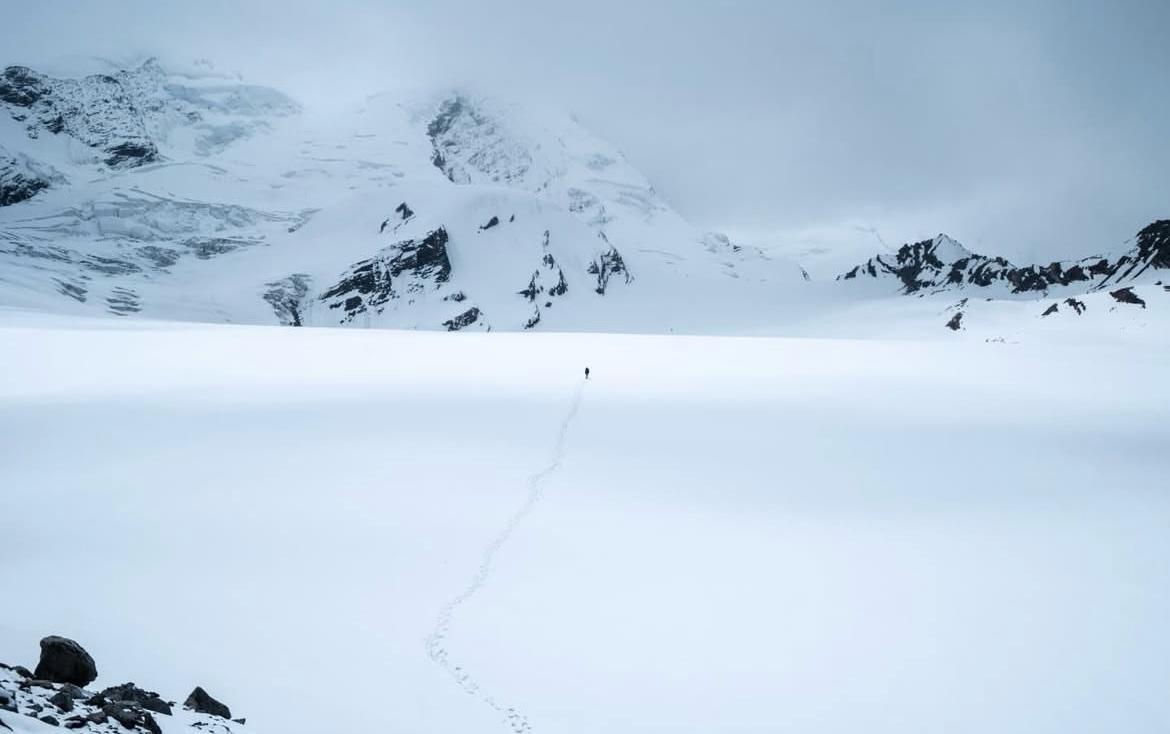
Then you step onto the glacier / upper moraine.
This is where you start:
- Roping up (if required)
- practising glacier travel
- learning how to walk with crampons or on hard snow/ice
- reading terrain, where to step, where not to
The route climbs gradually at first, then steeper as you approach the Camp 1 zone, somewhere in the 4,500–4,700 m range, depending on conditions that season.
You do not sleep there today.
The route climbs gradually at first, then steeper as you approach the Camp 1 zone, somewhere in the 4,500–4,700 m range, depending on conditions that season.
.
Night at Base Camp.
Day 7
Shift Base Camp to Camp 1
Trek Distance: ~4–6 km (one way)
Elevation: ~12,500–13,000 ft / 3,800–4,000 m → ~14,700–15,400 ft / 4,500–4,700 m
Today, you move up for real.
You leave Base Camp with a lighter load than the ferry day (because some is already cached at Camp 1), but it still feels heavier — this time you know you’re not returning at the end of the day.
The climb is familiar, but altitude makes it slower. Breaks are shorter and more deliberate. Hydration and pace matter more.
By midday/afternoon, you reach the Camp 1 site, dig out tent platforms if needed, and set up your new high camp. The view is now firmly glacial — open snow/ice fields above, crevasses in the distance, rock and moraine below.
The night here is cold and quieter. You’re now fully in expedition territory..
Day 8
Camp 1 to Summit Camp (Load Ferry + Acclimatisation)
Trek Distance: ~3–5 km up and back
Elevation: ~14,700–15,400 ft / 4,500–4,700 m → ~17,000–17,700 ft / 5,200–5,400 m (Summit Camp zone), then back to Camp 1
The pattern repeats one level higher.
You carry a controlled load to the Summit Camp zone, higher up on the glacier, closer to the headwall and steep summit slopes.
Terrain now:
- Longer snow slopes
- more defined crevasse fields
- sections where you may front-point or side-step on firmer snow
Your guides lead, set anchors where needed, and decide where to rope up and how to move as a team.
You cache gear and return to Camp 1 for the night, giving your body one more cycle of climb-high–sleep-lower before you commit to the top camp.
Day 9
Move to Summit Camp
Trek Distance: ~3–5 km (one way)
Elevation: ~14,700–15,400 ft / 4,500–4,700 m → ~17,000–17,700 ft / 5,200–5,400 m
You repeat the route from yesterday, but now with the intention of staying.
Loads are lighter than on a ferry day, but the altitude makes every step count. Breaks are deliberate, communication is tight, and the team starts to move like a single unit, with rope distances fixed and instructions short and precise.
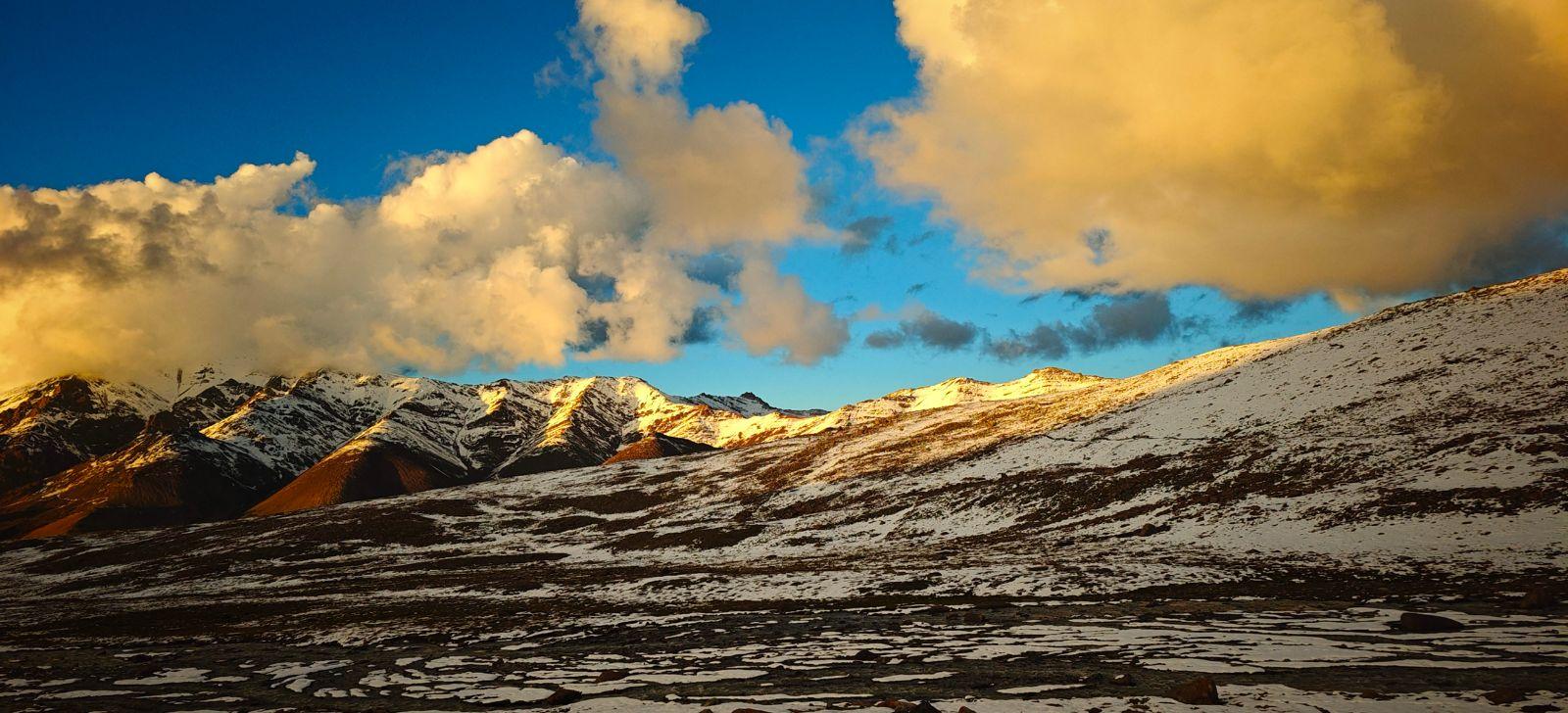
By the time you reach Summit Camp, you’re on open snow with minimal rock showing. Tents are carved into the slope or placed on small levelled platforms.
The rest of the day is about:
- Rehydrating
- Sorting summit gear (layers, gloves, headlamp, harness, crampons)
- Eating even if you don’t feel very hungry
- Resting horizontally as much as possible
You sleep early. Summit push is next.
Day 10
Summit Day: Attempt summit & back to Camp 1
Trek Distance: Varies (~8–10 hrs ascent, 4–5 hrs descent)
Elevation: ~17,000–17,700 ft / 5,200–5,400 m → 20,955 ft / 6,387 m → back down
You wake up in the dark — sometime around midnight or 1 am, depending on the weather, snow conditions, and the guide's judgment.
Hot drink, light food, harness check, crampons on, rope up.
The route:
- Starts with a gradual climb up the glacier,
- Then steepens into long 35–45° snow slopes leading to the upper ridge and summit dome.
This is not a place for speed. It’s a place for rhythm:
Step, pole/axe, breath. Step, pole/axe, breath.
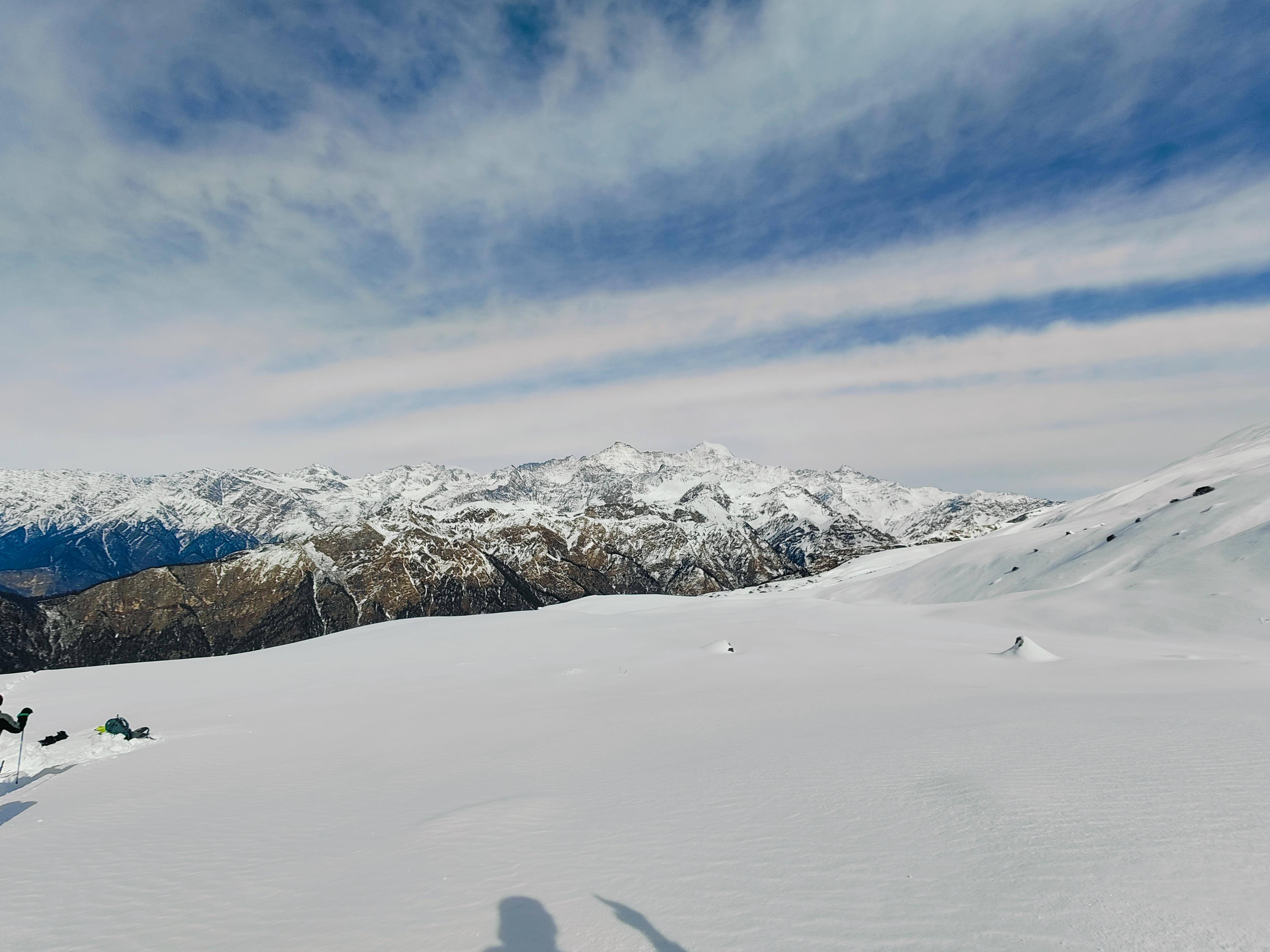
As dawn comes in, you begin to see the range behind you, Swargarohini, Bandarpunch, and a long horizon of Garhwal peaks, often above a sea of cloud if the inversion plays along.
The summit is a small, sloping top.
You don’t do long celebrations here: a few careful photos, maybe a quiet minute if the weather allows, and then the real work begins, the descent.
You return along the same route, downclimbing the slopes, managing ropes carefully, and following the guide's instructions. Depending on team energy and conditions, you either sleep back at Summit Camp or drop down to Camp 1 for better rest.
Either way, this is the biggest day of the expedition, mentally, physically, and emotionally.
Day 11
Descend to Base Camp (and possibly further)
Trek Distance: ~7–10 km
Elevation: from Camp 1 / Summit Camp → ~12,500–13,000 ft / 3,800–4,000 m
You pack up high camps, clear caches, and begin the long descent to Base Camp.
The drop in altitude is immediate in your lungs and legs; breathing eases, appetite returns, and the emotional weight of summit day begins to settle.
Once at Base Camp, you exhale properly for the first time in days. Gear is sorted, loads rebalanced, and there is a lot more laughter in the kitchen tent.
If everyone is feeling good and the day is long enough, you may even push further down towards Ruinsara the same day, but often, a whole rest night at Base Camp is precisely what the team needs.
Day 12
Ruinsara to Gangaad and to Dehradun (long exit day)
You now retrace your steps:
- Base Camp / Kyarkoti to Ruinsara:
- Back through the boulders, streams, into the calmer basin of Ruinsara Tal.
- Ruinsara to Gangaad / Roadhead:
- Descend via the trail that peels off towards the Har Ki Dun valley side, eventually re-entering forest, old farms, and finally villages like Gangaad / Osla region.
From the roadhead, vehicles pick you up and you drive back via Sankri towards Dehradun, finishing late in the evening.
It’s a long transition from summit world back to city lights, but by then, the mountain has already done its job. You know very clearly what a 6000 m expedition feels like in your body and mind.
Our Expectations from Participants
A 6000 m expedition is very different from a trek; the days are longer, the cold is sharper, the weather turns quicker, and every decision matters. Black Peak demands physical preparation, patience, and a mindset willing to learn and adapt.
Here’s what we expect from you when you sign up for this expedition:
1. Come Prepared — Not Just Motivated
You should already be comfortable walking long days in the mountains.
This isn’t the place to “see how it goes.”
We expect you to train consistently for 2-3 months before the expedition, running, stair climbs, strength work, and long loaded carries. We’ll guide you through a structured plan, but the effort has to come from you.
2. Understand That This Is an Alpine-Style Expedition
From Base Camp onwards, everything changes:
- You’ll be carrying loads on ferry days
- You’ll move between high camps.
- You’ll climb in crampons and on snow.
- You’ll rope up as a team.
- You’ll manage your layers, fuel intake, and pace.
We expect you to take responsibility for your own gear and systems, and to follow instructions closely. This is how you stay safe at altitude.
3. Teamwork Is Non-Negotiable
6000ers are climbed as a team, never solo.
We expect you to:
- Support slower teammates
- communicate clearly
- Follow the guides’ decisions (especially on summit day)
- Keep morale steady even when it gets tough
A good team can climb almost anything. A poor team can fail on an easy day.
4. Be Adaptable — Plans Change
Weather, snow conditions, and mountain judgment decide everything.
We may shift:
- summit day
- load ferry plans
- high camp placements
- turn-around time
We expect you to respect these decisions. They’re always made with safety first.
5. Hygiene, Hydration & Eating Discipline
Above 4500 m, your appetite dips and water feels like a chore, but discipline is life-saving.
We expect you to:
- Stay hydrated even when you don’t feel thirsty
- eat regularly
- Manage your layers wisely.
- Avoid wet feet, cold hands, and careless exposure.
These small things determine how you perform at altitude.
6. Respect the Mountain & the People Who Live Here
You’ll pass through villages, farms, and forest areas before entering high alpine terrain.
We expect:
- No shortcuts through crops or pastures
- Quiet mornings
- minimal disturbance to wildlife, shepherds, and locals
- Follow LNT principles
Expeditions earn respect by the way they move through a landscape.
7. A Growth Mindset
We’re here not just to take you up a mountain, but to help you learn mountaineering:
- Efficient movement on snow
- How to place your feet
- How to rest-step
- How to manage fear and fatigue
- How to climb smart, not just hard
You don’t need prior mountaineering experience, but you must be willing to learn.
Minimum Fitness Required
lack Peak is a Level 5 Expedition, and the demands are far higher than a regular high-altitude trek. To climb safely and enjoyably, you must already have strong endurance, strength, and recovery capacity before the expedition begins.
Here’s what you should be able to do before you arrive comfortably:
1. Endurance Benchmarks
You must be able to:
- Run for 1.5 to 2 hours at a comfortable pace.
- (pace shows aerobic base, not speed)
- Walk 12–15 km on mountain trails with a 10–12 kg backpack, without excessive fatigue
- Climb 1,000–1,500 stairs with a backpack in a single session (breaks allowed)
- Sustain 6–8 hours of activity on back-to-back days without significant soreness or burnout
2. Strength Benchmarks
Strong legs and a resilient core keep you safe on load ferries and steep sections.
You should comfortably manage:
- Bodyweight squats – 50 reps
- Lunges – 25 reps per leg
- Step-ups – 50 per leg (12–14 inch step)
- Plank – 90 seconds
- Dead hang – 30-60 seconds
No need to be a gym athlete, but you must have basic, reliable strength.
3. Altitude & Recovery Readiness
You should have:
- At least one prior high-altitude trek above 4,500 m (e.g., Buran Ghati, Pangarchulla, Hampta, Tarsar Marsar)
- Ability to recover overnight and maintain energy on multi-day mountain efforts
- Basic familiarity with pacing, hydration, and breathing patterns at altitude
4. Mental Fitness
Black Peak is long, cold, and slow at times.
We look for participants who are:
- Calm under fatigue
- Able to follow instructions in rugged terrain
- Patient during weather delays
- Positive and cooperative in team settings
Mindset is often the difference between success and turnaround.
5. Medical Safety
You should have:
- No major cardiac or respiratory issues
- No uncontrolled asthma
- No recent severe altitude sickness
- Strong immunity and the ability to withstand cold exposure
A basic medical check is recommended.
How We Support You (Odyssey Difference)
Once you register:
You get a personalised training plan
Adjusted for your lifestyle, fitness history, injuries, time availability, and equipment access.
Exclusive WhatsApp Training Group
Only for your expedition team:
- Fortnightly check-ins
- video form corrections
- gear guidance
- accountability
- pacing and hydration cues for altitude
One-on-one guidance where needed
If someone falls behind or struggles with a specific aspect, we help them privately.
Climbing a 6000er is a team effort, and your preparation begins long before you reach Base Camp.
Inclusion
Exclusion
How difficult is Black Peak? What level is it?
It involves:
1. Steep snow slopes (35–45°)
2. load ferry days
3. camping at high altitude
4. long summit night (10–14 hrs)
5. glacier travel
It’s a mountaineering expedition, not a trek.
You don’t need to be an expert mountaineer, but you must have prior high-altitude experience and be willing to learn, follow instructions, and stay disciplined.
Do I need prior mountaineering experience?
You should have completed at least:
One high-altitude trek above 4,500 m, and ideally, a challenging trek (Bali Pass, Pangarchulla, Buran Ghati, Kedarkantha Speed variants, Borasu, etc.)
We teach everything you’ll need on the mountain:
crampon walking
ice axe handling
roping up
snow slope techniques
layer management
summit-night pacing
But you must come physically and mentally prepared.
What is the summit day like?
You climb:
roped up
wearing crampons
carrying an ice axe
through long snow slopes
Expect:
8–10 hrs of climbing
4–5 hrs of descent
cold temperatures (-10°C to -20°C with wind)
slow, rhythmic movement
Incredible sunrise views over Swargarohini & Bandarpunch
It’s long, demanding, but unforgettable.
How cold does it get?
Camp 1: -5°C to -12°C
Summit Camp: -10°C to -18°C
Summit night: windchill can touch -20°C to -25°C
We provide insulated mountaineering boots and technical gear. You bring the proper layering, and we guide you through it thoroughly.
What technical gear will Odyssey provide?
Double mountaineering boots
Crampons
Ice axe
Helmet
Harness
Ropes, anchors, carabiners
Gaiters
Mitts (over-gloves)
Ascent and safety equipment
Group cooking gear
Safety gear (O2 cylinder, comms, medical kits)
You only bring your personal clothing & backpacking gear.
How heavy will my backpack be?
Load ferry days: 12–16 kg
Moving to Camp 1 / Summit Camp: 10–14 kg
Summit night: 4-6 kg (mostly layers, water, snacks)
This is why training is critical.
Is there a possibility of turning back?
Reasons include:
bad weather
unsafe snow conditions
crevasse risk
altitude issues
physical fatigue
turnaround time breach
Our guides will take the call.
Safety is always above summit.
What happens if I cannot continue?
Additional costs (mule/porter evacuation, extra stays) are not included.
We have emergency protocols for all situations.
Will oxygen be available?
It’s only used when medically necessary.
Prevention is the primary strategy: slow pace, acclimatisation cycles, hydration, and monitoring.
Is high-altitude rescue insurance mandatory?
All participants must have insurance covering:
high-altitude trekking above 6,000 m
helicopter evacuation
medical emergencies
We’ll guide you with the correct insurance options.
What do camps look like?
spacious tents
kitchen + dining tent
toilet tents
water source nearby
Camp 1 & Summit Camp:
alpine tents (2-person sharing)
hard snow/ice platforms
no luxury, minimal space
designed for survival & efficiency
This is full expedition style.
How many people are in the team?
6–8 participants max.
This ensures:
safety
personal attention
efficient rope management
better summit success
meaningful learning
Best time to climb Black Peak?
This is the window when:
Snow is stable
avalanche risk is lower
The weather is predictable
Crevasses are visible
The winds are manageable
Monsoon makes the route unsafe.
Do we really need load ferries?
carry loads high
deposit them
climb back down
sleep lower
move up the next day
It’s critical for acclimatisation and reduces risk of altitude sickness.
Odyssey instructors teach you how to do it efficiently.
Is Black Peak a good first 6000er?
It is challenging but not highly technical.
A perfect introduction to:
glacier travel
steep snow climbing
high camps
rope techniques
summit-night endurance
It prepares you for more challenging peaks later.
You can talk to us, and we will guide you to the right one.
How do I prepare physically?
A 8–12 week training plan
A closed WhatsApp training group
Fortnightly check-ins
Form corrections
Backpack & stair-climb routines
You must commit to it consistently.
What’s the summit success rate?
Teams are small
weather plays along
Participants are well-trained
Turnaround times are respected
Guides maintain safety margins
We don’t promise the summit; we promise a safe, disciplined attempt.
Will there be mules/porters?
Above Base Camp — no.
You carry your own loads between high camps.
What is the “Odyssey way” of climbing?
safety > summit
small teams
clear communication
teaching mindset
Helping you train
No shortcuts on acclimatisation
No ego climbing
No overcrowding on the rope
You don’t just climb the peak; you learn what expedition climbing truly feels like.
SELECT DATE TO REGISTER
Thank You!
Your form has been submitted successfully. We'll get back to you soon.
₹ 73,499 + 5% GST
