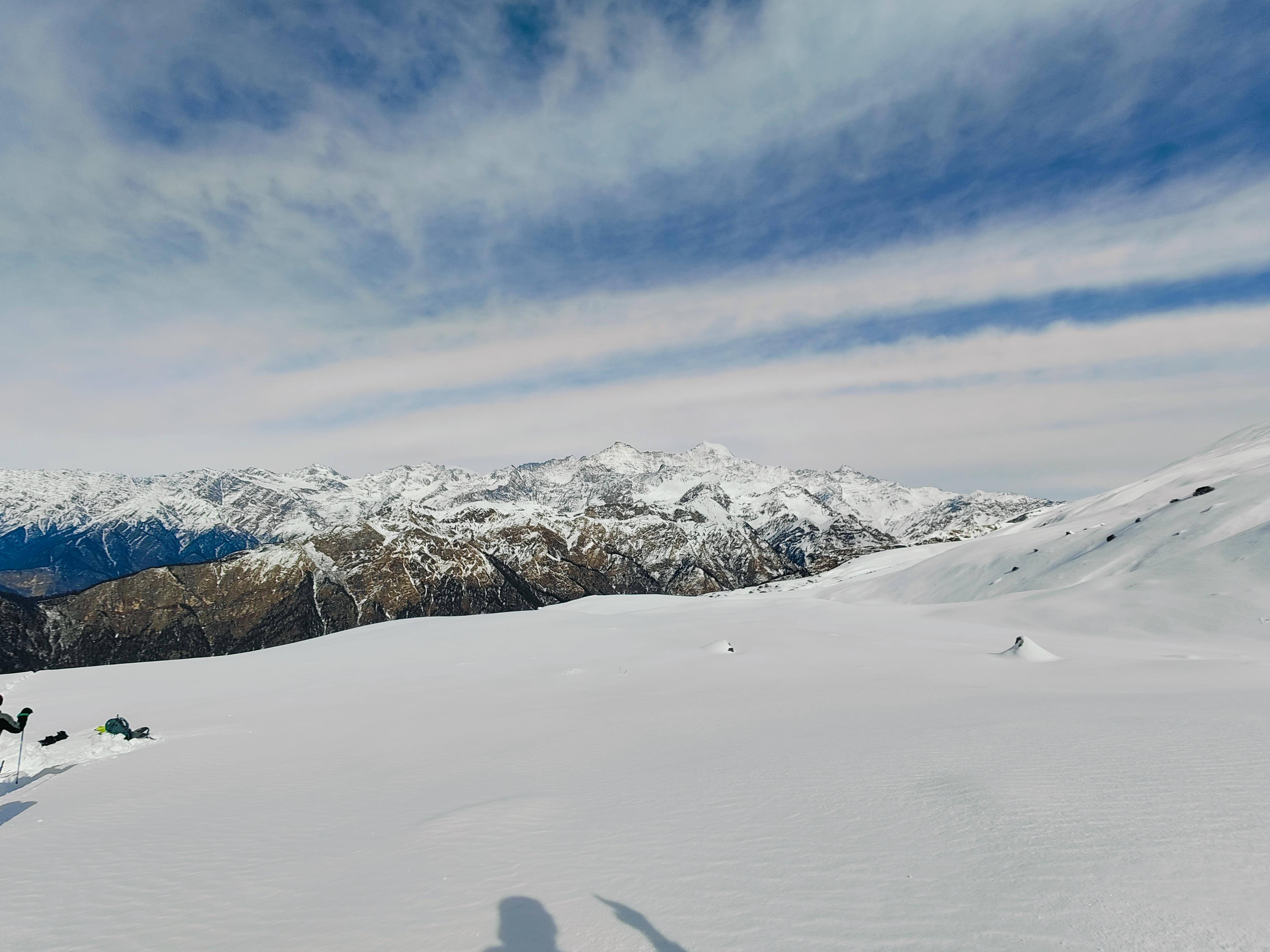
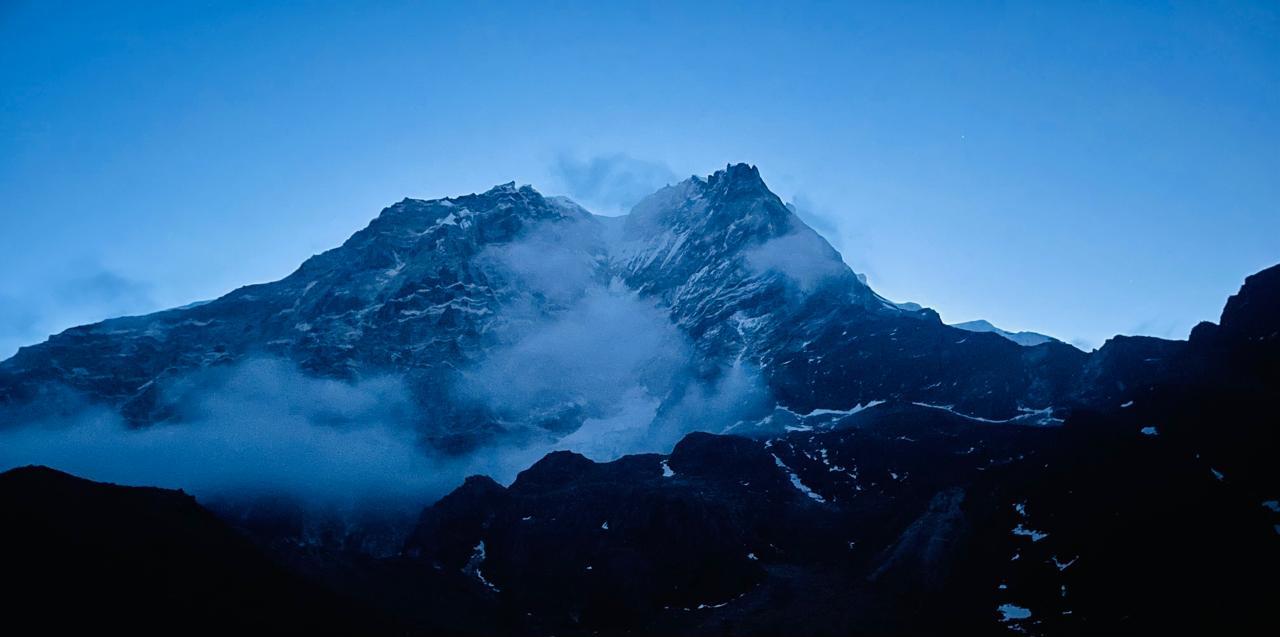
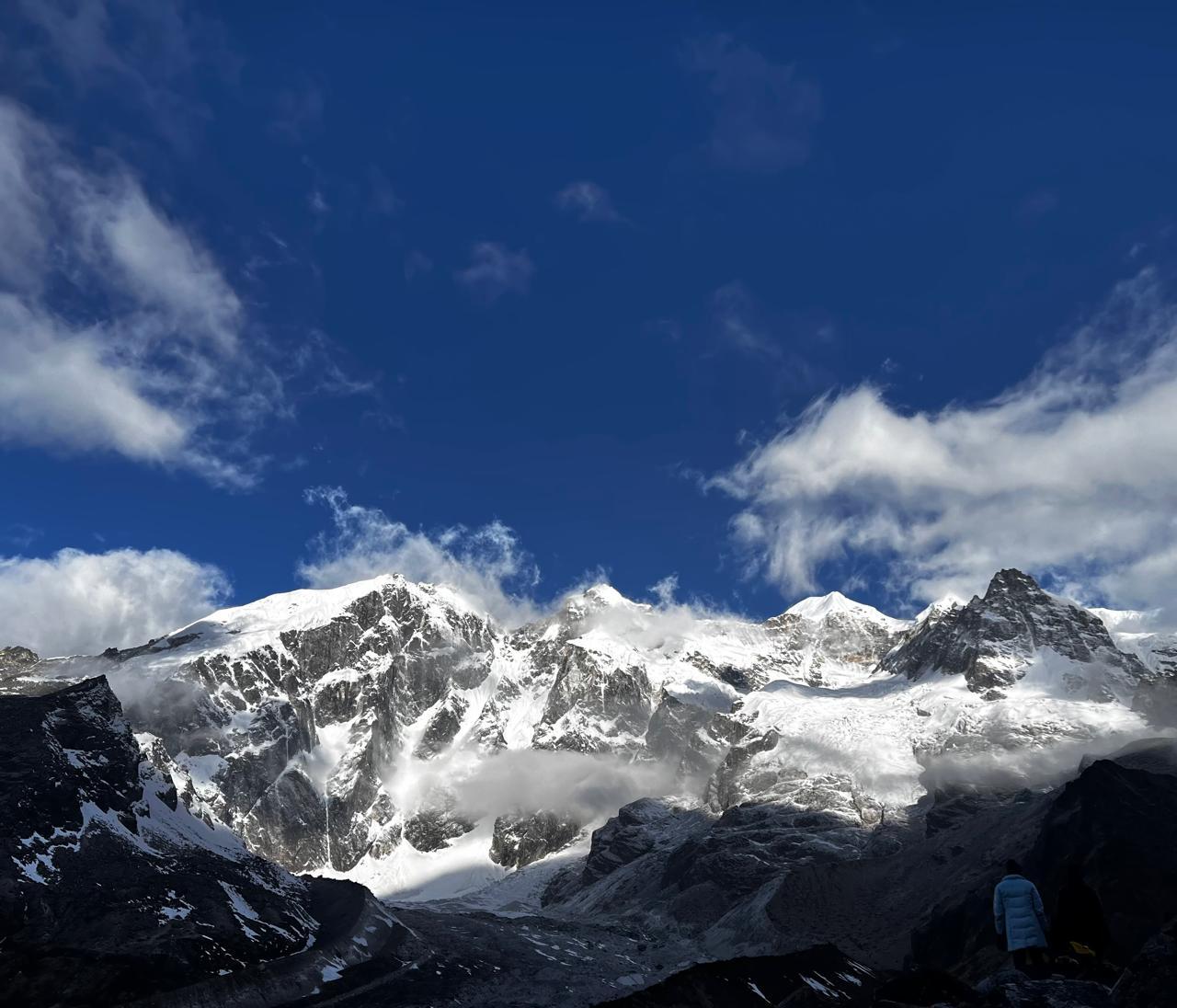
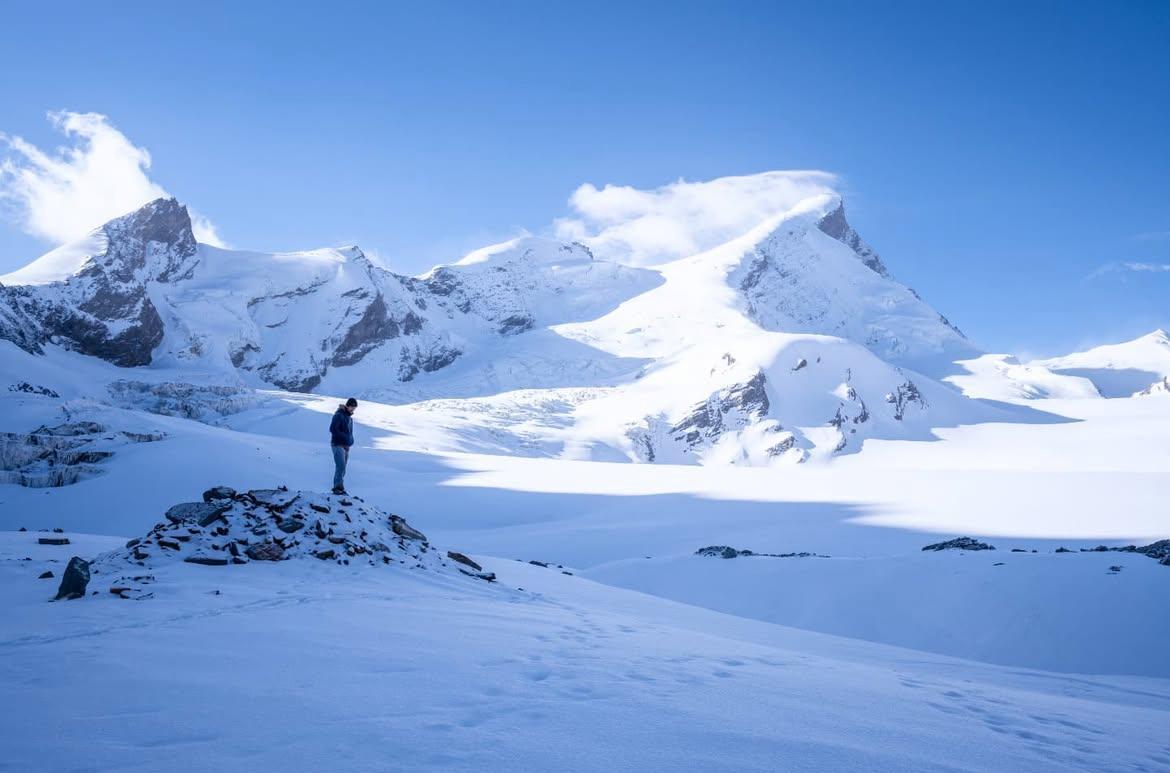
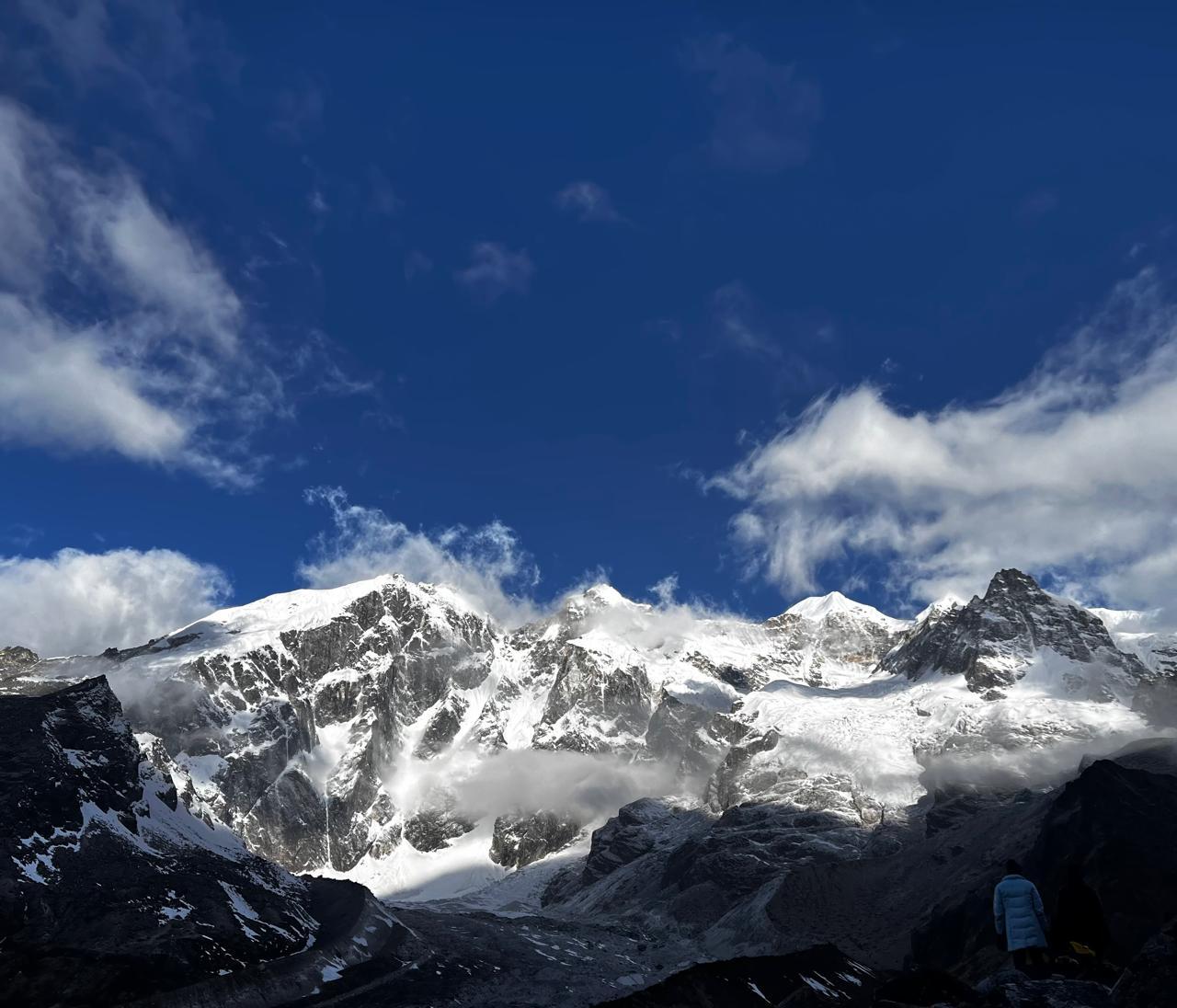
Rising above the Beas Kund basin near Manali, Friendship Peak dominates the skyline of the Pir Panjal range with its snow-clad slopes and glaciated flanks. At nearly 5,300 meters, it is among the most accessible Himalayan summits in this altitude bracket, yet it demands serious preparation, discipline, and respect for mountain conditions.
The expedition begins in Manali, where pine forests, mountain rivers, and familiar Himalayan villages slowly give way to quieter valleys and high alpine basins. As altitude increases, vegetation thins, temperatures drop, and snow becomes a constant presence. The landscape transitions from forested trails to open alpine meadows, rocky moraines, and finally glaciers and snowfields.
Above base camps, the terrain becomes distinctly alpine. Snow slopes require careful footwork; glaciers demand rope travel and constant awareness; summit ridges test balance, endurance, and mental focus. Depending on the season, climbers may encounter hard-packed snow, soft snow, or icy sections requiring crampon and ice-axe use throughout the summit push.
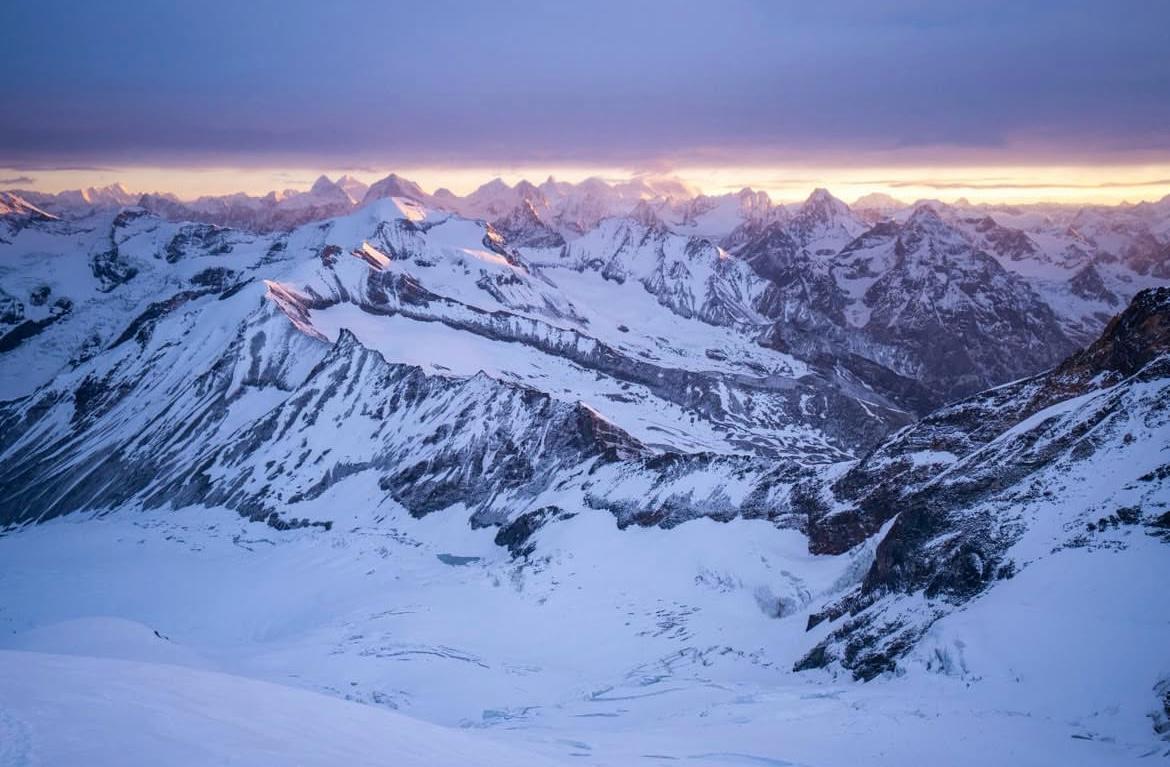
From the summit, weather permitting, the Himalayas unfold in every direction—endless ridgelines, massive snow faces, distant valleys, and the quiet immensity that only high altitude can offer. Camps at night are cold, stark, and deeply humbling, with star-filled skies and complete silence. Friendship Peak is not a casual trek; it is a controlled exposure to true Himalayan climbing, often leaving participants changed long after they descend.
Day 1
Arrival in Manali | Acclimatization & Preparation
Participants arrive in Manali and settle into their accommodation. The day is reserved for gear checks, introductions, permit formalities, and an expedition briefing.
Day 2
Drive from Manali to Dhundi | Trek to Bakarthach (3,300 m)
Starting Altitude: 2,850 m (Dhundi)
Camp Altitude: 3,300 m
Distance: 8 km
Time: 4–5 hrs
Elevation Gain: 450 m
A short drive from Manali brings the team to Dhundi, where the trek begins.
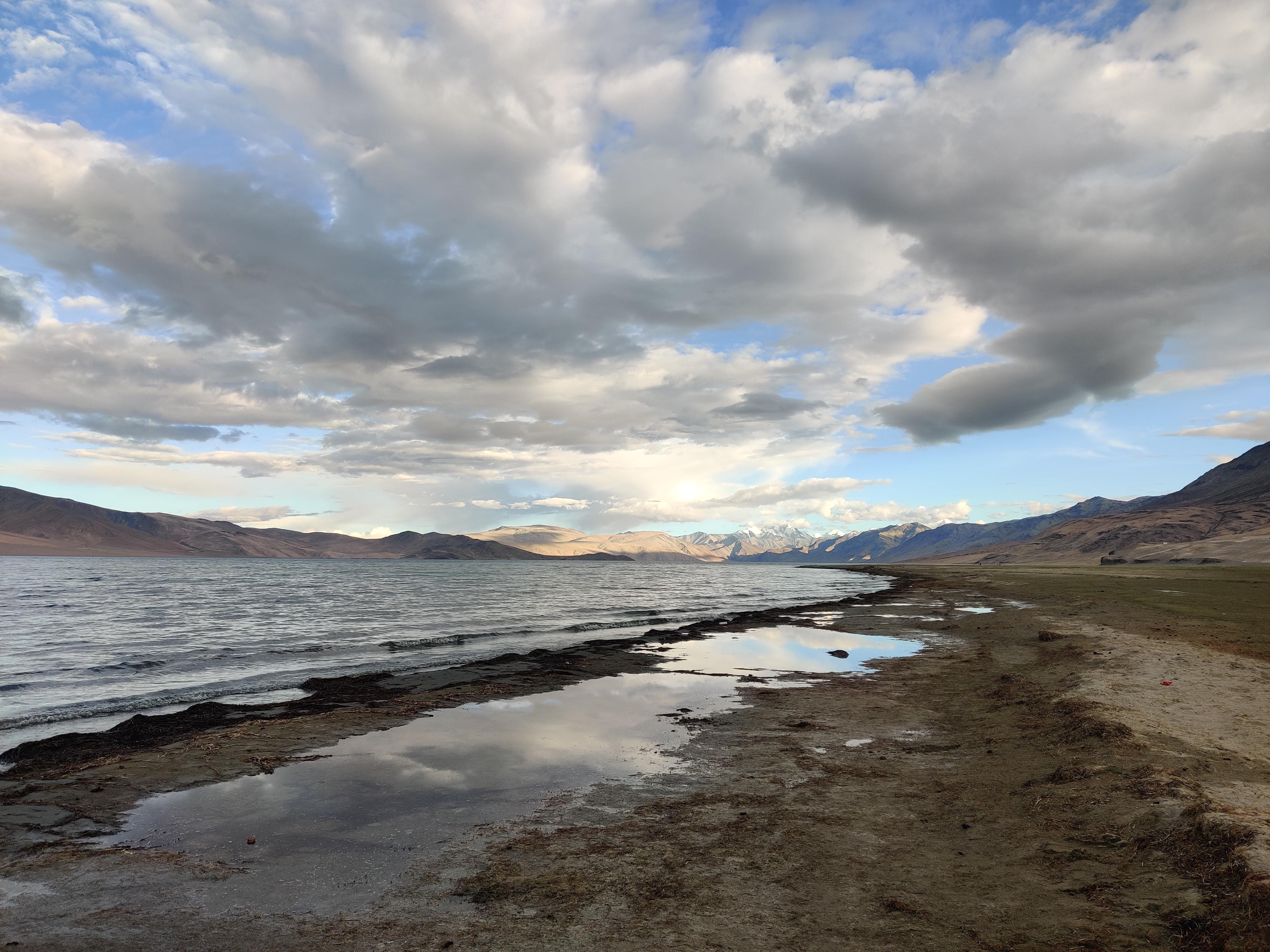
The trail follows the upper Beas valley through alpine meadows, grazing grounds, and glacial streams. As the forests thin out, the surrounding mountains begin to dominate the landscape. Bakarthach, often referred to as the "shepherd's meadow," offers expansive views of Hanuman Tibba, Shitidhar, and the surrounding peaks.
The day is relatively moderate and allows participants to settle into the rhythm of mountain travel.
Day 3
Trek from Bakarthach to Lady Leg Base Camp (3,900 m)
Starting Altitude: 3,300 m
Camp Altitude: 3,900 m
Distance: 5 km
Time: 4–5 hrs
Elevation Gain: 600 m
The route gradually leaves the grassy meadows behind and enters more rugged alpine terrain. The trail climbs through moraine sections and rocky slopes toward Lady Leg, the traditional base camp for Friendship Peak expeditions.
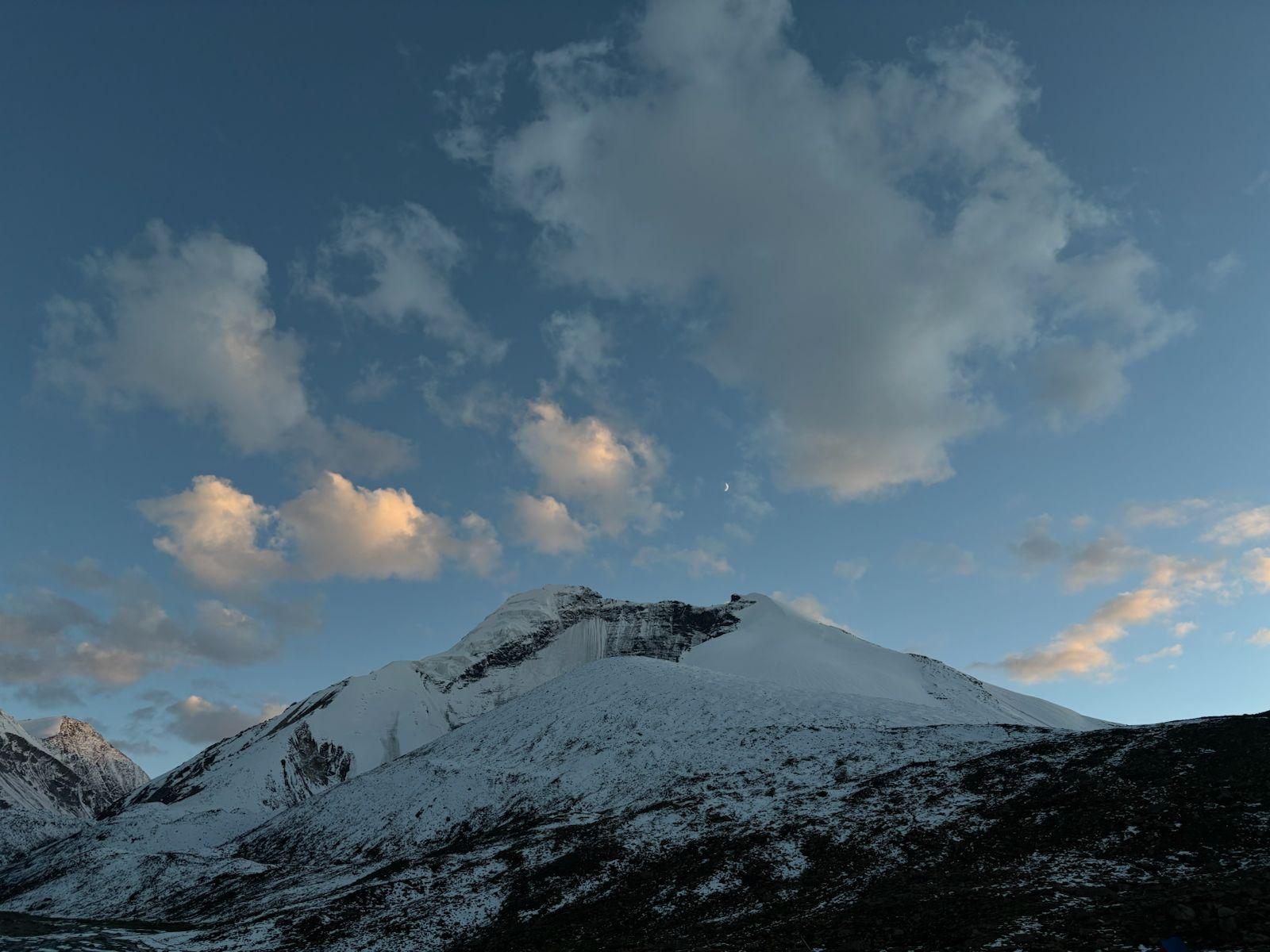
As altitude increases, movement becomes slower and more deliberate. The camp sits beneath the glacier system leading toward Friendship Peak and provides dramatic views of surrounding snow-covered ridges.
This is often the point where participants begin to truly feel they are on a mountaineering expedition.
Day 4
Acclimatization & Load Ferry | Move Toward Summit Camp (4,400 m)
Starting Altitude: 3,900 m
Camp Altitude: 4,400 m
Distance: 3–4 km
Time: 3–4 hrs
Elevation Gain: 500 m
The morning is dedicated to acclimatization and mountain skills practice. Depending on conditions, participants may review movement techniques on snow, crampon use, ice axe handling, and rope travel.
After lunch, the team gradually moves higher toward Summit Camp.
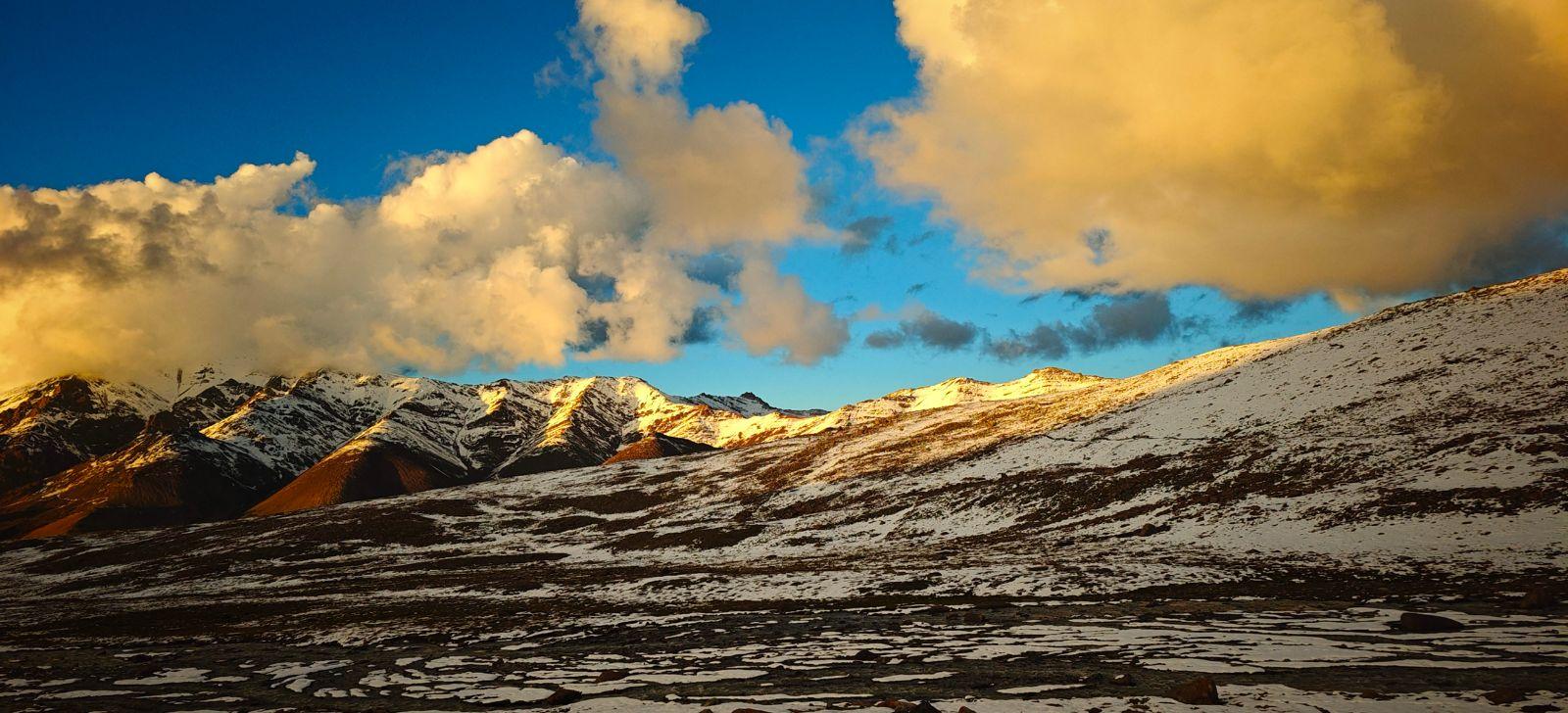
The terrain becomes increasingly alpine, with snowfields, rocky sections, and expanding views of the surrounding peaks. The afternoon is kept light to allow participants to rest, hydrate, and prepare for an early summit attempt.
An early dinner and a good night's rest are essential.
Day 5
Summit Camp to Friendship Peak (~5,289 m) & Return to Lady Leg
Highest Altitude: 5,289 m
Camp Altitude: 3,900 m
Distance: 10–12 km
Time: 10–14 hrs
Elevation Gain: 890 m
Elevation Loss: 1,390 m
Summit day begins well before sunrise. We may start as early as 2am.
Headlamps illuminate the route as the team climbs steadily across snow slopes and glacier terrain. As daylight arrives, the surrounding peaks of the Pir Panjal and Great Himalayan Range reveal themselves in every direction.
The final climb requires steady pacing, patience, and efficient movement at altitude.
From the summit of Friendship Peak, climbers are rewarded with views extending toward Deo Tibba, Indrasan, Hanuman Tibba, and countless snow-covered ridges across Himachal Pradesh.
After spending time on the summit, the team descends carefully back to Summit Camp before continuing down to Lady Leg for the night.
This is the longest and most demanding day of the expedition.
Day 6
Trek from Lady Leg to Dhundi | Drive Back to Manali
Starting Altitude: 3,900 m
Ending Altitude: 2,050 m
Distance: 13 km Trek
Time: 5–6 hrs Trek + 1 hr Drive
Elevation Loss: 1,050 m
The final day retraces the route through Bakarthach and down to Dhundi.
With the summit behind, the descent often feels relaxed and reflective. The meadows, rivers, and mountains that marked the start of the expedition now offer a different perspective.
Upon reaching Dhundi, the team drives back to Manali, concluding the expedition with a sense of accomplishment and a first taste of Himalayan mountaineering. Expect to reach Manali by 5PM.
Minimum Fitness Required
Minimum Fitness Required
Challenging treks demand sustained physical output over multiple days, often at high altitude and in variable terrain. Participants must arrive with a well-developed aerobic base and the ability to move efficiently for long hours.
We strongly recommend following the training principles from Training for the New Alpinism by Steve House & Scott Johnston - with most training volume in Zone 2 to build deep cardiovascular endurance.
Minimum Fitness Benchmarks
Participants must be able to:
- Sustain 90–120 minutes of continuous Zone 2 effort without excessive fatigue.
- Walk 12–15 km on mixed terrain comfortably.
- Climb 20–25 flights of stairs steadily without long rest pauses.
- Complete 6–8 hours of movement on back-to-back days.
Recommended Training Timeline
- 8–12 weeks of structured preparation before the trek.
- 4–5 aerobic sessions/week, primarily Zone 2 (45–90 min).
- Occasional higher-intensity uphill efforts only after a strong aerobic base is built.
This prepares your body for long summit days, sustained climbs, and cumulative fatigue.
2. Strength, Mobility & Load Tolerance
Challenging terrain requires strength under fatigue and the ability to protect joints during long descents.
Strength (2–3 sessions per week)
Focus on:
- Lower body: squats, step-ups, lunges, split squats
- Posterior chain: glute bridges, hip hinges
- Core stability: planks, side planks, anti-rotation work
Participants should be comfortable performing these movements while carrying load (8–12 kg).
Mobility & Joint Resilience
Daily mobility (10–15 minutes):
- Ankles (range + stiffness tolerance)
- Hips (flexion, extension, rotation)
- Thoracic spine (rotation and posture)
Good mobility reduces injury risk during long, technical descents.
3. Sports Movement, Balance & Coordination
For challenging treks, balance and reactive movement are non-negotiable.
We recommend 1–2 sessions per week of agility-based or contact sports such as:
- Football
- Basketball
- Squash
- Badminton
- Trail running on uneven terrain
These improve:
- Dynamic balance
- Rapid foot placement
- Stability on loose rock, snow, and moraine
Our Expectations from Participants
Participants on challenging treks are expected to demonstrate a high level of responsibility and self-awareness.
We expect you to:
- Arrive fully trained, not under-prepared.
- Carry a loaded backpack (8–12 kg) for extended periods when required.
- Follow trek leader instructions on pacing, acclimatisation, and safety without exception.
- Communicate early about discomfort, injuries, or altitude symptoms.
- Maintain mental resilience, patience, and adaptability in difficult conditions.
- Respect teammates, local culture, and the environment.
- Submit all required documents (ID proofs, medical declarations, insurance, waivers, permits, etc.) within the timelines shared by the coordinator.
High Altitude Readiness
Challenging treks often involve:
- Altitudes above 4,000–5,000 m
- Long exposure to cold, wind, snow, or glacier terrain
Participants must:
- Have no uncontrolled medical conditions.
- Disclose all medications, prior altitude issues, or injuries in advance.
- Understand basic symptoms of AMS, HAPE, and HACE.
- Be willing to descend immediately if instructed by the trek leader.
High-altitude discipline is critical — the mountain does not negotiate.
Experience Prerequisites
While not always mandatory, it is strongly recommended that participants have:
- Prior multi-day trekking experience
- At least one trek above 3,500-4,000 m
- Familiarity with cold weather, basic mountain routines, and long walking days
This significantly improves safety, pacing, and group efficiency.
Gear Readiness
Participants must come prepared with all gear and accessories listed in the official trek checklist shared by the coordinator prior to departure.
Failure to carry mandatory gear may result in disqualification from the trek in the interest of safety.
Mental Preparedness
Challenging treks test more than fitness:
- Long days
- Weather delays
- Remote terrain
- Limited comforts
Participants must be comfortable with discomfort, uncertainty, and delayed gratification.
Inclusion
Exclusion
What kind of expedition is Friendship Peak?
Is Friendship Peak suitable for first-time high-altitude trekkers?
Do I need prior mountaineering experience?
What is the fitness requirement for Friendship Peak?
Jog 10 km in under 70–75 minutes comfortably
Sustain long uphill climbs with a loaded backpack
Maintain steady Zone 2 cardiovascular output for extended durations
Training should focus on aerobic base building (Zone 2), leg strength, core stability, mobility, and balance.
What kind of technical skills will I learn during the expedition?
Walking techniques with crampons
Ice axe usage (self-belay and self-arrest basics)
Rope travel on snow and glaciers
Snow safety and team movement
Basic understanding of alpine hazards
What are the major risks involved in this expedition?
Acute Mountain Sickness (AMS)
Cold injuries (frostnip/frostbite)
Slips or falls on snow and ice
Weather-related delays or turnarounds
Our systems are designed to manage risk, not eliminate it. Conservative decision-making and team safety always override summit attempts.
What is the group size for Friendship Peak?
Who leads the Friendship Peak Expedition?
What gear do I need to bring?
Are crampons, ice axes, and helmets provided?
How cold does it get on Friendship Peak?
What makes OutonOdyssey’s Friendship Peak expedition different?
SELECT DATE TO REGISTER
Thank You!
Your form has been submitted successfully. We'll get back to you soon.
₹ 38,499 + 5% GST
