

This backpacking expedition didn’t start with a big idea.
It started with an everyday conversation we were having one day.
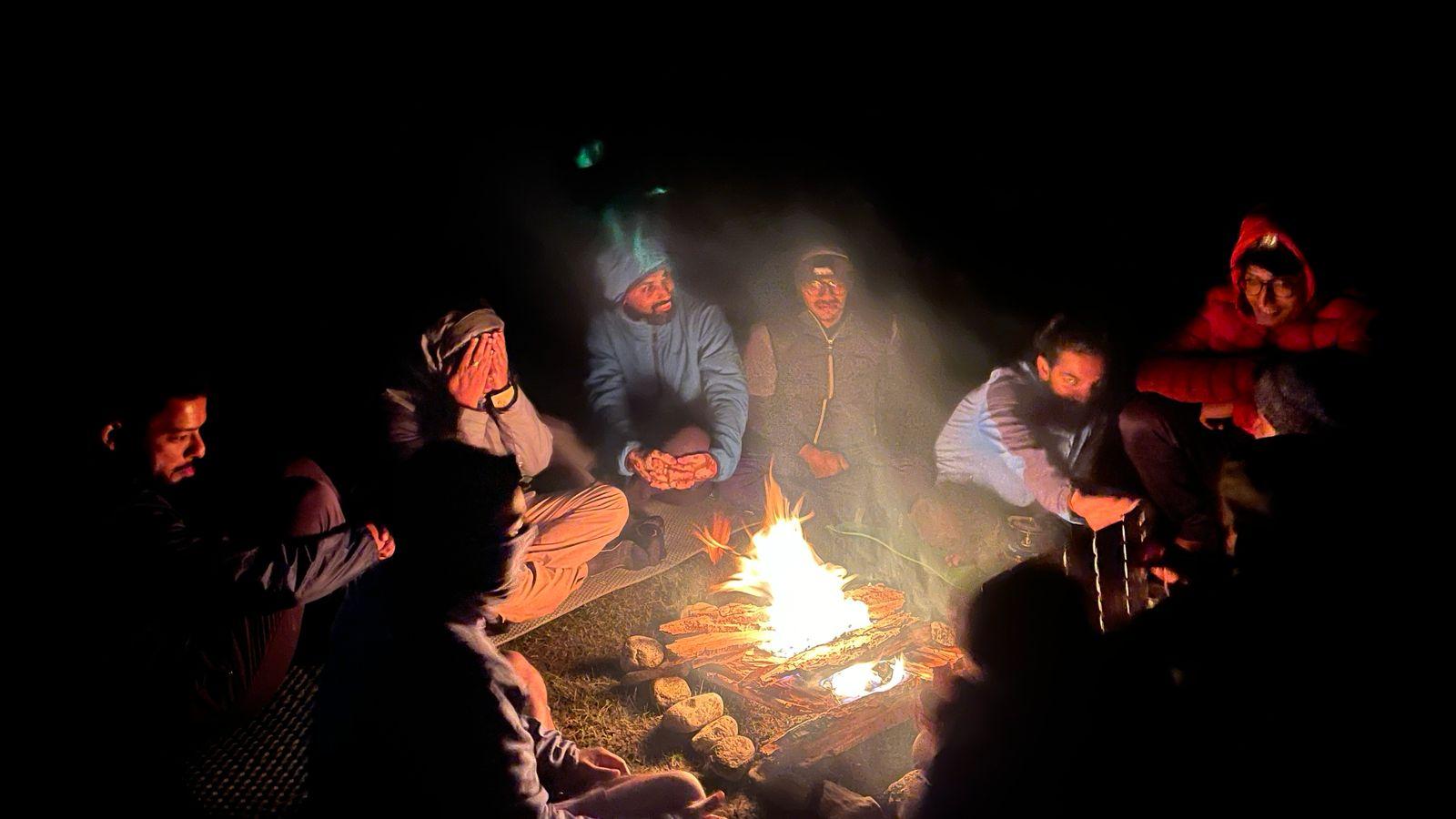
We were reminiscing about last year's all-boys backpacking trip(an unintentional one). The memories of the wild and unplanned adventure, and really enjoying the recollection of us roughing it, cooking together, making things up as we went along, and enjoying each other’s company.
And somewhere in that conversation, a simple thought came up:
Why don’t we do something like this for women, too?
This idea was an honest gut feeling that backpacking is an incredible way to be in the mountains.
Backpacking often sounds intimidating, even to people who’ve done multiple treks. Carrying everything on your back, cooking your own meals, and not having every detail handled for you feels both exciting and uncomfortable.
This expedition is about trying it anyway, without overthinking it.
Over five days, we travel from Devjani to Taluka, climbing the Kedarkantha summit and continuing across the long, open Phulara Ridge. It’s a rare combination of a summit and a traverse in one journey, and one that gives you a fuller, more spacious experience of the region.
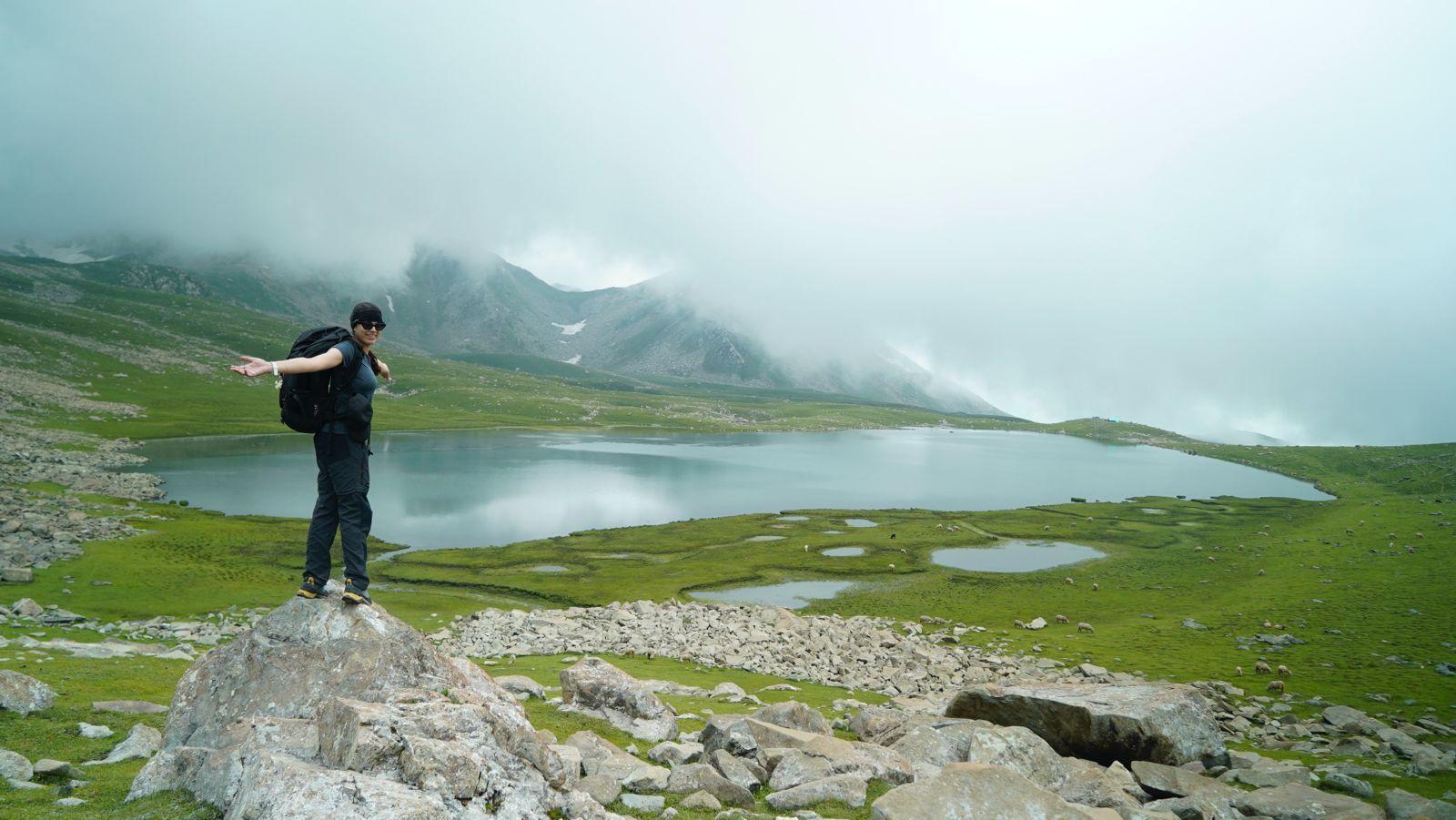
You carry your own backpack.
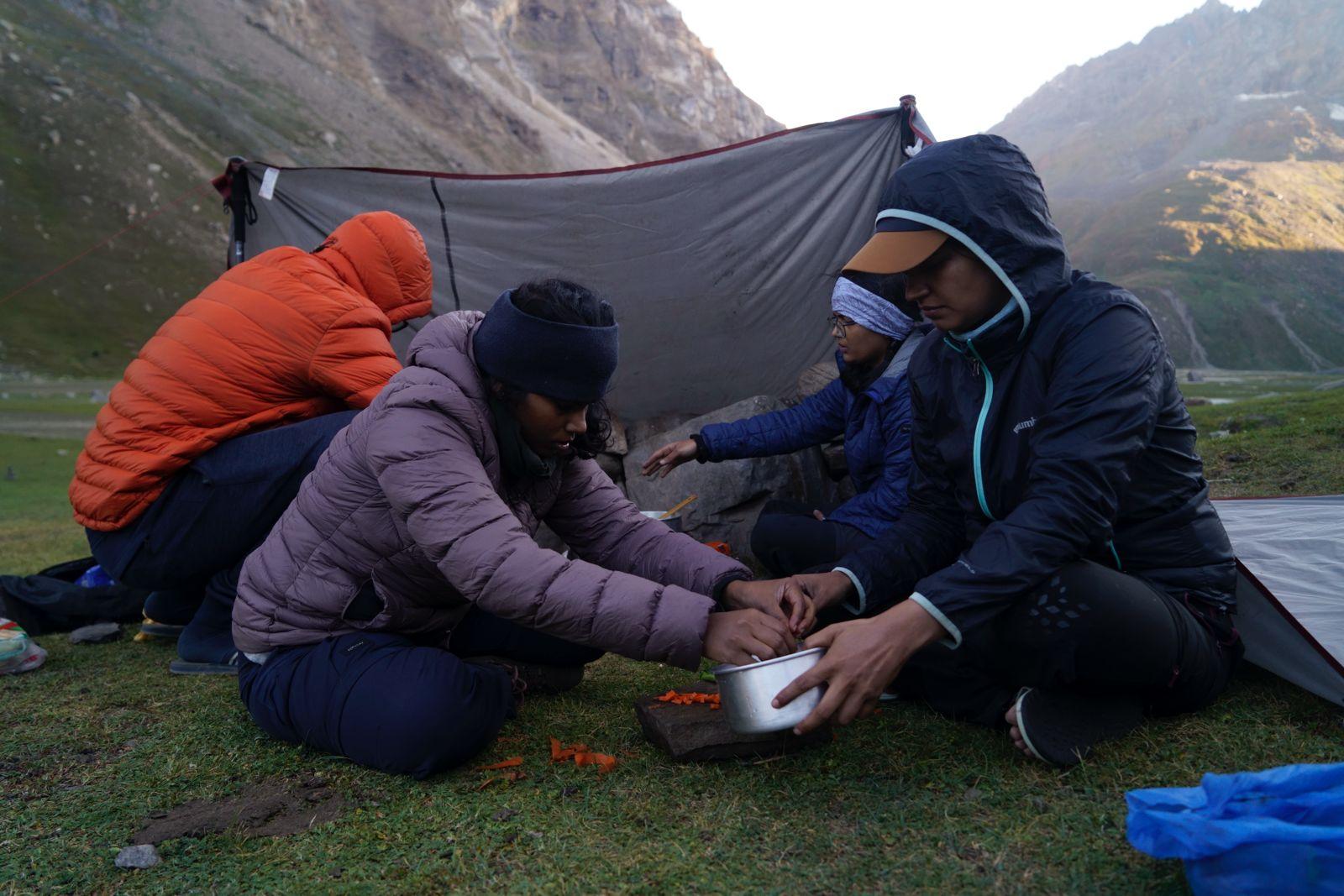
You cook meals together.
You walk ridges, descend forests, and slowly settle into the rhythm of backpacking.
Some days feel easy, while some might not, and that’s part of the fun.
Somewhere along the trail, backpacking starts to feel normal.
And once it does, it becomes hard not to enjoy it.
This all-women backpacking expedition exists for a simple reason.
We wanted to create a space where women can explore the outdoors the Odyssey way, by backpacking. Too often, when we talk about all-women teams, the conversation usually turns into breaking barriers or empowerment.
While we don’t deny any of that, the idea here is much simpler.
Because backpacking is fun.
And it’s a great way to be in the outdoors.
Day 1
Dehradun to Devjani | Becoming a Backpacking Team
Drive Distance: ~175 km
Time Taken: 6-7 hours
Elevation Profile: ~2,100 ft / 640 m → ~7,200 ft / 2,200 m
We start early from Dehradun and spend half of the day on the road, slowly climbing into the Yamunotri valley.
The drive isn’t long with winding roads, river crossings, and small towns giving way to quieter stretches. Phone networks fade in and out, traffic thins, and the day naturally slows down.
By afternoon, we reach Devjani.
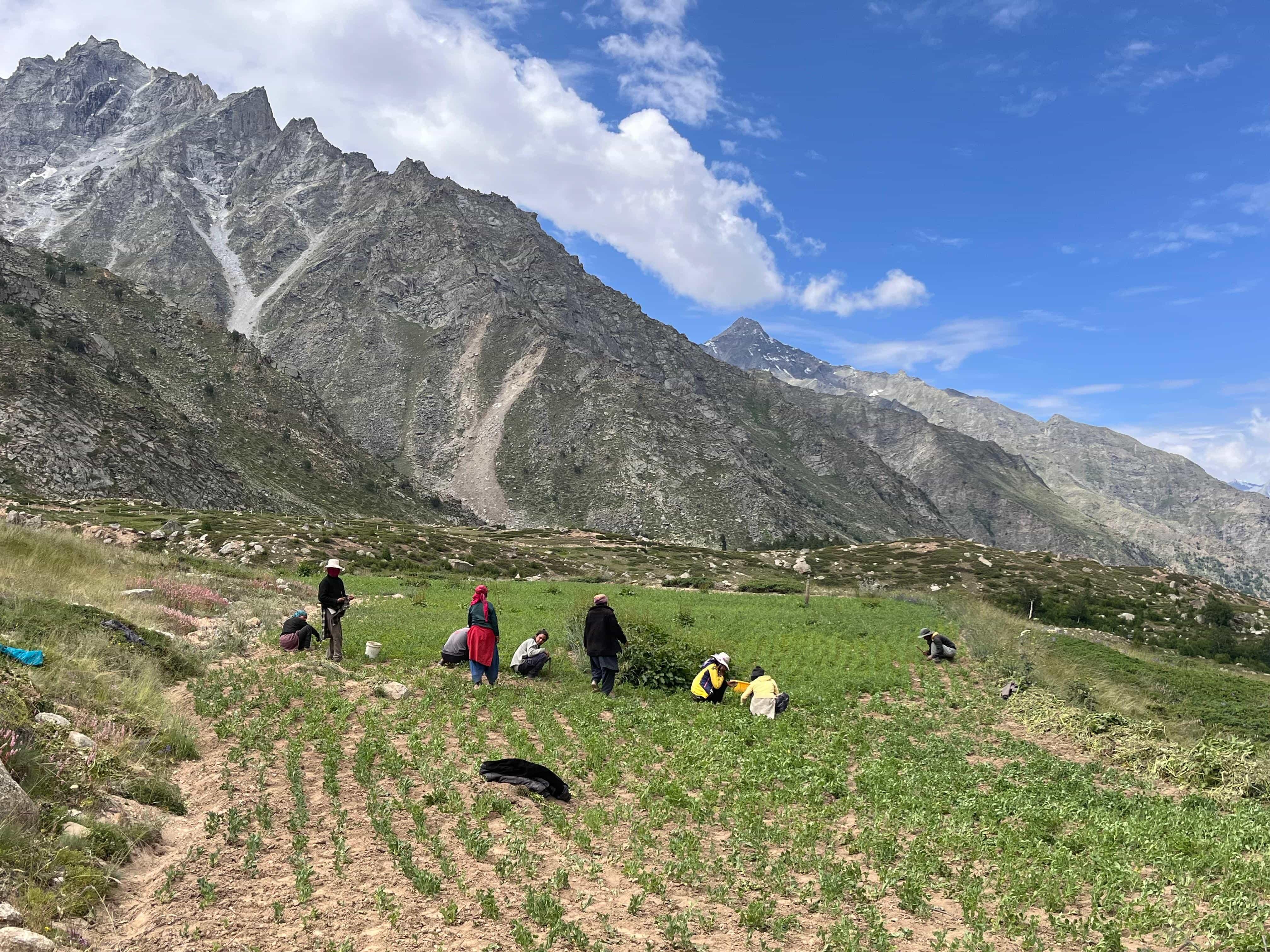
Devjani is unlike most mountain villages you’ve seen. There are no shops here. Just a handful of houses, warm locals, and expansive open views that will make you want to sit quietly. It’s the kind of place that doesn’t ask for attention, and that’s precisely what makes it special.
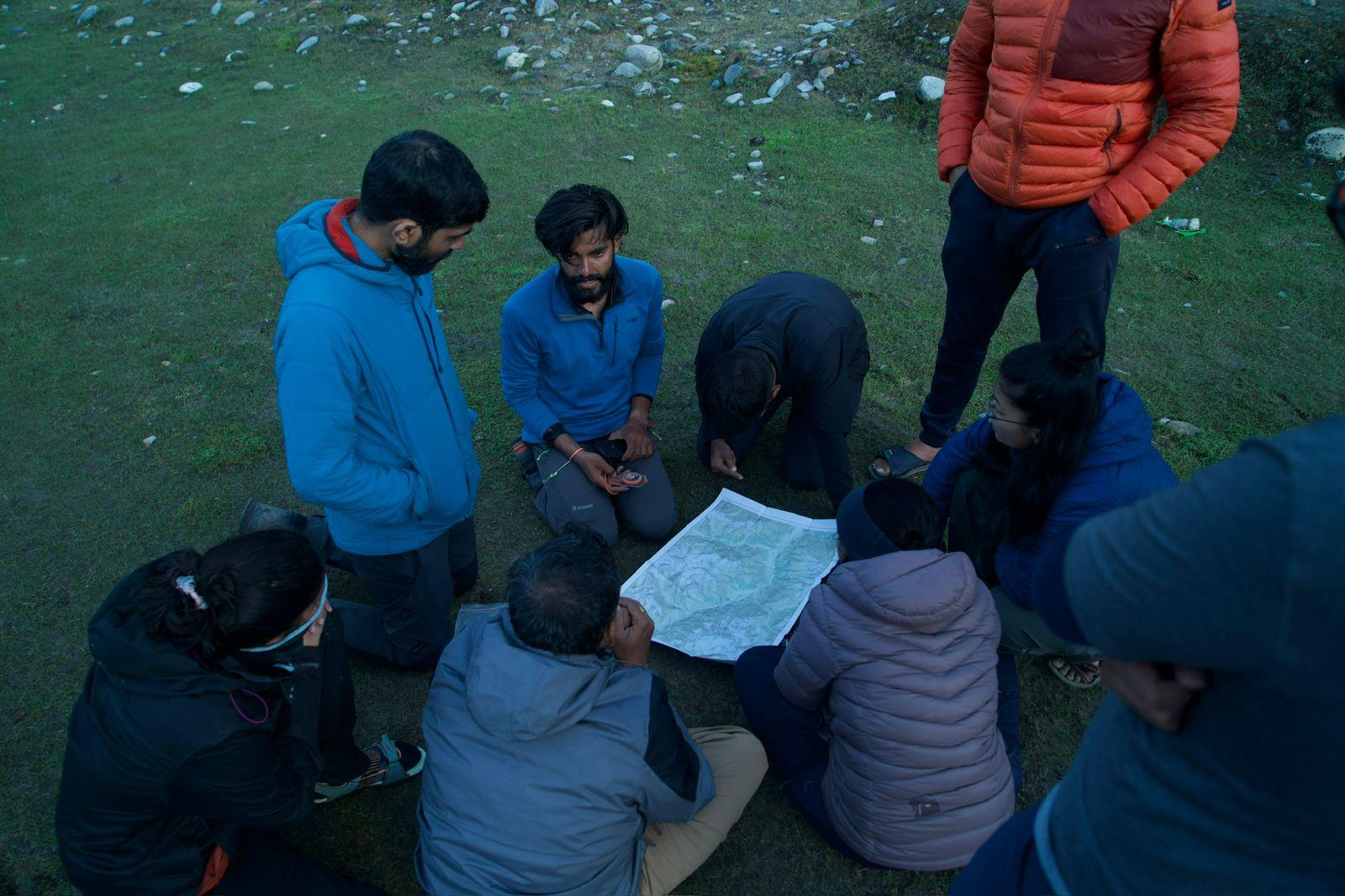
After settling in, we gather for our first briefing. This is where the expedition truly begins.
Together, we:
- Meet the team and understand how we’ll move as a group
- Go through ration planning for the days ahead.
- Divide group gear and shared equipment.
- Pack, unpack, and repack backpacks.
- Weigh loads and redistribute so everyone carries comfortably.
This process is slow, deliberate, and collaborative.
Backpacking is as much about preparation as it is about walking, and Day 1 is where that foundation is set.
By the end of the day, backpacks are sorted, roles feel clearer, and the group starts to feel like a team.
Backpacking stops being an idea and starts becoming the rhythm of the journey ahead.
Day 2
Devjani to Camp 1 (Forest Camp) | Settling Into Backpacking
Trek Distance: ~8–10 km
Time Taken: 5–6 hours
Elevation Profile: ~2,200 m / 7,200 ft → ~2,800–2,900 m / 9,200–9,500 ft
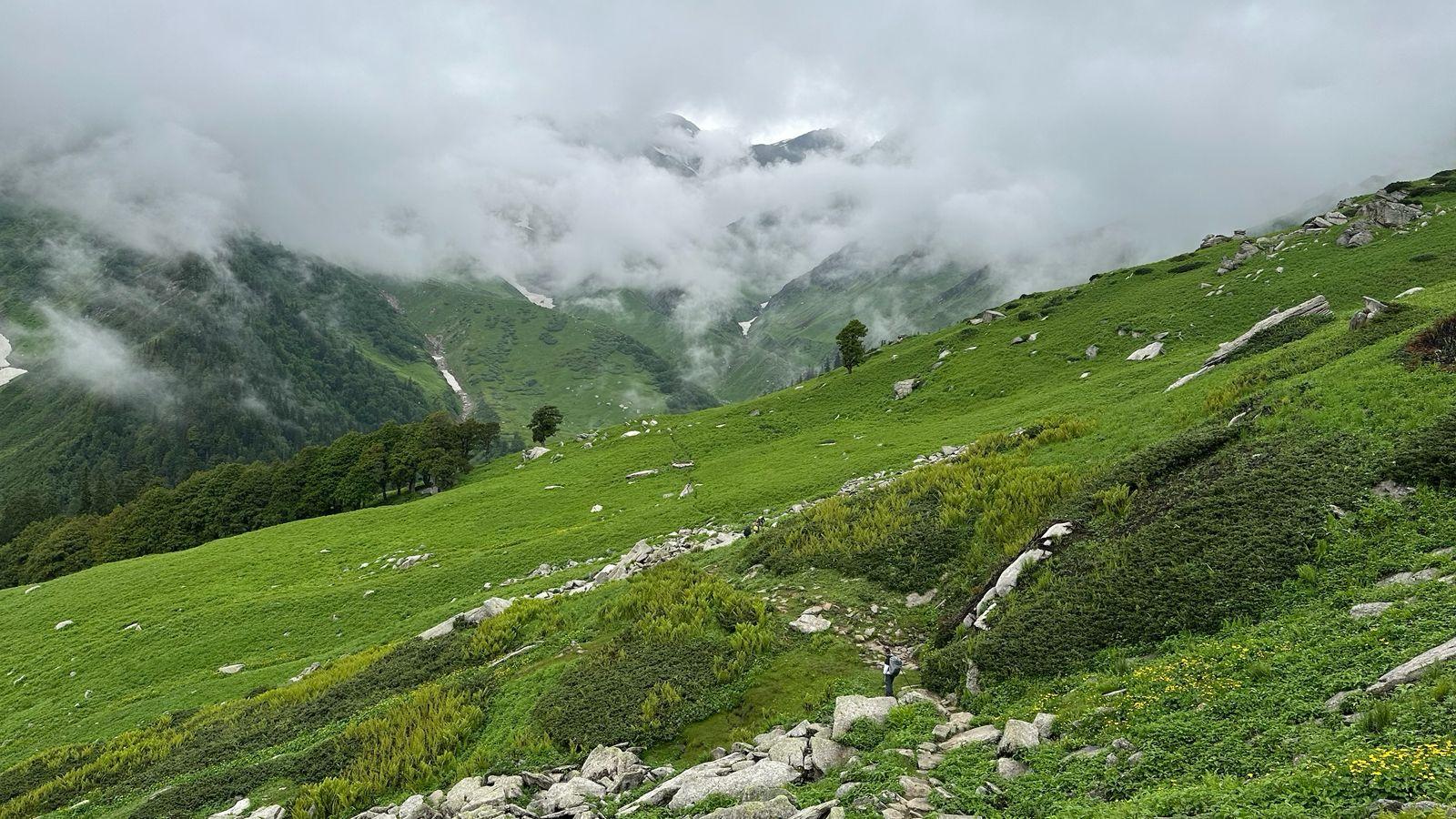
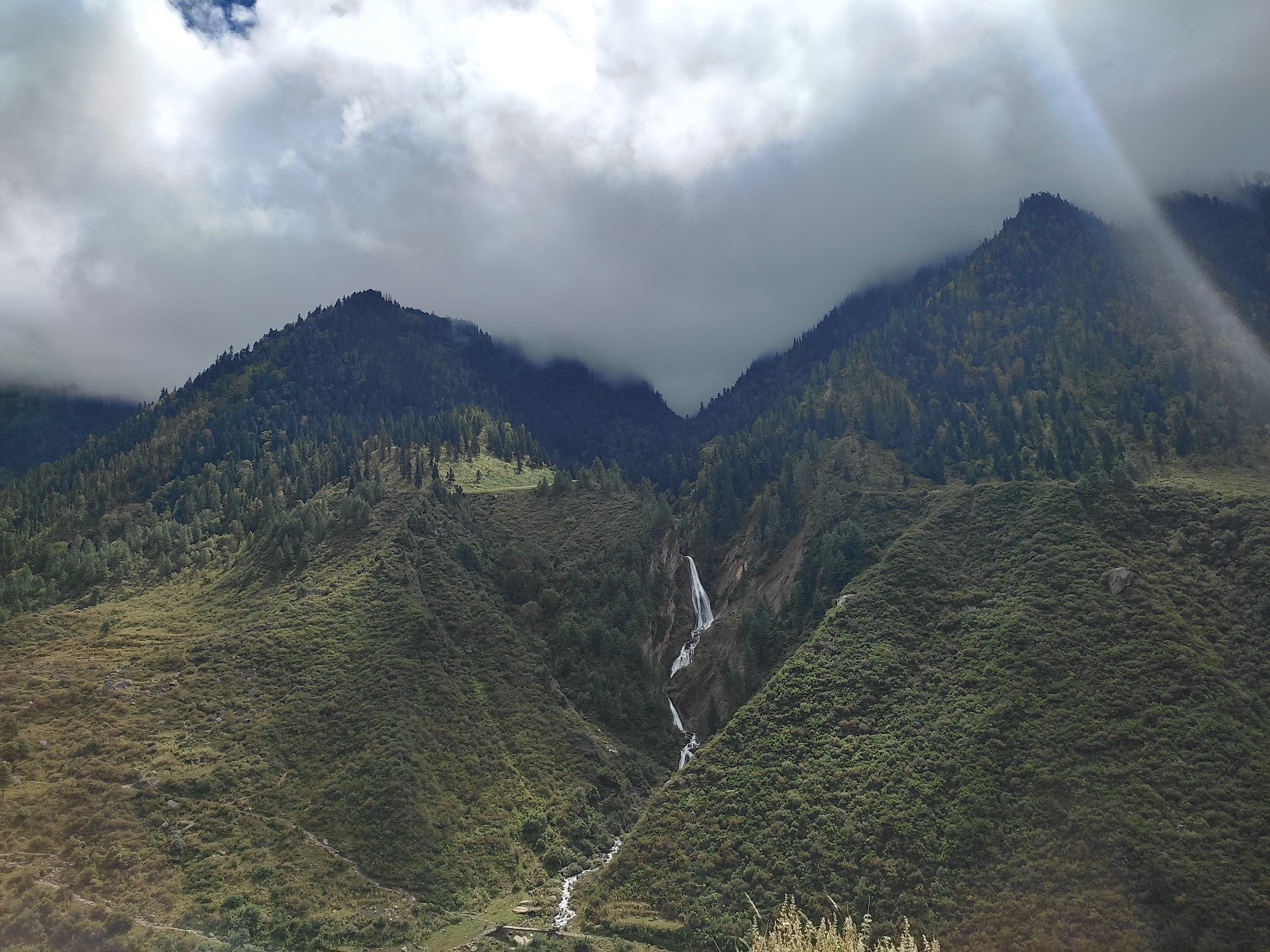
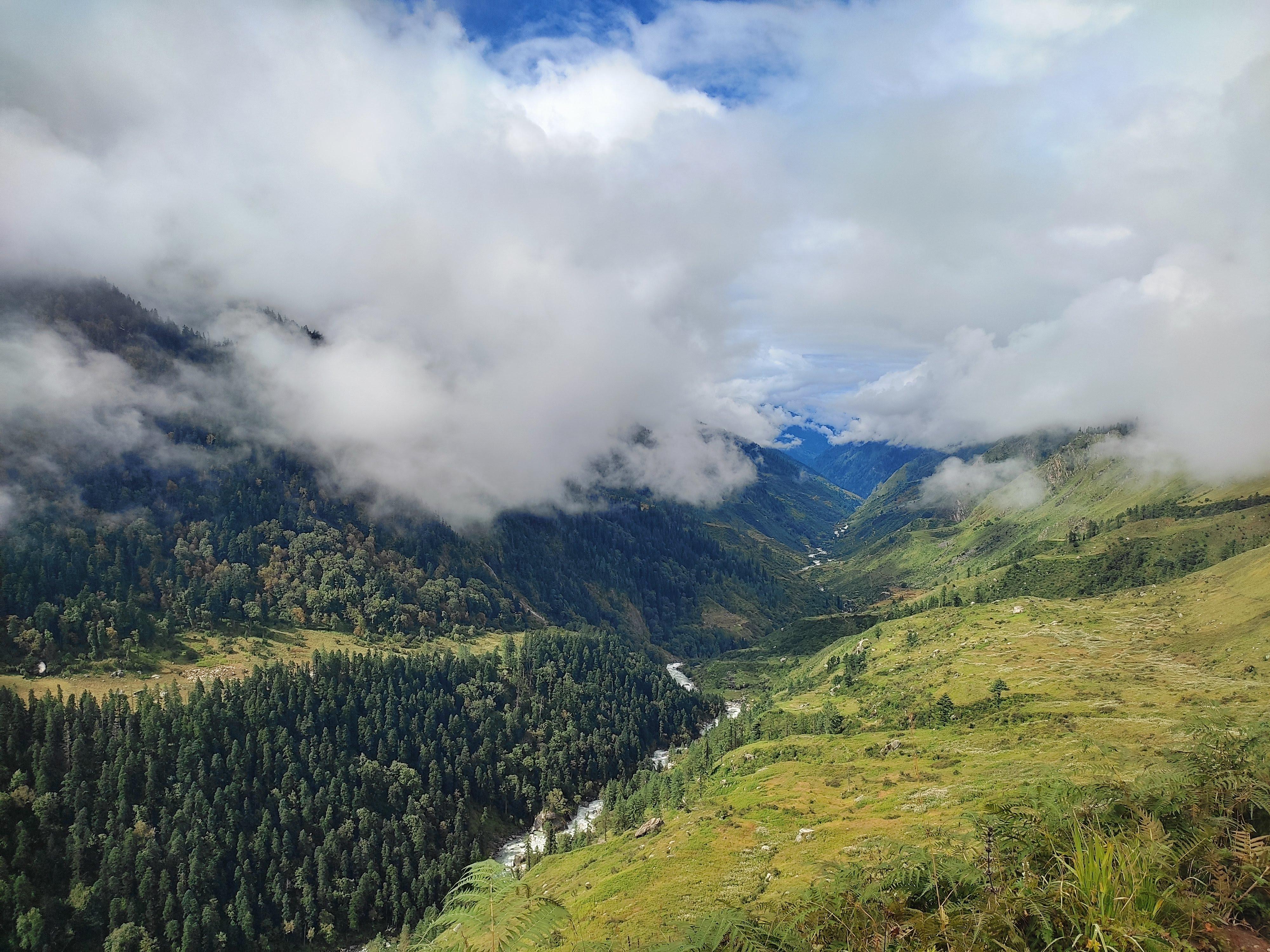
We start the day by stepping into what feels like a classic Himalayan forest, tall pines, stretches of oak, and open clearings that appear just often enough to pause and look back at how far we’ve climbed.
The trail climbs steadily, but it’s not the gradient that makes the day enjoyable; it’s the load on our backs.
Carrying 10–12 kilos changes the way you walk. You start noticing your natural pace, how often you need water, when a layer goes on or comes off, and how minor adjustments make a big difference over a long day.
This is where backpacking quietly starts teaching you things:
- How to manage effort instead of pushing
- How to walk comfortably with a weight
- How to keep breaks short and useful
- How to move as a group without forcing speed
The forest keeps things calm. Conversations come and go, the trail does its job, and the day settles into a steady rhythm of walking and resting.
By afternoon, we reach Camp 1, a well-known forest clearing tucked inside a ring of trees. There’s a nearby water source, flat ground for tents, and just enough open space to spread out without feeling exposed.
We pitch our own tents, set up a small cooking area, collect water, and get started on food. As stoves come out and bags are opened, something funny starts to happen.
Teammates begin getting creative, pushing to use up ingredients from their packs, mixing things together, and quietly hoping their backpack feels a little lighter the next morning.
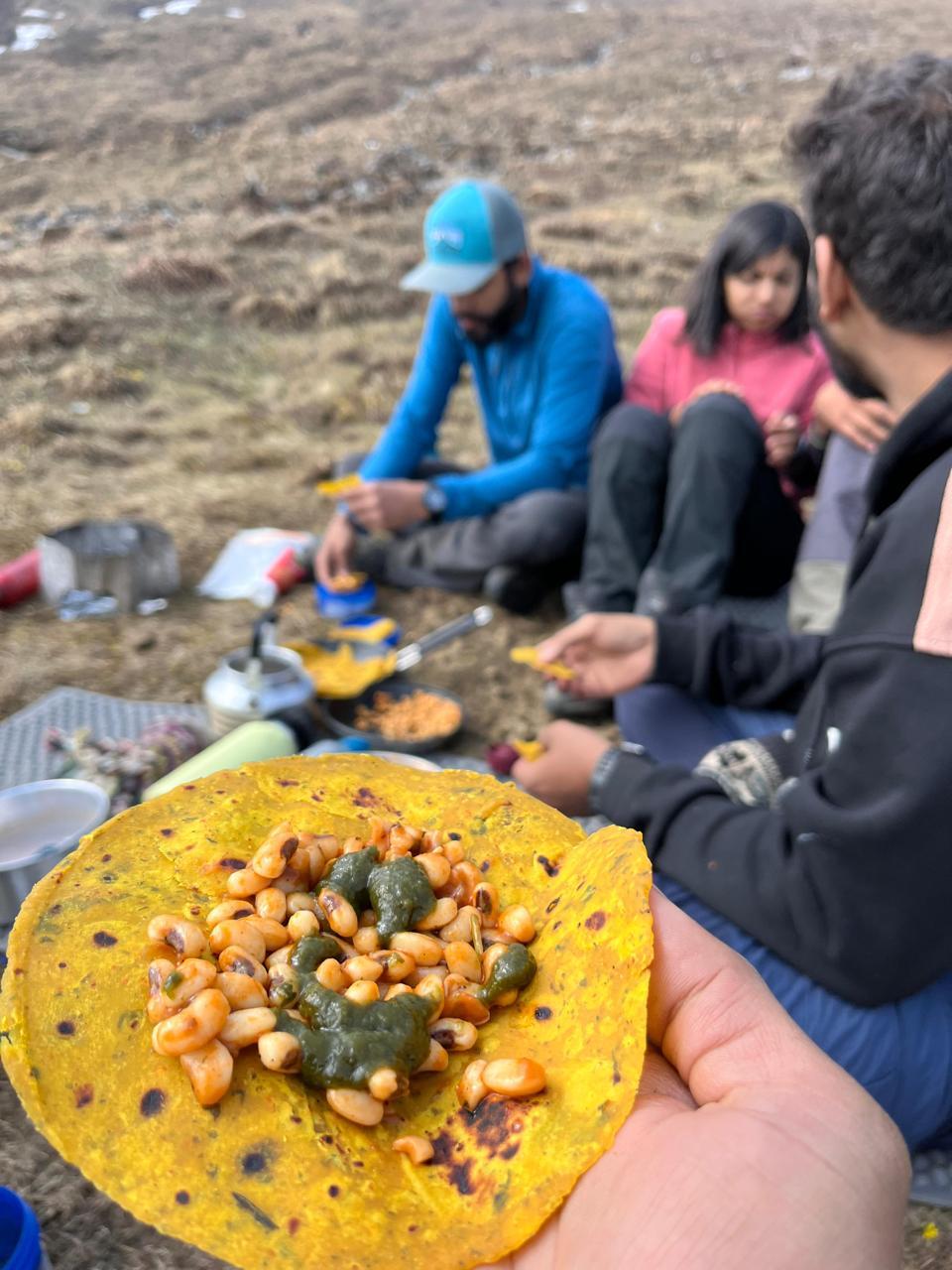
What comes out is a proper backpacking meal, simple, warm, and surprisingly satisfying. Far from comfort food, but exactly what you want after a day of walking with a load on your back.
This is usually the moment it clicks for most people:
This trek isn’t being run for you; you’re part of running it.
Day 3
Camp 1 to Bhoj Gadi via Kedarkantha Summit | Up, Over, and Through
Trek Distance: ~10–12 km
Time Taken: 7–9 hours
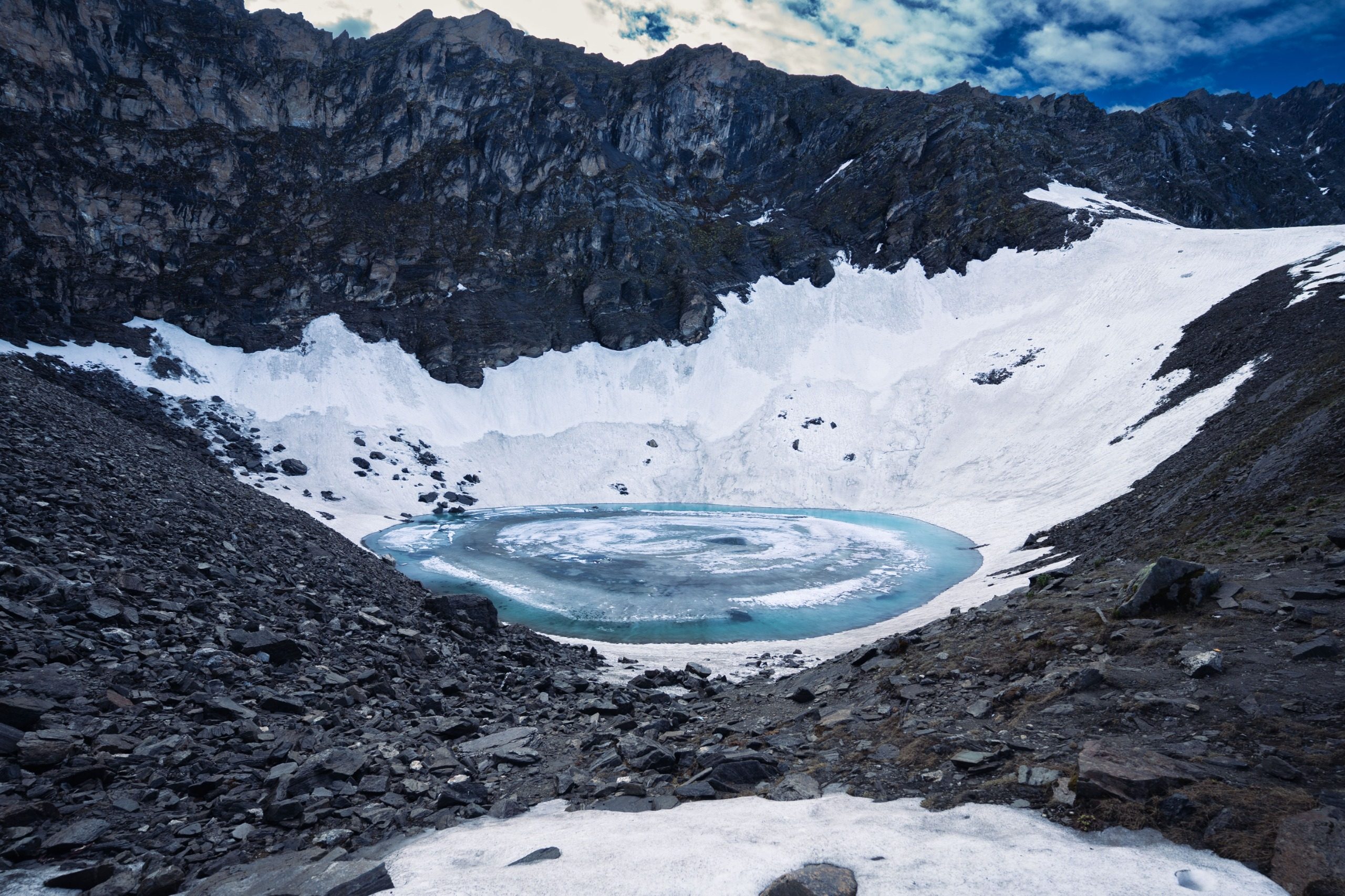
Elevation Profile: ~2,800–2,900 m / 9,200–9,500 ft → Summit: ~3,800 m / 12,500 ft → Camp: ~3,400 m / 11,150 ft
The day starts early.
Packs are comparatively lighter this morning, but the rhythm of backpacking stays the same: steady steps, controlled breathing, and frequent check-ins.
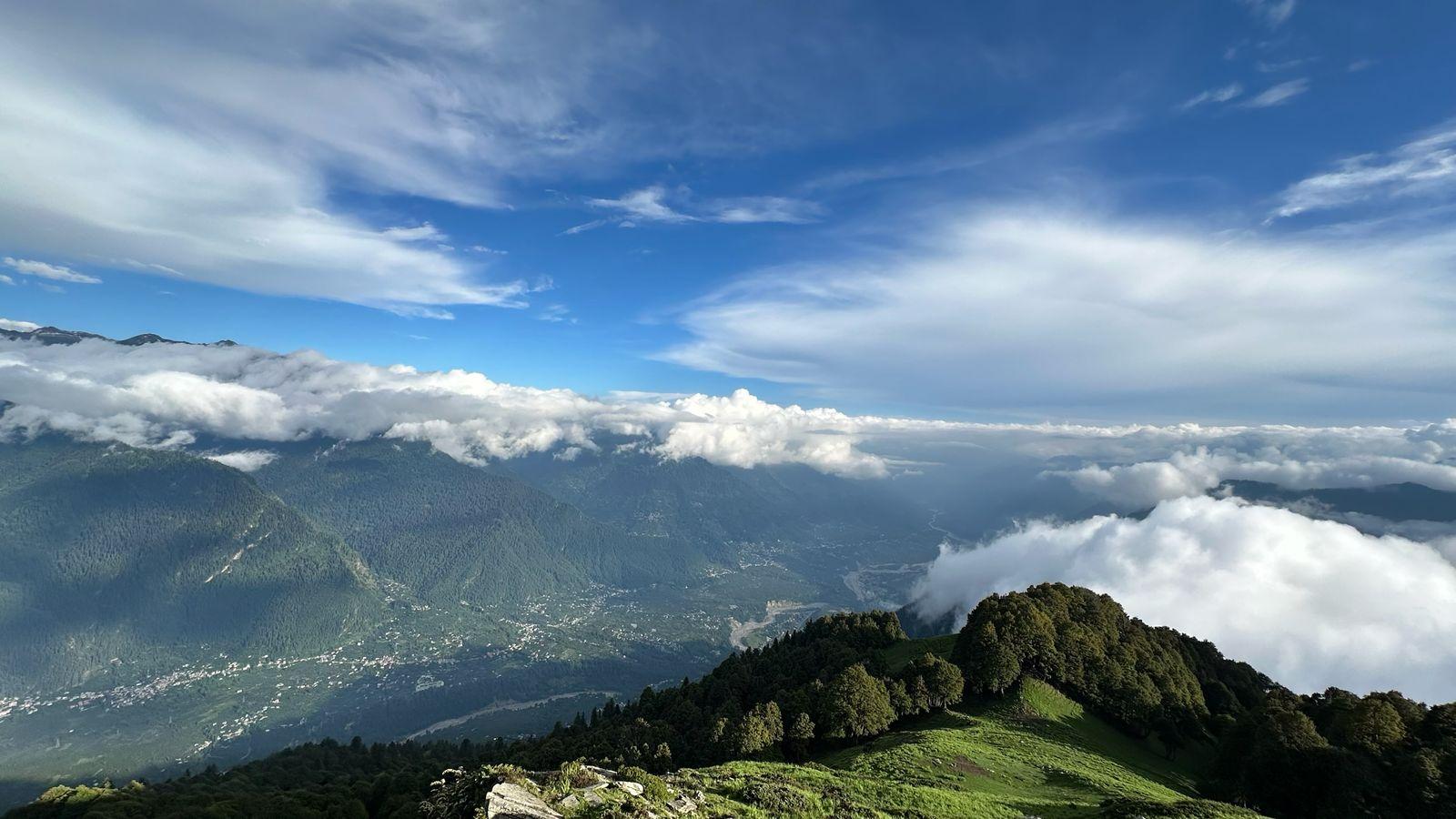
The climb unfolds gradually. The forest gives way to open slopes, and the views stretch farther with every turn.
Reaching the Kedarkantha summit feels spacious rather than rushed. We take time to soak it in, take it in, and share the moment with the team. It’s a high point of the journey, but not the end of the day.
Either breakfast or an early lunch is cooked on the trail, depending on conditions. For many, this is a new experience. Pulling out stoves, heating water, and eating a warm meal right there on the mountainside is something we do often while backpacking.
After the summit, we descend on the Phulara side, leaving the familiar trail behind. This is where the traverse truly begins.
As we continue towards Bhoj Gadi, the day stretches on. Legs feel the effort, breaks become more intentional, and the group leans into each other’s energy.
Backpacking shows its quieter side here: patience, consistency, and moving forward without fuss.
By the time we reach camp, the mood is calm and satisfied. Tents go up, dinner is cooked, and the group settles in for the night.
The summit is behind us.
Ahead lies the ridge.
Day 4
Bhoj Gadi to Pushtara via Phulara Ridge | Walking the Long Way
Trek Distance: ~12–14 km
Time Taken: 6–8 hours
Elevation Profile: ~3,400 m / 11,150 ft → ~3,500 m / 11,480 ft (with gentle undulations)
Day 4 is about movement.
There’s no early rush this morning. Packs are loaded, camp is cleared, and we step out knowing it’s going to be a long, steady day because of the distance.
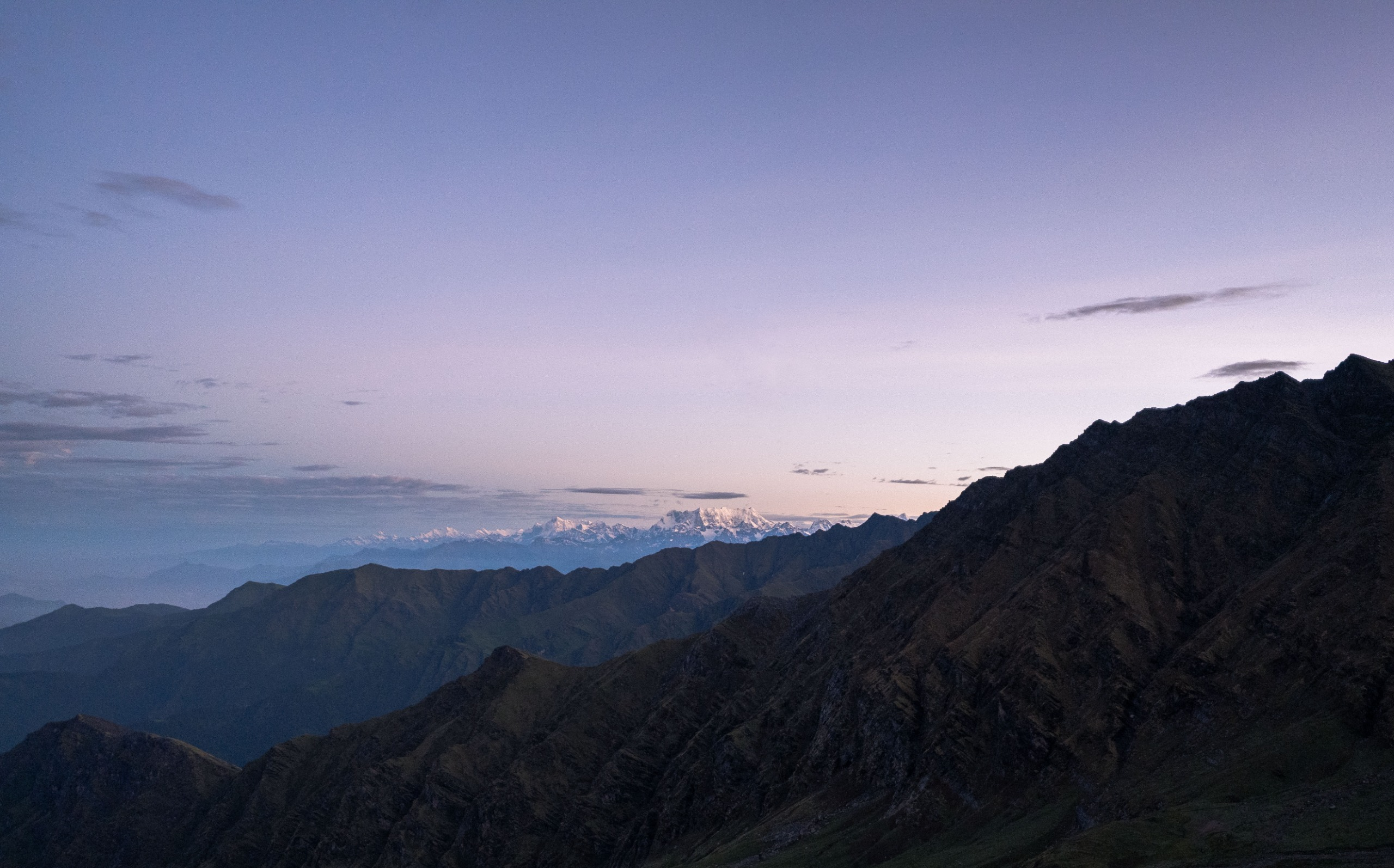
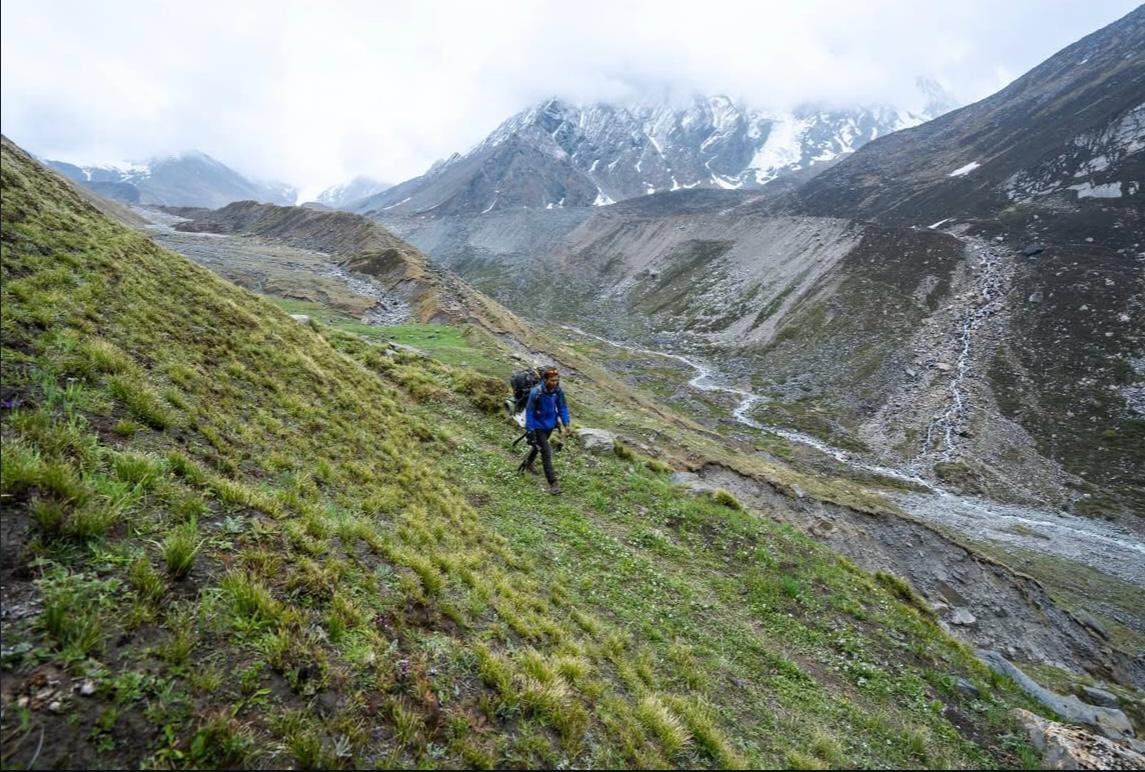
We gain the Phulara Ridge soon after leaving camp, and once we’re on it, the landscape changes completely. The forest drops away, the trail opens up, and the ridge stretches out in front of us like an invitation to keep walking.
You walk for long stretches without needing to stop, settling into a rhythm where your pack feels like part of you rather than something you’re carrying.
Lunch is usually cooked on the ridge or just off it, wherever the views ask us to pause.
With fewer landmarks and no obvious “goal” like a summit, the day becomes less about getting somewhere and more about being on the trail.
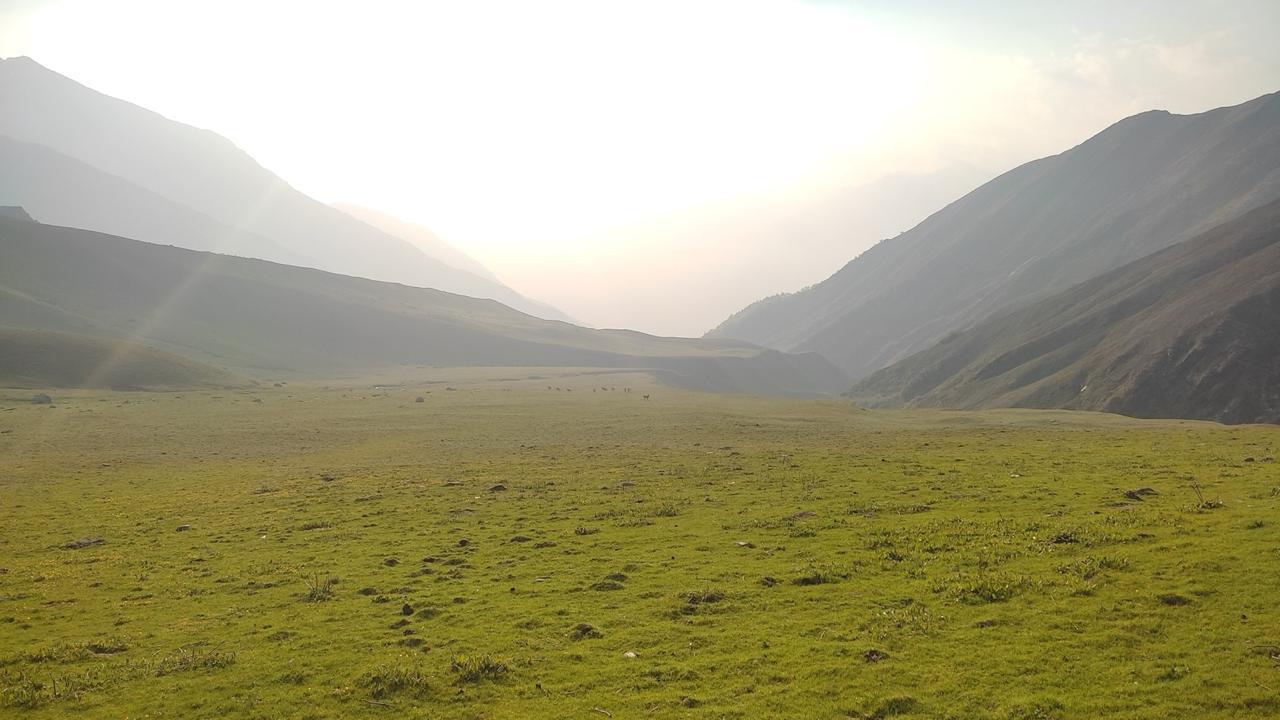
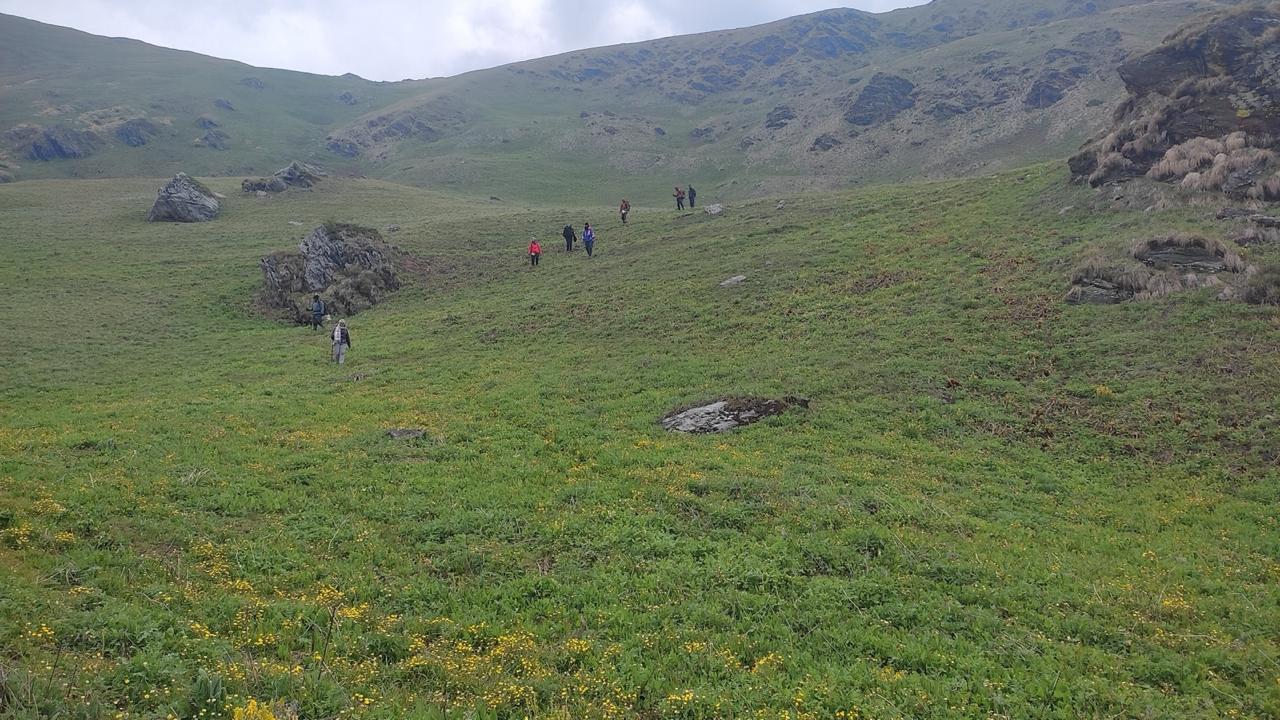
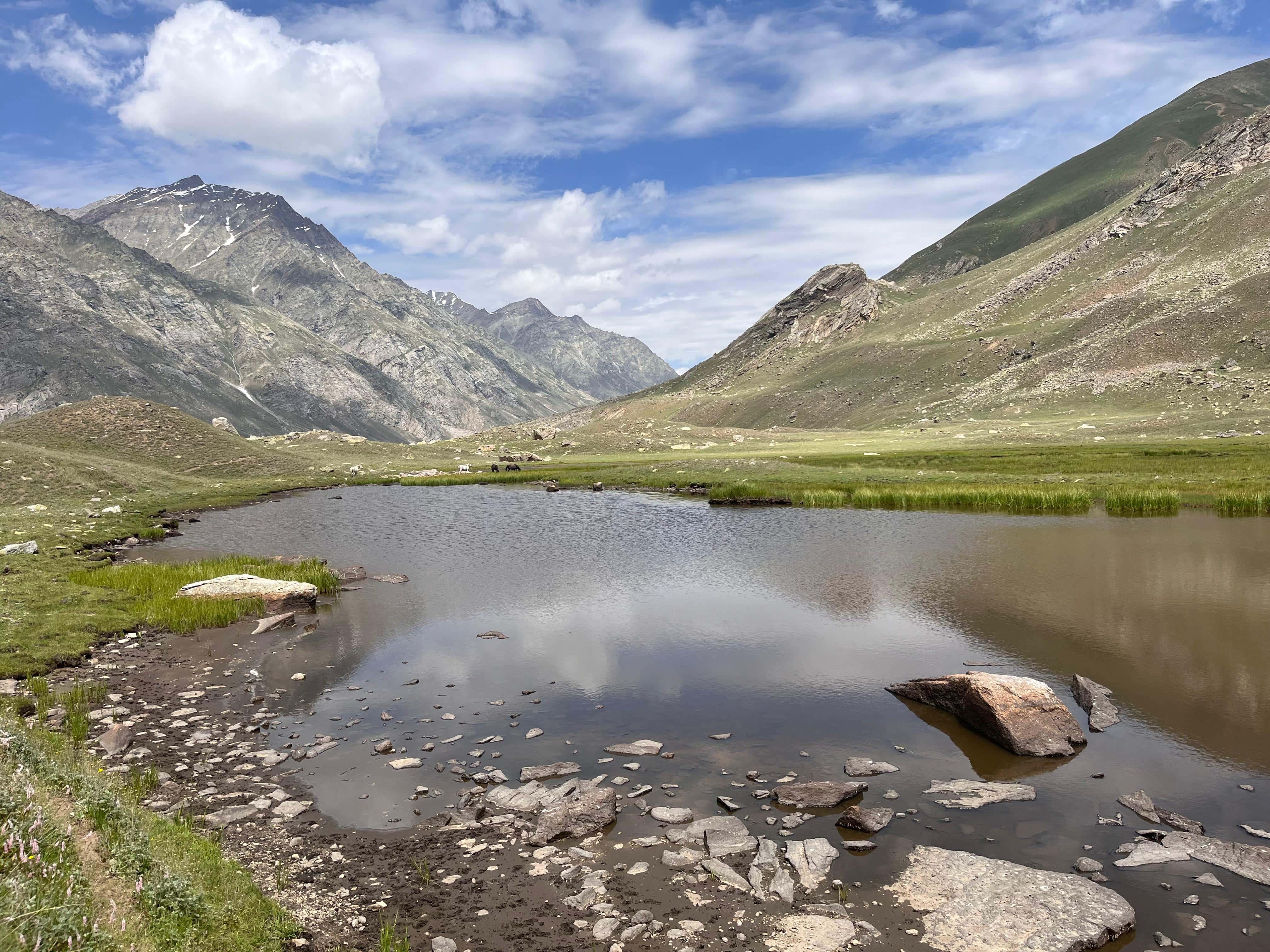
By afternoon, we descend gently into the expansive meadows of Pushtara, our campsite for the night. There’s a quiet sense of satisfaction in having walked a long way under your own steam.
Dinner is unhurried. The sky changes colour slowly. And for many, this becomes their favourite day of the expedition, not because it was complicated or dramatic, but because it felt expansive and straightforward.
Day 5
Pushtara to Taluka | Walking Out
Trek Distance: ~8.5 km
Drive Distance: ~190 km
Time Taken: 4-5 hours trekking + drive
Elevation Profile: ~3,500 m / 11,480 ft → ~2,100 m / 6,900 ft
We wake up to our last morning on the trail.
There’s a familiarity to the routine now, packing tents, loading backpacks, and moving around camp without much discussion. What felt new on Day 1 feels normal by Day 5.
The trail drops steadily from Pushtara, winding back into forests as we begin the long descent toward Taluka.
Knees take over from lungs today, and the pace naturally slows. It’s a good day to walk quietly, letting the forest do most of the talking.
As we lose altitude, the signs of habitation slowly return. Paths widen, trees thin out, and the sound of water and village life creeps back in. By the time we reach Taluka, the backpacking journey feels complete.
Packs come off for the last time.
From here, we drive back to Dehradun, the road feeling louder and faster than it did a few days ago.
Conversations drift between memories from the trail and plans waiting back home.
There’s no dramatic ending to a backpacking trip.
Just the quiet satisfaction of having walked in, walked across, and walked out, carrying everything you needed, and leaving with a little more than you arrived with.
Our Expectations from Participants
This expedition is an introduction to backpacking, the Odyssey way.
For five days, you’ll carry your own backpack, move as a team, cook together, and share responsibility for how the journey unfolds. While our leaders are there to guide and support you, this experience works best when everyone shows up prepared and involved.
Here’s what we expect from you before and during the expedition:
1. Willingness to Participate Fully
Backpacking is not a “sit back and be taken care of” experience.
You’ll be involved in:
- carrying your own gear
- setting up and packing tents
- helping with cooking and camp routines
- making small decisions as a group
2. Team Mindset
This journey is built around shared effort.
Some days will feel easier; others will feel longer. What matters is moving together, with patience, respect, and open communication.
Supporting each other on the trail, during long walks, and around camp is a big part of what makes backpacking enjoyable.
A positive, easygoing attitude goes a long way in the mountains.
3. Respect for the Outdoors
We’ll be travelling through forests, ridgelines, and high meadows that are fragile and relatively untouched.
We expect every participant to:
- follow Leave No Trace principles
- respect local communities and customs
- minimise waste and care for shared spaces
Minimum Fitness Required
What You Should Be Able to Do Before the Trek
This is a backpacking-style expedition, which means long days of walking with a loaded pack. You don’t need to be exceptionally fast or athletic, but your body should be prepared for sustained movement and load-bearing.
To comfortably join this expedition, you should meet the following benchmarks.
Endurance
You should be able to:
- Jog or brisk walk 5 km at a comfortable pace
- Climb 10–12 floors without needing long breaks
- Go for a 2–3 hour local hike or trek while carrying a 4-6 kg backpack
Strength
You should be able to:
- Perform 20–25 bodyweight squats and 10–15 lunges per leg with reasonable control.
- Hold a plank for 60 seconds and a side plank for 30 seconds on each side.
- Perform 10–15 push-ups, or a modified version, comfortably.
- Carry a 10 kg backpack up and down stairs for 10–15 minutes without strain.
Meeting these benchmarks helps ensure that your body can handle:
- long hours of walking
- repeated uphill and downhill movement
- and the constant load-bearing nature of backpacking.
These are not pass/fail tests, just practical indicators of readiness.
If you’re close to these benchmarks and training consistently, you’re likely on the right track.
If you’re unsure about your fitness level, we’re happy to help you assess or guide you on preparation before the trek.
How to Train for Backpacking Expeditions
Backpacking feels much better when your body is prepared.
We recommend 6–8 weeks of simple, consistent training before the expedition.
Focus on three things:
1. Endurance
- Brisk walking, jogging, cycling, or stair climbing
- Aim for 3–4 sessions a week
- Gradually increase duration rather than intensity
2. Strength
- Legs: squats, lunges, step-ups
- Core: planks, dead bugs, carries
- 2–3 sessions a week are enough
3. Walking with a Load
- Practice walking with a backpack
- Start light and gradually increase weight
- This helps your shoulders, hips, and back adapt
We’ll share a simple, structured training plan after registration to help you prepare without overthinking it.
The goal isn’t to be perfect, to arrive feeling comfortable, confident, and ready to enjoy the journey.
Inclusion
Exclusion
Is this trek only for women?
Do I need prior backpacking experience to join?
Is this a supported trek like regular treks?
Participants carry their own backpacks, help with cooking, set up tents, and share camp responsibilities. Trek leaders guide and support the team, but the experience is intentionally hands-on.
How heavy will my backpack be?
Will there be porters or offloading options?
What kind of accommodation can I expect?
How are meals managed on this trek?
Some meals are cooked at camp, while others are prepared on the trail. Ingredients, cooking systems, and fuel are provided.
How cold does it get on the trek?
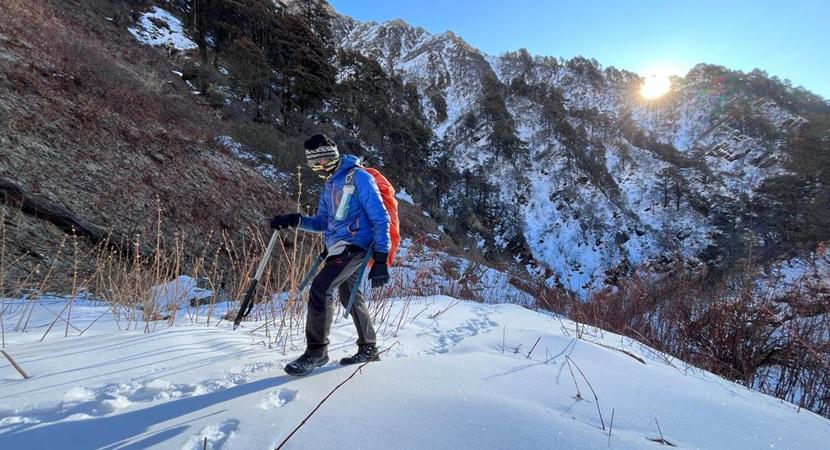
Cold mornings and nights
Snow patches at higher camps
Pleasant walking temperatures during the day
A detailed packing list will be shared to help you prepare properly.
What happens in case of bad weather or unforeseen conditions?
adjust daily plans
change campsites
modify the route
if required for safety. These decisions are taken in the group's interest.
What if I feel unsure about my fitness or readiness?
Is this trek suitable if I’m nervous about camping or cooking outdoors?
How big is the group?
What about toilets on the trail?
We follow a Leave No Trace approach:
Toilet routines are done away from campsites and water sources
Trek leaders will guide you on where and how to go
Hygiene, privacy, and waste disposal practices will be clearly explained
To make this more comfortable, we carry a lightweight portable toilet tent for privacy at camps.
Many participants feel unsure about this initially, but with guidance and a supportive group, it becomes manageable very quickly.
SELECT DATE TO REGISTER
Thank You!
Your form has been submitted successfully. We'll get back to you soon.
₹ 15,499 + 5% GST
