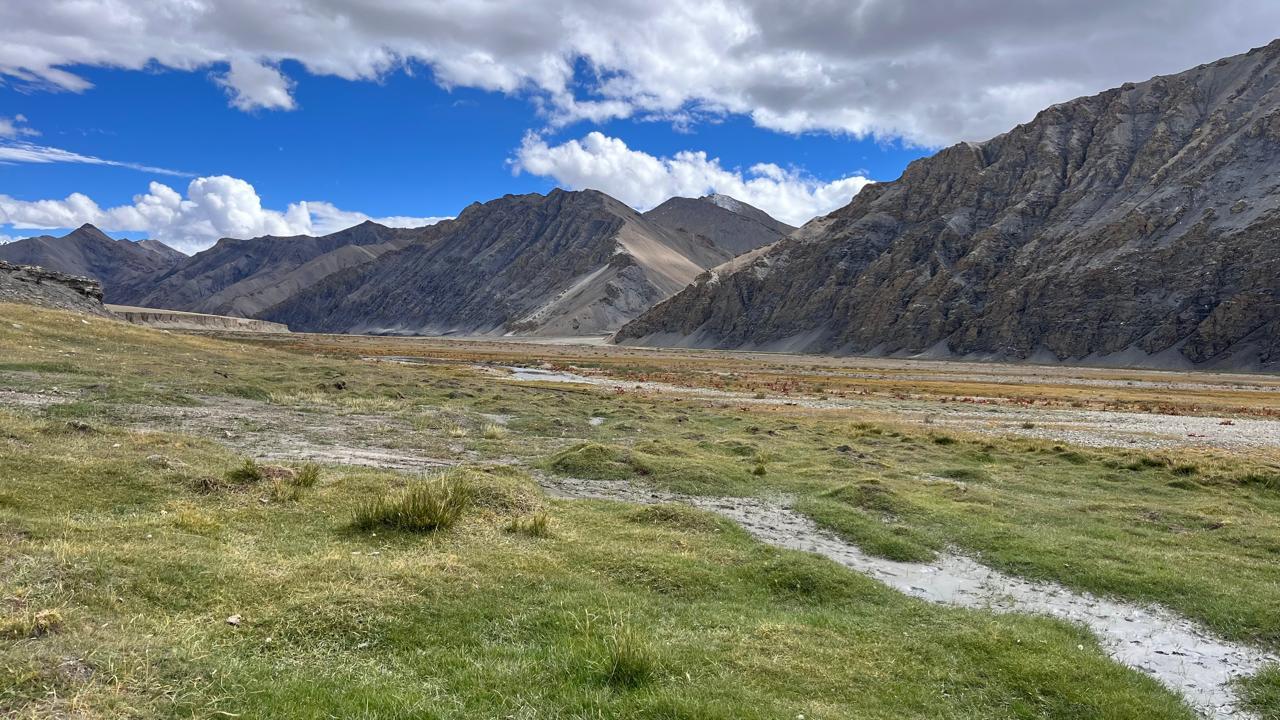
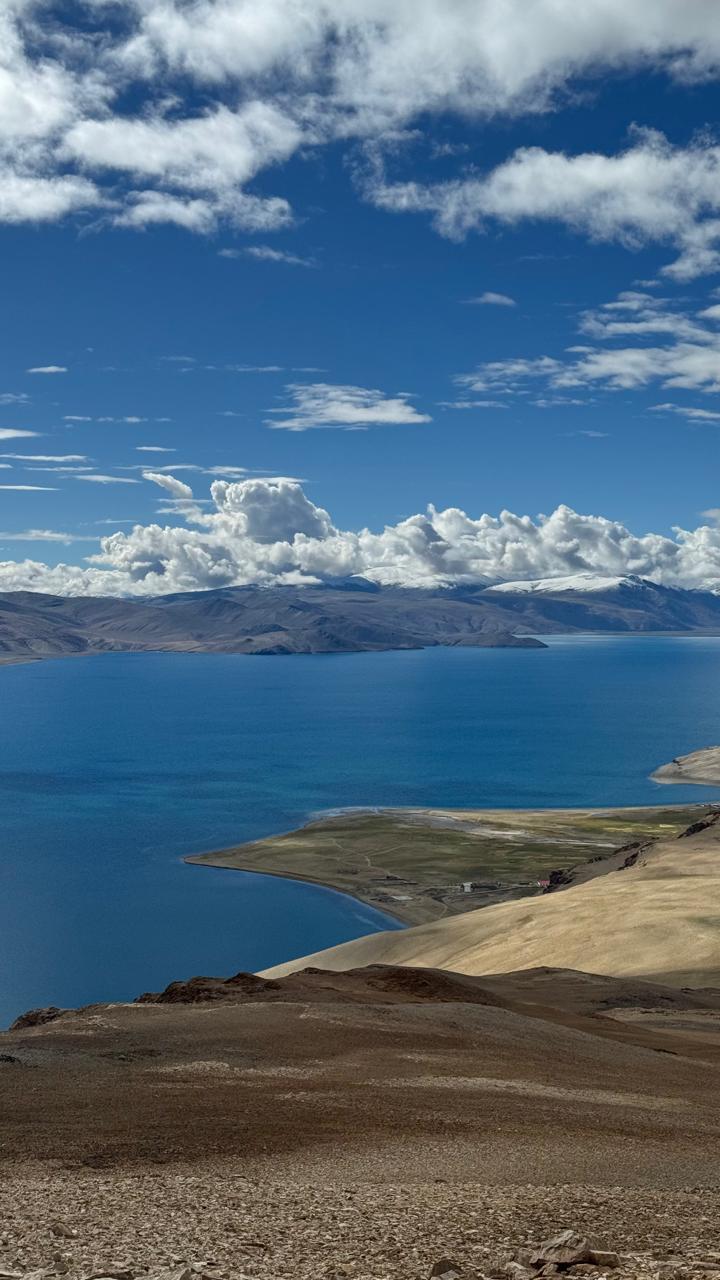


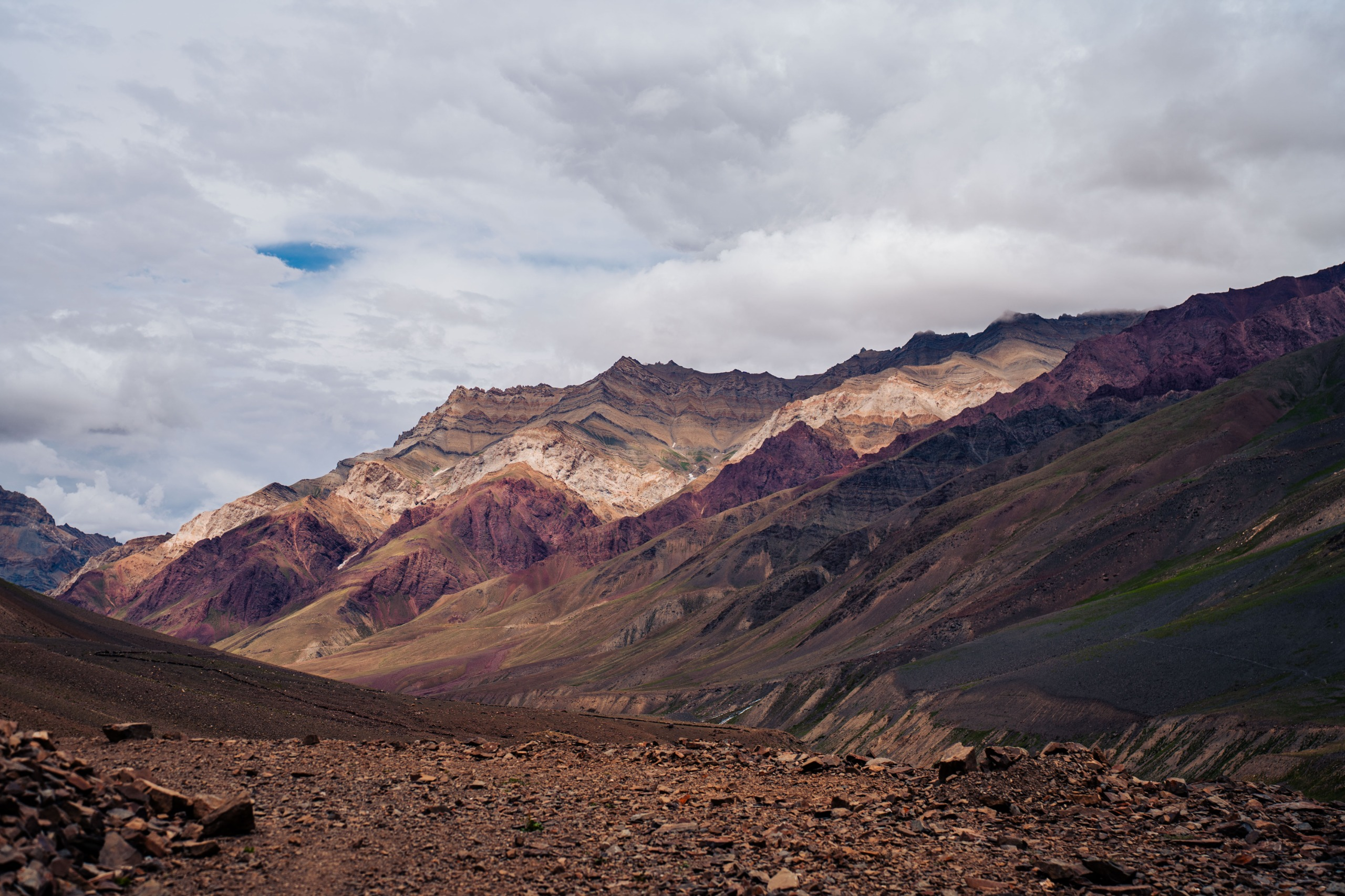
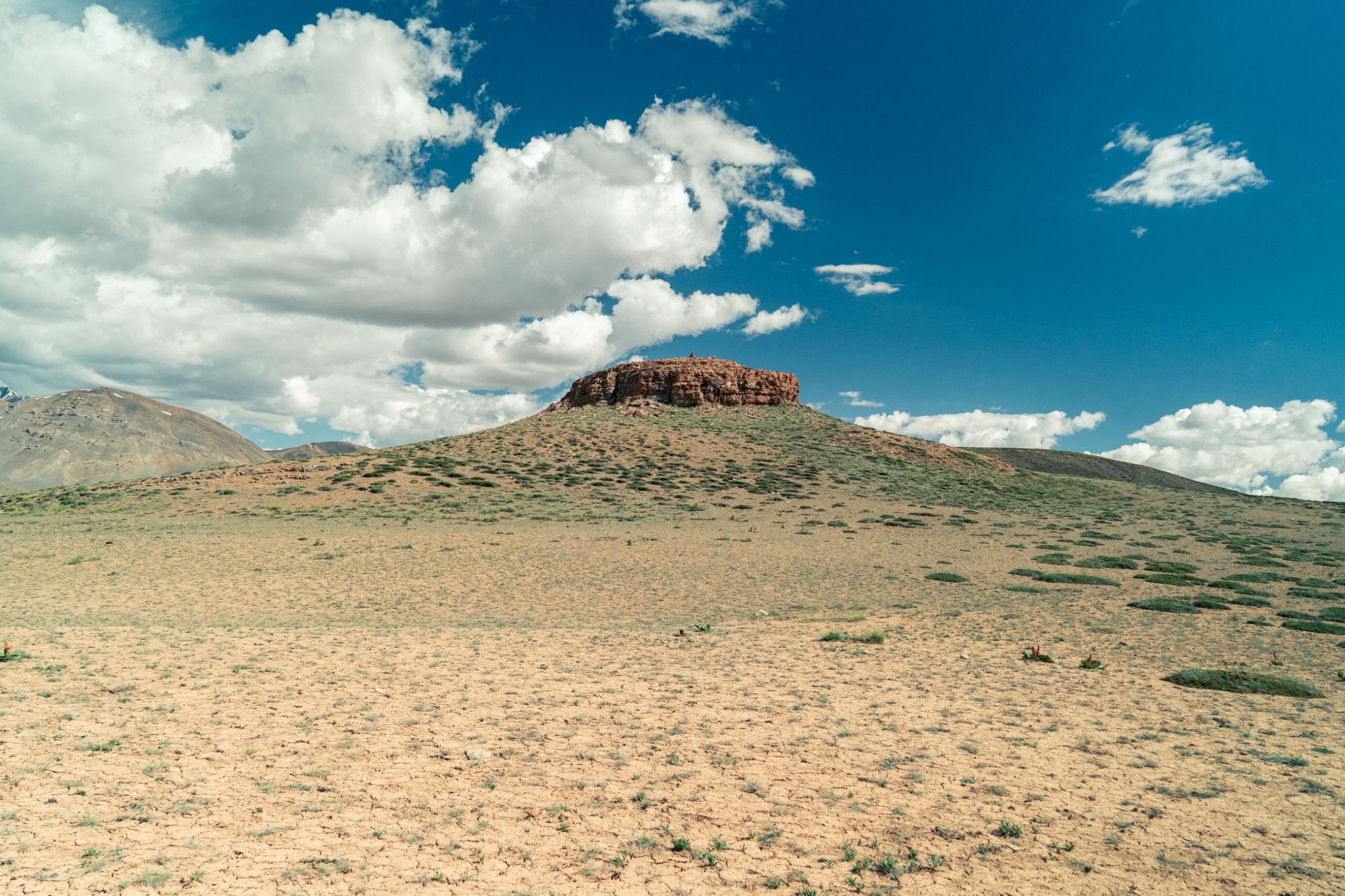
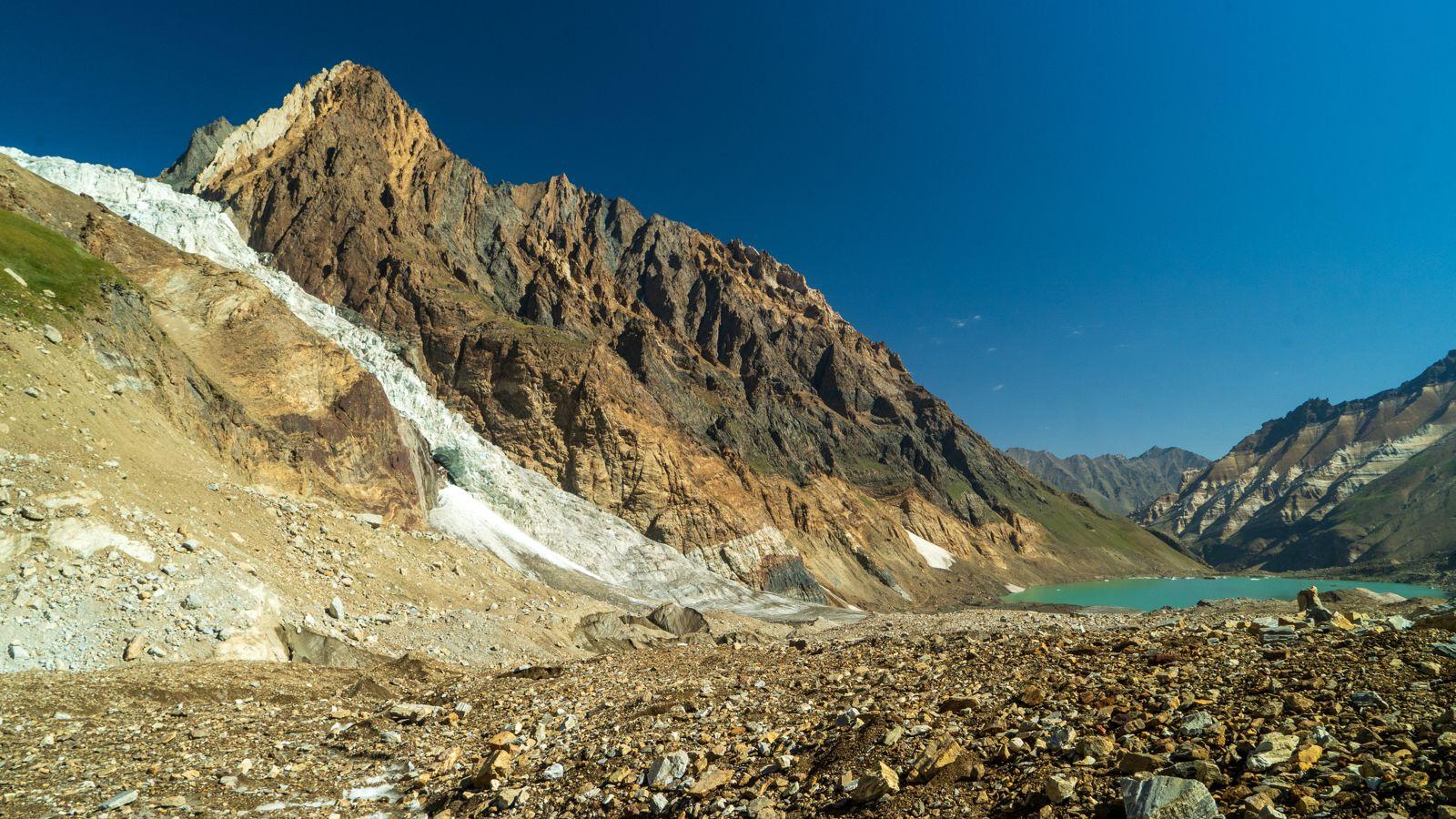
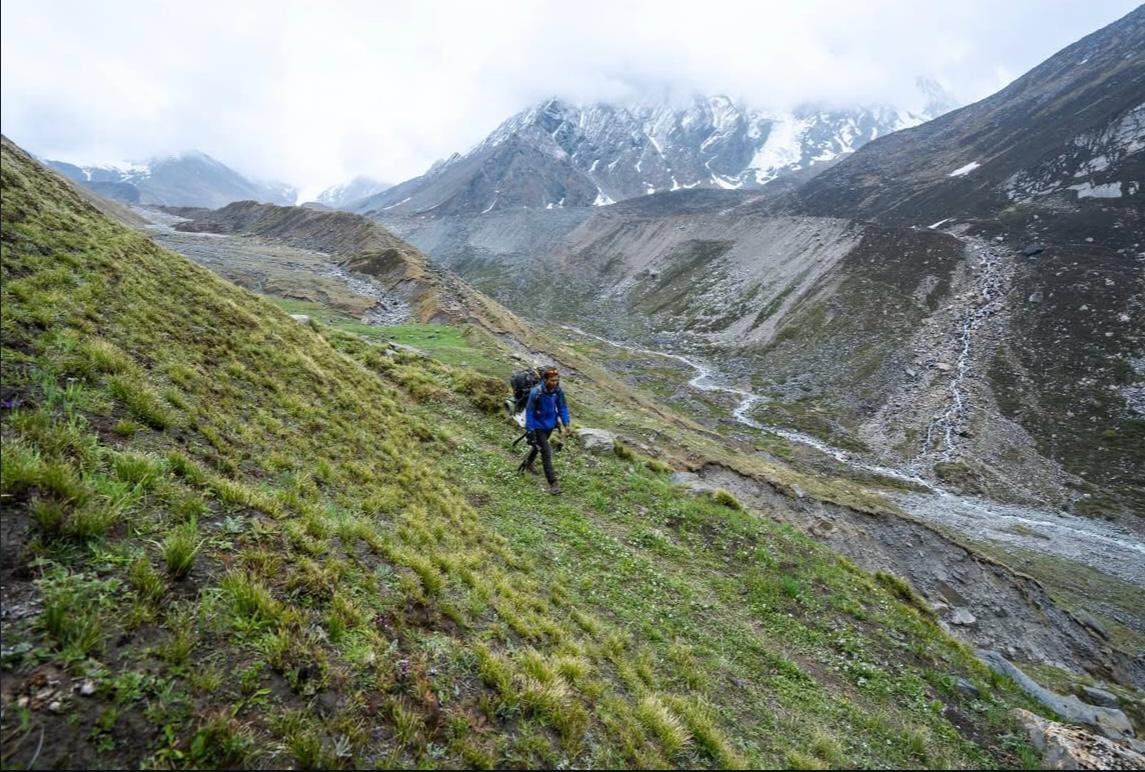
The Rumtse to Tso Moriri trek is a classic high-altitude traverse that moves steadily eastward across the Changthang plateau, one of Ladakh’s most remote and sparsely populated regions leading you to the Remote village of Karzok in the span of 7 days of trekking. Beginning near the Indus valley and gradually entering the open highlands of Changthang, the trek covers nearly a hundred kilometres of terrain above 4,500 metres, demanding sustained physical effort and careful acclimatization.
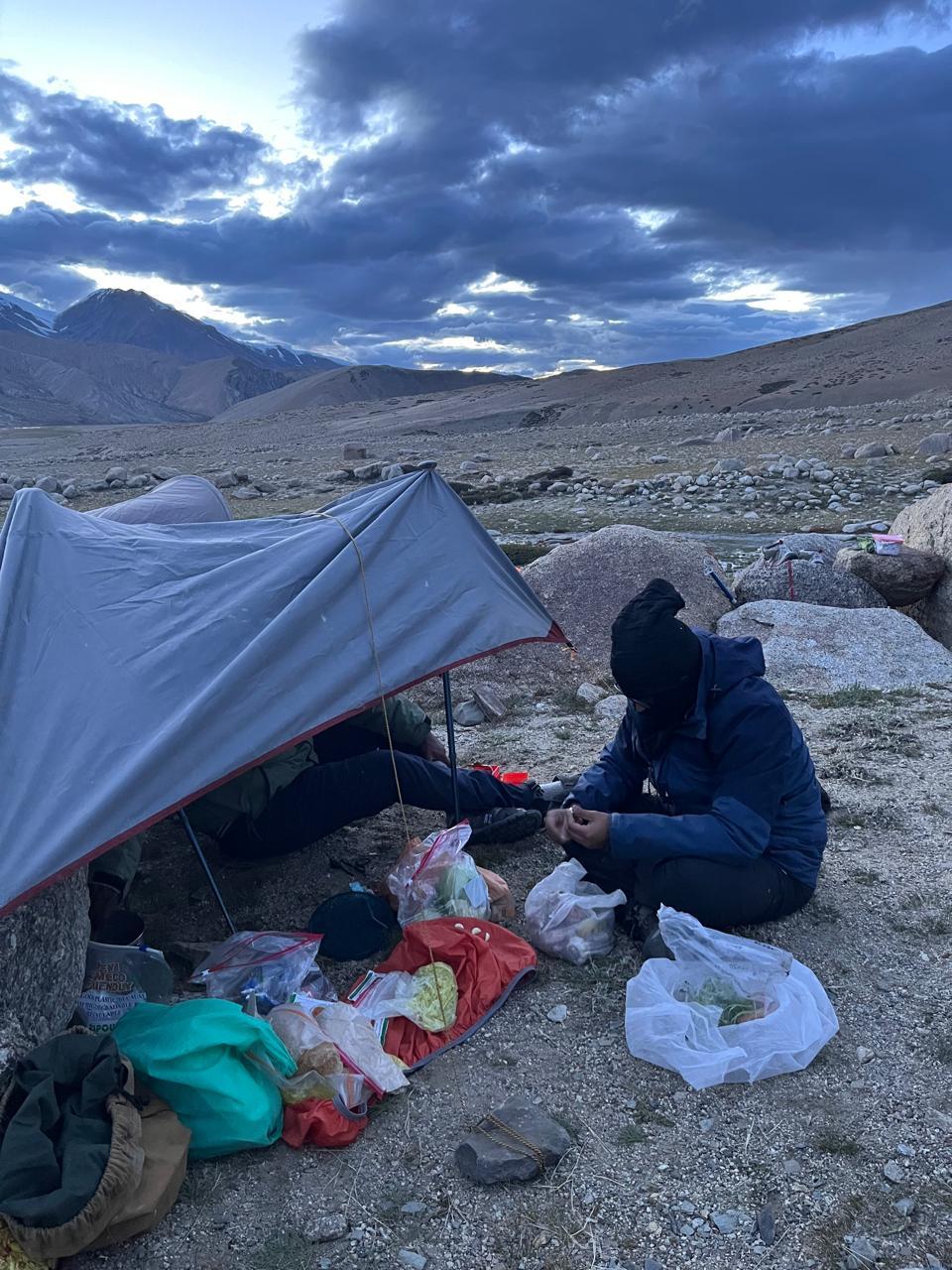
Trails are often faint, marked more by traditional movement patterns of nomadic communities than by formal paths. Days are long, and the environment is dry, cold, and exposed, with weather that can change rapidly. The entire journey is in Backpacking style, meaning, as a team we are responsible for our own gears. We pitch our tents, plan our ration and take decisions as a team, all under the safety and expertise of Odyssey instructors and guides. There will no kitchen team or porters to fall back to.
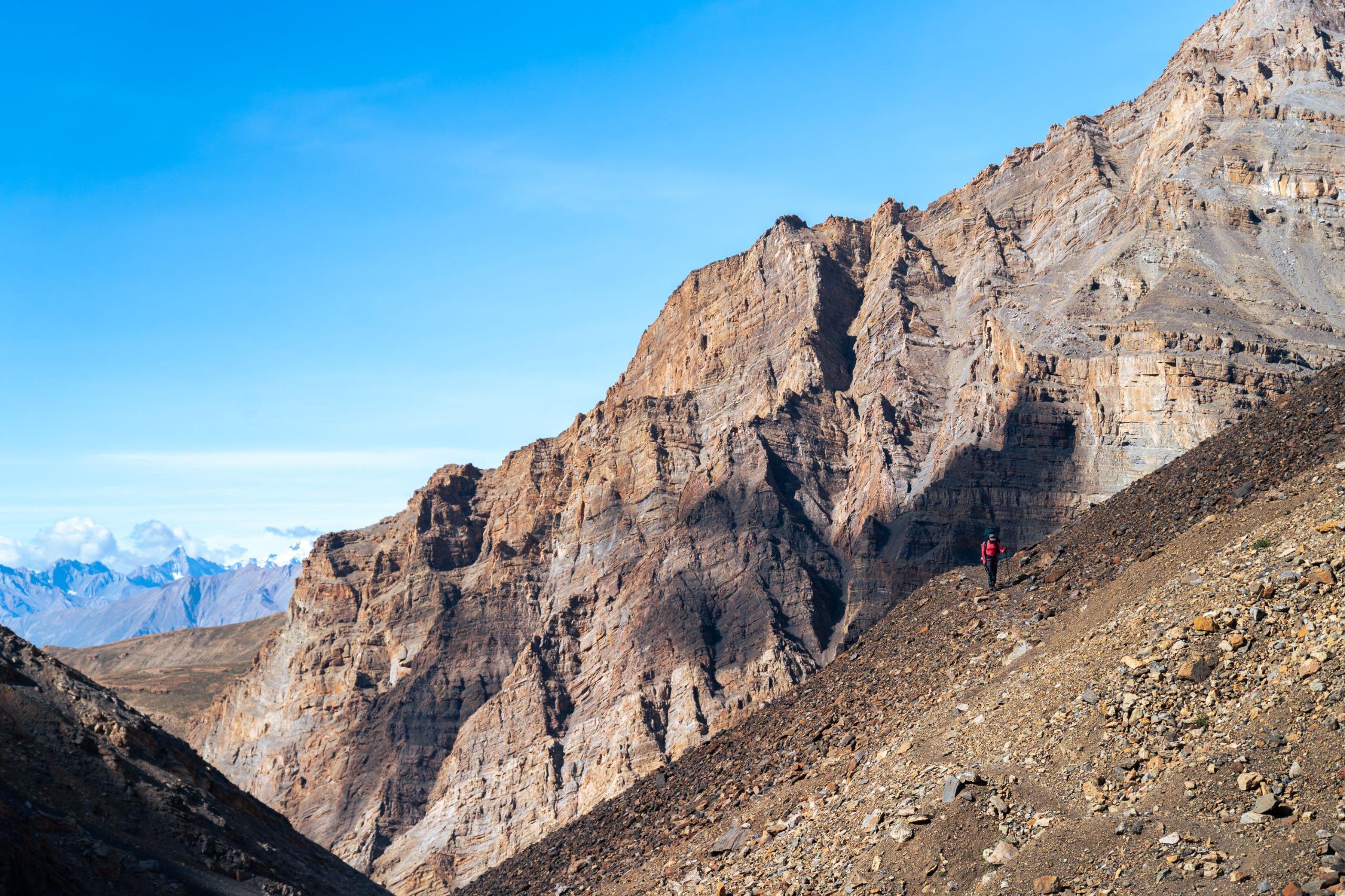
Physically, this trek is demanding due to its length, repeated high passes (there are 5 of them), and sustained altitude rather than technical difficulty. The challenge lies in maintaining steady pacing, managing fatigue, and adapting to thin air over consecutive, all while carrying your own backpack that could weigh somewhere between 12-15 Kgs.
To support efficient movement and reduce load stress at altitude, Odyssey provides ultra-light backpacking equipment, including tents, kitchen systems, and shared expedition gear. Participants are required to carry only their personal gear, as specified in the pre-trek packing guidance.
Day 1
Acclimatization at Leh
Altitude: 3500m
You will meet Odyssey instructors today.
The day is reserved for rest and acclimatization. Participants are encouraged to hydrate well, take short walks, and allow the body to adapt gradually to altitude at Leh which is at 11,000 feet.
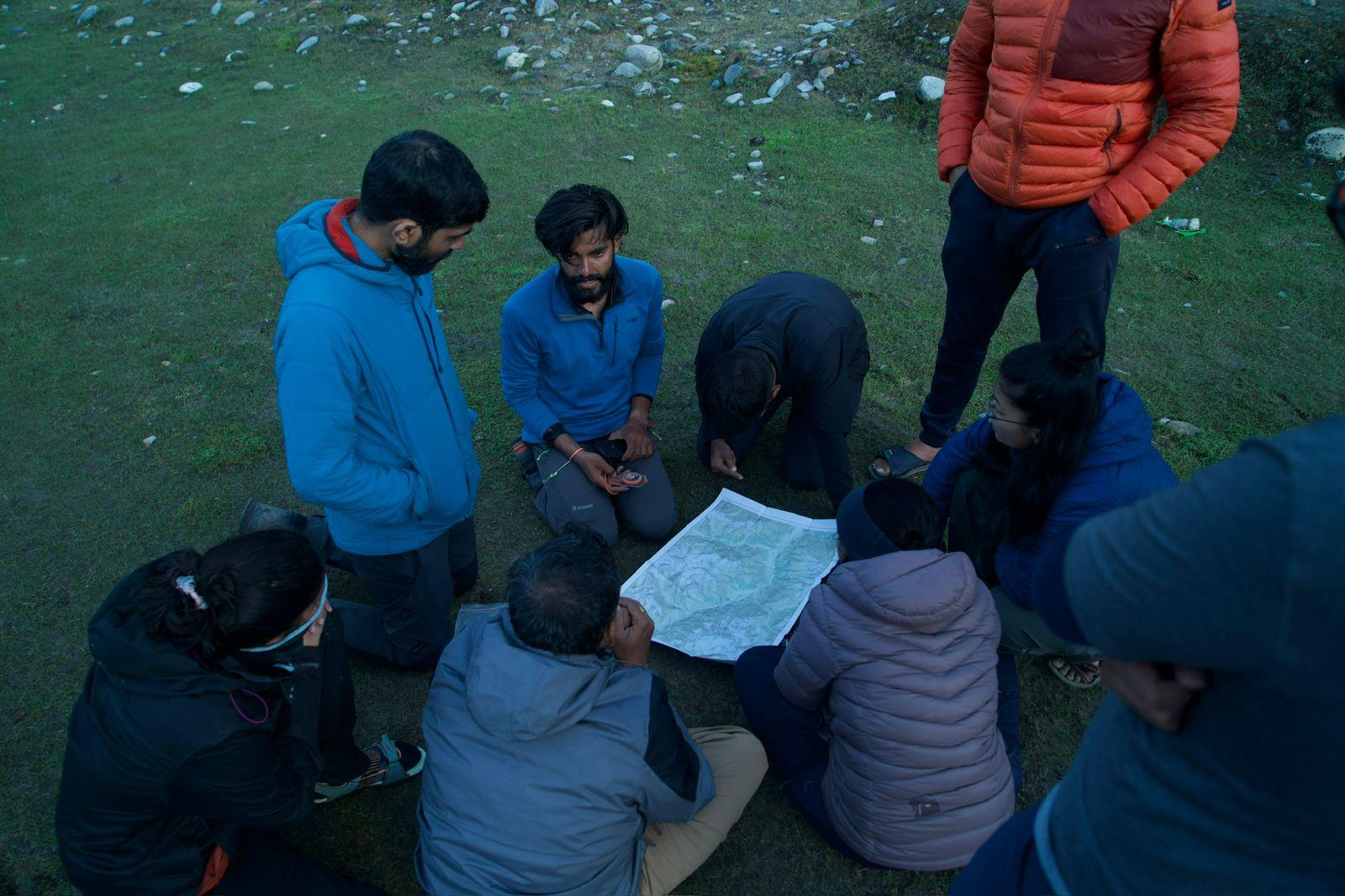
A detailed briefing is conducted, covering route overview, safety protocols, and ration planning.
Day 2
Leh to Rumtse, Trek to Kyamar
Starting Altitude: 4,150 m
Ending Altitude: 4,538 m
Trek Distance: 11 km
Time Taken: 4 hours
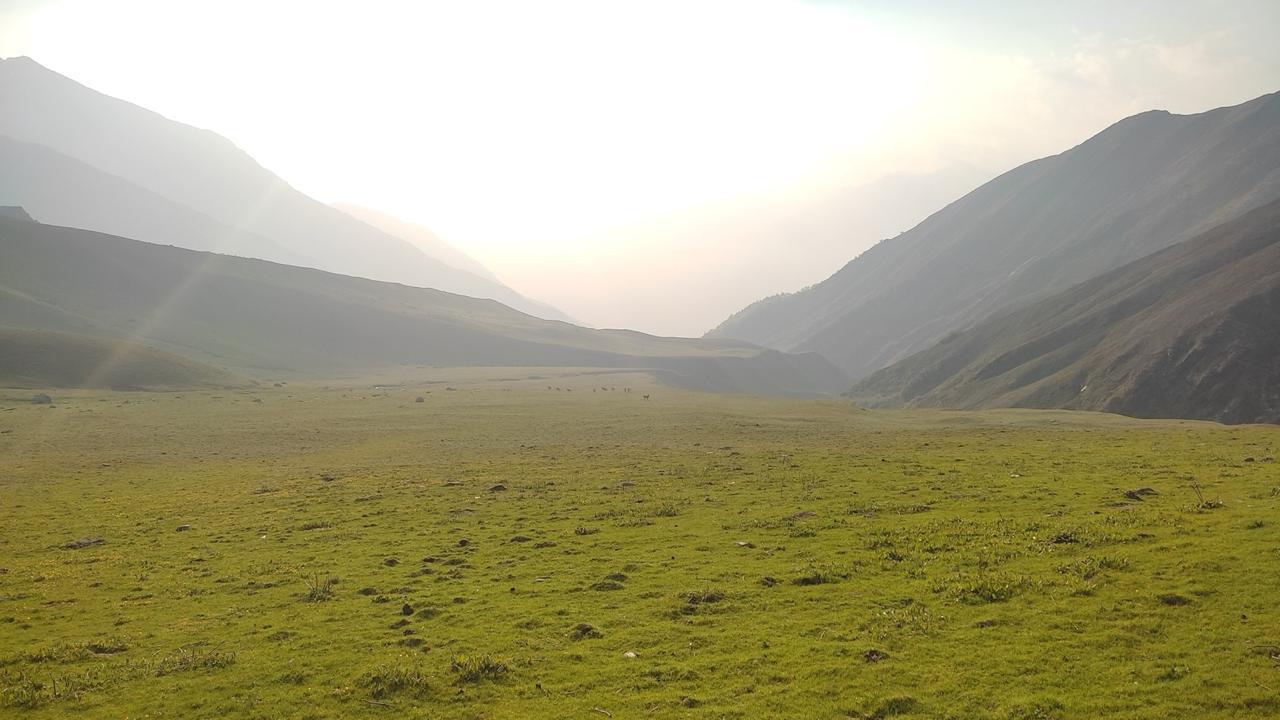
After a drive from Leh to Rumtse, the trek begins along gentle trails that follow open valleys and grazing land. The pace remains moderate, allowing the body to settle into movement at altitude. The campsite at Kyamar is set in a wide basin with expansive views. We reach the camp, start setting up our tents and cook meals for the evening.
Day 3
Kyamar to Tisaling via Kyamar La and Mandalchan La
Starting Altitude: 4,538 m
Ending Altitude: 4,940 m
Trek Distance: 16 km
Time Taken: 8 hours
Elevation Gain: 668 m
Elevation Loss: 266 m
This is the first demanding day, crossing two high passes. The climb to Kyamar La is gradual, followed by a longer ascent to Mandalchan La. Terrain alternates between rolling slopes and rocky sections. The long duration requires disciplined pacing and regular hydration.
Day 4
Tisaling to Ponganagu via Shibuk La
Starting Altitude: 4,940 m
Ending Altitude: 4,651 m
Trek Distance: 14 km
Time Taken: 7 hours
Elevation Gain: 335 m
Elevation Loss: 624 m
A steady ascent leads to Shibuk La, the highest point of the day. From the pass, the descent opens into broad valleys with distant views. The day balances effort with recovery, offering some relief after the previous long stage. We will make lunch on the way, and reach for evening chai and some snacks. We then prep for dinner, preferably something rich in protein.
Day 5
Ponganagu to Nuruchan
Starting Altitude: 4,651 m
Ending Altitude: 4,679 m
Trek Distance: 18 km
Time Taken: 7 hours
Elevation Gain: 350 m
Elevation Loss: 322 m
This is a long but relatively moderate day in terms of gradient. The trail moves through open plateau terrain with sustained forward movement. Wind exposure can increase fatigue, making rhythm and mental focus important.
Day 6
Nuruchan to Gyamar Barma via Kyamayuri La
Starting Altitude: 4,679 m
Ending Altitude: 5,190 m
Trek Distance: 19 km
Time Taken: 9 hours
Elevation Gain: 731 m
Elevation Loss: 220 m
One of the most demanding days of the trek. The climb to Kyamayuri La is long and gradual, followed by extended walking across high-altitude terrain. The altitude and distance combine to test endurance and recovery. One must make sure they are consuming enough calories (~400 Kcal) on trail and lot of electrolytes.
Day 7
Gyamar Barma to Korzok via Yalung Nyau La
Starting Altitude: 5,190 m
Ending Altitude: 4,550 m
Trek Distance: 22 km
Time Taken: 8–9 hours
Elevation Gain: 245 m
Elevation Loss: 885 m
This is a long and decisive day, marking the completion of the traverse. The route begins with a gradual ascent towards Yalung Nyau La, the final high pass of the trek. The climb is steady rather than steep, but the accumulated fatigue from previous days makes pacing and discipline essential.
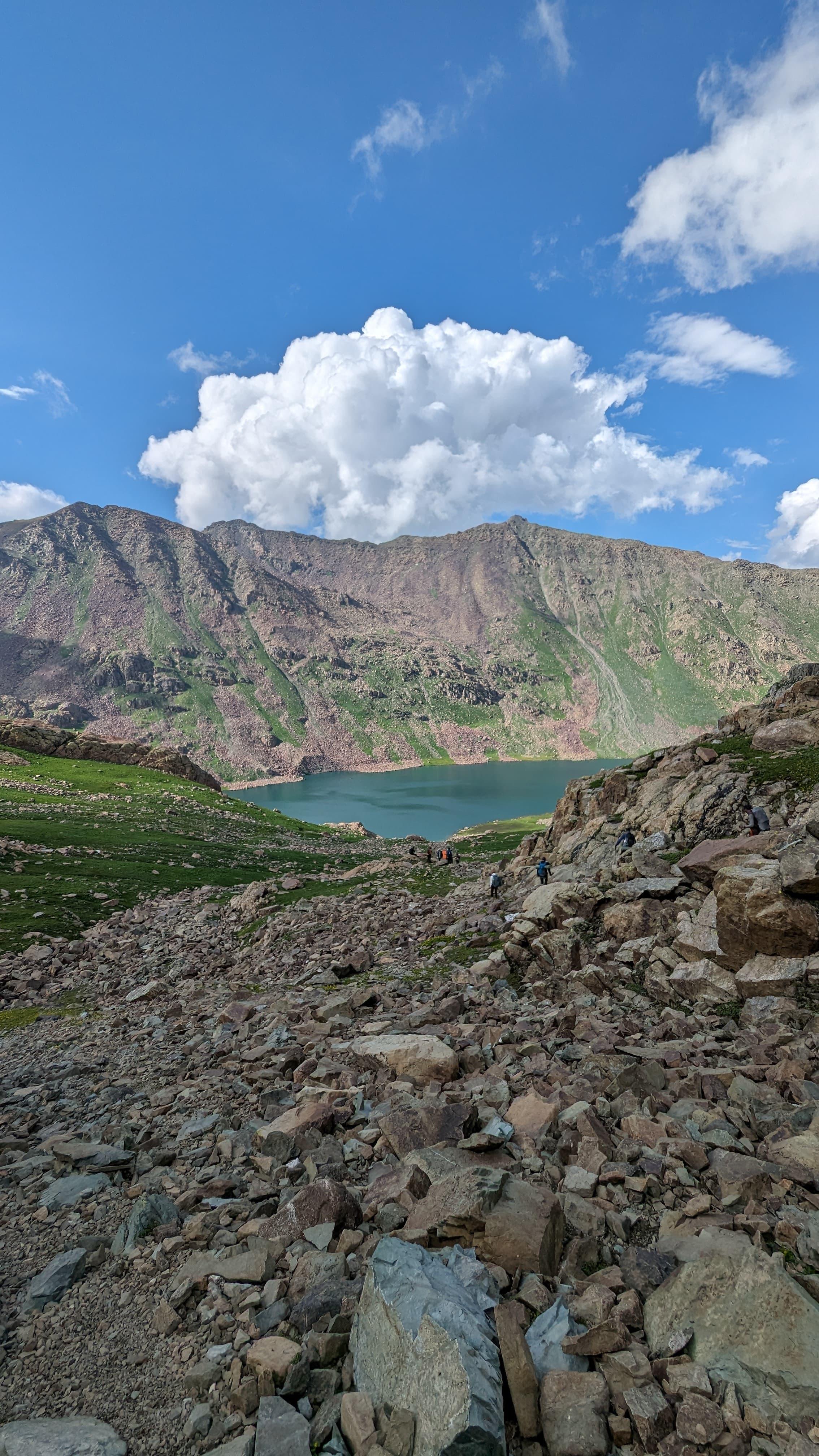
From the pass, the terrain opens dramatically, offering expansive views across the Changthang plateau before beginning a sustained descent toward Korzok.
The descent is long and continuous, transitioning from high-altitude grazing grounds into broader valleys leading toward Tso Moriri.
As the trail approaches Korzok, the landscape softens and the first permanent signs of settlement appear after several days of isolation. Reaching the village on foot provides a strong sense of completion and contrast after the remoteness of the preceding stages.
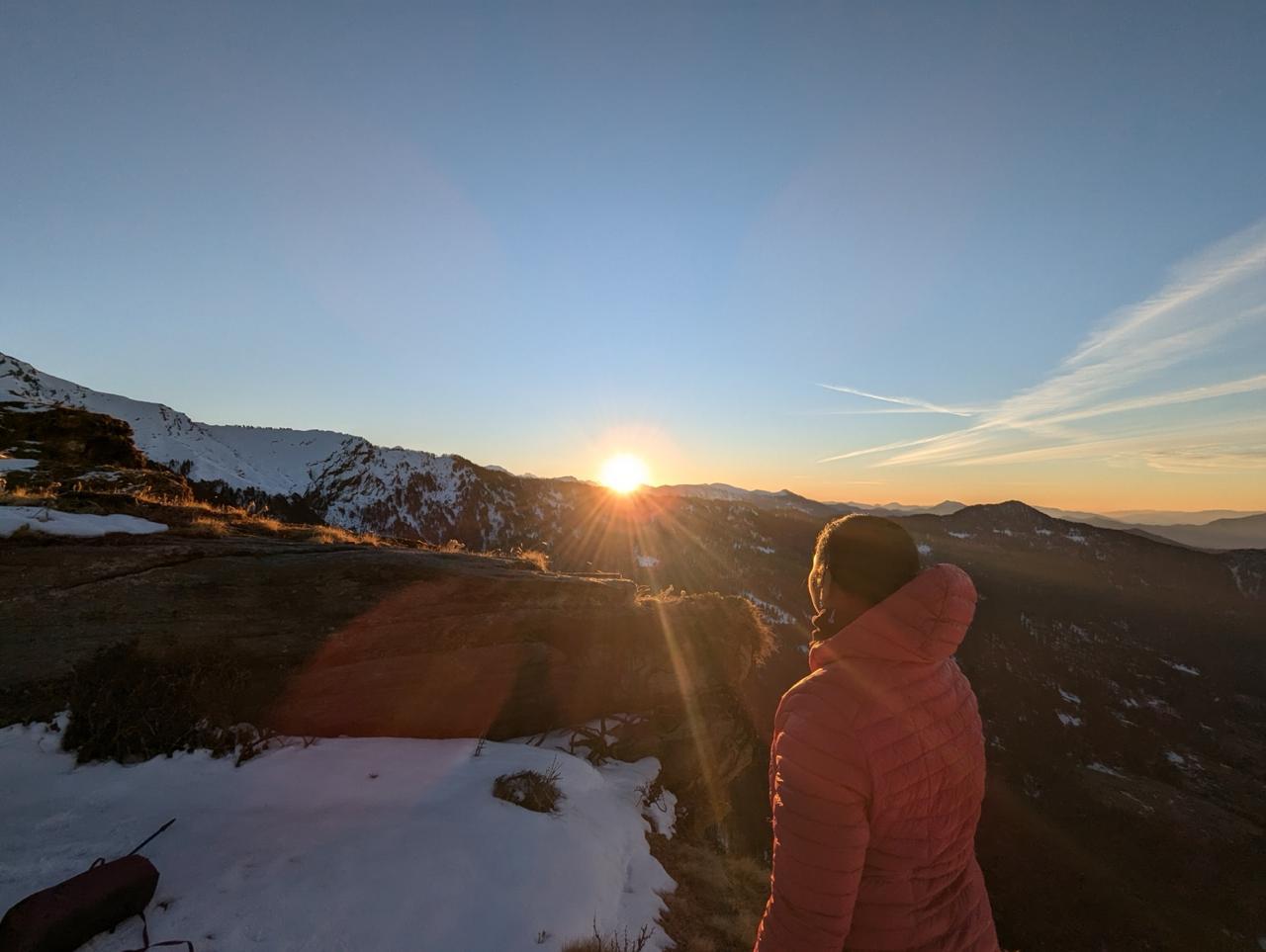
We stay overnight at Korzok (4,550 m / 15,000 ft), allowing time for rest, recovery, and quiet reflection by the lake.
Day 8
Drive from Korzok to Leh
We then take a 6 hour drive towards Leh, marking the end of our backpacking journey. We reach Leh, submit all our backpacking gears and celebrate with a team dinner.
Kindly plan your return flight on Day 9.
Fitness Requirements
Participants are expected to meet the following fitness benchmarks:
- Ability to walk 15 km comfortably while carrying a 6–8 kg backpack over uneven mountain terrain.
- Regular engagement in cardiovascular training at least three times per week, such as running, cycling, hiking, or swimming.
- Consistent strength training, with particular emphasis on legs, core, and overall stability.
- A strong aerobic base, enabling steady movement for long hours without excessive fatigue.
- Prior experience of at least 2 Himalayan treks above 12,000 feet
Adequate preparation is essential to ensure safety, recovery, and the ability to fully engage with the demands of a long, high-altitude traverse. Participants who train consistently tend to adapt better to altitude, maintain pacing discipline, and experience the trek with greater confidence and ease.
Expedition Behaviour
- Open-mindedness, respect for local culture, and patience with trail uncertainties.
- Active participation in group decisions and cooperation with the trek leader.
- Commitment to Leave No Trace principles and sustainable trekking ethics.
- Willingness to embrace discomforts like cold, long days, basic camping hygiene.
Inclusion
Exclusion
SELECT DATE TO REGISTER
Thank You!
Your form has been submitted successfully. We'll get back to you soon.
₹ 36,499 + 5% GST
