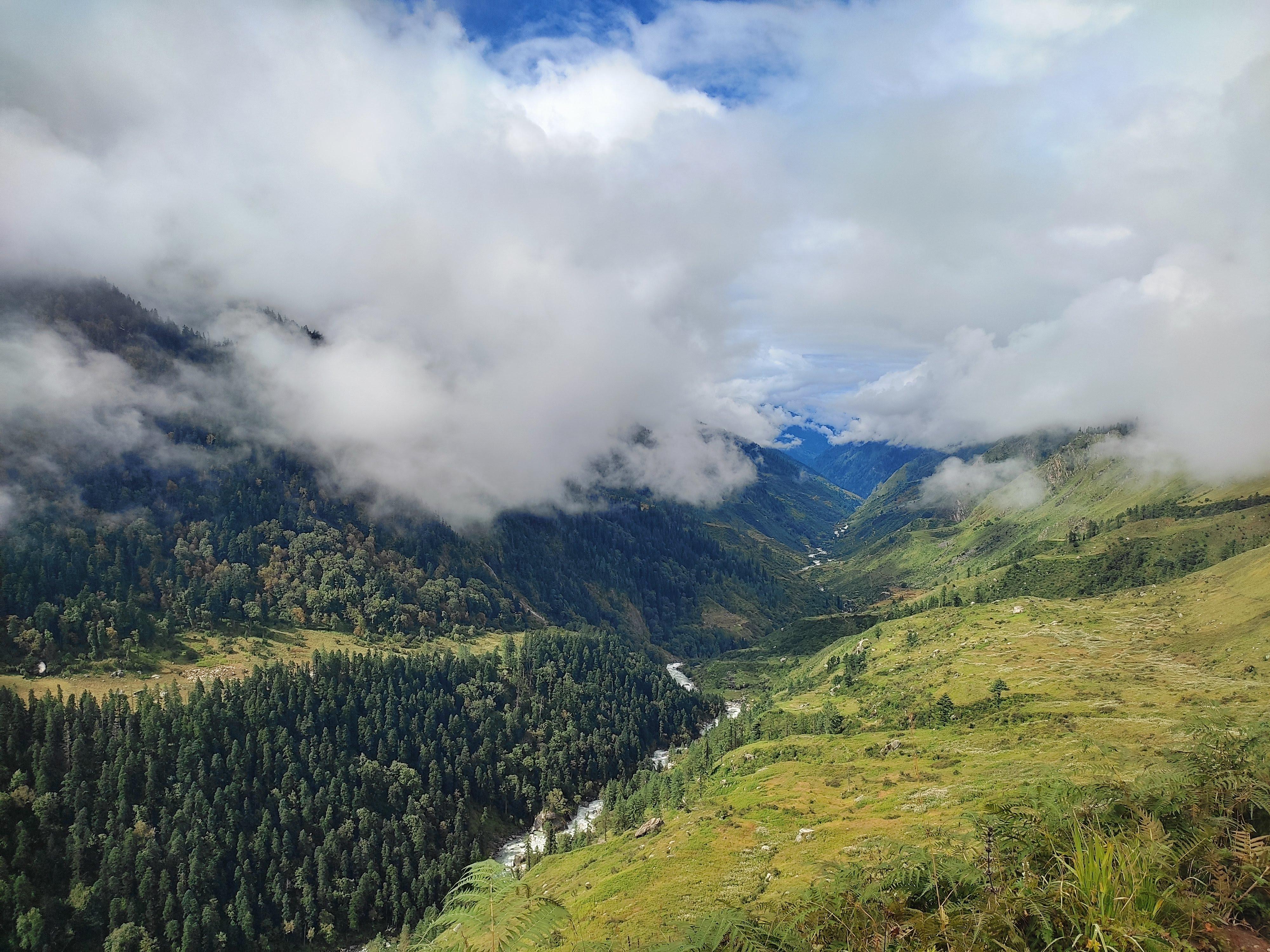
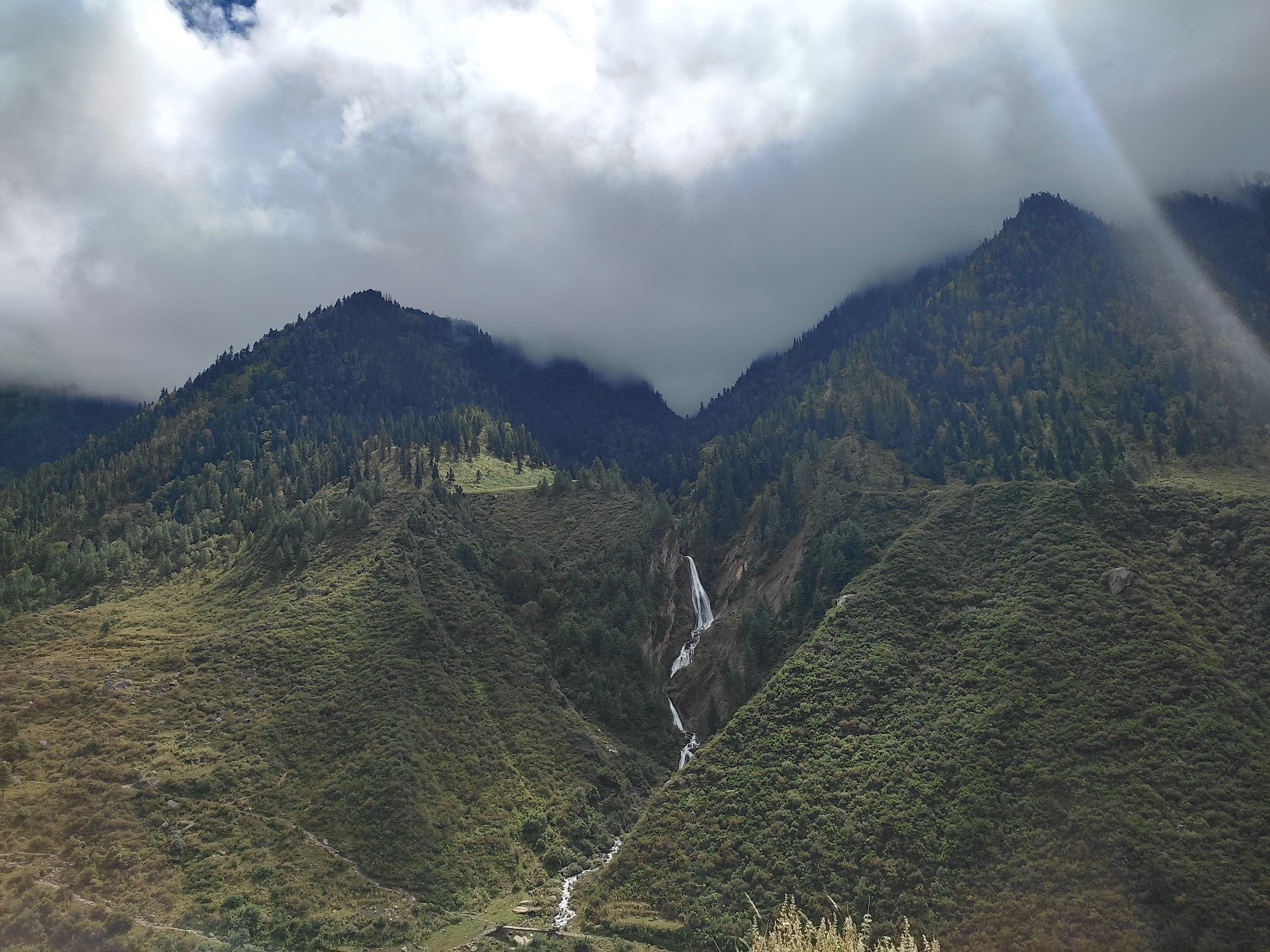
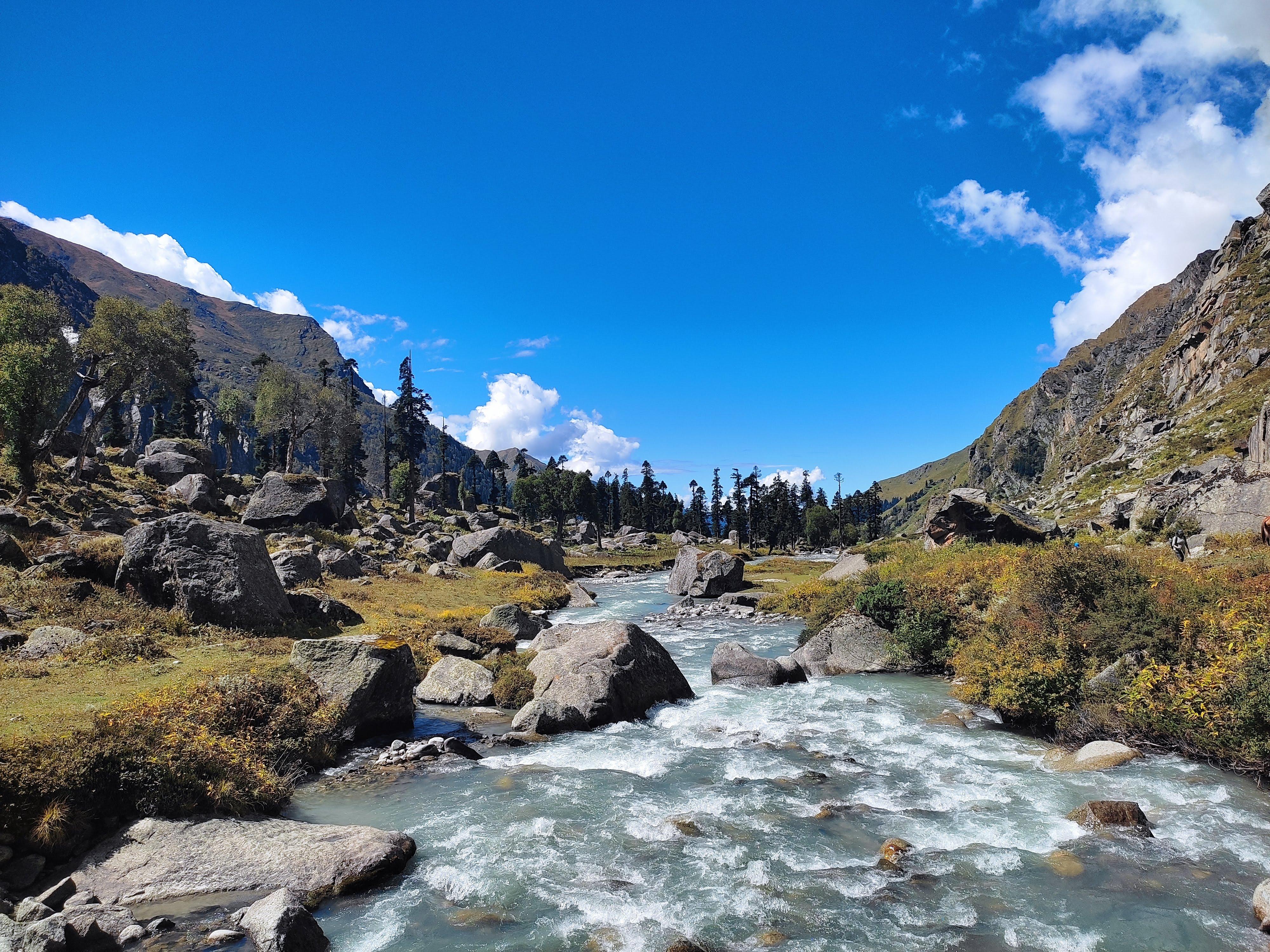

If what lies behind that mountain or the next valley is a question that often intrigues you, Borasu Pass is the answer.
If you’ve stood in Har ki Dun and wondered where this trail leads, or stared at photos of the valley and asked Where does this river come from, this journey takes you there, to the very headwaters of the Tons, across glaciers and ridgelines, and into another world entirely.
The Borasu Pass Backpacking Trek is a passage between worlds. Between Uttarakhand and Himachal. Between the known and the forgotten. Between comfort and the kind of freedom that only the wild can offer.
Starting from Osla in the Har ki Dun Valley, the trail winds through pine forests, alpine meadows, and glacial basins before crossing the Borasu Pass at 5,200 m, one of the most remote and dramatic crossings in the Indian Himalayas. By the time you descend into Chitkul, the last village of Kinnaur, the landscape has changed completely, from lush green valleys to brown, windswept mountains that feel almost Tibetan.
This was once an ancient trade route between the people of the Tons and the Baspa valleys. Traders carried salt from Tibet and rice from the plains, crossing over the pass long before trekking became a word. Today, you walk that same trail, but carrying your own world: a tent, stove, and everything you need for survival.
As a backpacking expedition, Borasu is as real as it gets. You’ll be part of a small team led by Odyssey instructors and guides who’ve spent years navigating these mountains. They’re there to lead, teach, and ensure every decision, from where to pitch a tent to when to cross a snowfield, is made with safety and intent.
What makes this trek unique is the way you participate in it. You’ll carry your own pack, set up your tent, cook with your team, and learn the rhythm of self-sufficiency that backpacking is all about. There’s no support staff waiting around the corner; you are the team.
It’s not for everyone.
But if you’ve ever wanted to understand what lies beyond, or what you’re truly capable of when you strip everything down to what you can carry, Borasu Pass is where you find out.
Day 1
Drive from Dehradun to Kotgaon
Drive Distance: ~200 km
Elevation Profile: 2,100 ft / 640 m → 6,800 ft / 2,070 m
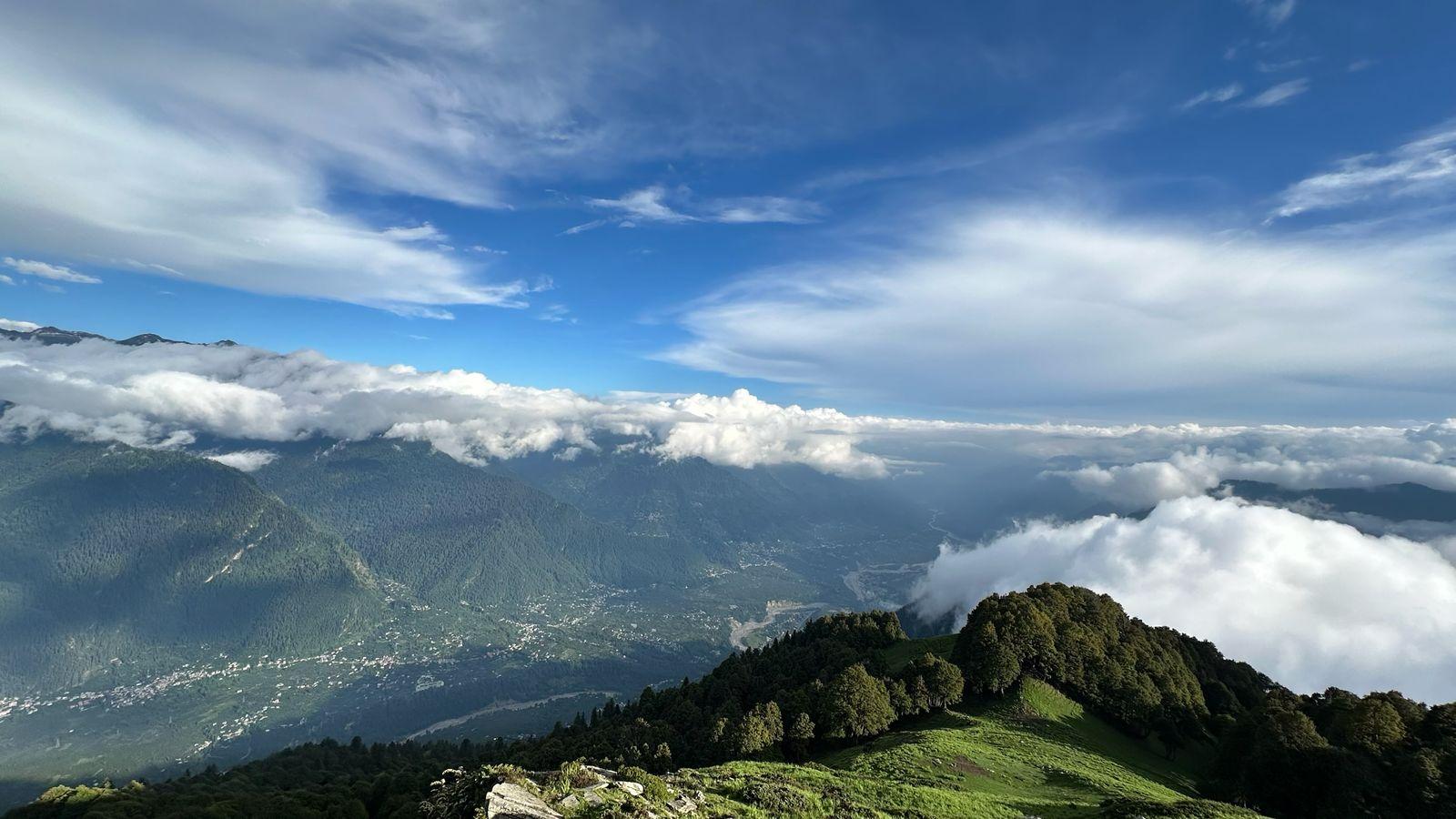
The journey begins early from Dehradun, tracing the course of the Tons River through pine-clad valleys and mountain roads. As you pass Purola and Mori, the air turns cooler, and the bustle of the city fades away.
By evening, you reach Kotgaon, a quiet hamlet with wooden homes and apple orchards overlooking the valley. The snow peaks of Swargarohini rise beyond, distant, yet watching.
This is your first night in the mountains. The packs are checked, tents are pitched, and the rhythm of the expedition begins to settle in.
Day 2
Kotgaon to Osla via Gangaad
Drive + Trek Distance: ~18 km (10 km drive + 8 km trek)
Elevation Profile: 6,800 ft / 2,070 m → 8,600 ft / 2,620 m
You drive till Gangaad, where the road ends and the trail begins. From here, backpacks go on, and the adventure takes its first real step.
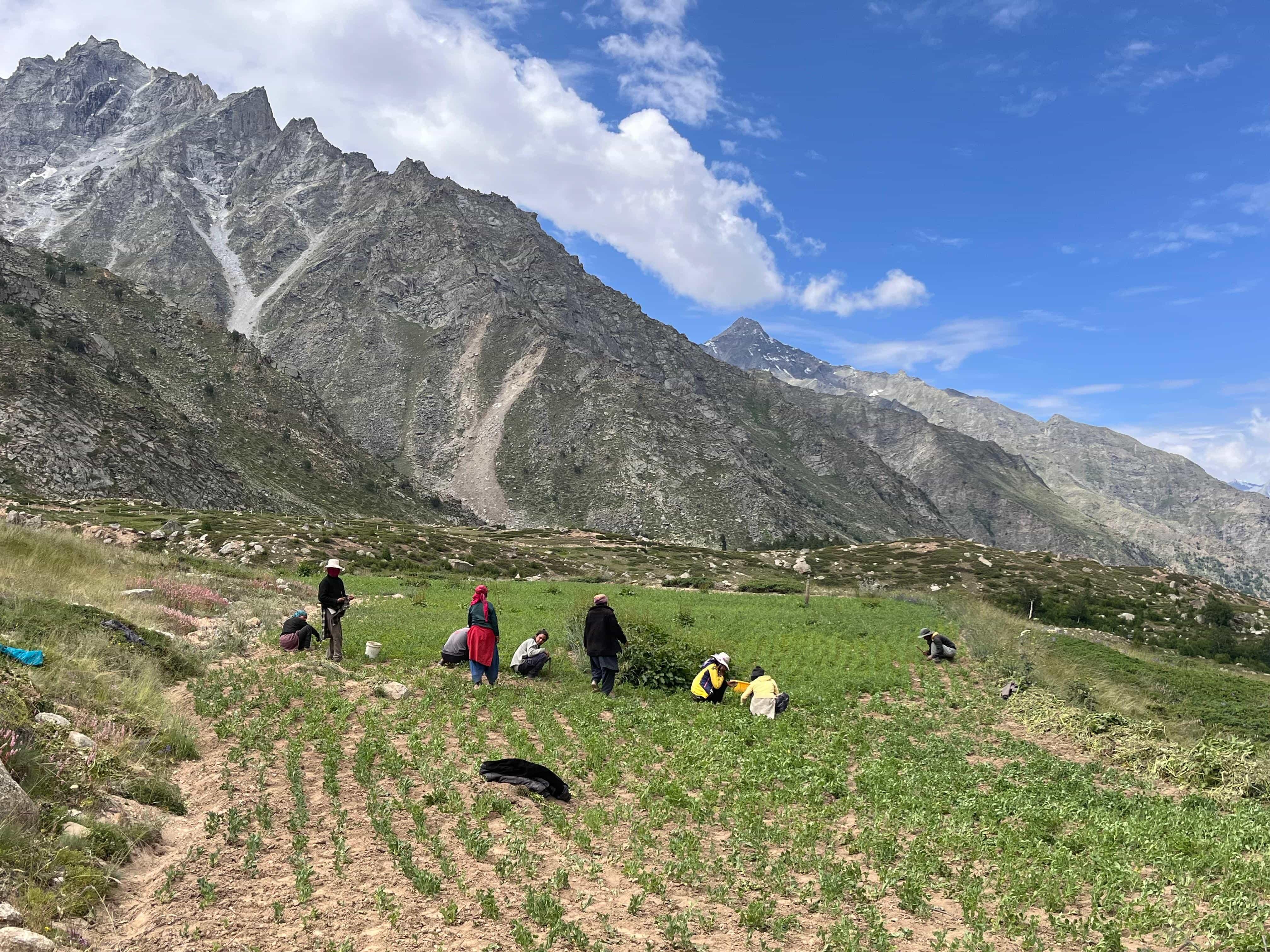
The path to Osla winds through ancient wooden houses, fields of red rice, and locals carrying baskets of fodder along narrow trails. The sound of the river below follows you all day.
By afternoon, you reach Osla, a village where mythology and everyday life blend seamlessly, the people still worship Duryodhana, and stories from the Mahabharata linger in the air.
You stay in a local homestay, eat what the villagers eat, and watch the last light fall on Swargarohini, turning its peaks gold and then pink before darkness settles over the valley.
Day 3
Osla to Har Ki Dun Valley
Trek Distance: ~11 km
Elevation Profile: 8,600 ft / 2,620 m → 11,500 ft / 3,510 m
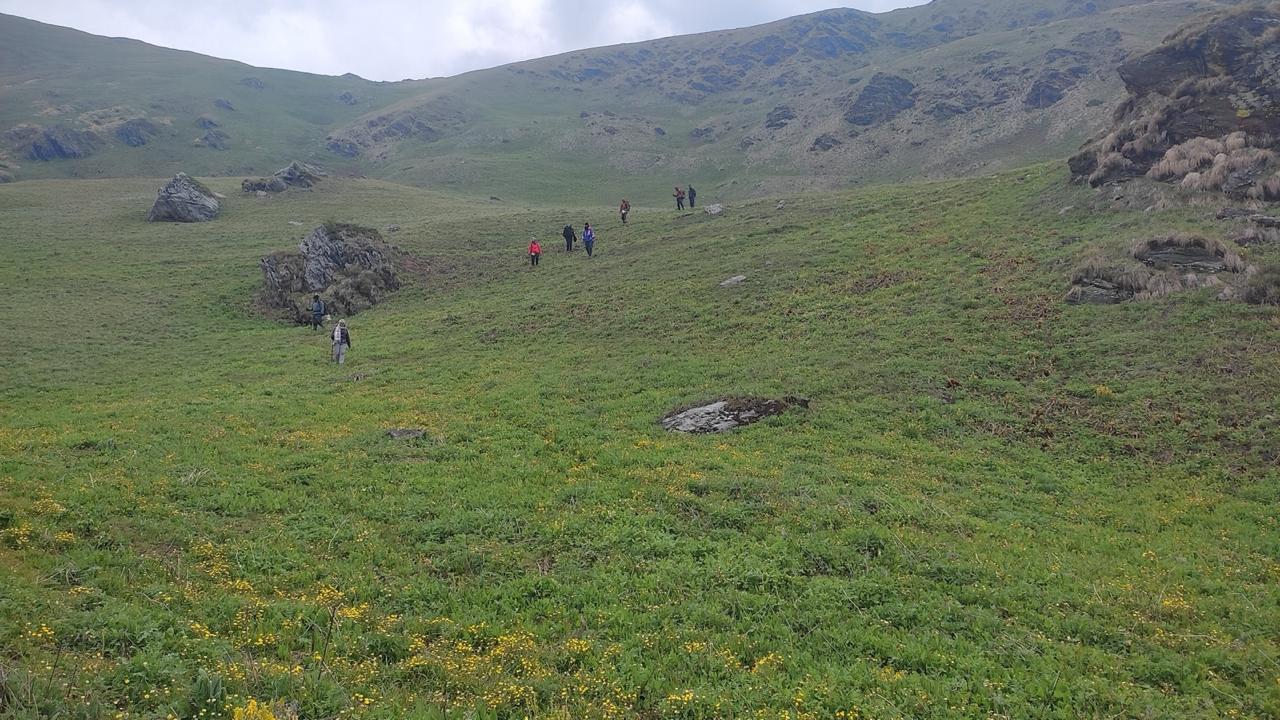
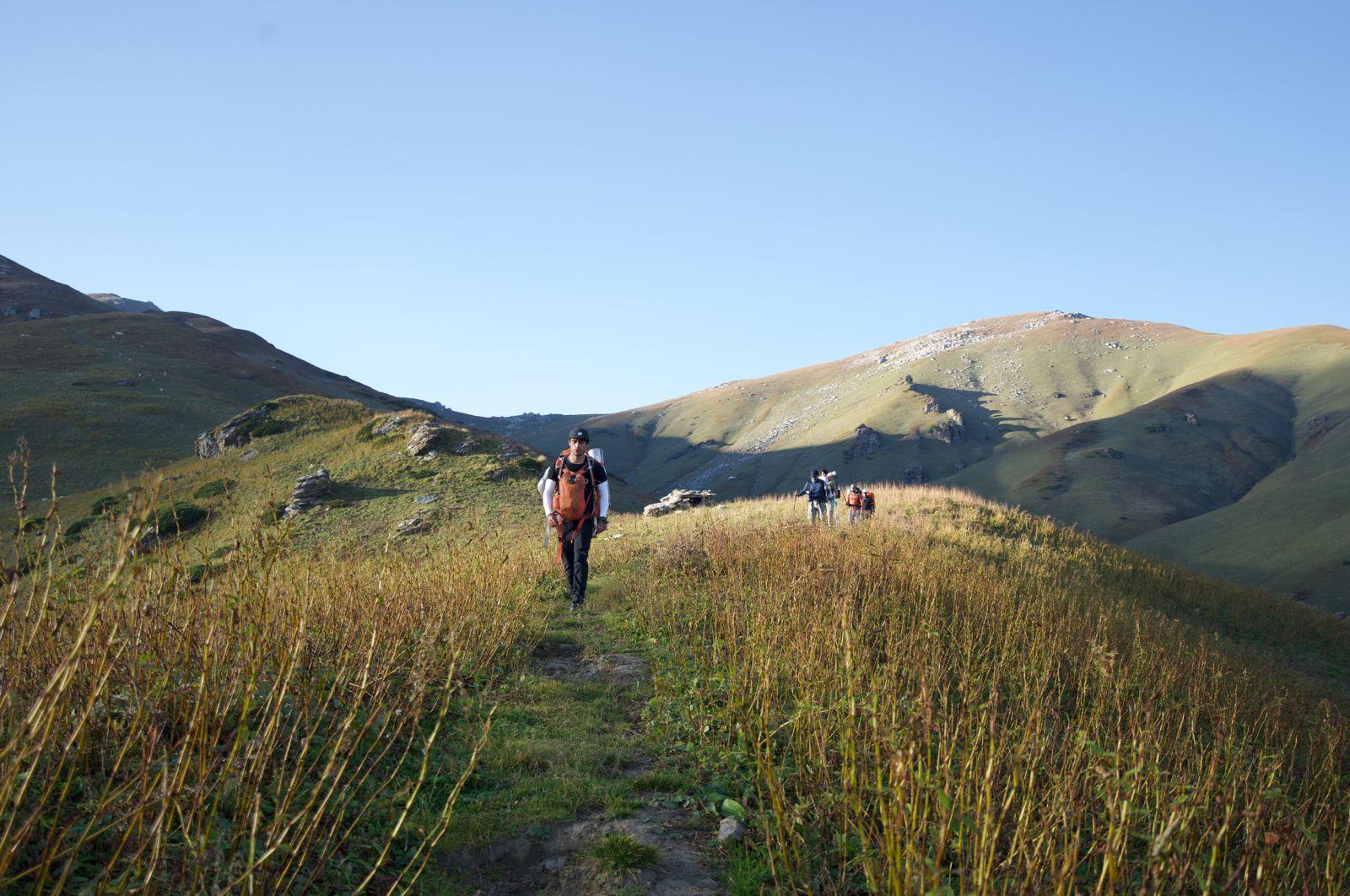
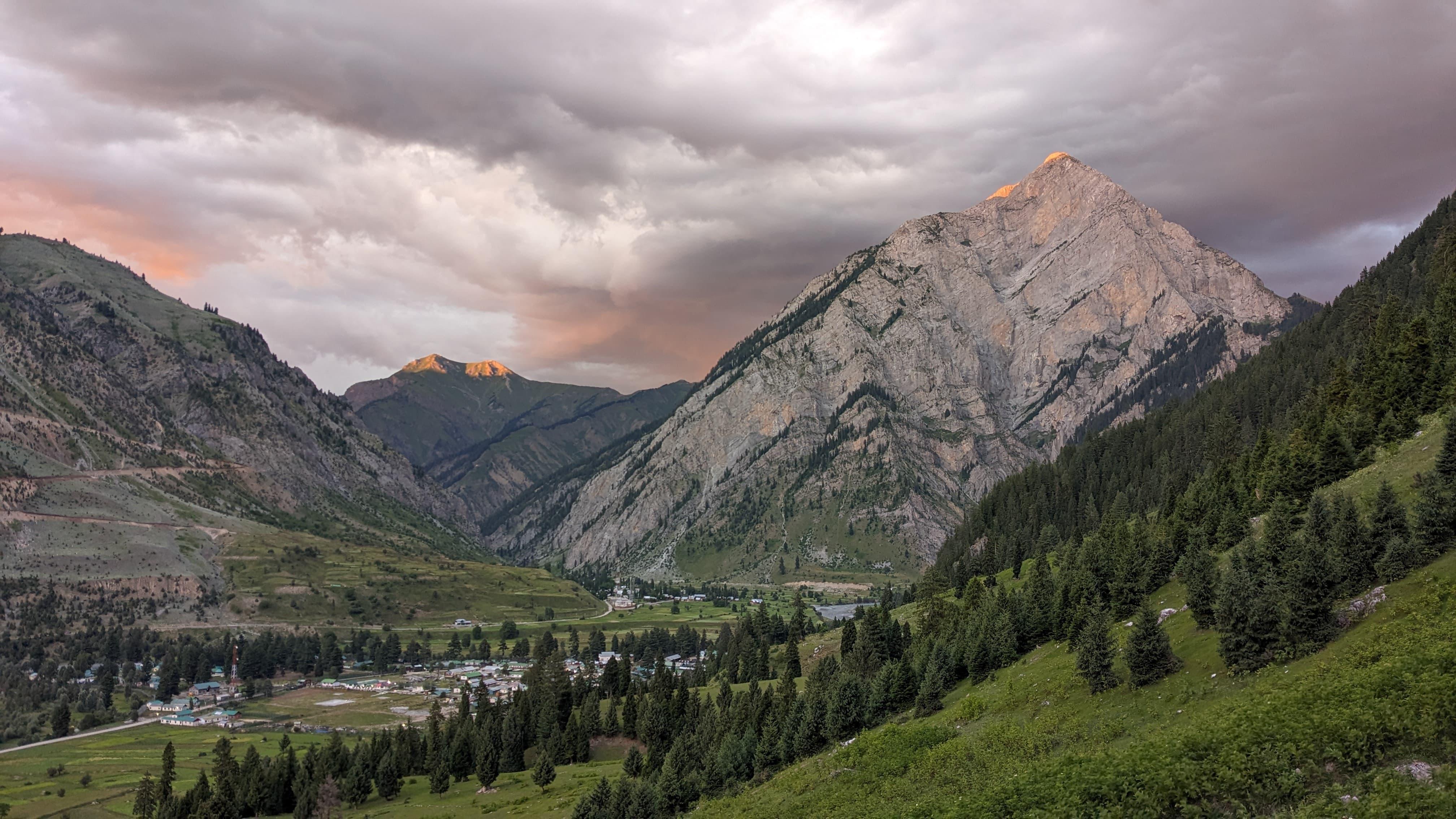
This is where the trek opens up, the forest gives way to vast meadows, and the valley suddenly expands in all directions. The Tons River glistens alongside the trail, and with each turn, Swargarohini looms larger, as if guiding the way.
The walk is steady and long, crossing small wooden bridges and ridges dotted with rhododendrons.
You reach Har Ki Dun, one of India's most beautiful alpine valleys, surrounded by snow-capped peaks, with the sound of wind and river echoing across.
The camp is set beside the river; the stars come out early here, and the Milky Way spills across the sky like powdered light.
Day 4
Har Ki Dun to Ratha Tho via Maninda Tal
Trek Distance: ~10 km
Elevation Profile: 11,500 ft / 3,510 m → 13,450 ft / 4,110 m
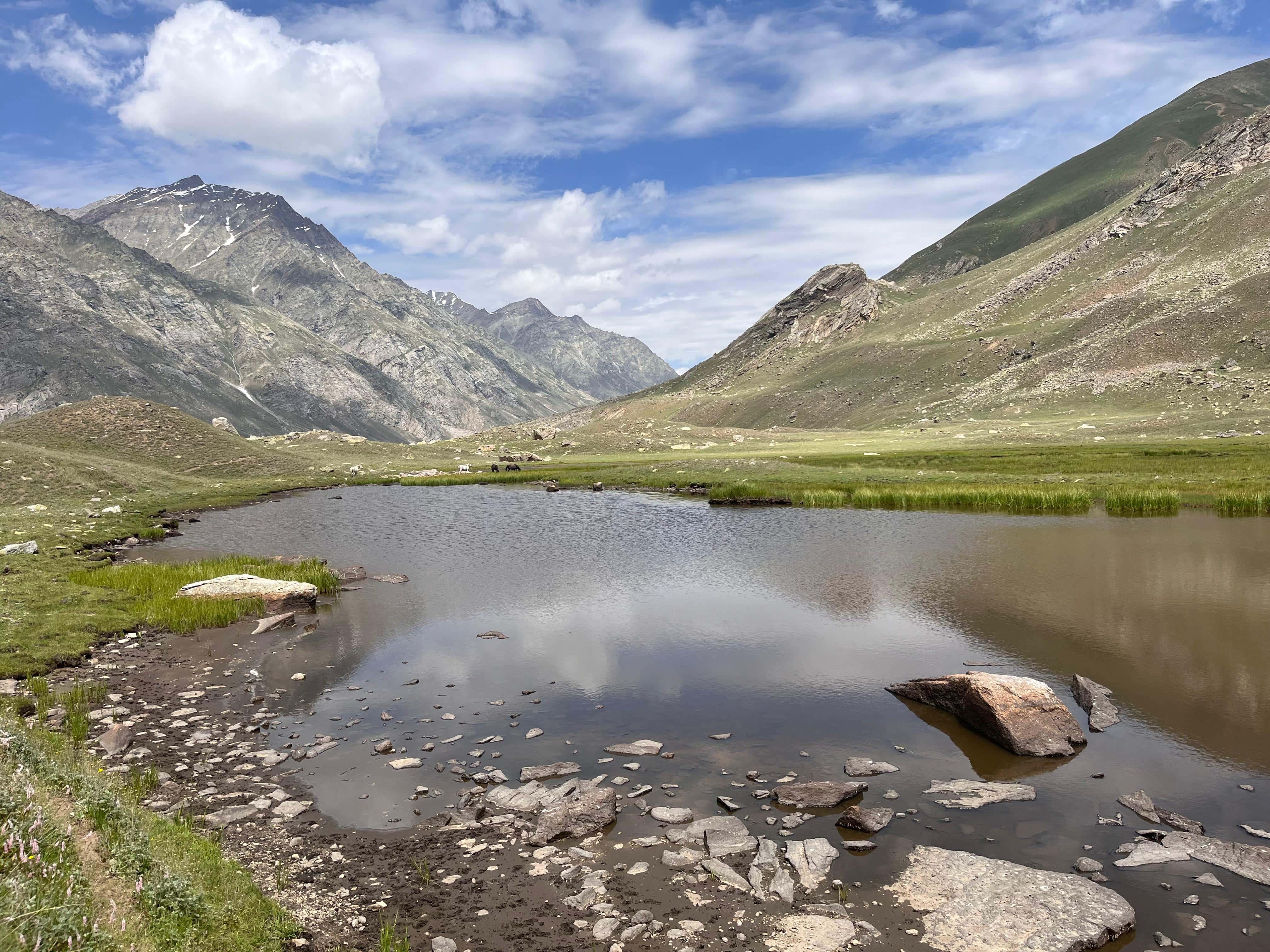
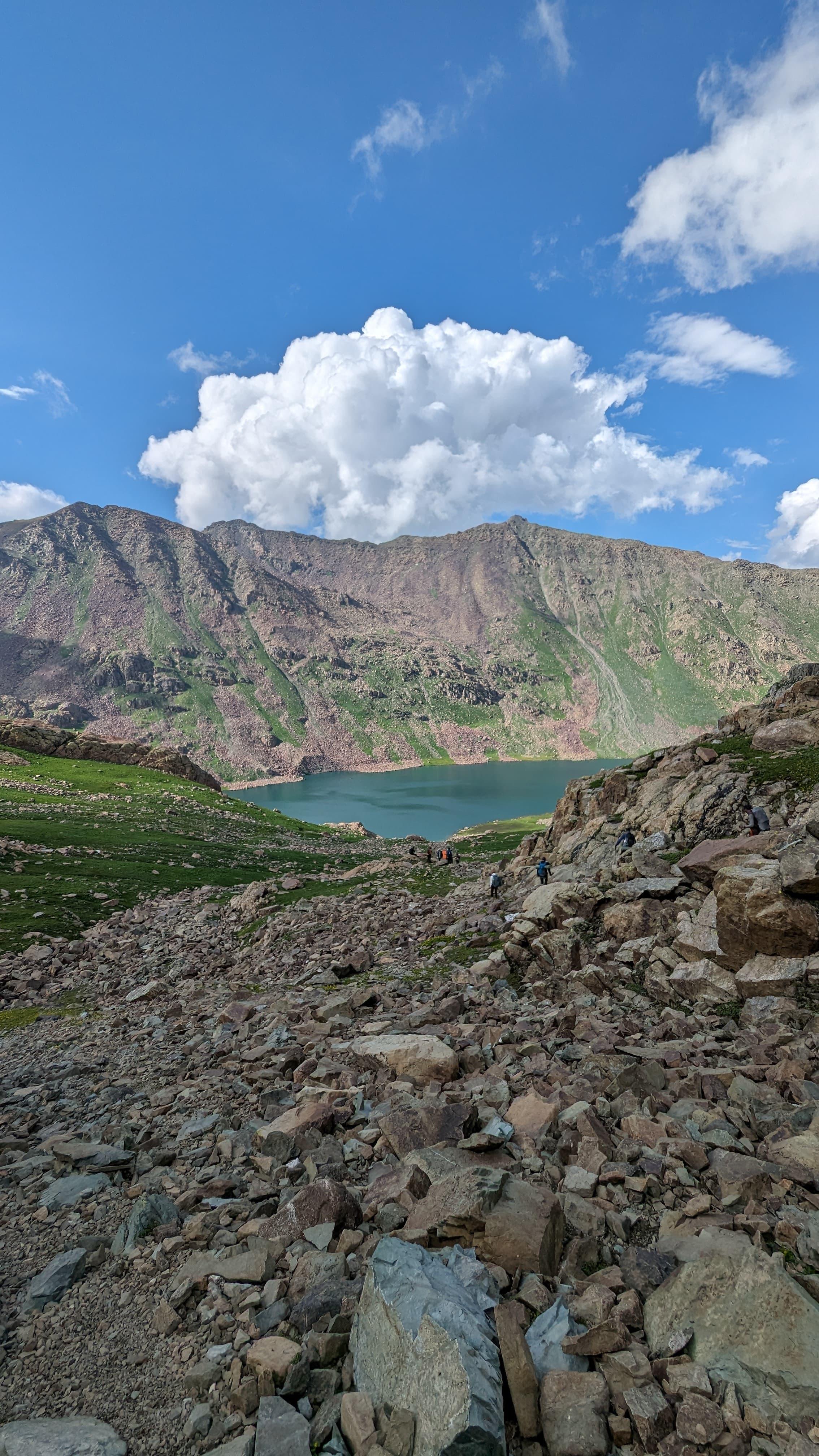
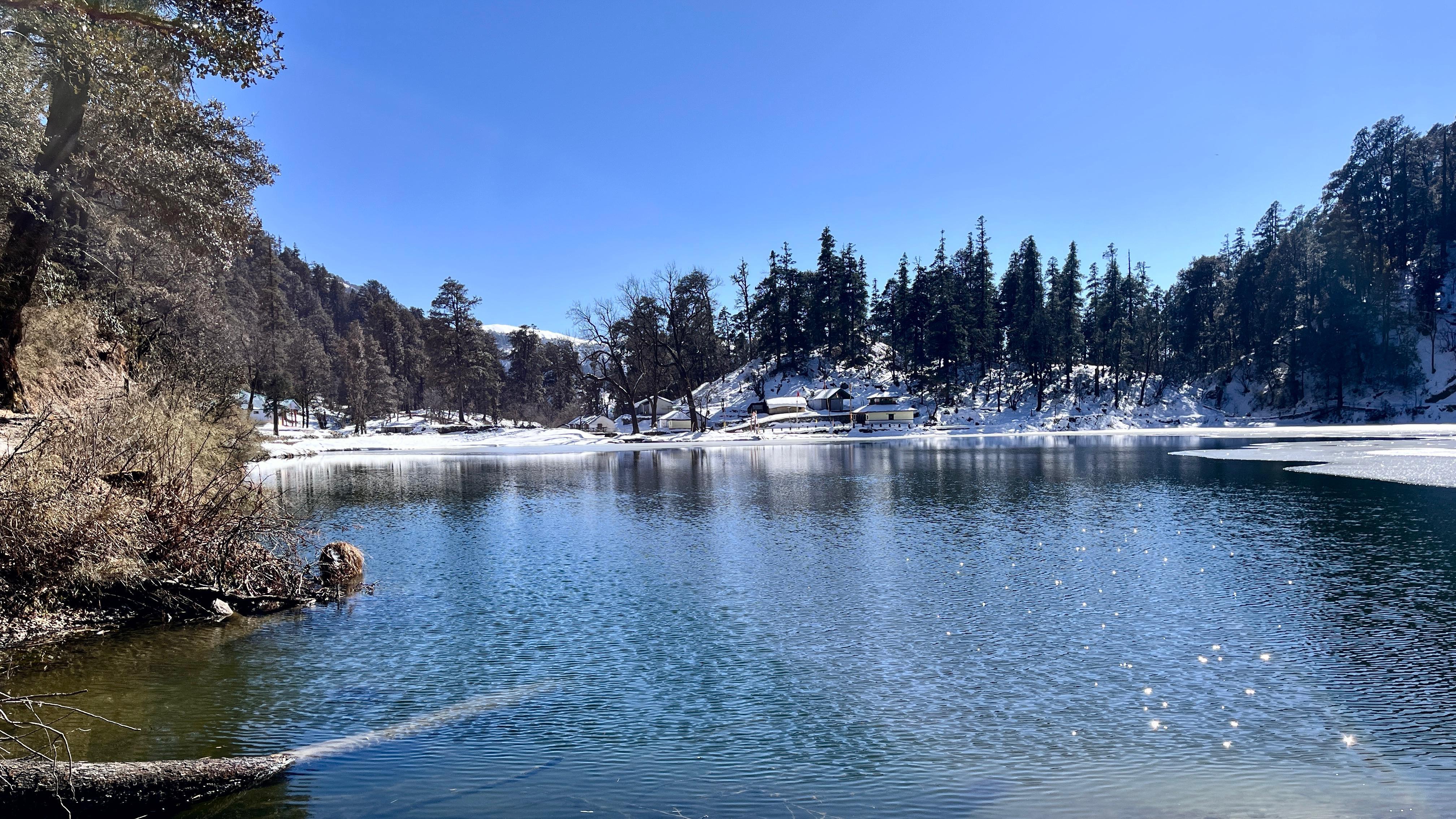
Today, the trek leaves the familiar trail behind. You start early, climbing steadily towards Maninda Tal, a serene lake nestled in a stone bowl and sky.
The water reflects the surrounding peaks, still and cold, as if untouched for centuries. From here, the trail becomes wilder, with narrower ridges, moraine fields, and a few steep ascents before the open meadows of Ratha Tho appear.
Camp here under an open sky, surrounded by ridgelines that catch the evening light. This is where the sense of remoteness begins, far from the villages, deep in the heart of the Himalayas.
Day 5
Ratha Tho to Upper Lamjung (Base Camp)
Trek Distance: ~8 km
Elevation Profile: 13,450 ft / 4,110 m → 15,520 ft / 4,730 m
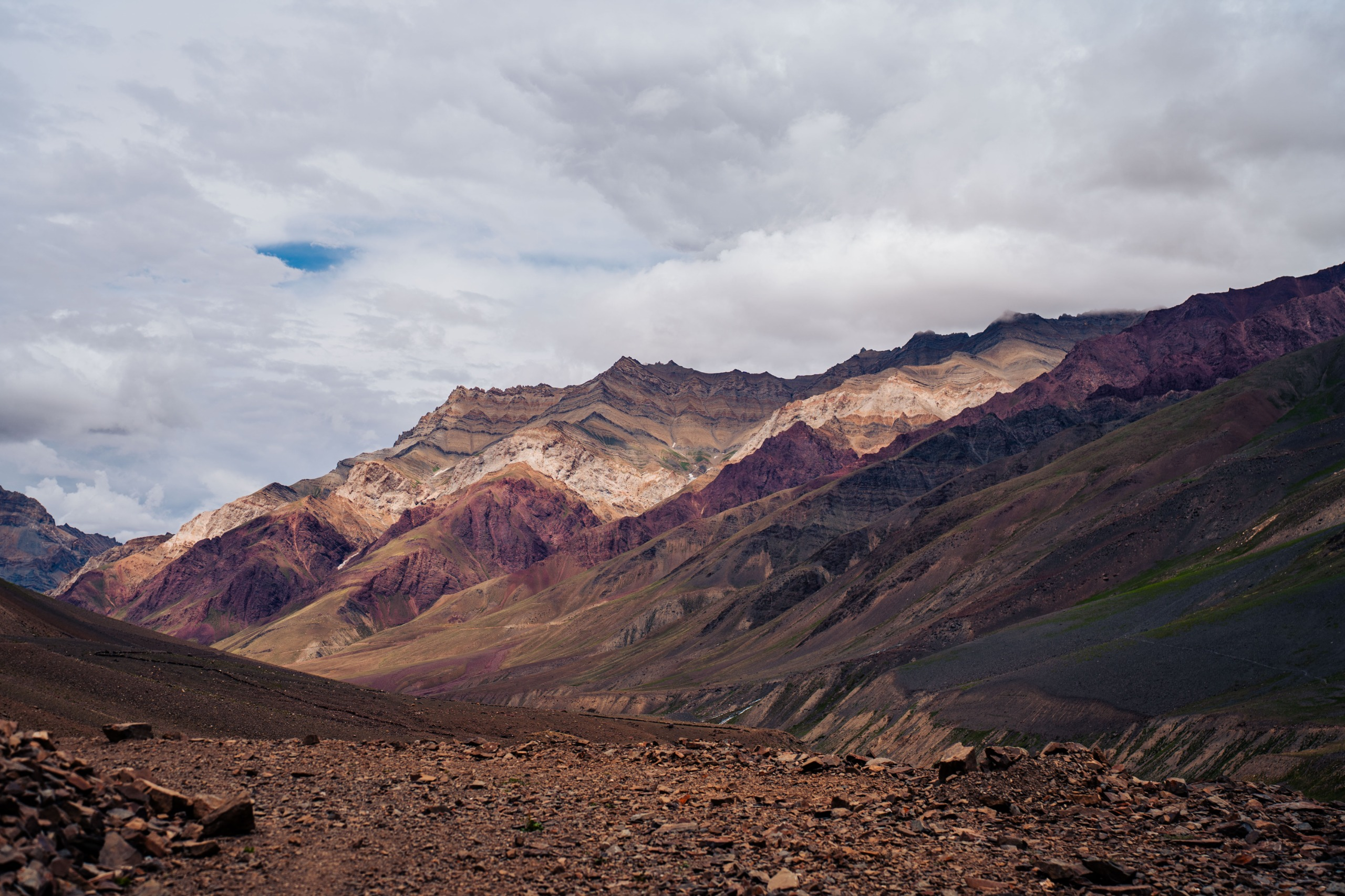
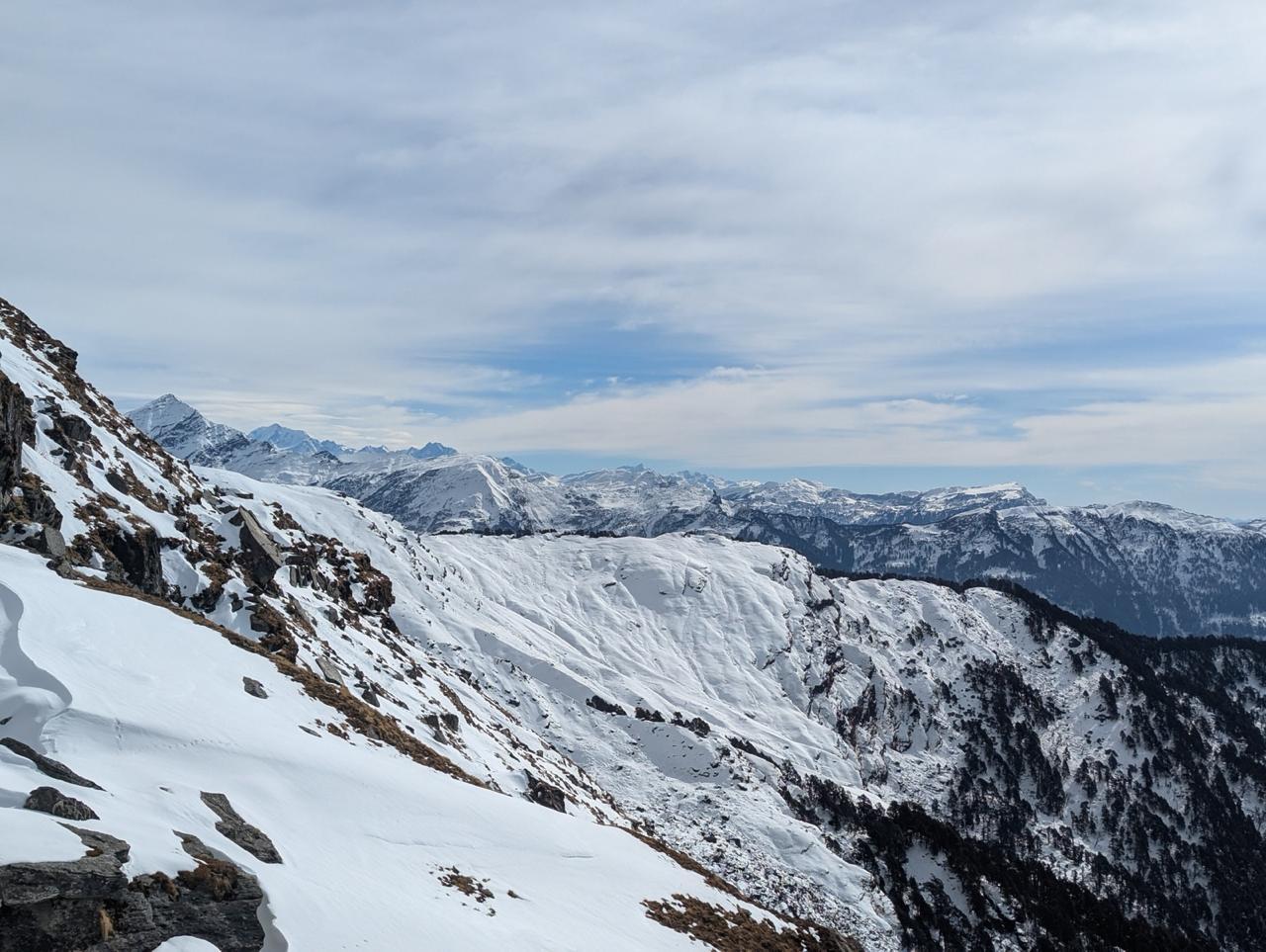
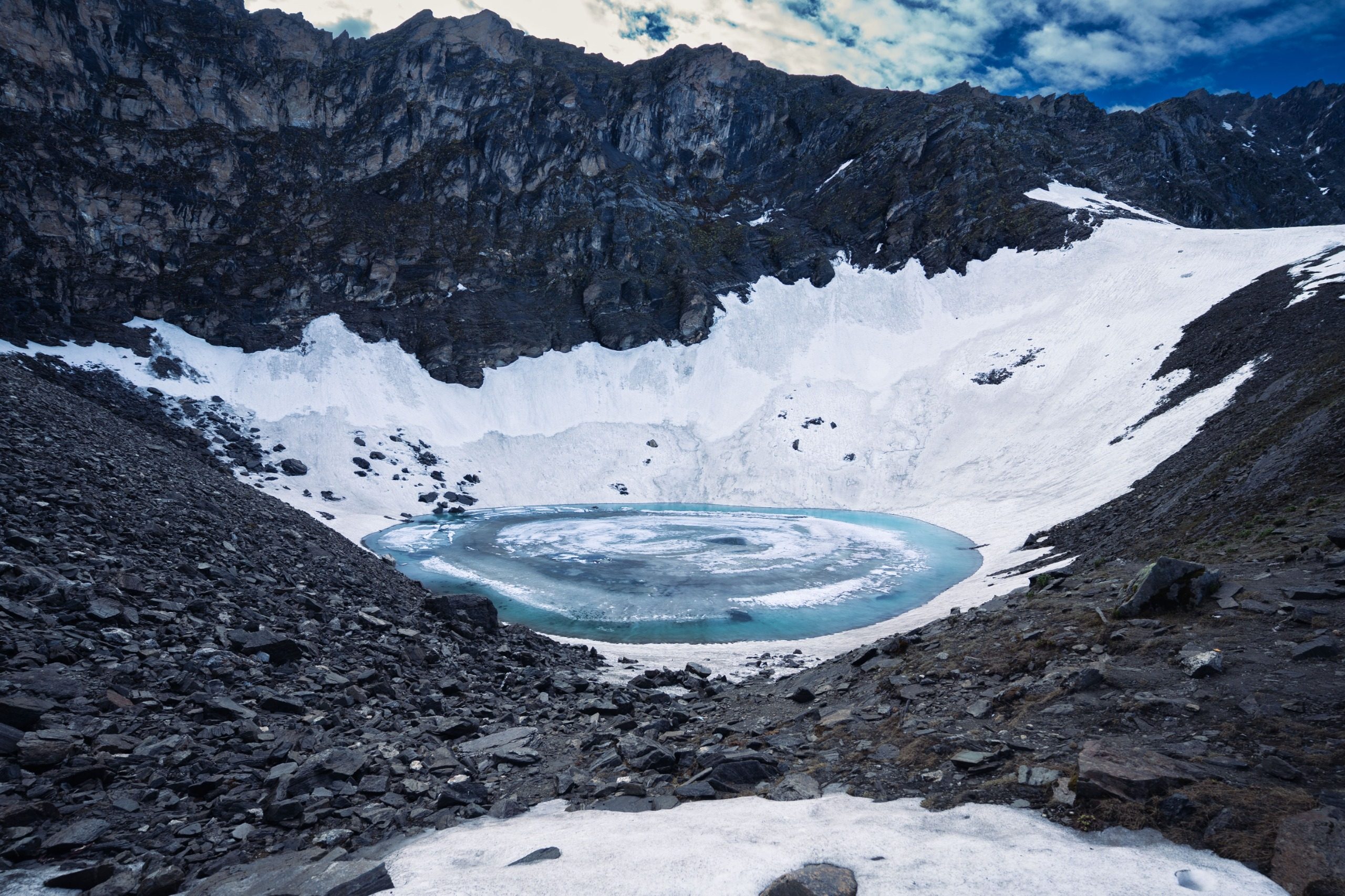
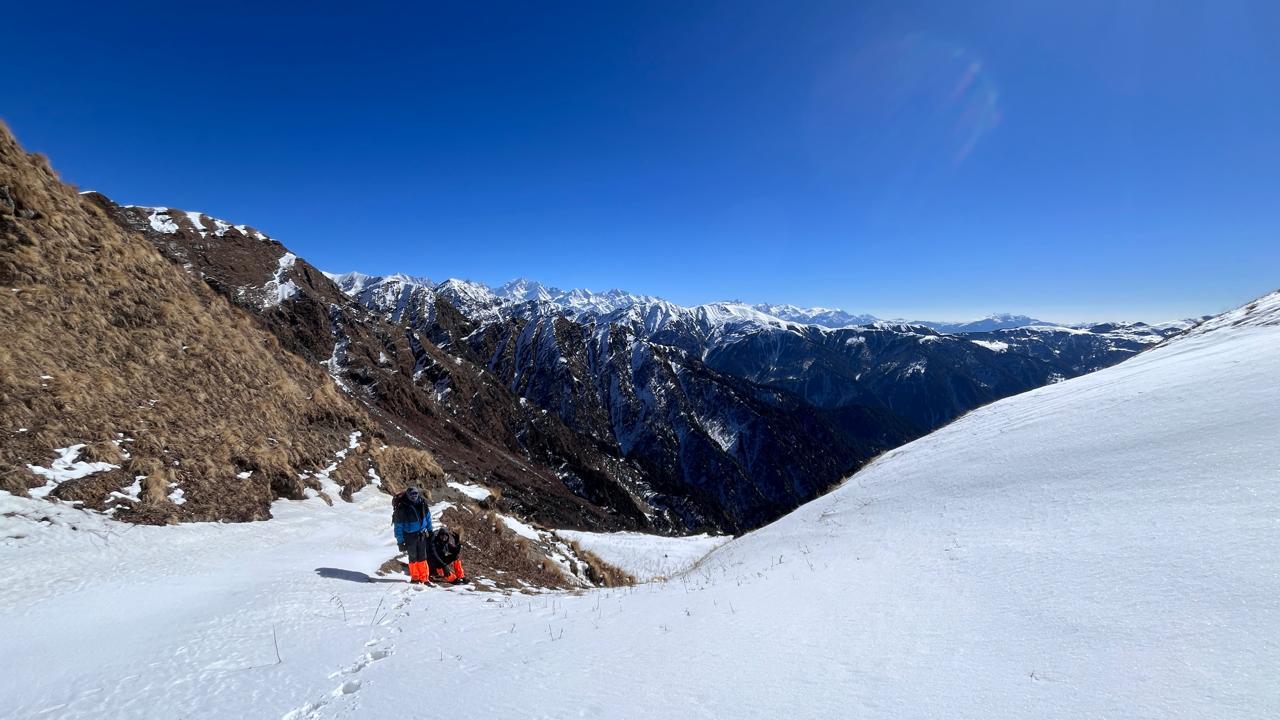
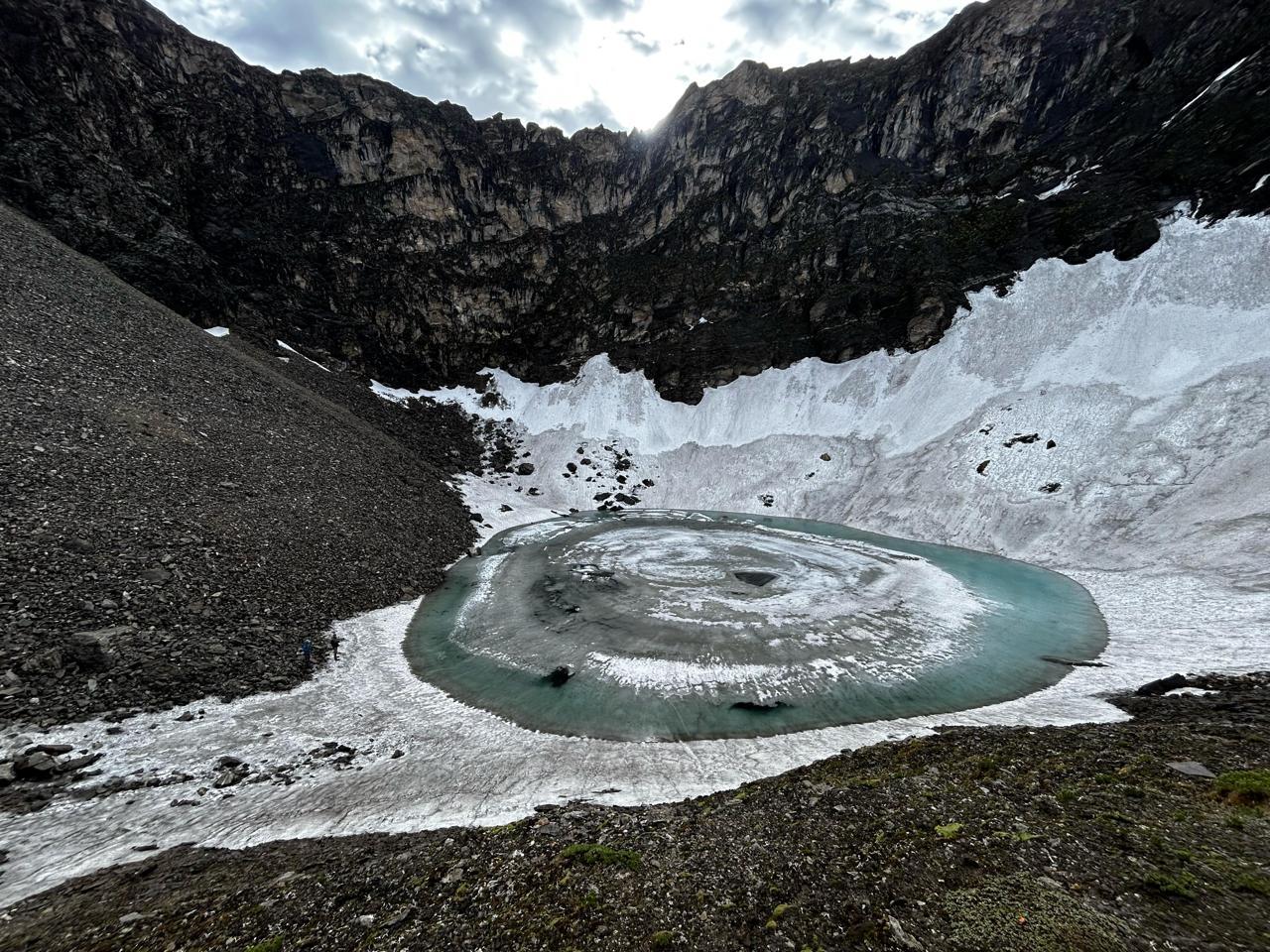
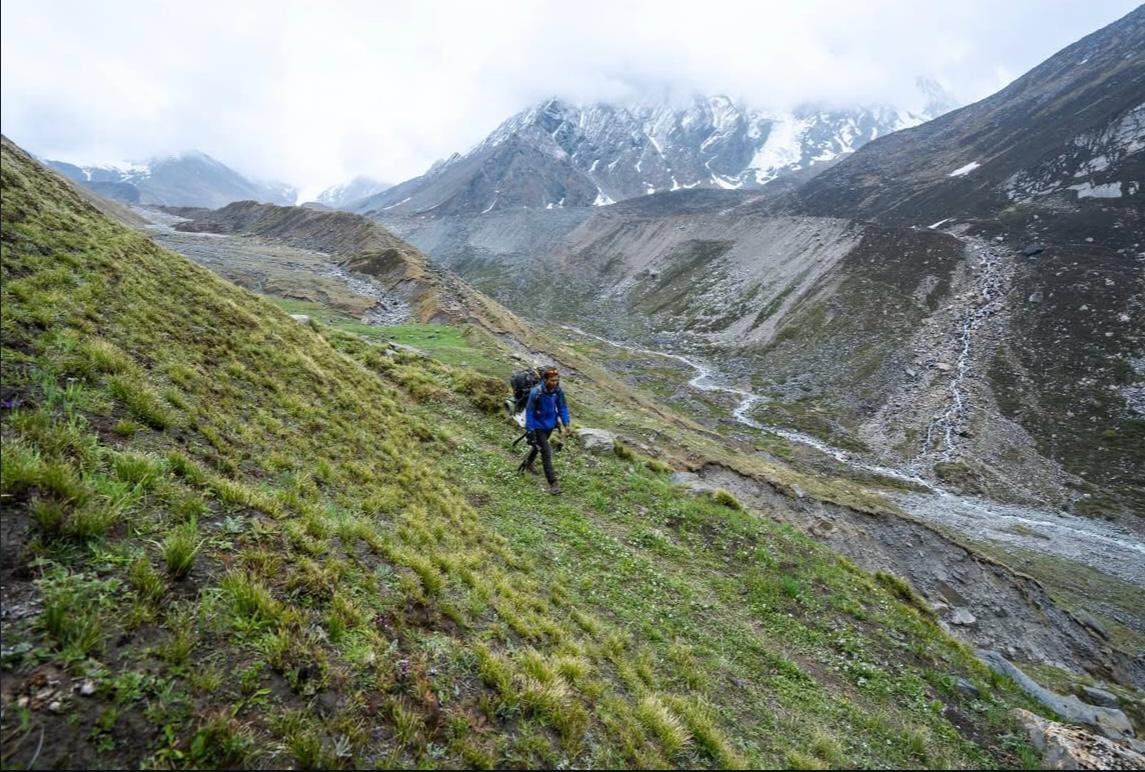
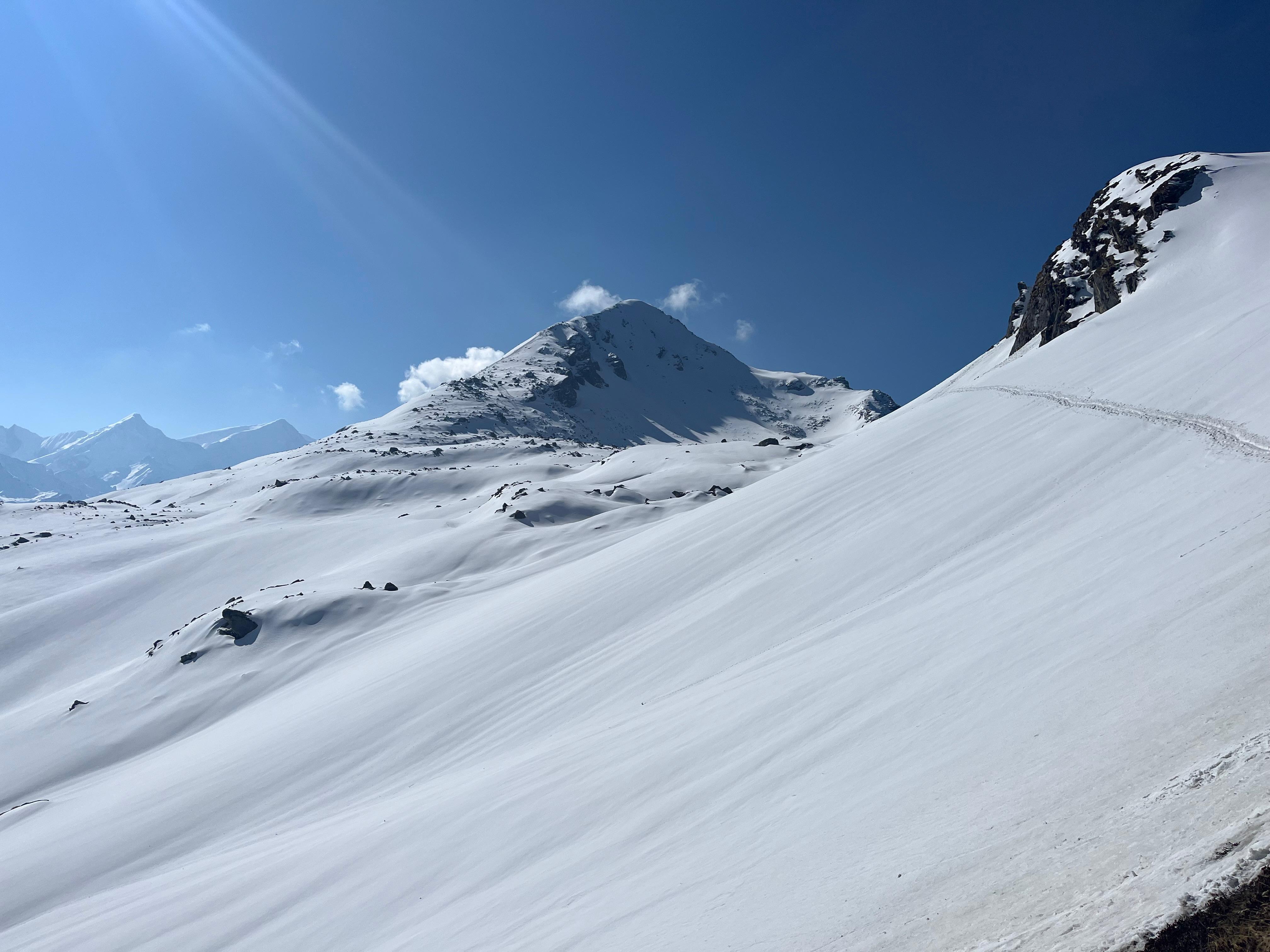
The day begins with silence, the kind that only exists above the treeline. The landscape shifts from green to grey, from grass to rock and ice.
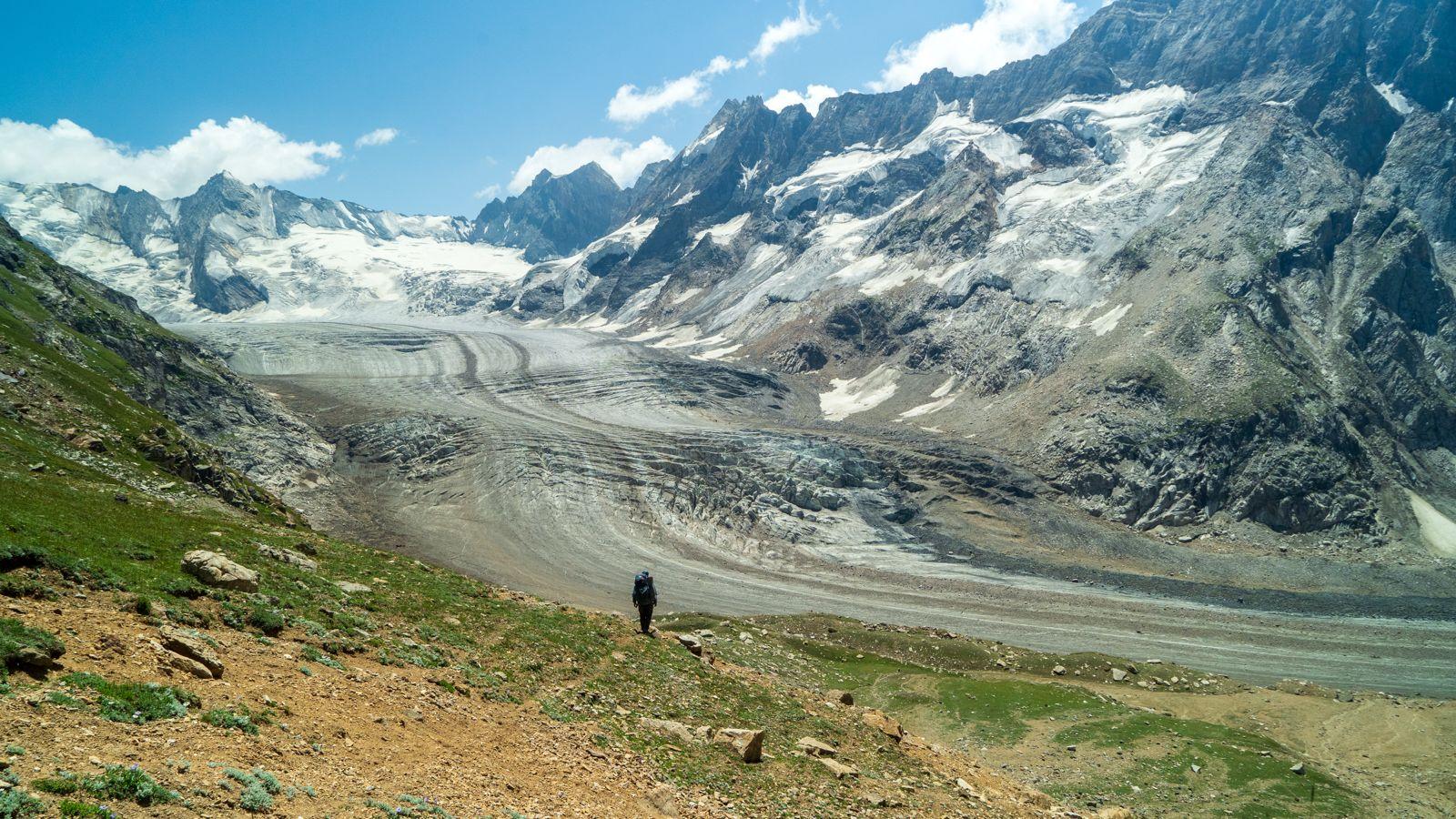
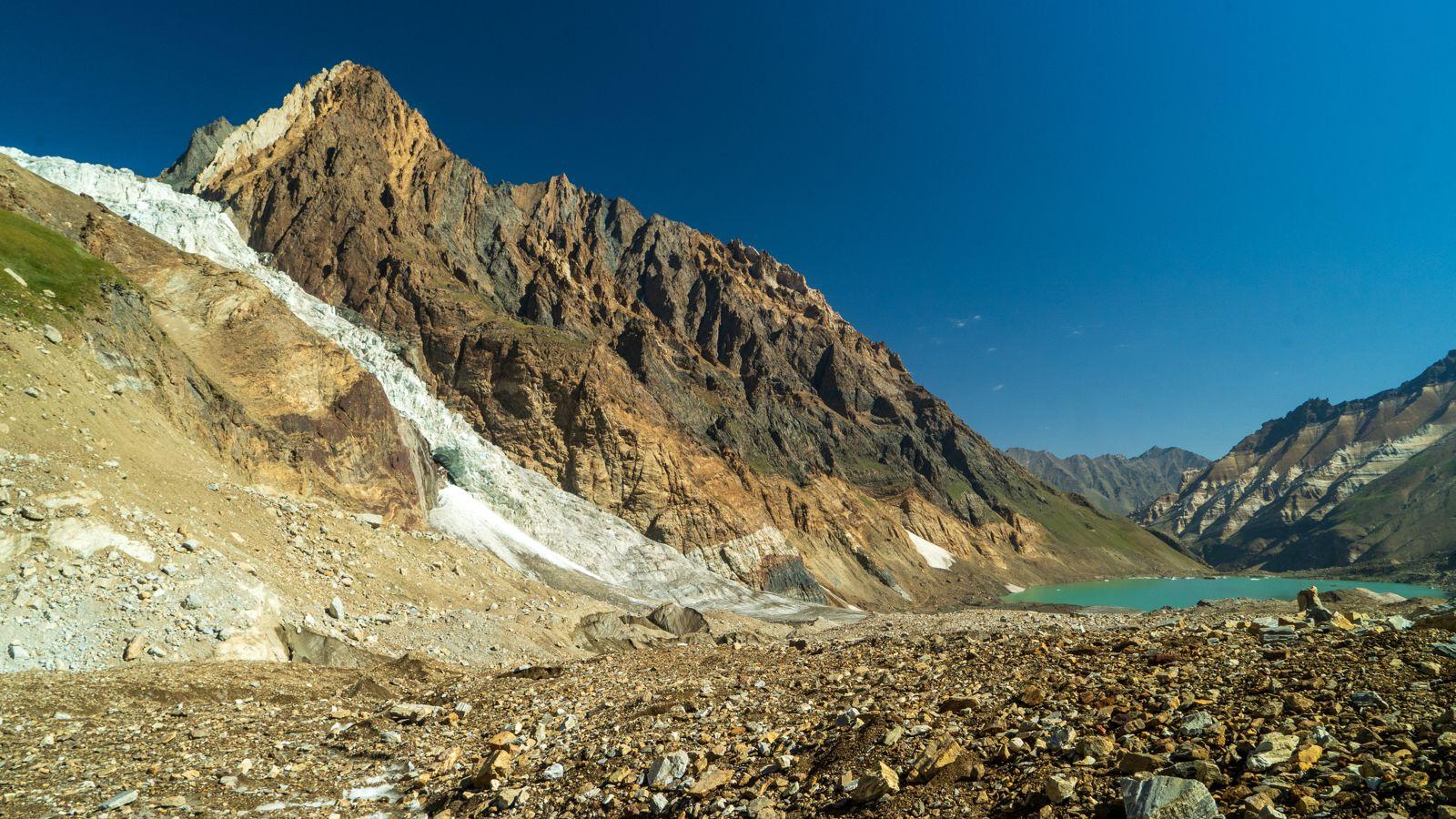
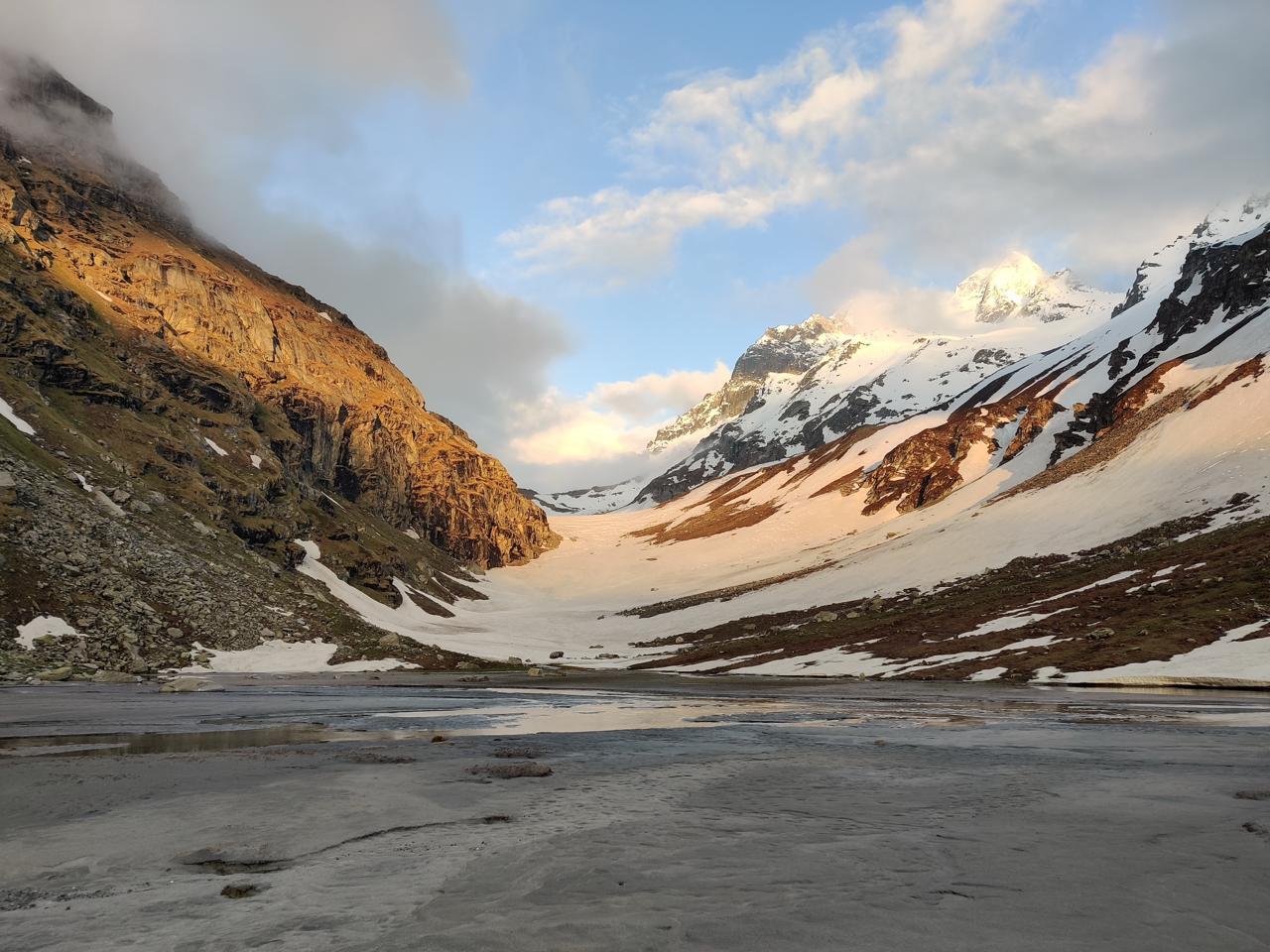
You walk through glacial valleys and cross snow-fed streams, with the wind growing sharper as you gain height. The trail leads to Upper Lamjung, a windswept basin surrounded by hanging glaciers.
This is base camp, the last night before the pass. The team preps for the crossing, melting snow for water, tightening backpack straps, and checking layers. The cold bites, but the anticipation warms everything.
Day 6
Upper Lamjung to Bonga via Borasu Pass
Trek Distance: ~14 km
Elevation Profile: 15,520 ft / 4,730 m → 17,060 ft / 5,200 m → 14,760 ft / 4,500 m
The pass day, long, raw, and unforgettable.
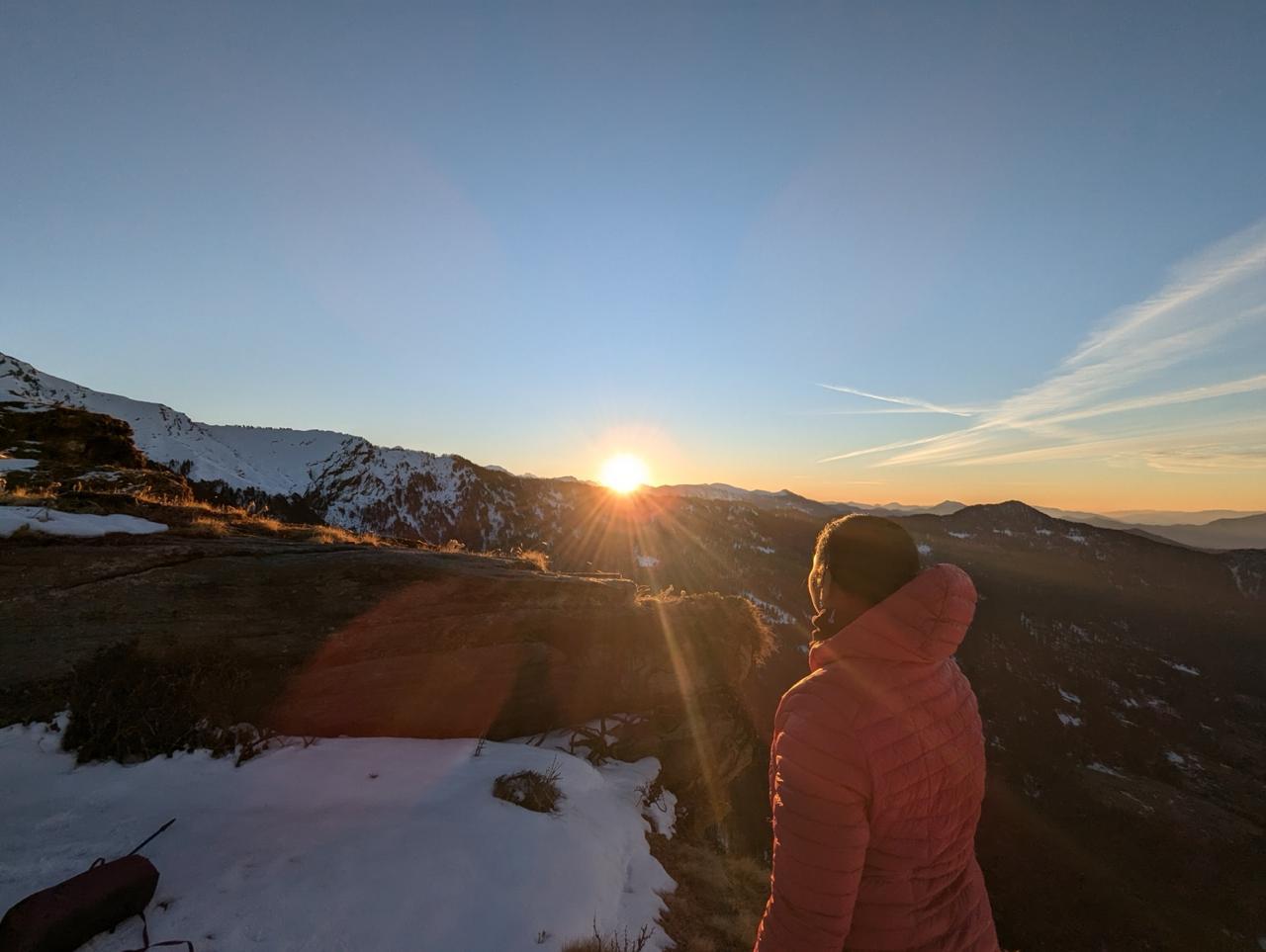
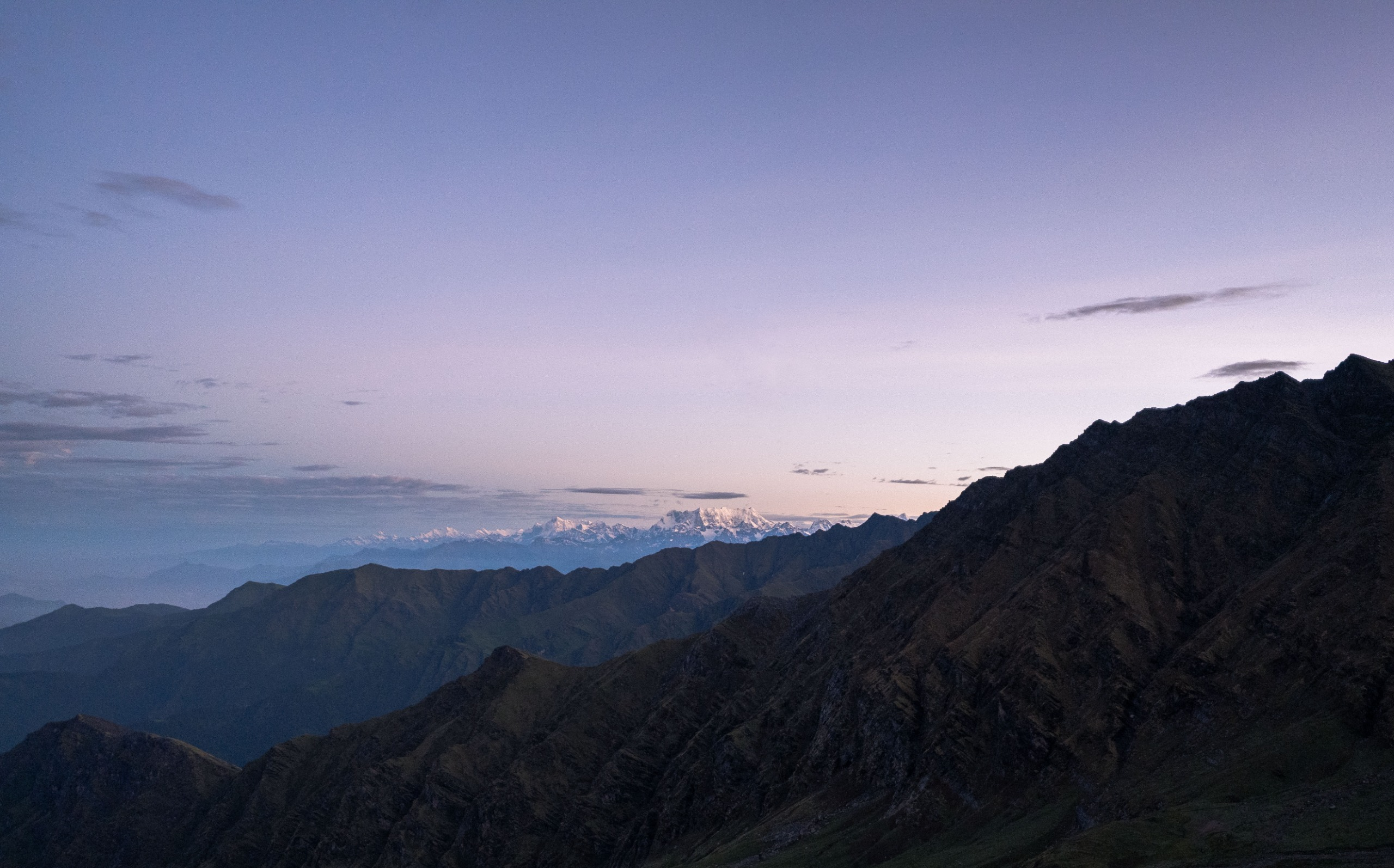
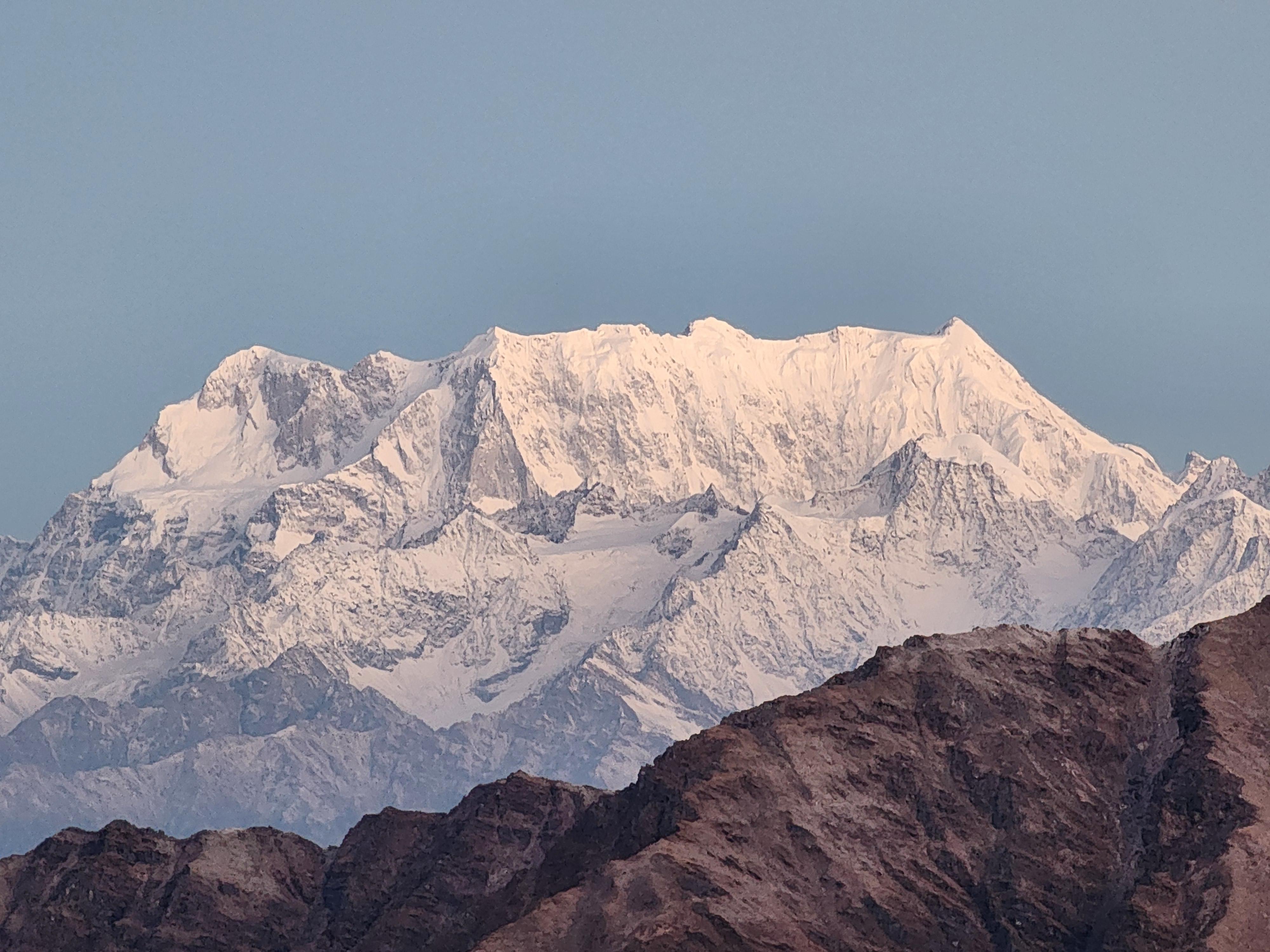
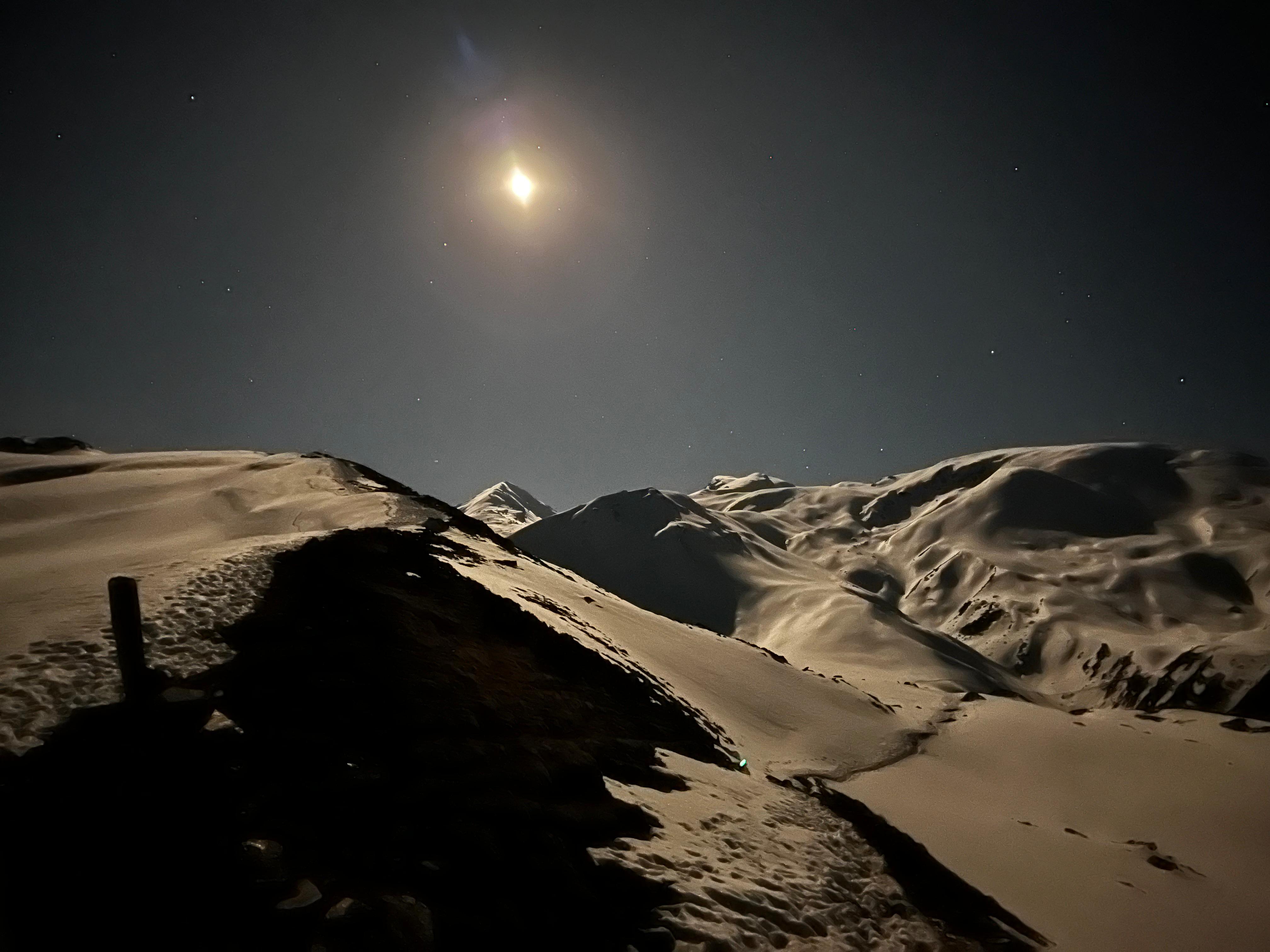
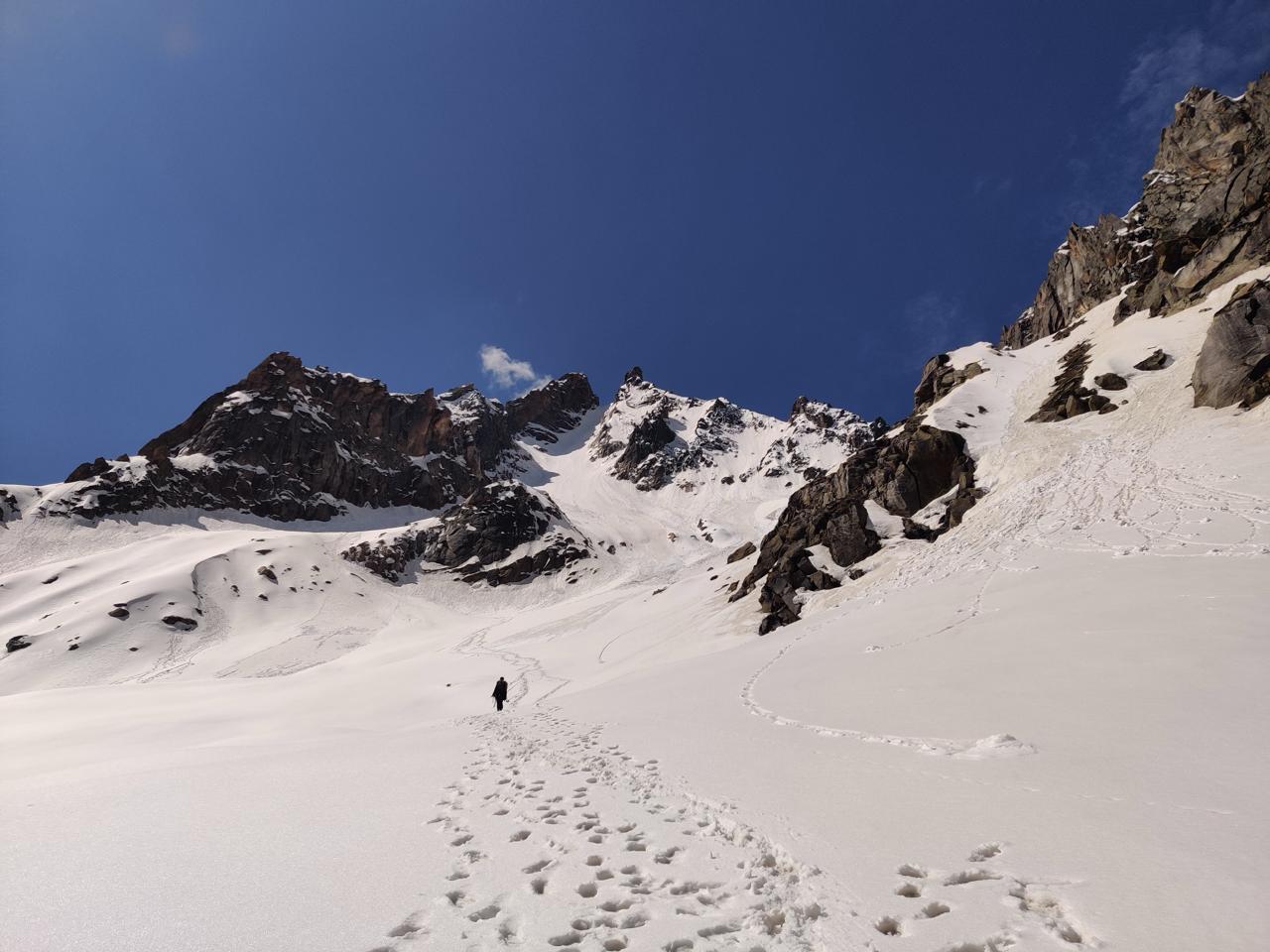
You start before dawn, headlamps slicing through the cold, night. The ascent is steep and steady, the snow crunching beneath your boots. As the sun rises, the peaks of Swargarohini, Black Peak, and Kinnaur Kailash glow in pale gold.
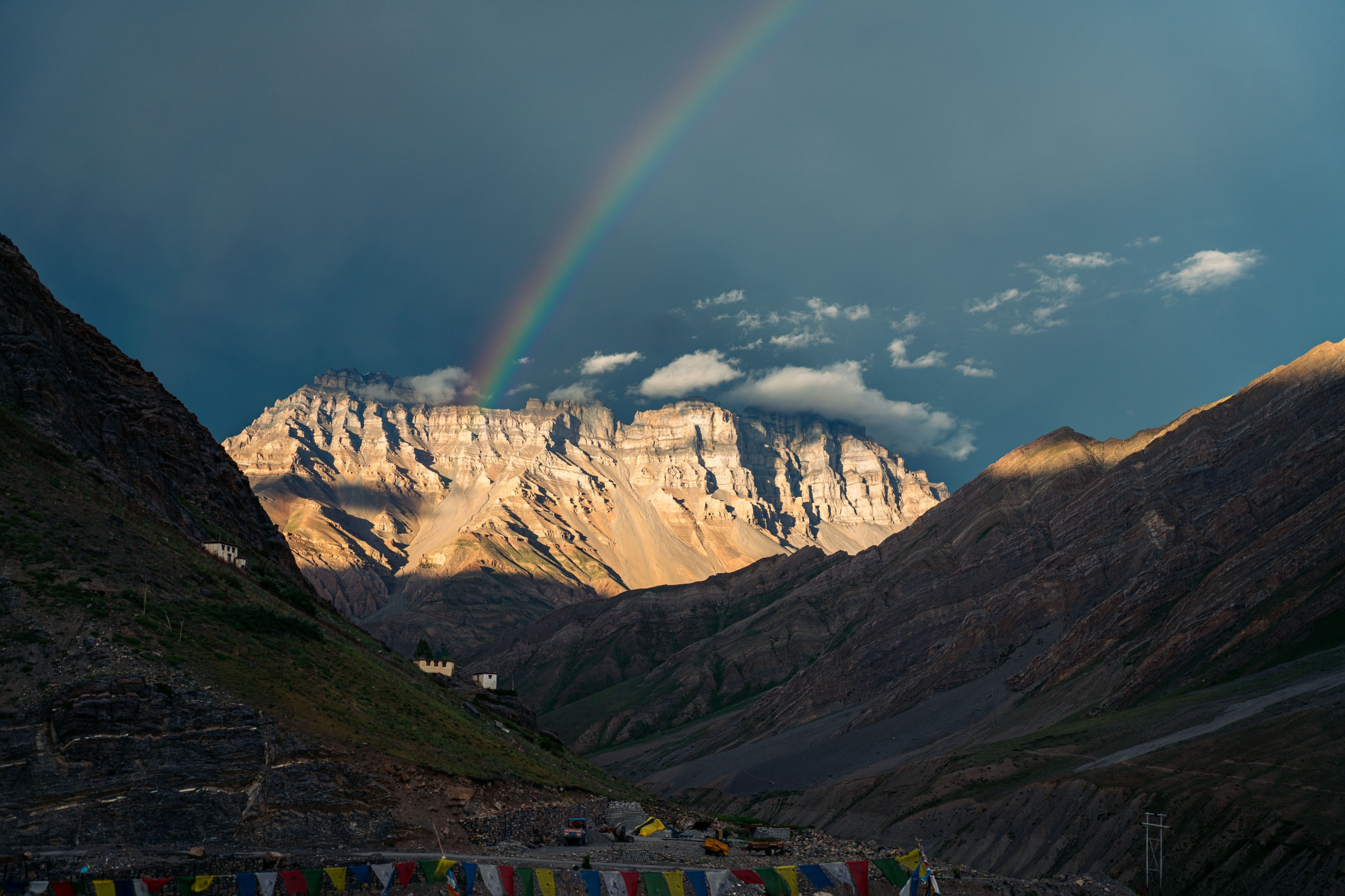
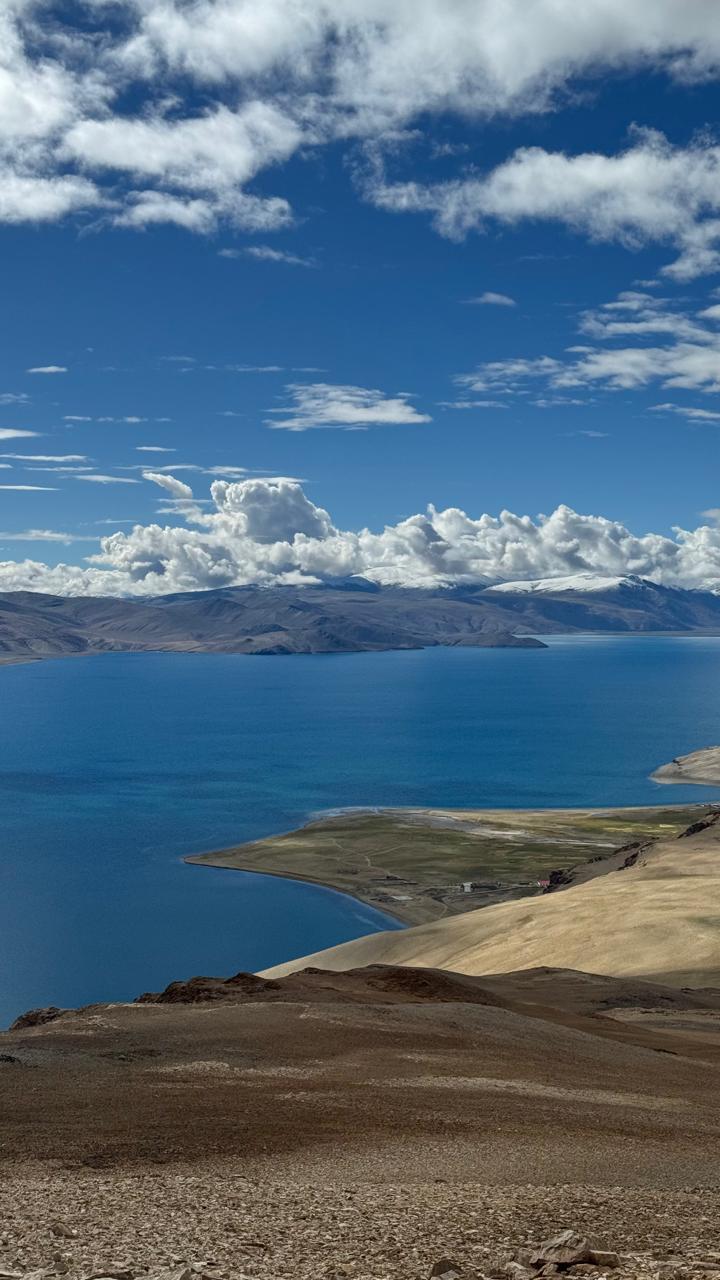
Reaching Borasu Pass feels surreal, a narrow ridge between two worlds. On one side lies Garhwal; on the other, the stark brown ranges of Kinnaur. The air is thin, the silence absolute.
After soaking in the view, the descent begins, cautious steps over moraine and snow patches, till you finally reach Bonga, a flat meadow tucked into the folds of the mountain.
It’s been a long day, but a few moments compared to standing at the top of Borasu and knowing you’ve crossed between states, valleys, and worlds on your own strength.
Day 7
Bonga to Chitkul
Trek Distance: ~13 km
Elevation Profile: 14,760 ft / 4,500 m → 10,760 ft / 3,280 m
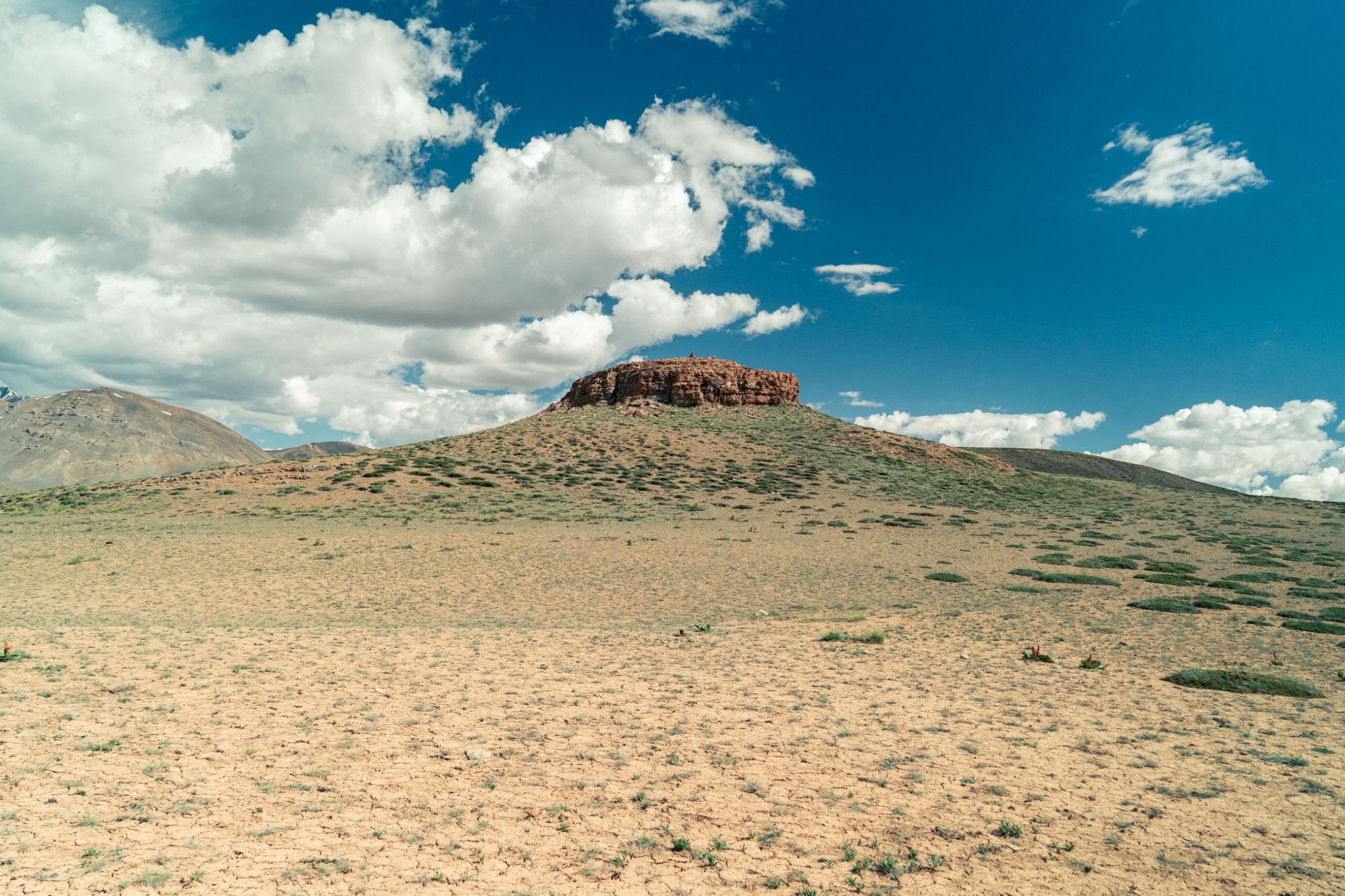
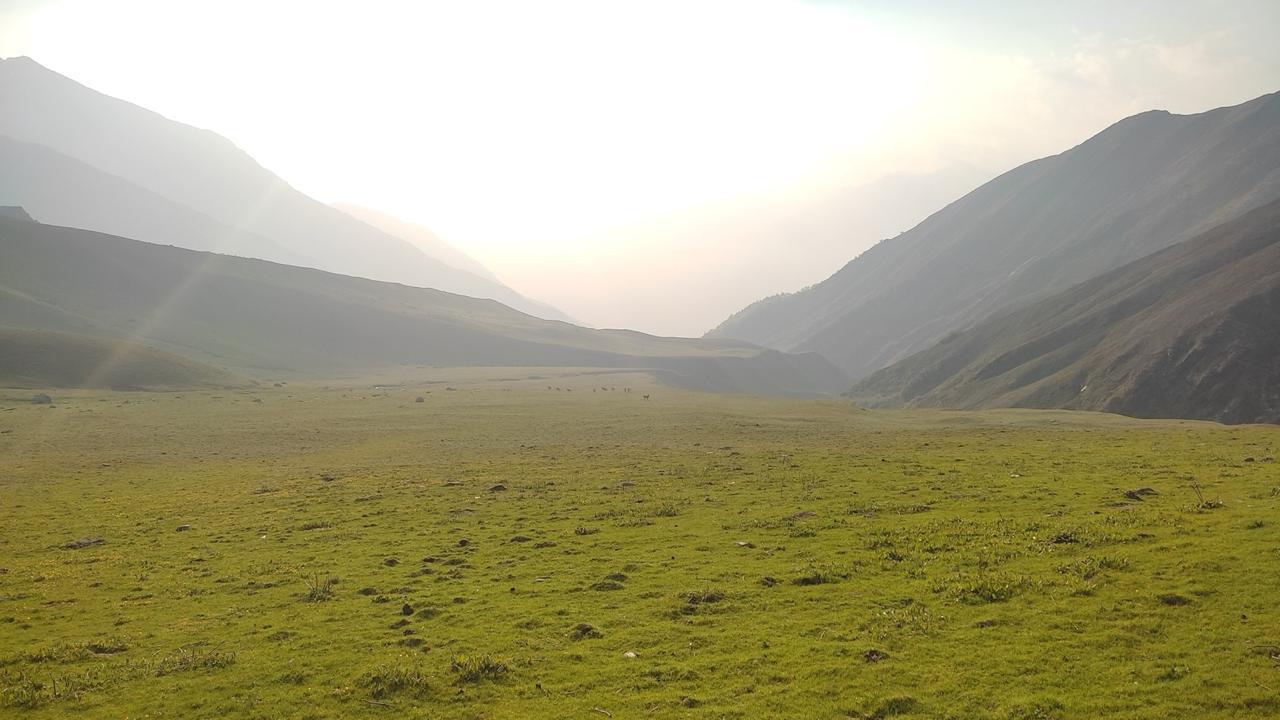
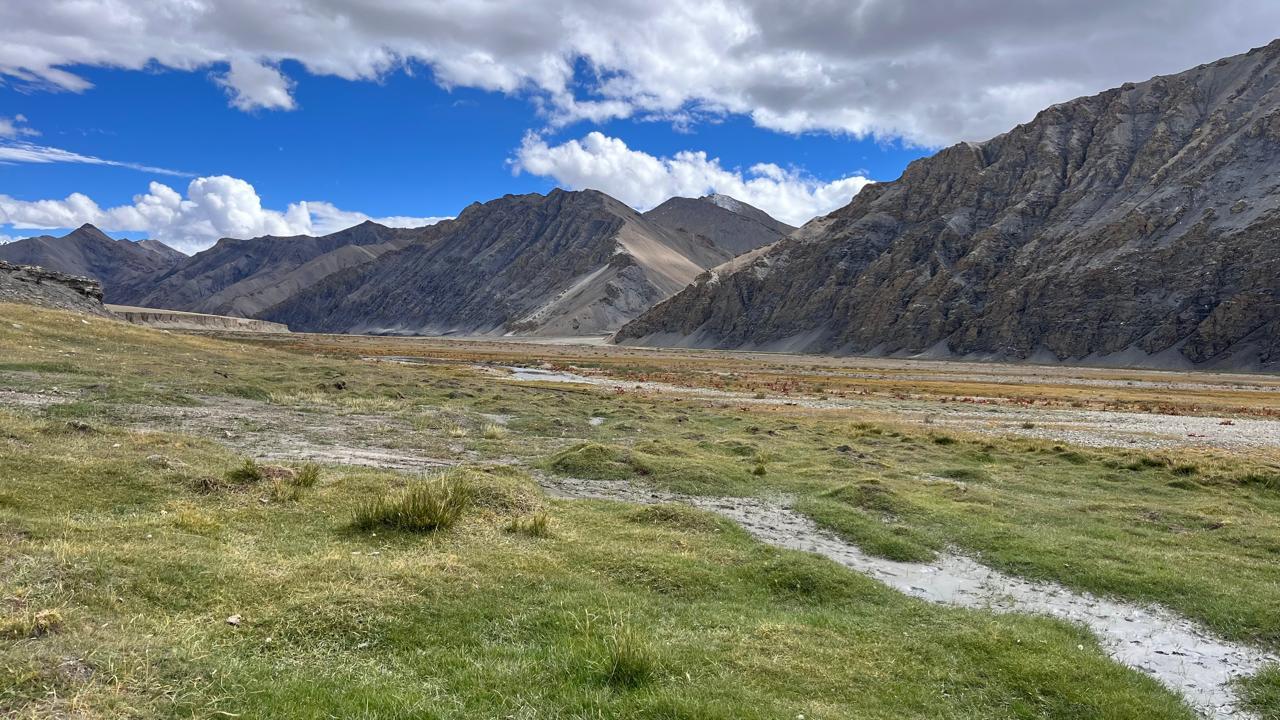
The landscape softens again, from icy ridges to brown slopes, then to the green meadows of Kinnaur.
The descent is long but gentle, tracing the Baspa River as it widens into the valley. The first sign of civilisation, a cluster of wooden roofs, signals your arrival in Chitkul, the last village of India.
After days of remoteness, the smell of food, chatter, and the sight of apple trees feel grounding. You’ve crossed the Himalayas on foot, one valley into another.
Day 8
Depart from Chitkul
Drive Distance: —
Elevation Profile: 10,760 ft / 3,280 m
Morning in Chitkul feels like an epilogue. The sun hits the whitewashed houses, prayer flags flutter in the wind, and the Baspa River hums gently below.
After breakfast, you begin the drive down the valley, still half in the journey, half already missing it. The road winds toward Shimla, leaving behind the silence, the laughter, and the rhythm of the wild.
Our Expectations from Participants
The Borasu Pass backpacking is an introduction to true backpacking.
For a week, you’ll carry everything you need, move as a team, and rely on each other. Every decision, from when to start walking to how to pitch a tent in the wind, becomes a shared experience.
Here’s what we expect from you before and during the expedition:
1. Physical Preparedness
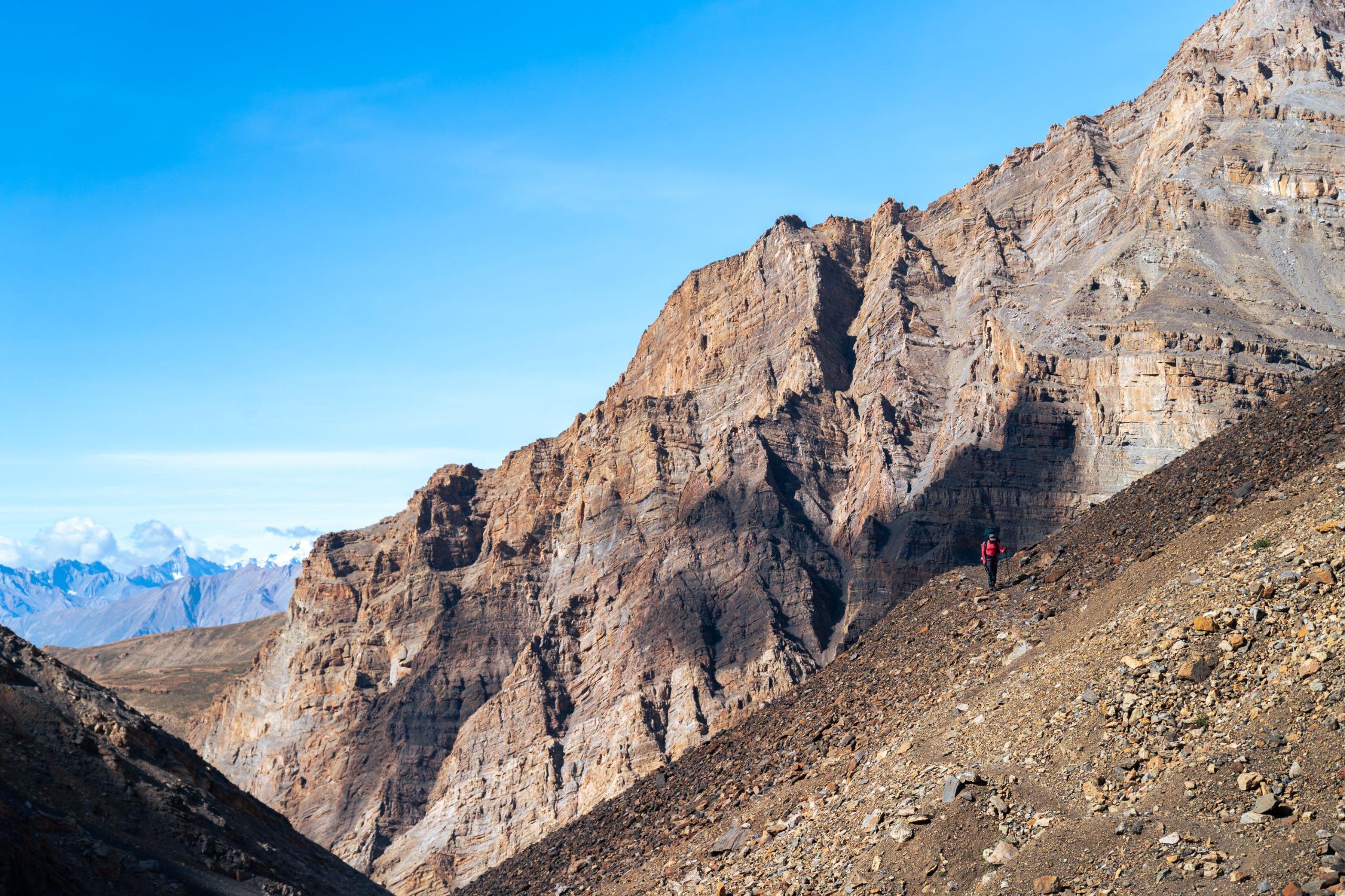
You’ll be trekking for 6–8 hours a day, often on uneven terrain and steep climbs, while carrying your backpack (8–14 kg).
We expect participants to train consistently for at least 6–8 weeks prior to the trek, focusing on a balanced mix of endurance, strength, and mobility.
We’ll share a structured fitness plan to help you prepare, so when the mountains test you, your body will hold strong.
2. Self-Sufficiency & Responsibility
Backpacking is about learning to depend on yourself and the team.
You’ll carry your own gear, set up your tent, help with cooking, and learn how to pack light while staying prepared.
Odyssey instructors will guide and support you, but the experience is designed to help you build confidence in the wild, step by step.
3. Team Spirit
The mountains demand teamwork above all else.
From crossing streams to cooking in cold evenings, everyone contributes, and that’s what makes the experience memorable.
Respect, patience, and clear communication are at the heart of how we move in the outdoors.
4. Respect for the Land
You’ll be walking through fragile alpine ecosystems and high glacial basins, places few people reach.
We expect every participant to follow Leave No Trace principles: no littering, no shortcuts, and no disturbance to local wildlife or culture.
5. Mindset of Exploration
Weather, terrain, and conditions can change quickly at these altitudes.
Come with flexibility, ready to adapt, learn, and embrace uncertainty.
Some days will be tough. But in those moments, you’ll also discover what backpacking and the mountains truly mean.
Minimum Fitness Requirement
What You Should Be Able to Do Before the Trek
To join this trek confidently, you should be able to:
Endurance:
Jog or brisk walk 5 km at a comfortable pace.
Climb 10–12 floors (150–180 steps) without long breaks.
Trek or hike locally for 2–3 hours, carrying a 6–8 kg backpack
Strength:
Do 20–25 bodyweight squats and 10–15 lunges per leg with control
Hold a plank for 60 seconds and a side plank for 30 seconds each side.
Perform 10–15 push-ups or an equivalent modified version.
Carry a 10 kg backpack up and down stairs for 10–15 minutes without strain.
Meeting these benchmarks ensures your body can handle both the long hours of walking and the constant load-bearing nature of backpacking.
How to Train for before the Backpacking Expedition
Borasu Pass demands endurance, not speed.
You’ll be trekking 6–8 hours a day through varied terrain: forests, meadows, moraine, snow, and long descents, often carrying your own backpack weighing 8-14 kg.
To enjoy the experience fully and stay safe, we recommend a minimum of 7-8 weeks of training, specifically designed for this type of backpacking trip.
Weeks 1–4: Build Your Base
Focus on developing cardiovascular endurance and joint strength to enhance overall physical well-being.
- Brisk walk/jog: 4–5 km daily, 3-4 times a week
- Leg and core strength: Squats, lunges, step-ups, planks (3 sessions per week)
- Weekend hikes: Include small hill walks or stair climbs of 60–90 minutes
This is where you lay the foundation: steady heart rate, stable joints, and consistent rhythm.
Weeks 5–8: Train Like You Trek
Simulate the trek conditions by carrying your backpack and building load tolerance.
- Endurance hikes: 10–15 km walks once or twice a week with a 6–8 kg backpack
- Stair climbs or hill repeats: 2–3 sessions a week with a loaded pack.
- Core and shoulder strength: Push-ups, dead bugs, planks, and farmer’s carries
- Recovery: Yoga or stretching twice a week for mobility and flexibility.
You’re not training to be fast, you’re training to be consistent. The ability to move for long hours, stay steady under load, and recover each day is what matters in the mountains.
Inclusion
Exclusion
How heavy will my backpack be?
As the days go by and ration supplies are used, the weight gradually reduces to around 10–12 kg. We’ll guide you on how to pack light and efficiently, ensuring that everything you carry serves a purpose.
Is this trek suitable for first-time backpackers?
However, if you’ve completed multiple Himalayan treks and maintain a regular fitness routine, you can speak to our team before registering. We’ll help you assess whether this is the right next step for you.
What does “backpacking” mean in this trek?
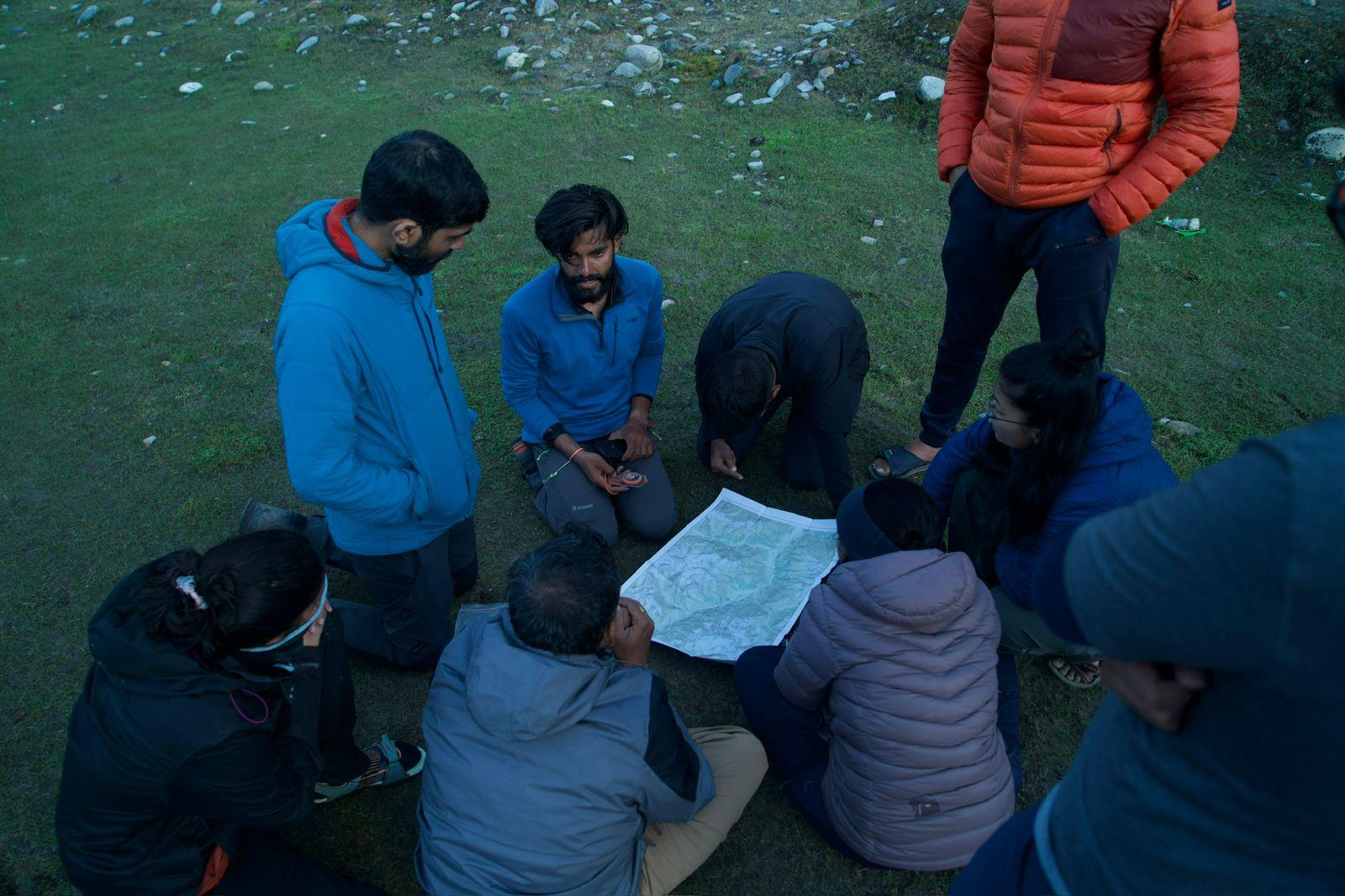
There’s no porter or mule support. You walk as a team, cook together, and learn to manage weight, food, and resources. Odyssey instructors lead the expedition, but every participant is part of the process, from setting up camp to cooking dinner under the stars.
What kind of food will we eat on the trek?
The idea is to learn to cook in the wilderness and become truly self-sufficient. In the lower camps, we use fresh ingredients, including rice, dal, vegetables, and eggs, to prepare hearty meals such as khichdi, noodles, or pasta. As we move higher, we transition to dehydrated, easy-to-cook meals that conserve fuel and weight while maintaining nutrition integrity.
Our instructors will teach you various techniques of outdoor cooking, from efficient stove use to portion planning and balancing meals for recovery. We eat well, always, because food is not just fuel here, it’s part of the experience of living in the wild.
If you have dietary preferences (such as vegan, gluten-free, or Jain), please let us know in advance, and we’ll plan accordingly.
How do we manage cooking and water on the trail?
Participants take turns helping with setup, cooking, and cleanup, part of learning how to live comfortably in the wild.
How cold does it get?
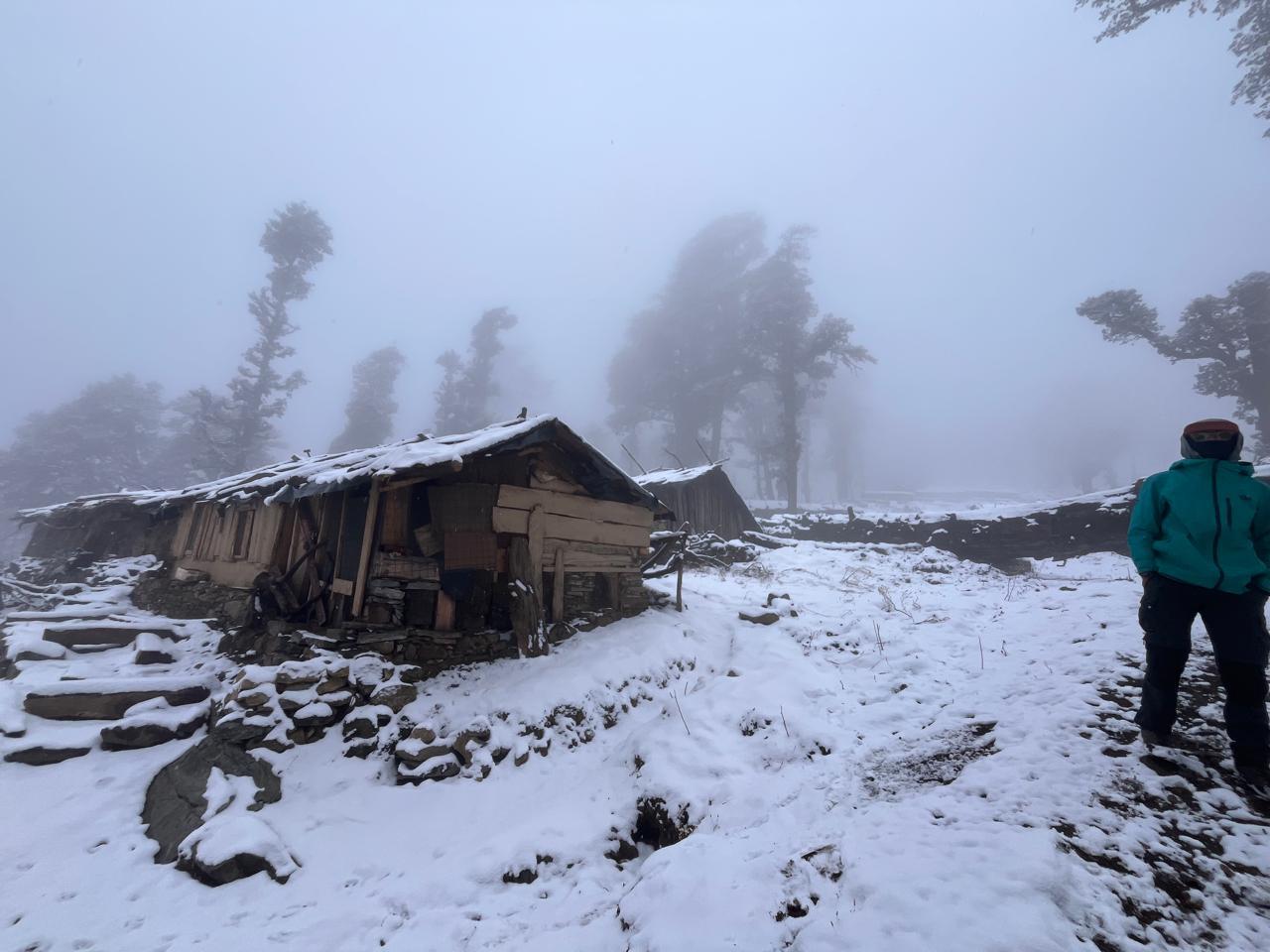
Nights: 0 to -5°C at higher camps (Upper Lamjung and Bonga)
Good layering and a quality sleeping bag are essential. We’ll share a detailed gear list once you register.
What’s the camping setup like?
Each participant carries their tent and sleeping gear, and the team decides on campsites together each day. It’s a mix of function and freedom, no fixed tents, no fixed comforts, just clean, earned rest.
Is there a network or charging available?
Once you enter the Har Ki Dun valley, you disconnect completely until you reach Chitkul.
How is Borasu different from regular treks?
In backpacking, you are everything. You move light, take responsibility, and learn practical mountain skills, from navigation to campcraft.
It’s less about being served, more about discovering what you can do.
What happens in case of bad weather or injury?
In the event of a medical issue or sudden weather change, decisions are made collectively, with safety as the top priority. Evacuation is coordinated via local contacts from Har Ki Dun or Chitkul.
SELECT DATE TO REGISTER
Thank You!
Your form has been submitted successfully. We'll get back to you soon.
₹ 27,999 + 5% GST
