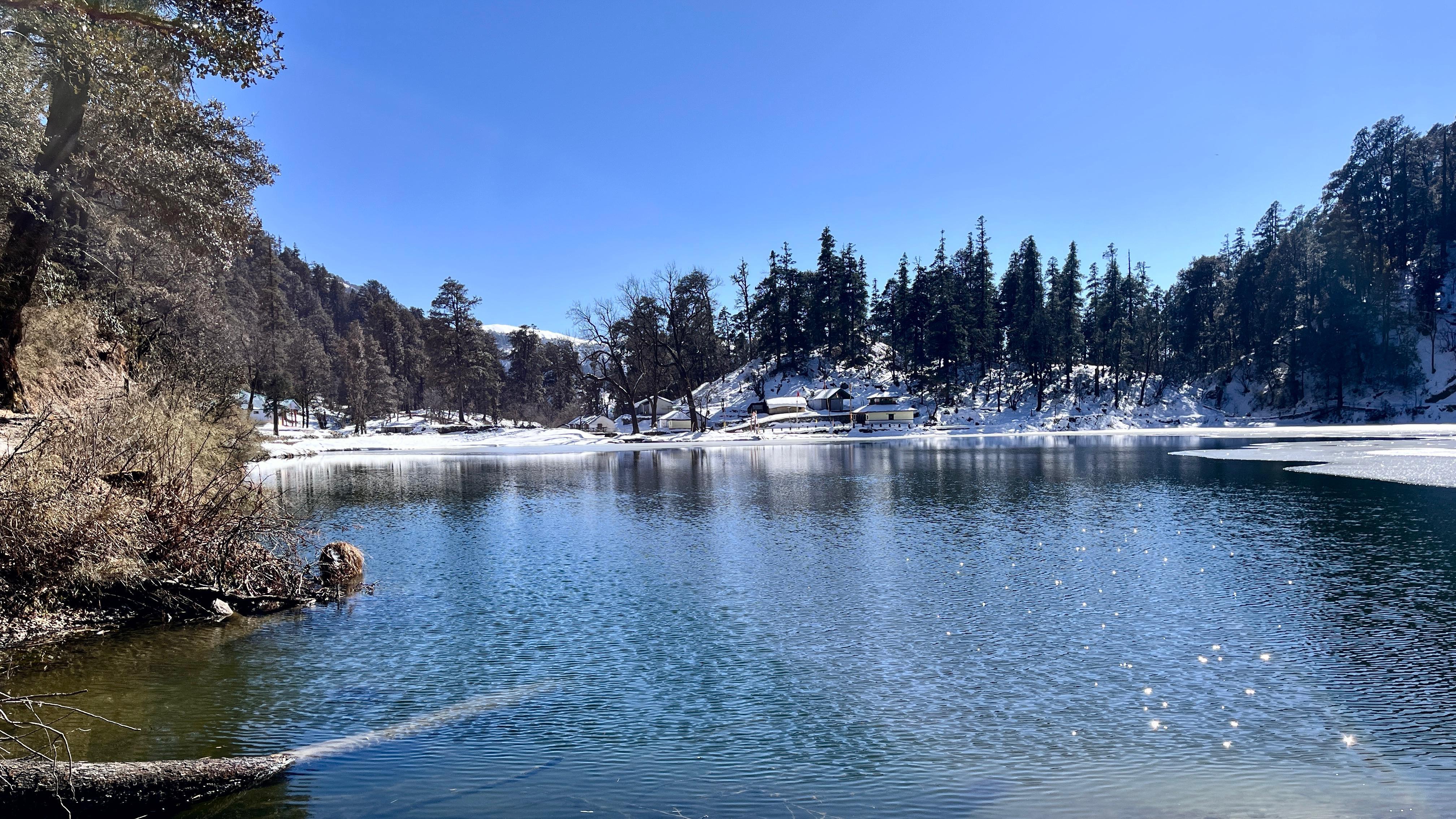


Most people think of Dodital as a quiet lake trek and turn back the same way they came.
But continuing beyond the lake and crossing Darwa Pass completely changes the journey.
This route turns a gentle forest walk into a full mountain circuit, one where you move deeper into the terrain, carry everything you need, and learn how a multi-day backpacking journey actually works.
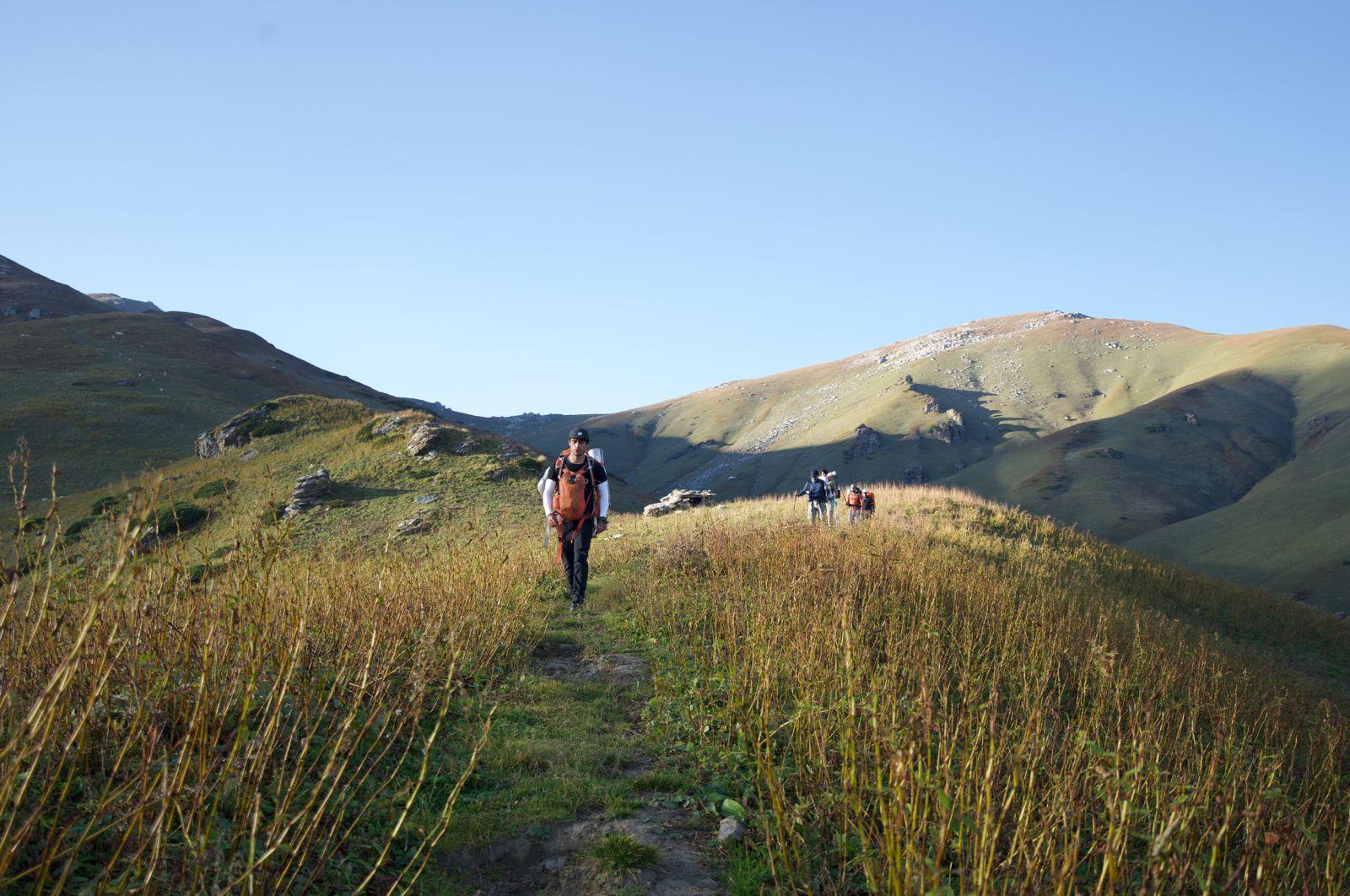
You carry your own pack, tent, food, stove, clothing, and move through forests, meadows, and high alpine terrain as a team.
From the oak and pine forests near Agoda, the trail leads to Dodital, where you settle into your first true backpacking campsite. Beyond the lake, the terrain becomes steeper. The climb toward Darwa Pass demands steady pacing, good energy management, and clear decision-making, skills learned through practice.
Rated at a moderate difficulty, this trek sits in a sweet spot between accessibility and challenge. The pack weight, terrain, and pass crossing make it a meaningful step up from regular treks, without tipping into expedition-level intensity.
For women who’ve done lodge-based or guided Himalayan treks and are curious about backpacking, this is a natural transition.
You learn how to pack smart, ration food, manage your energy, work with your team, and move independently in the mountains, skills that open the door to longer and more remote journeys ahead.
Day 1
Drive from Dehradun to Agoda I Backpacking Prep I
Time Taken: 6–7 hours drive
Elevation Gain: from 640 m to 1,740 m
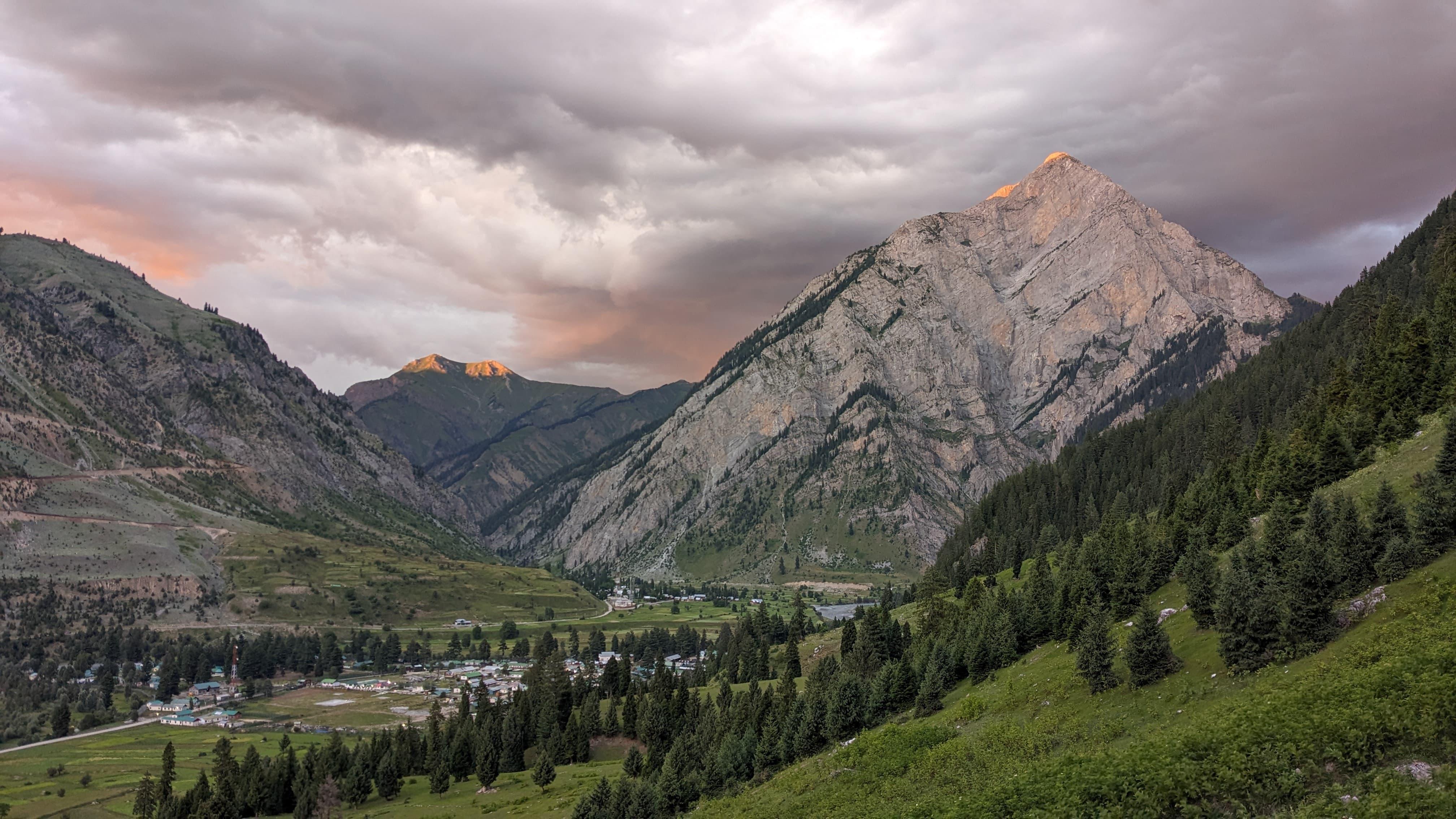
A scenic mountain drive from Dehradun takes us along the Bhagirathi Valley toward Uttarkashi, before turning into quieter village roads leading to Agoda.
By the time we reach Agoda, we’re firmly out of the city rhythm and into mountain time.
This is where you meet your backpacking instructor and guide, the people who’ll be walking with you for the next few days and teaching you how to function out here.
There’s excitement in the air, mixed with the nervous energy that comes with starting something unfamiliar.
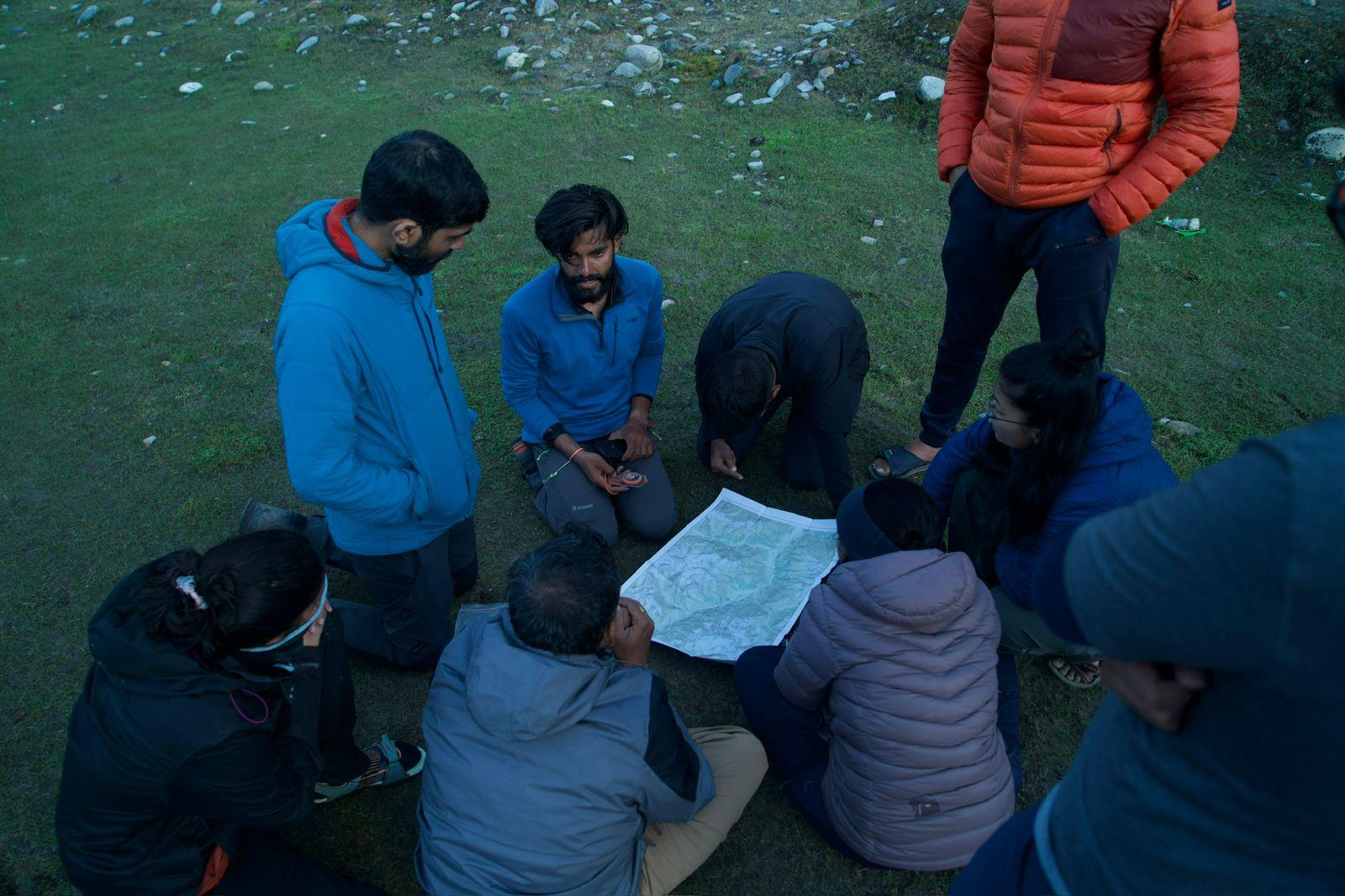
We sit together and lay out all the group gear.
Tents. Stoves. Fuel. Cooking pots. Rations. Water filters.
You’re walked through how each piece will be used and how the load will be shared. One thing becomes clear very quickly: nothing moves unless we carry it.
Backpacking, at its core, is teamwork.
Packing follows. Some people overpack, then repack, then rethink everything again after seeing how others manage.
It’s a small dance between what you think you need and what you actually do.
We end the day with dinner at Agoda, soaking in the surroundings and the quiet sense of anticipation.
Day 2
Trek from Agoda to Manjhi I Finding Your Rhythm I
Trek Distance: 8 km
Time Taken: 5–6 hours
Elevation Gain: from 1,740 m to 2,940 m
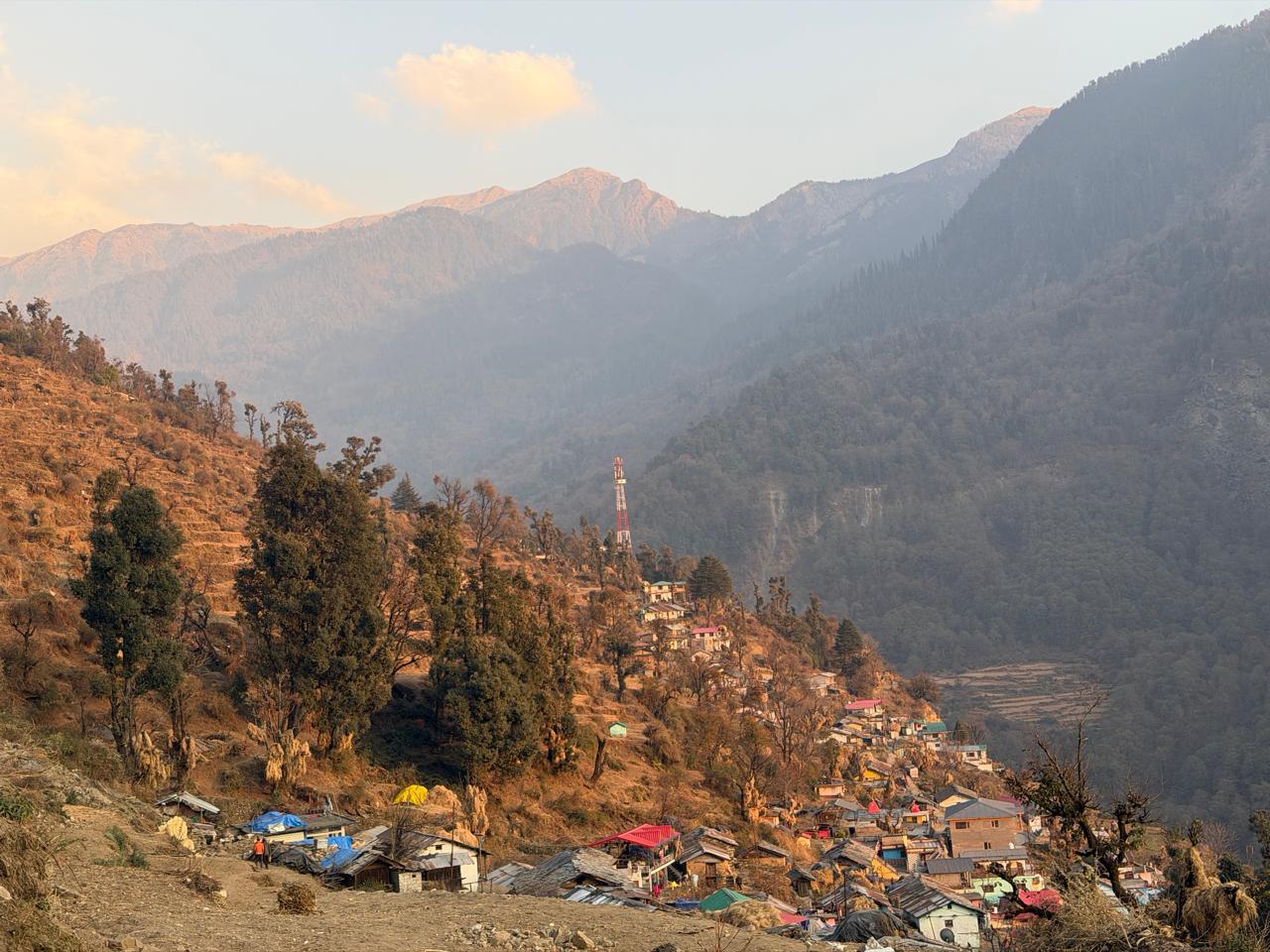
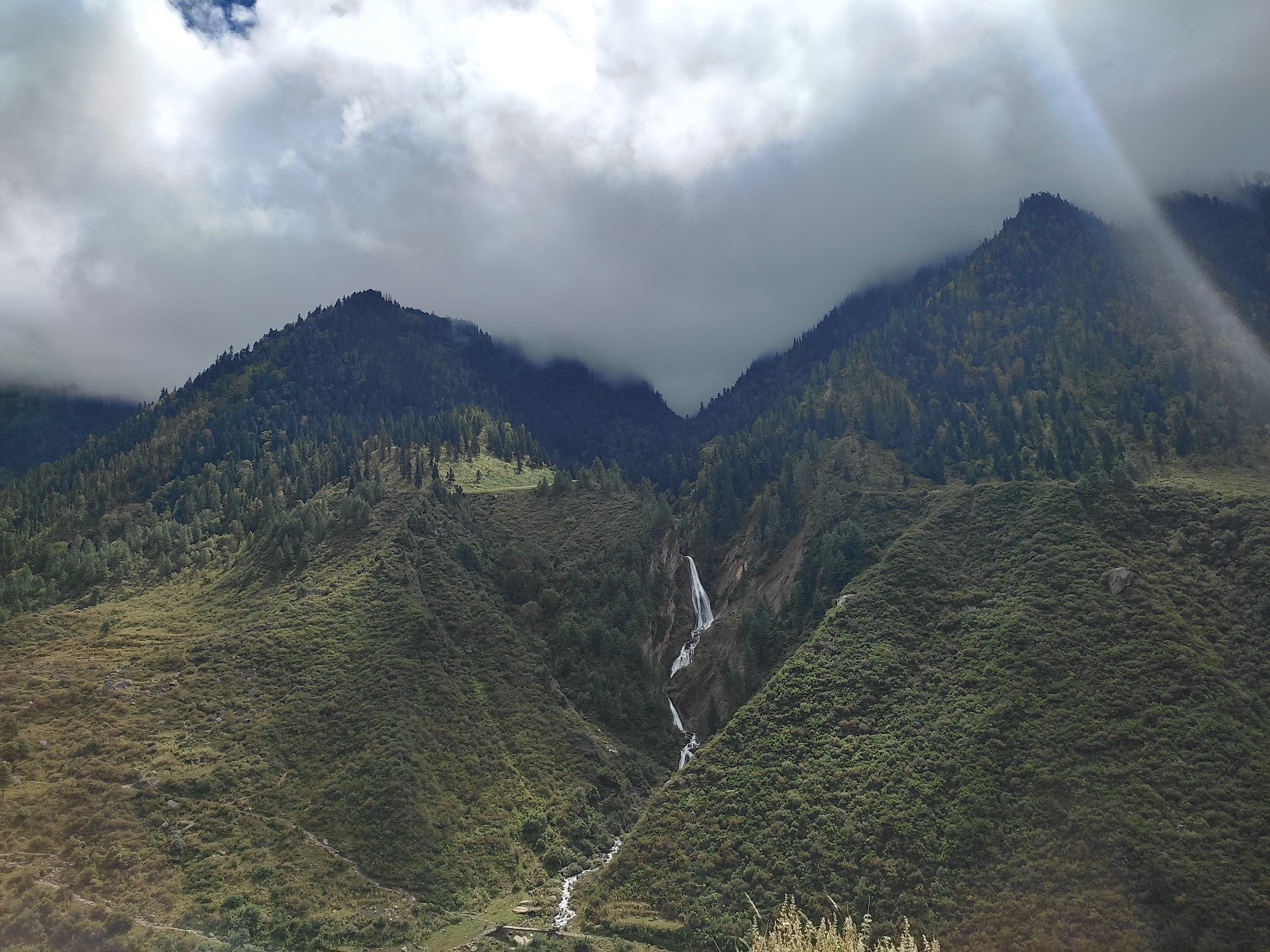
The trail climbs steadily out of Agoda, passing terraced fields before entering dense oak and pine forests. The air cools, sounds soften, and the forest gradually takes over.
The climb itself is manageable.
It’s the weight on your back that changes the day.
Carrying a full pack forces you to slow down and pay attention to finding your natural pace, figuring out how much water you really need, and learning when to add or shed layers. Occasional clearings offer brief views of distant ridgelines before the trail pulls you back into the trees.
Manjhi campsite sits in a quiet forest glade with a nearby water source and flat ground for tents. We pitch our own shelters, set up a small cooking area, collect water, and cook a simple, hearty meal.
By the end of the day, it becomes clear:
This is no longer a supported trek.
And that’s exactly the point.
Day 3
Trek from Manjhi to Dodital I Settling In I
Trek Distance: 4 km
Time Taken: 6–7 hours
Elevation Gain: from 2,940 m to 3,080 m
The trail continues through dense oak and rhododendron forests, climbing steadily but gently. The forest feels quieter and cooler, and movement becomes more rhythmic as everyone settles into their own pace.
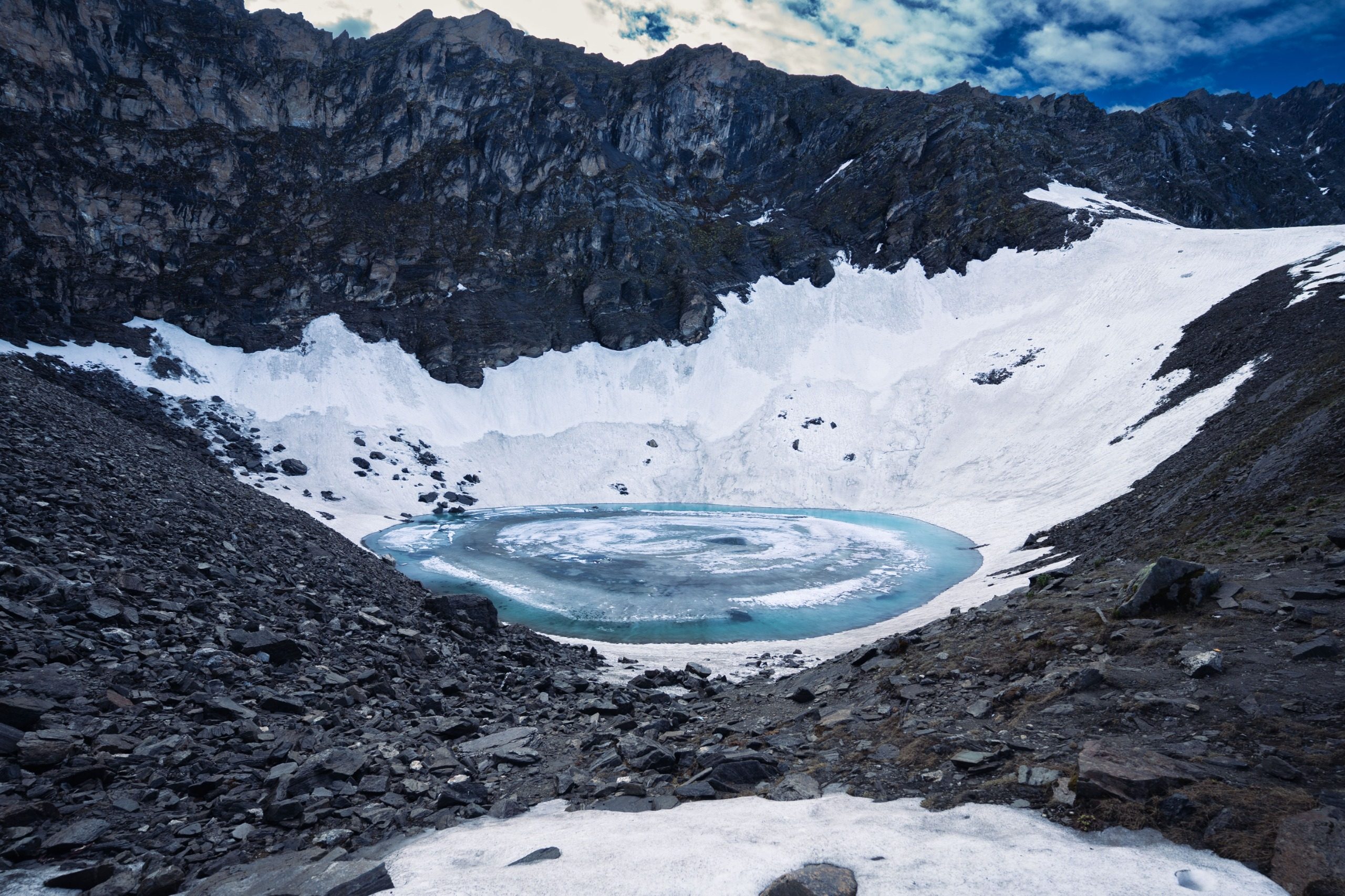
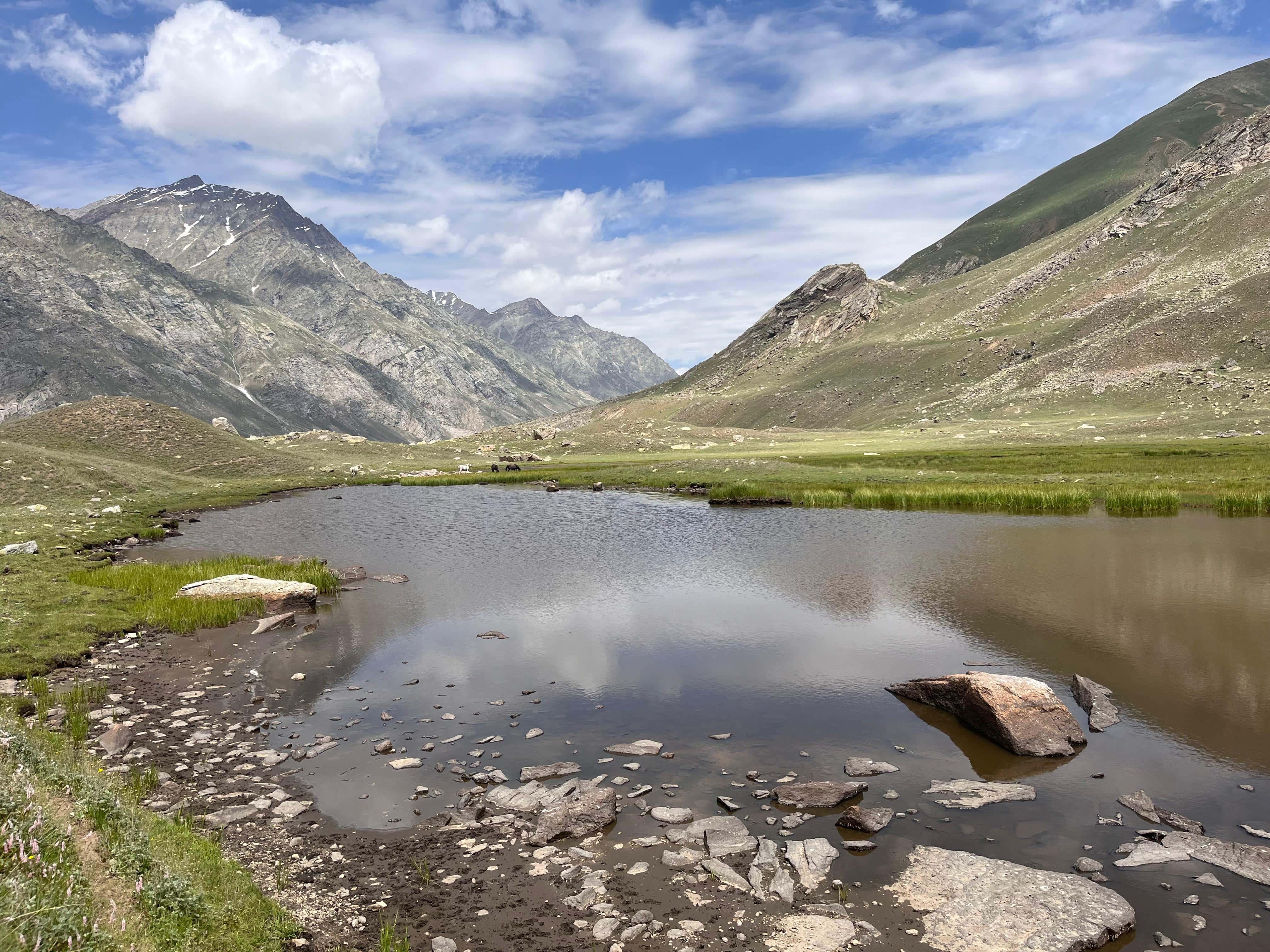
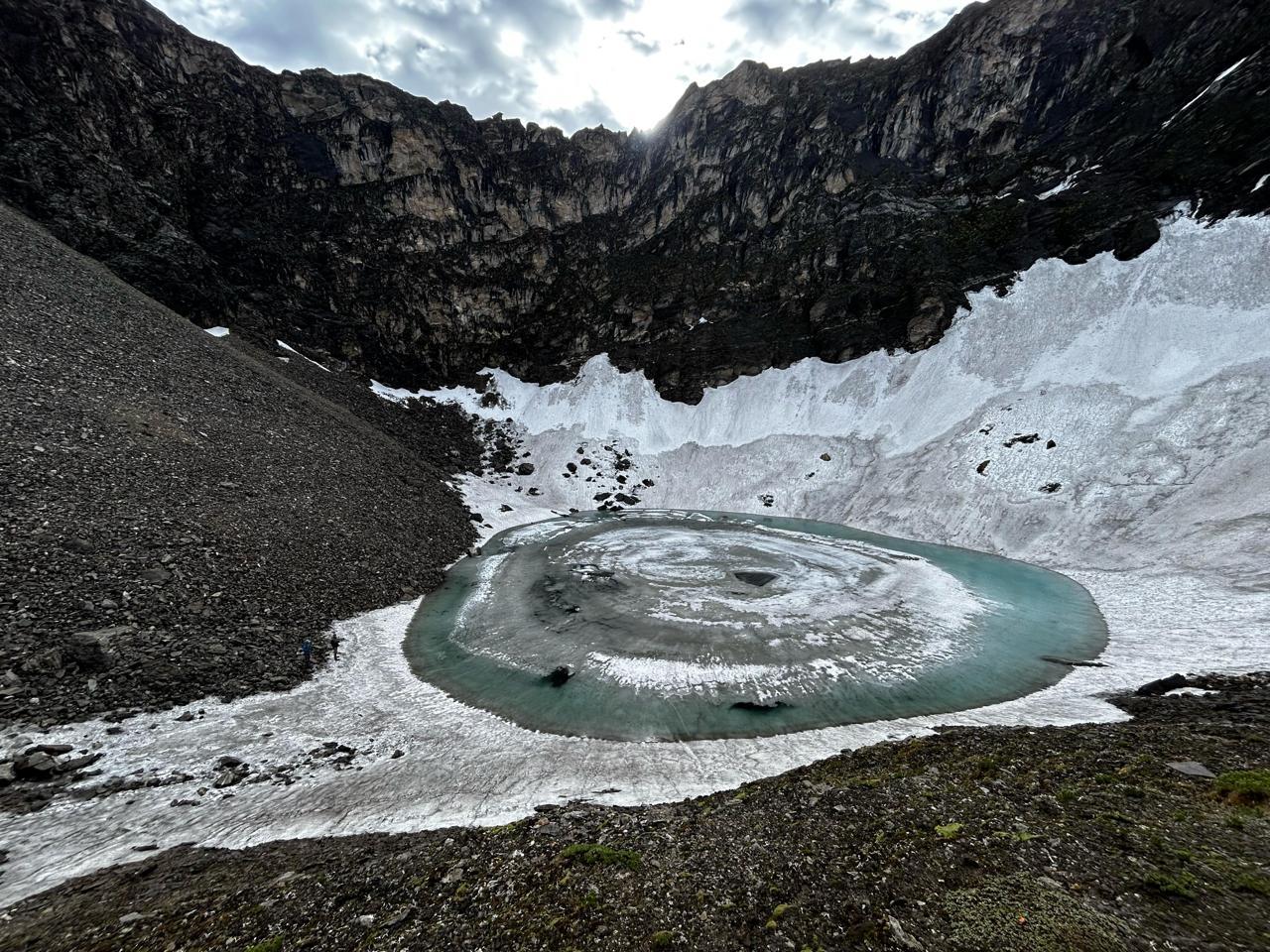
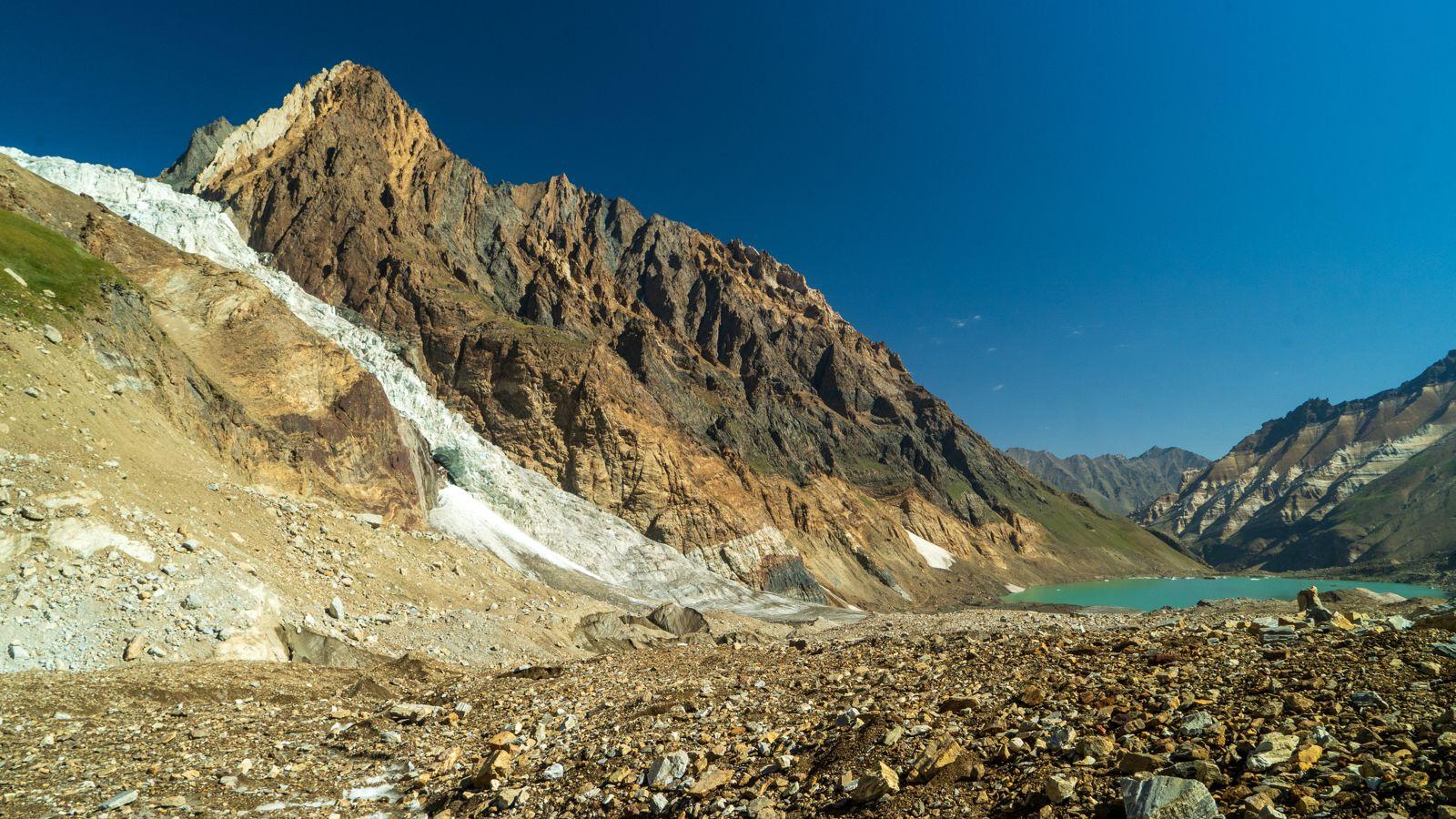
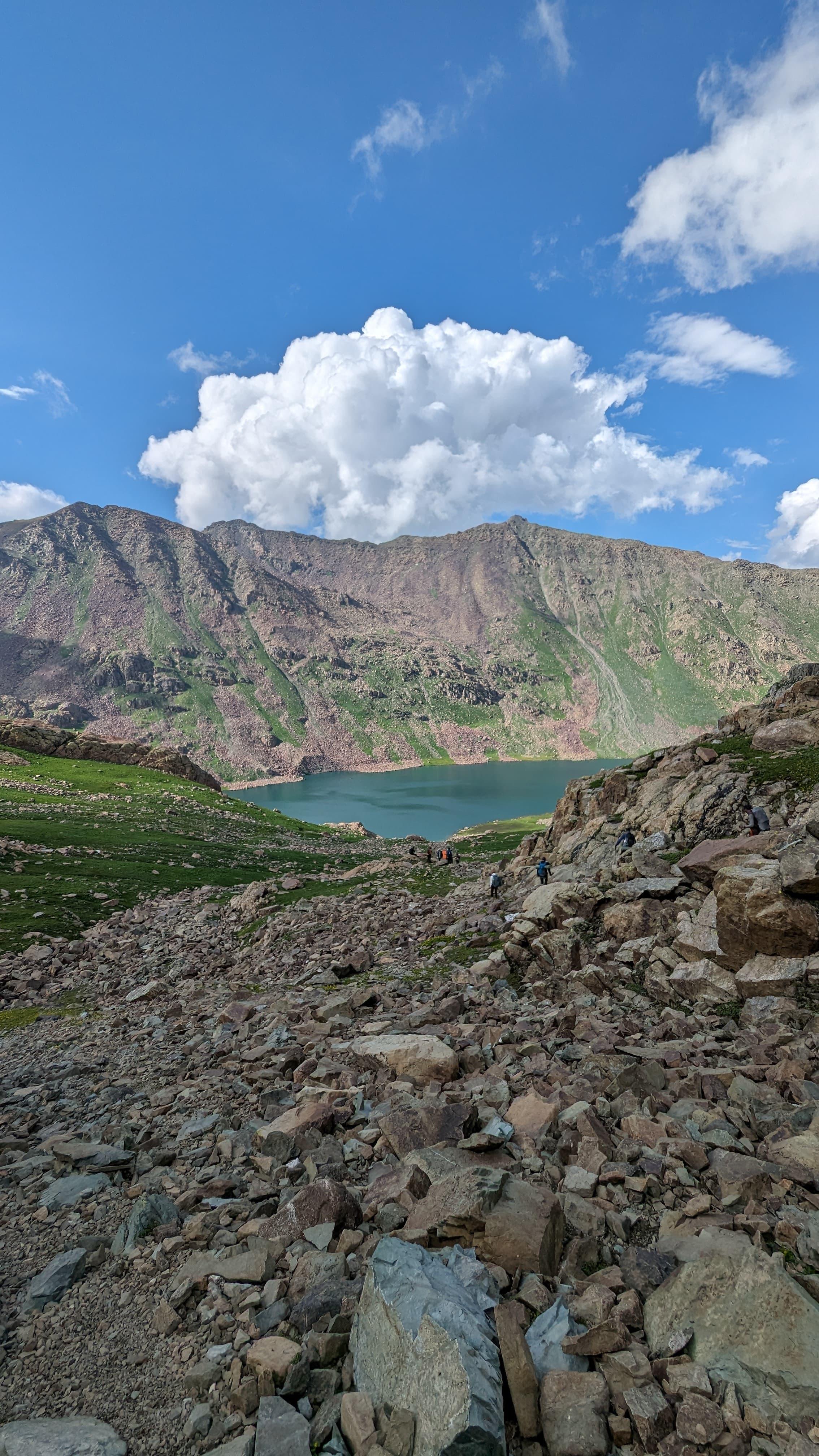
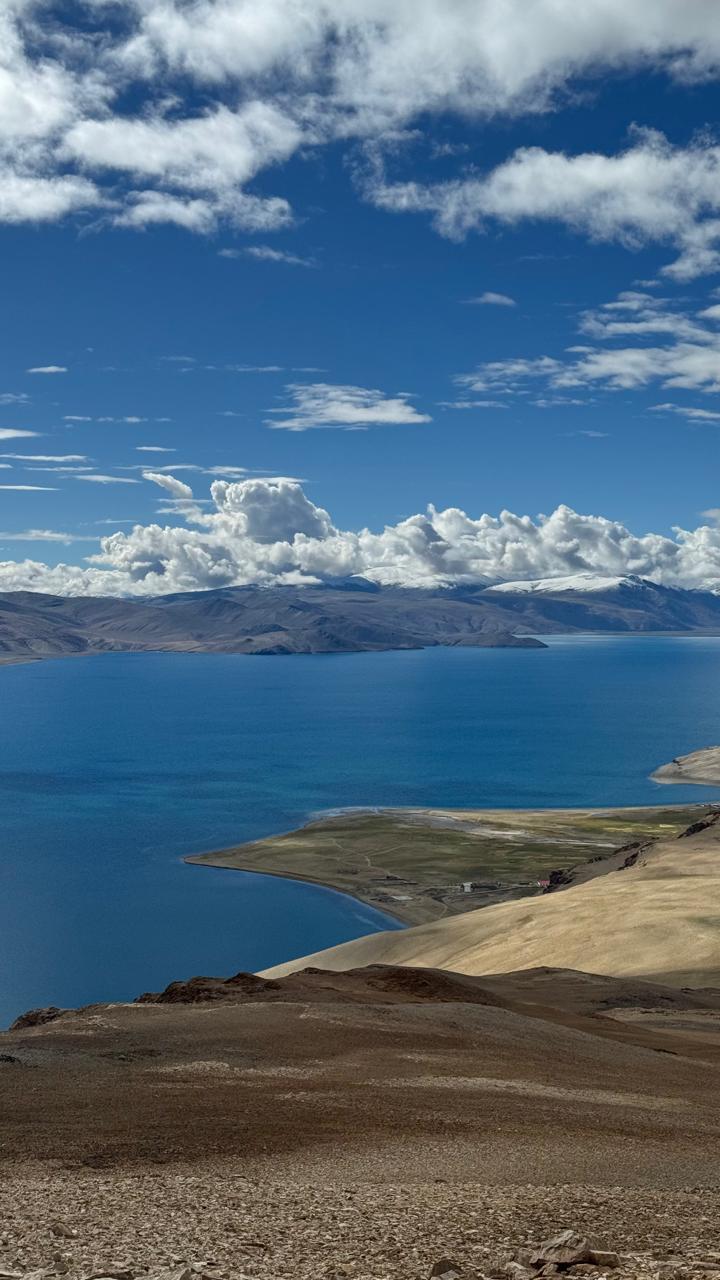
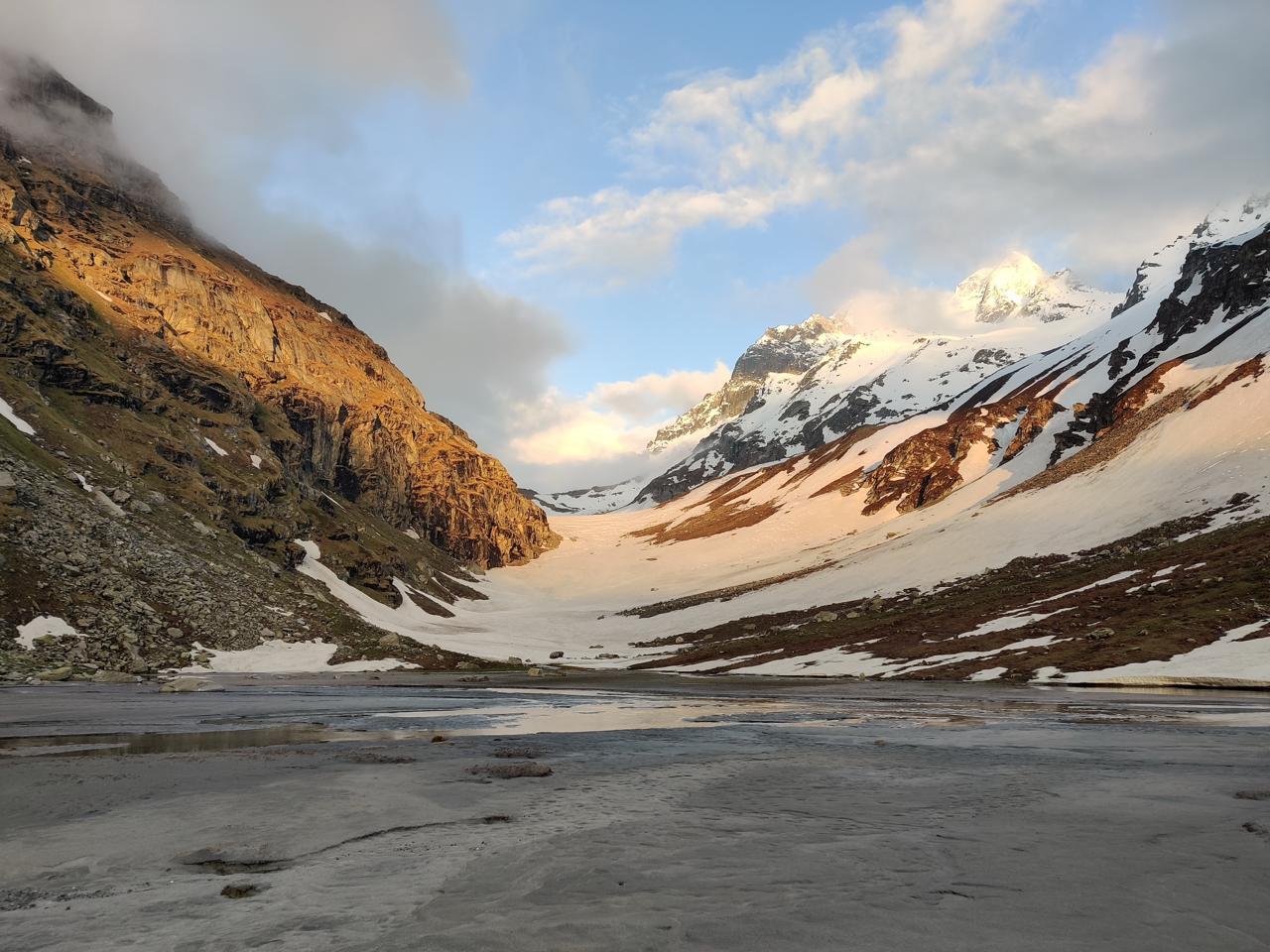
As altitude increases, the trees begin to thin, and the path opens slightly. Then, almost without warning, Dodital appears, still blue, tucked into a hollow in the mountains. After two days of walking with full packs, the arrival feels earned.
We set up camp near the lake and slow the day down.
Tents go up, packs come off, and the afternoon is spent understanding how to manage a longer halt, drying layers, organising food, filtering water, and letting bodies recover.
There’s space to walk along the lake’s edge, sit quietly, or simply do nothing at all.
It’s where the group settles, the routine becomes familiar, and backpacking starts to feel less like effort and more like a way of being out here.
Day 4
Trek from Dodital to Darwa Pass Camp I Exposure & Confidence I
Trek Distance: 7 km
Time Taken: 4–5 hours
Elevation Gain: from 3,080 m to 3,718 m
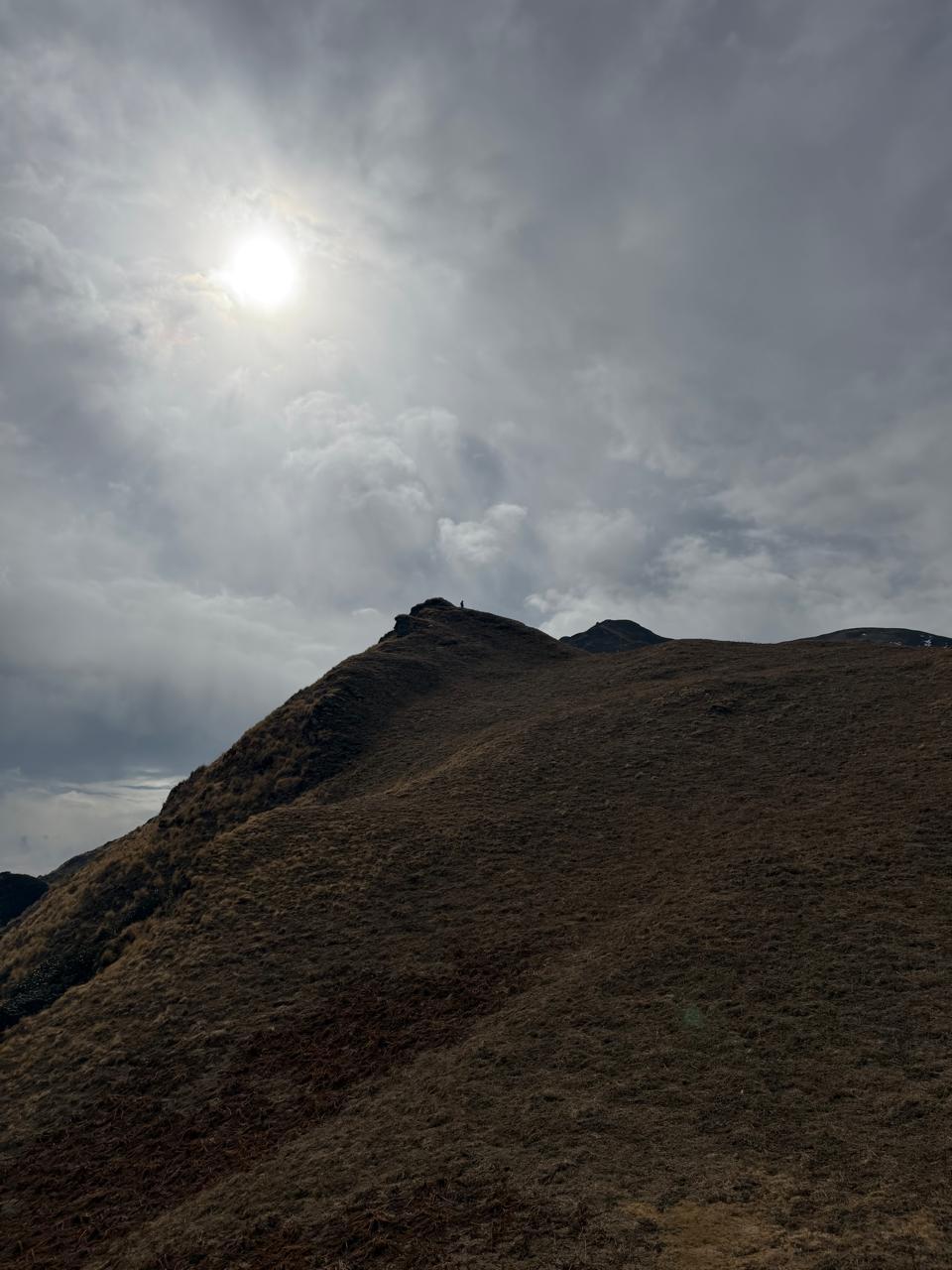
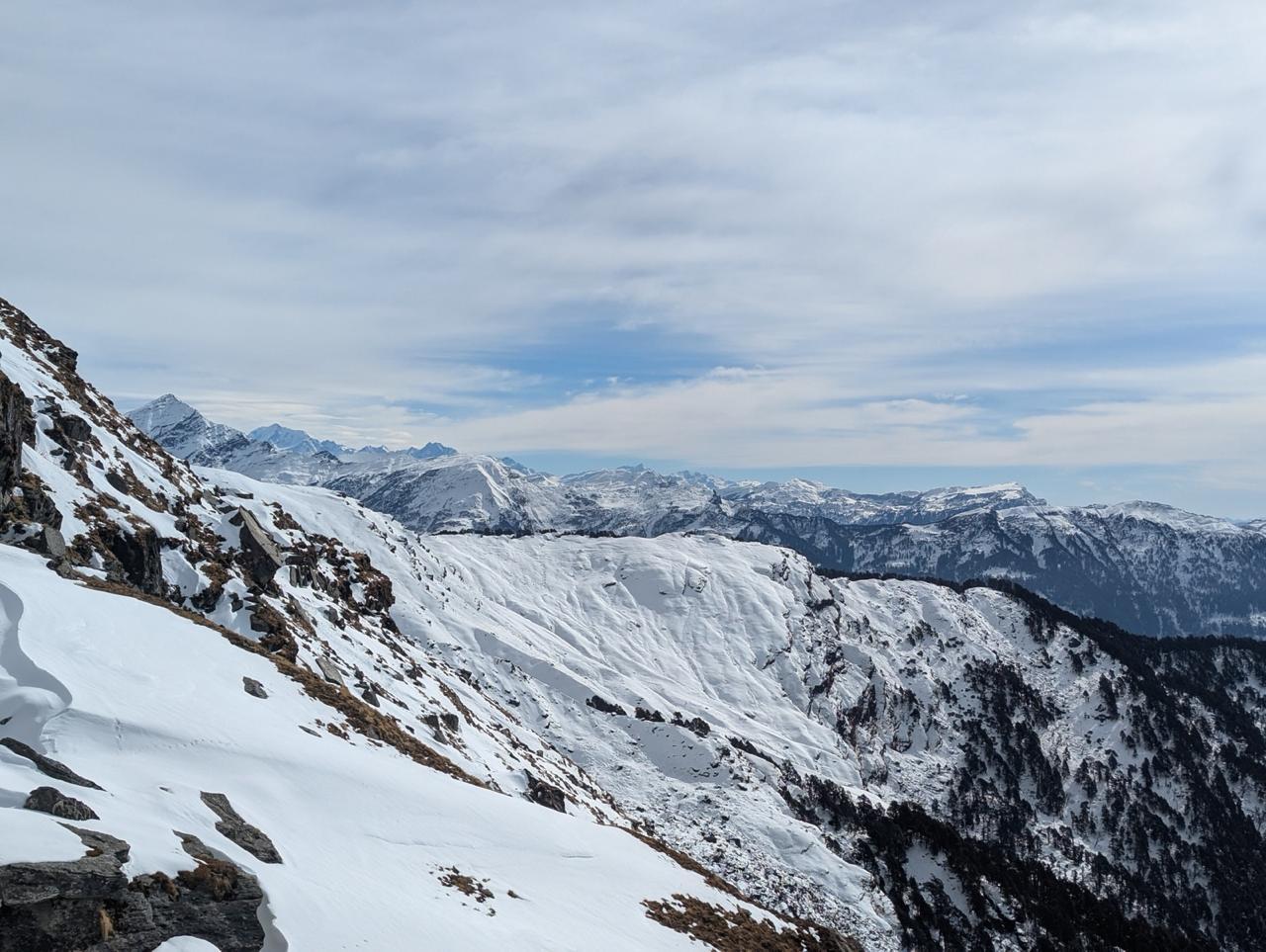
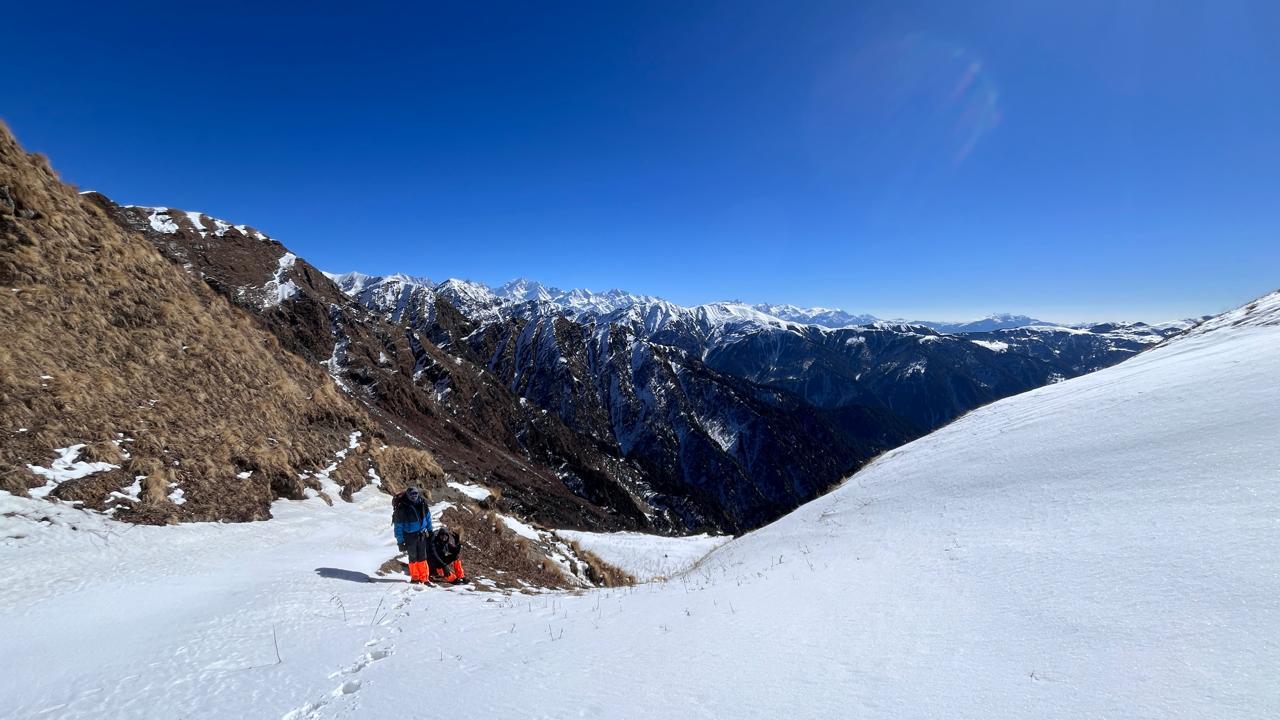
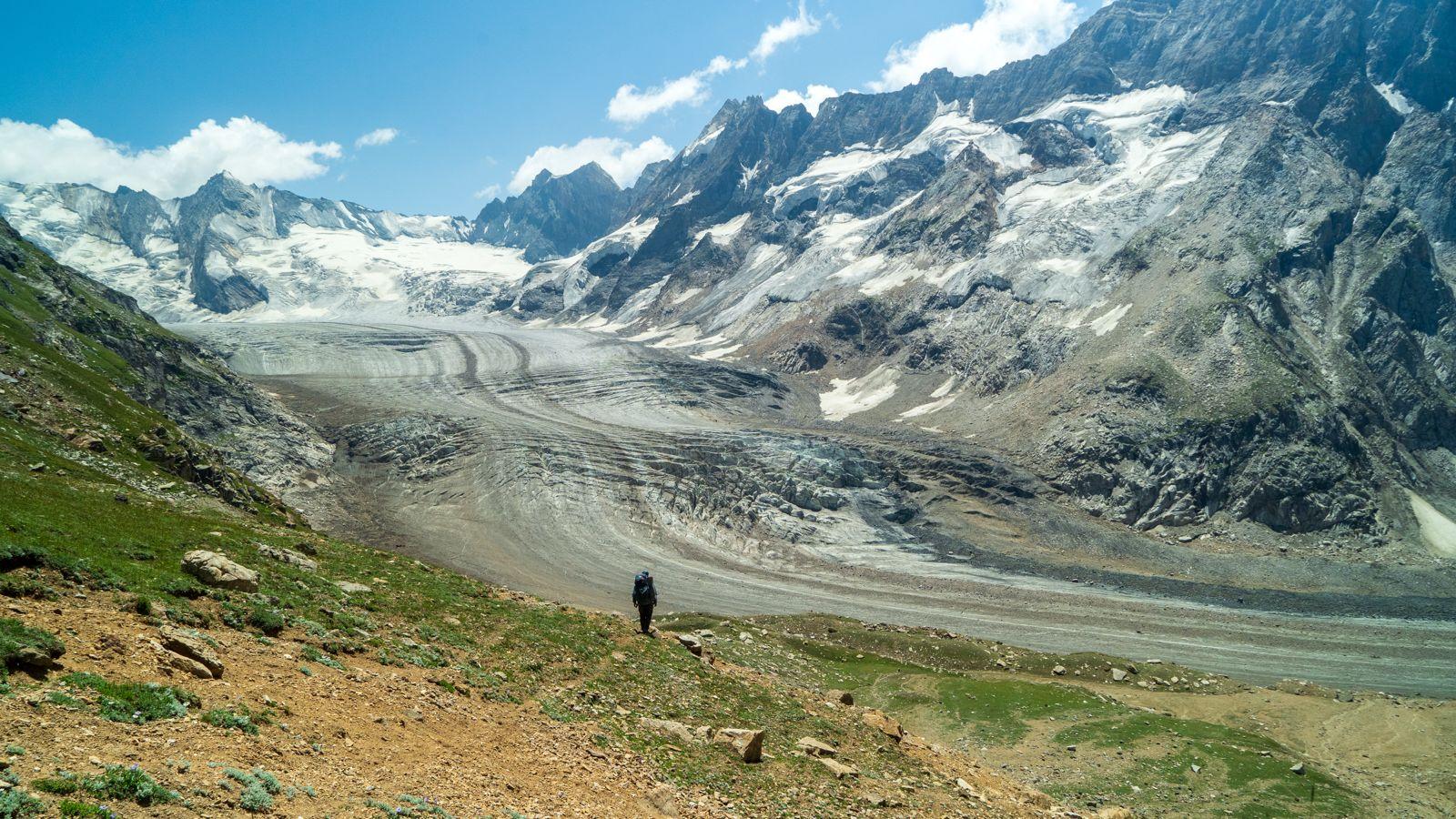
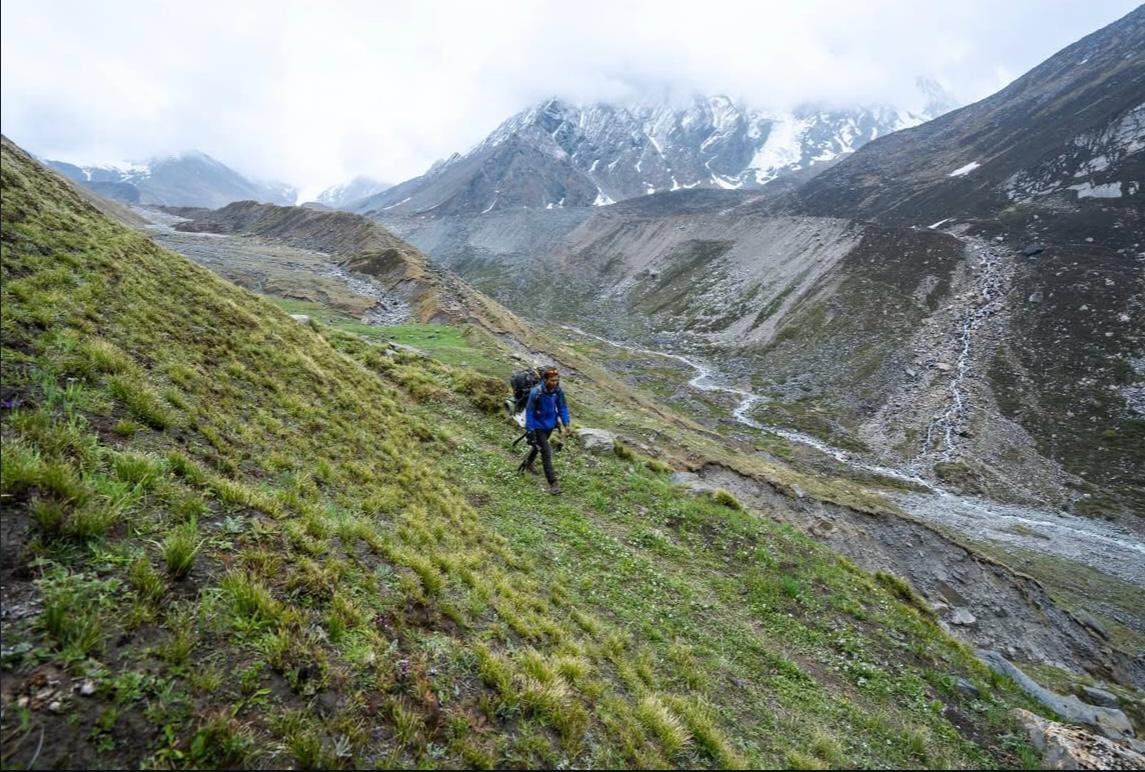
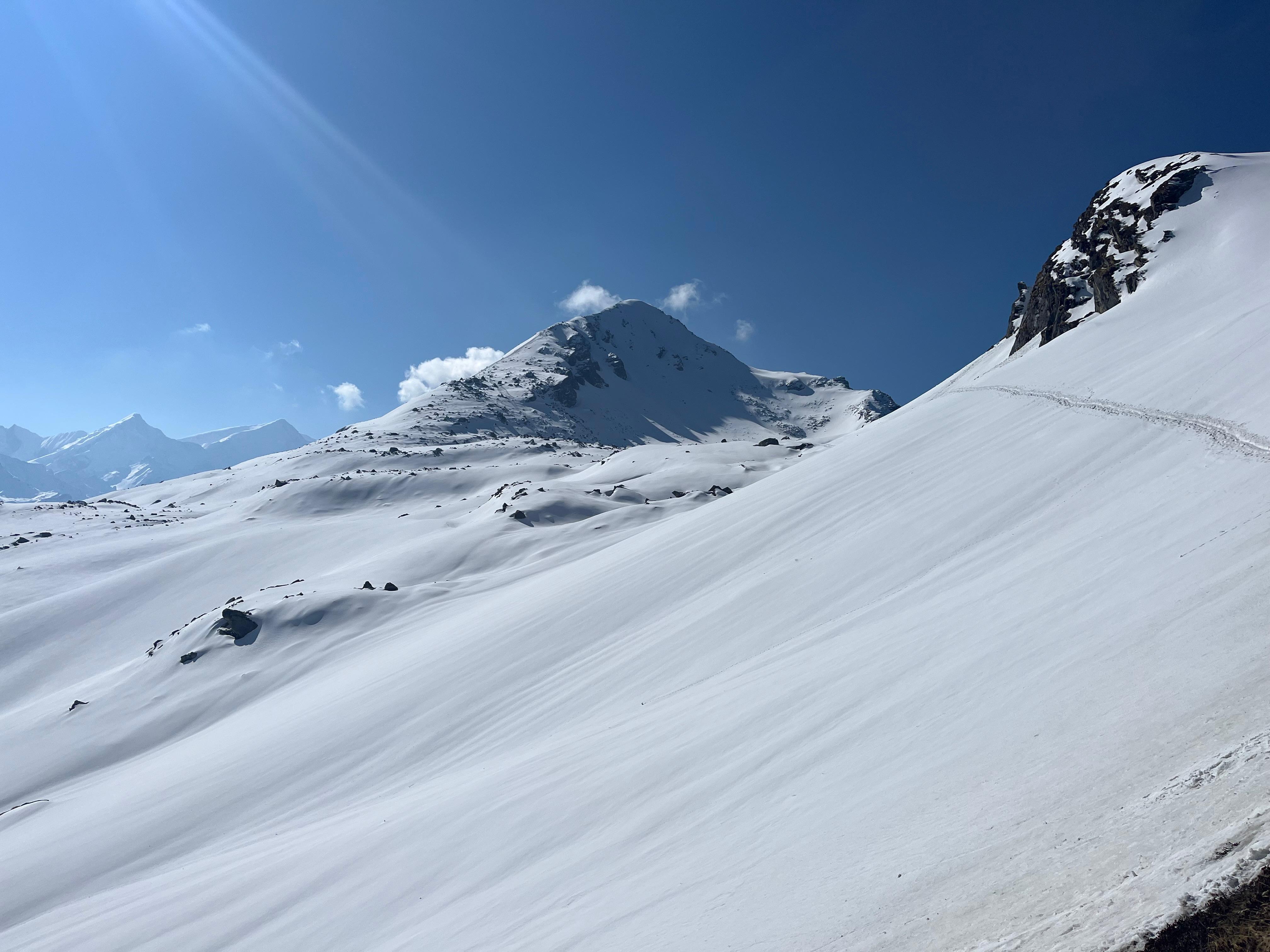
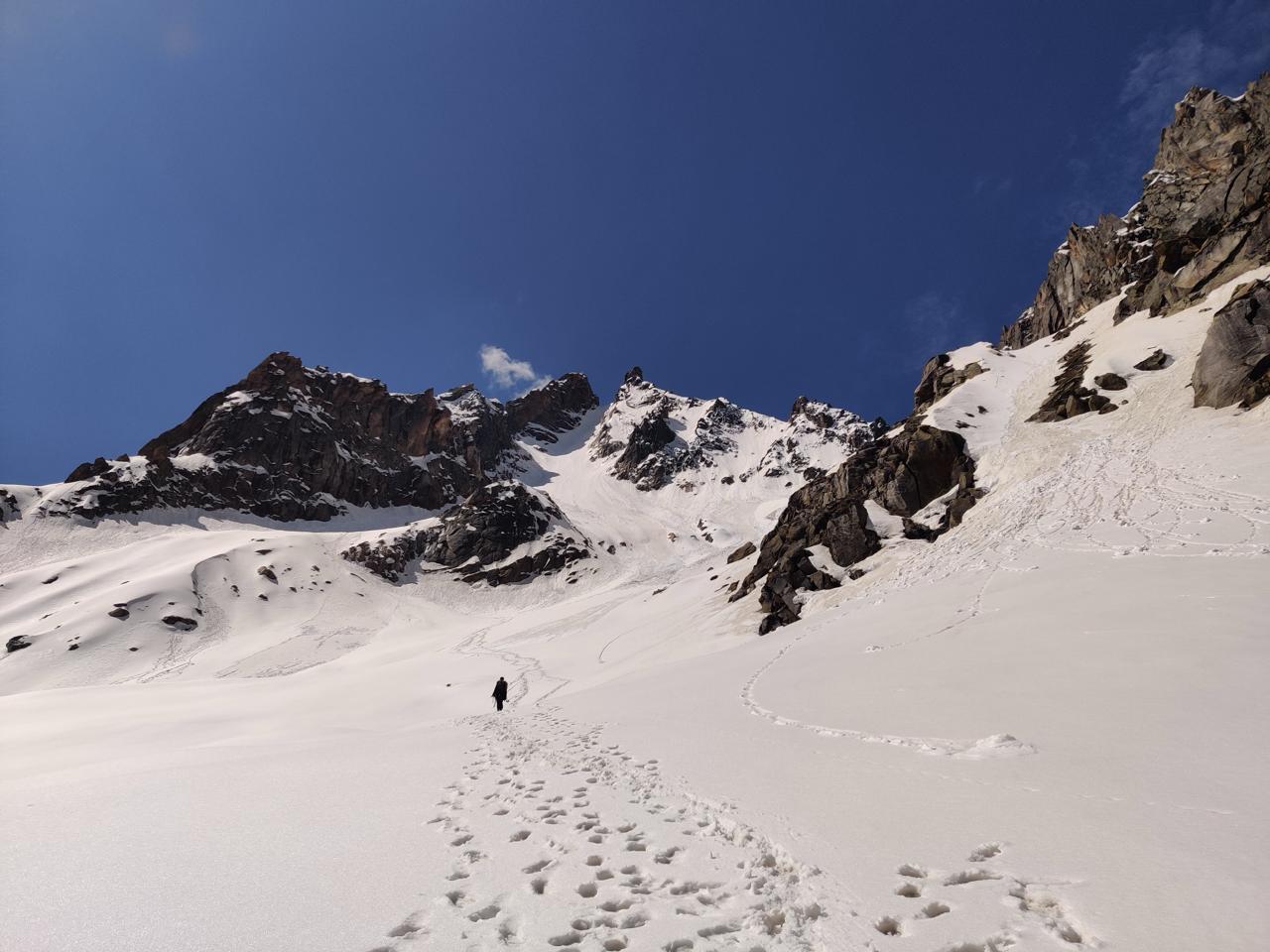
We start early, leaving the shelter of the forest behind as the trail climbs steadily toward Darwa Pass. The trees thin out quickly, giving way to open alpine grasslands and rocky slopes. With every step higher, the landscape opens up.
There’s more sky than forest now, more wind than cover.
You can see where the trail goes, feel the exposure, and understand why moving steadily and deliberately matters. Breaks are regular, the pace is calm, and the group moves together.
Reaching Darwa Pass feels quietly satisfying. We spend a little time here, taking it in, before starting the descent.
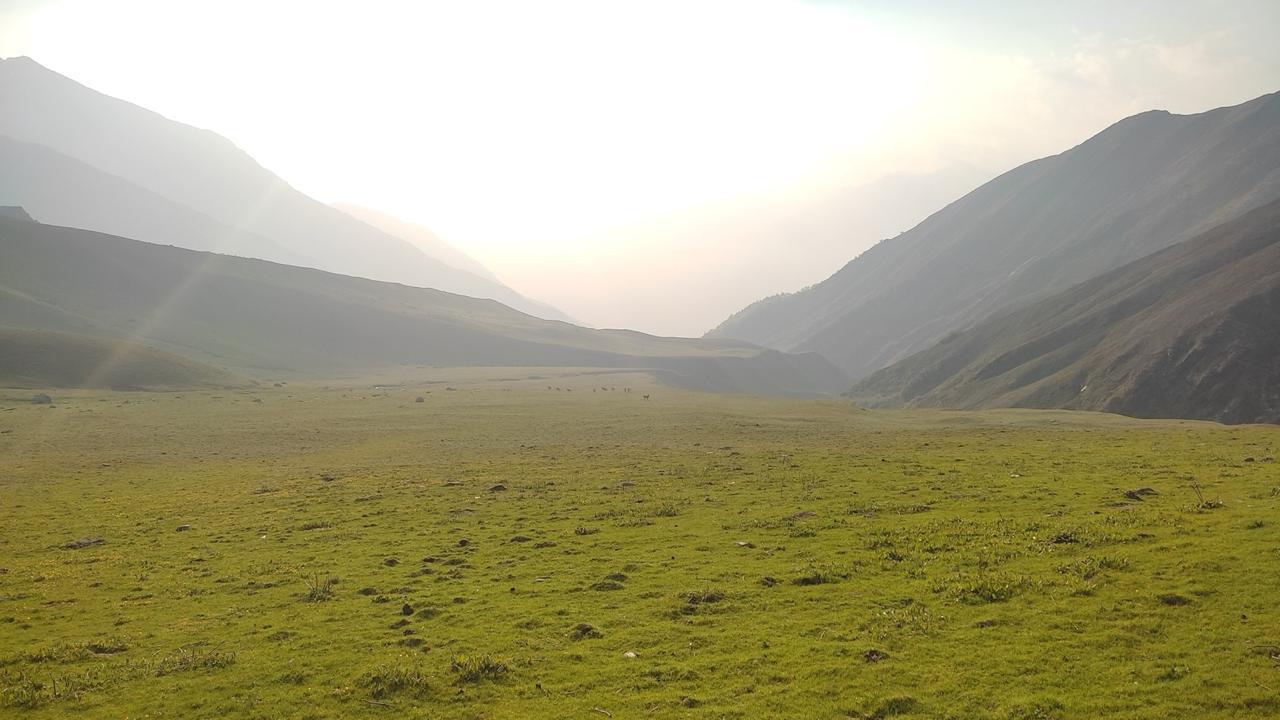
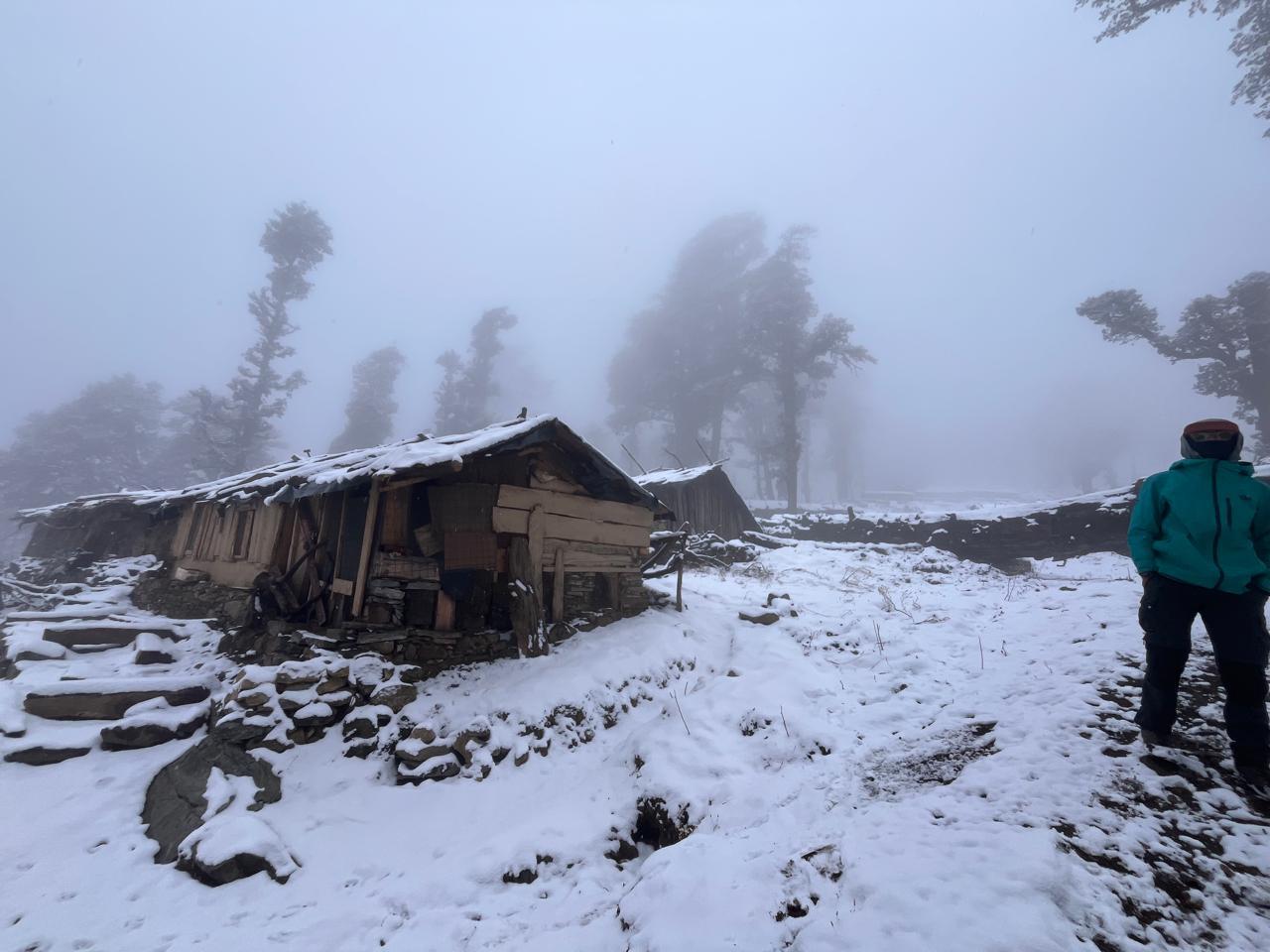
The trail drops into Seema Thach, a wide, rolling meadow scattered with shepherd huts. After the openness of the pass, the meadow feels expansive and gentle, a place to slow down again.
We pitch camp under an open sky, cook together, and settle in for the night. It’s the kind of day that stays with you, not because it was hard, but because everything finally made sense.
Day 5
Darwa Pass Camp to Seema Thach via Darwa Top
Trek Distance: 11 km
Time Taken: 6-7 hours
Elevation Gain: 3,718 m to 3,740 m via 4,150 m
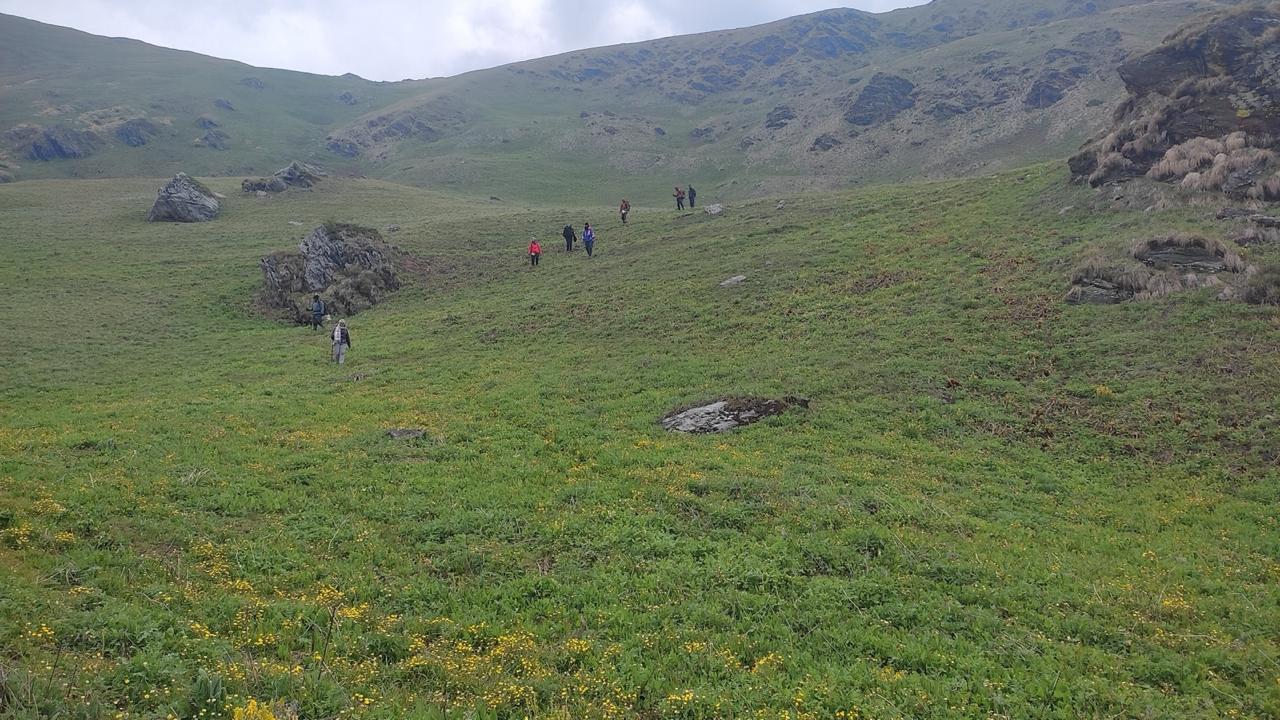
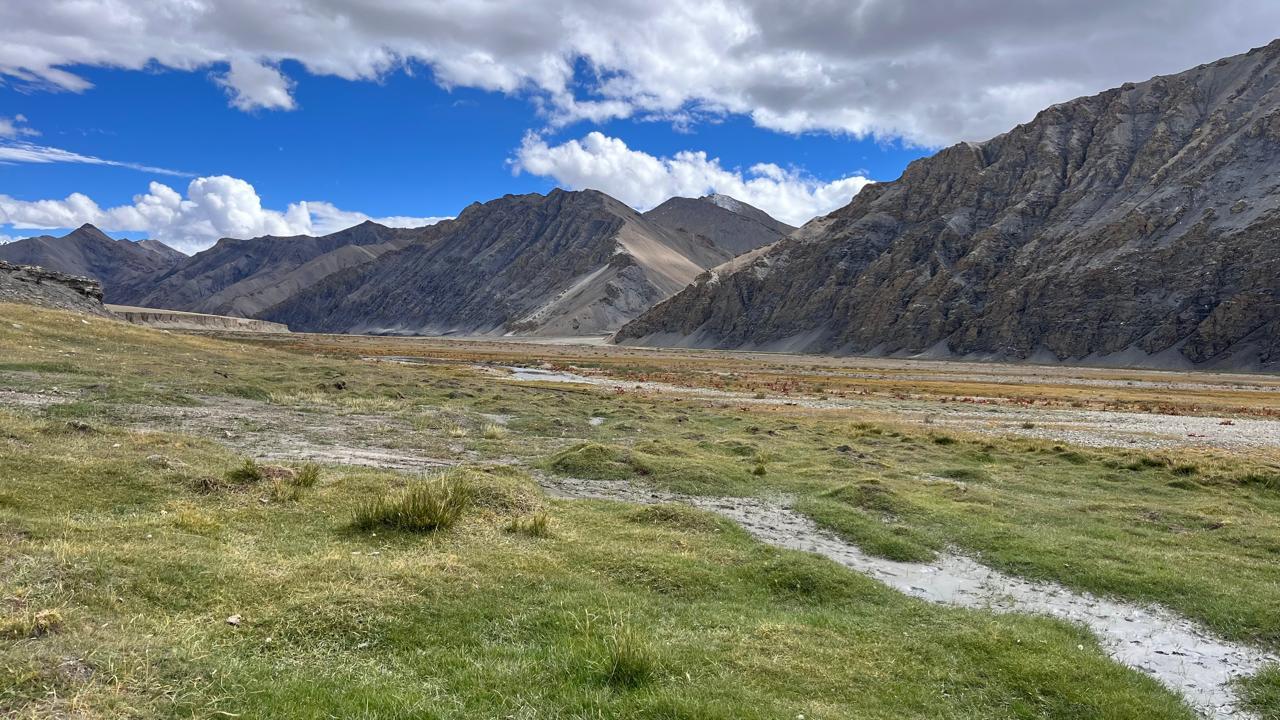
The entire walk today is through the rolling meadows of Darwa meadows. We will go through popular trekking trails like Gulabi Kantha and Aancha Top (Rudrakantha) trek.
There’s more sky than forest today, more wind than cover.
You can see where the trail goes, feel the exposure, and understand why moving steadily and deliberately matters. Breaks are regular, the pace is calm, and the group moves together.
Reaching Darwa Top feels quietly satisfying. We spend a little time here, taking it in, before starting the descent.
The trail drops into Seema Thach, a wide, rolling meadow scattered with shepherd huts. After the openness of the pass, the meadow feels expansive and gentle, a place to slow down again.
We pitch camp under an open sky, cook together, and settle in for the night. It’s the kind of day that stays with you, not because it was hard, but because everything finally made sense.
Day 6
Seema Thach to Hanuman Chatti I Endurance & Reflection I
Trek Distance: 12 km
Time Taken: 4–5 hours
Elevation Gain: from 3,450 m to 2,750 m
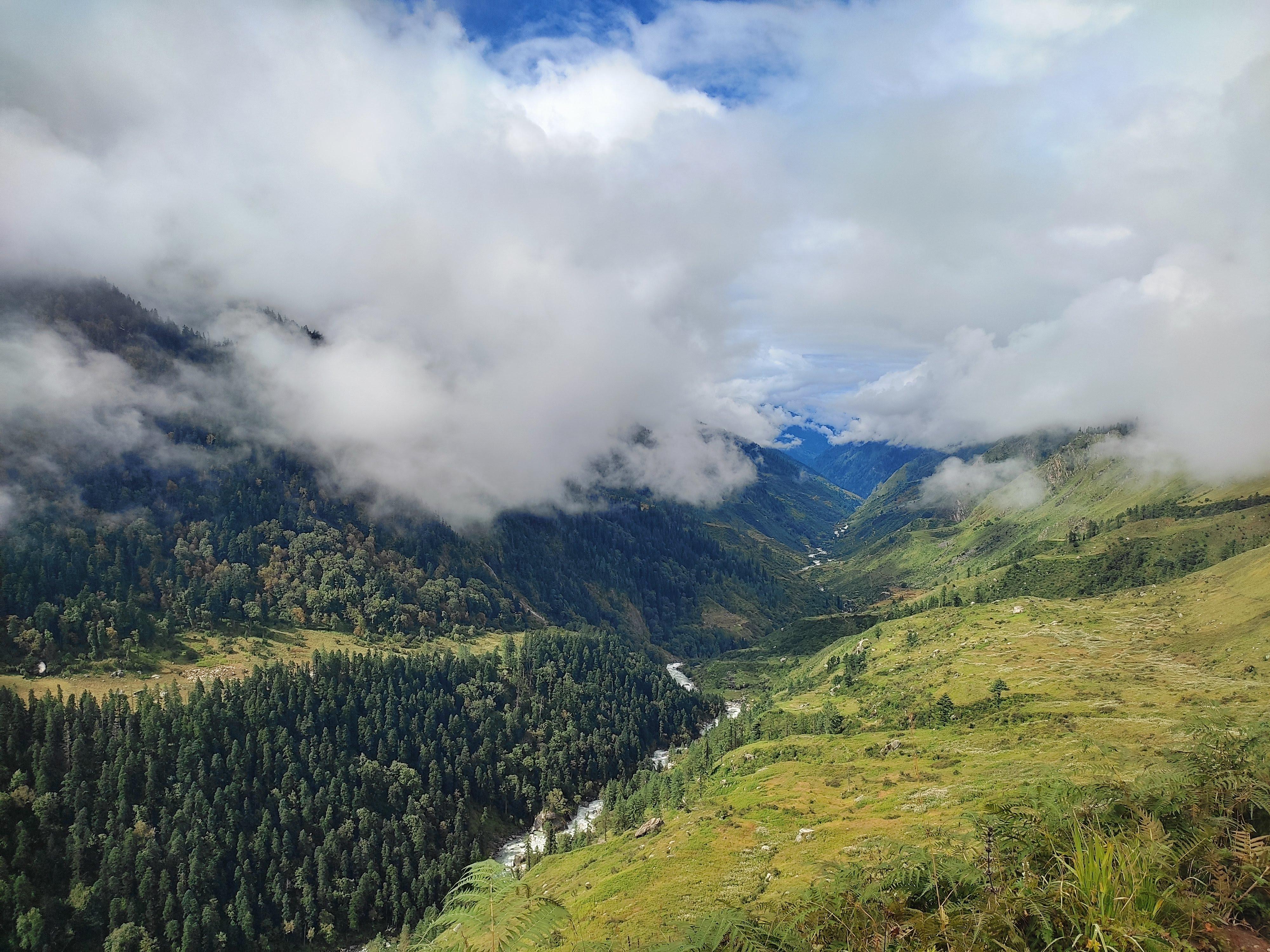
The day begins with a long, steady descent through open grasslands before the trail gradually slips back into pine and deodar forests.
It’s easier on the lungs, harder on the knees, the weight of the pack making itself known in a different way now.
Downhill walking with a loaded pack is its own lesson.
As we lose altitude, the sound of water grows louder.
Forest paths widen, signs of settlement appear, and we finally reach Hanuman Chatti, a small mountain village where trails, rivers, and roads meet.
The trek officially ends here.
Gear is set down, packs are lighter, and the rhythm of the mountains begins to loosen its grip.
The last few days feel close, almost recent, and yet it’s clear they’ve left their mark, in tired legs, steady lungs, and a changed sense of what you’re capable of.
Day 7
Drive from Hanuman Chatti to Dehradun I Integration I
Time Taken: 7–8 hours drive
Elevation Gain: from 2,750 m to 640 m
We begin the drive back to Dehradun, following winding mountain roads as they trace river valleys downstream.
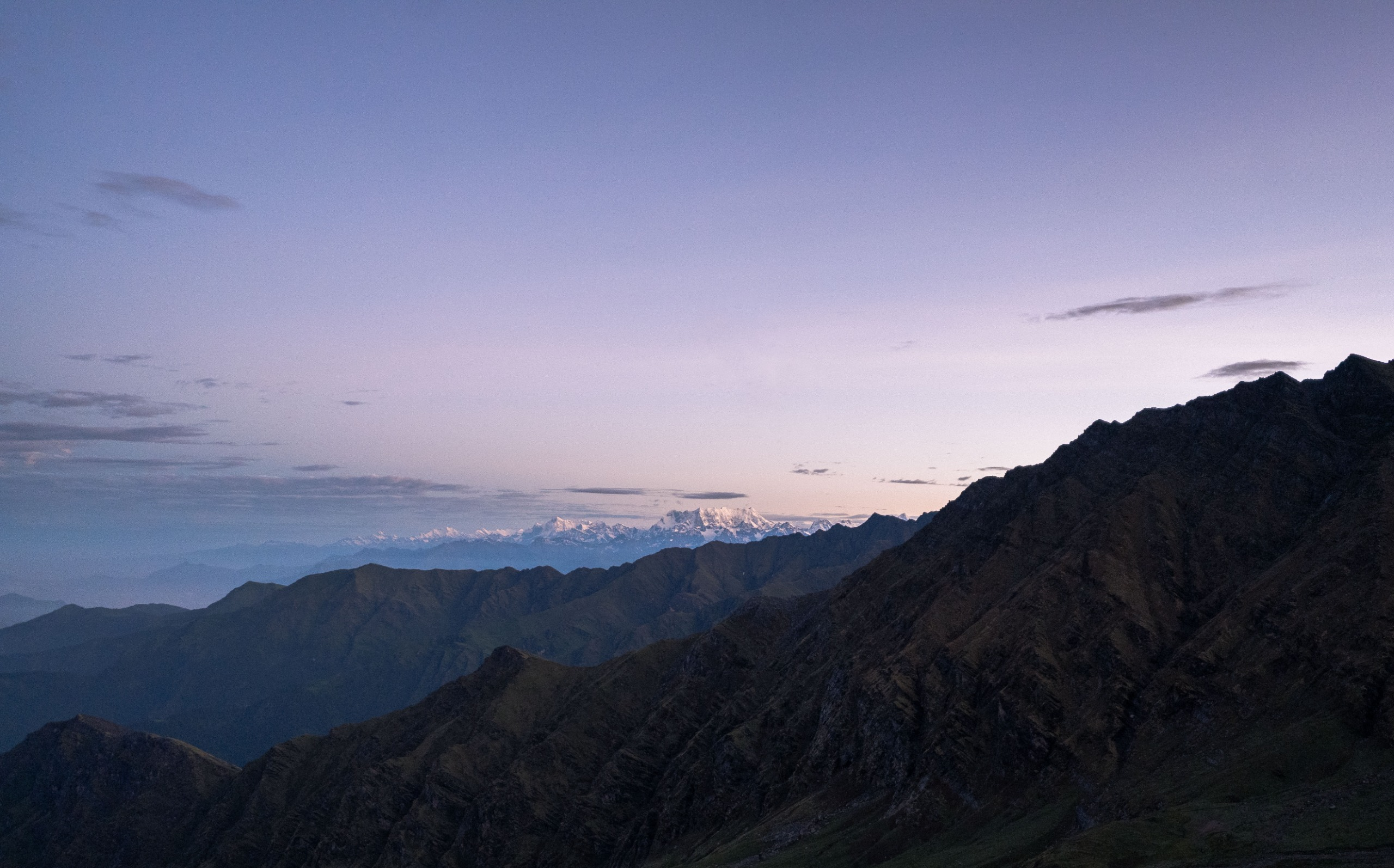
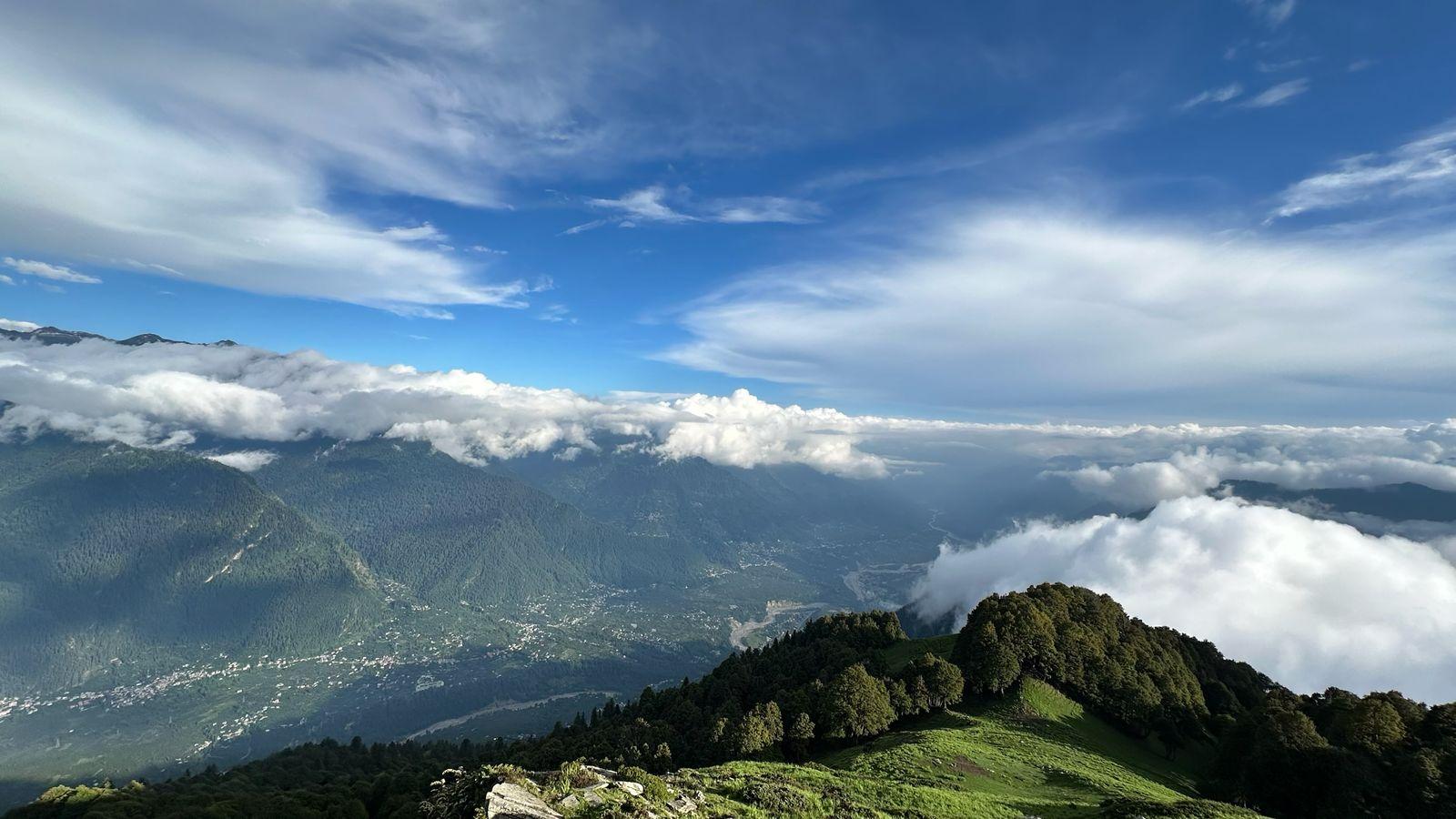
As the road curves away from the mountains, there are moments when you catch sight of ridgelines in the distance. It’s a good time to look back and realise how far you’ve walked across them, carrying everything you needed on your back.
Minimum Fitness Required
Easy-grade backpacking trips are beginner-friendly, but they still demand foundational stamina and consistency.
We follow a scientific approach where we build most of your endurance in Zone 2, a sustainable, conversational pace that strengthens your aerobic base without overexertion.
Minimum fitness benchmarks:
- Walk 8–10 km on gentle terrain without excessive fatigue.
- Climb 8–12 flights of stairs comfortably.
- Maintain 60–90 minutes of Zone 2 movement (brisk walking, cycling, slow jogging) without long breaks.
- Comfortable moving on slightly uneven or natural surfaces.
4–6 Week Recommended Aerobic Prep
- 3–4 Zone 2 sessions/week, 40–60 minutes each.
- Focus on durability and consistency, not speed.
This prepares your body to handle steady movement over several hours.
Mobility, Strength & Sports Movement
This section builds all-around movement quality (Essential even on easy trails).
Mobility (10–15 minutes daily)
- Ankles (For example - rotations, calf stretches)
- Hips (For example - lunges, hip openers)
- Upper back (For example - thoracic rotations)
Strength (2 sessions per week)
- Legs (For example - squats, step-ups, lunges)
- Core (For example - planks, dead bugs, bird-dogs)
- Balance (For example - single-leg stands, heel-to-toe walk, etc)
Sports Movement & Hand–Eye Coordination (1–2 sessions per week)
We encourage participants to add agility-based sports such as Badminton, Table tennis, Tennis, Basketball, Football (easy play), and Squash.
These develop reactive balance, foot placement accuracy, and movement confidence, all of which are valuable on uneven trekking terrain.
Our Expectations from Participants
To ensure a safe and smooth trekking experience:
- Arrive with the minimum required fitness as listed above.
- Be able to carry a 12 kg backpack comfortably throughout the trek.
- Follow all instructions from the trek leader regarding pacing, hydration, breaks, and safety.
- Maintain respectful behaviour toward teammates, staff, and local communities.
- Uphold Leave No Trace principles at all times.
- Submit all required documents (ID proofs, medical declarations, waivers, permits, etc.) within the timeline set by the coordinator.
Health & Acclimatisation Readiness
- No uncontrolled medical conditions or recent major injuries.
- Disclose any medications or concerns to the trek leader beforehand.
- Maintain good hydration and follow safe pacing.
- No prior altitude experience is required for easy treks.
Gear Readiness
Participants must come prepared with all the gear and accessories listed in the official trek checklist shared by the coordinator prior to departure.
These items ensure comfort, safety, and preparedness across changing mountain conditions.
Inclusion
Exclusion
What does All-Women Backpacking Team mean exactly?
Why is this trek being run as an all-women team?
Is this trek suitable for first-time backpackers?
How heavy will the backpack be during the trek?
Will there be any male staff or external support on the trail?
How is menstruation managed during the trek?
What are the accommodation and campsite arrangements like?
How is this different from a regular trekking experience?
Is this trek suitable for women joining solo?
SELECT DATE TO REGISTER
Thank You!
Your form has been submitted successfully. We'll get back to you soon.
₹ 15,499 + 5% GST
