

Few treks in the world carry the kind of weight and wonder that Everest Base Camp does. The name itself is enough to spark a dream. It’s not just a trek, it’s a walk through the heart of the Khumbu, among stories, peaks, and people who’ve defined what the word “mountain” means.
The trail begins at Lukla, a small airstrip perched on a mountainside, and winds up through Sherpa villages, hanging bridges, and ancient monasteries. As you move through Namche, Tengboche, Dingboche, and beyond, the landscape keeps shifting, from pine forests and river valleys to open alpine terrain and the grey, raw beauty of the Khumbu Glacier.
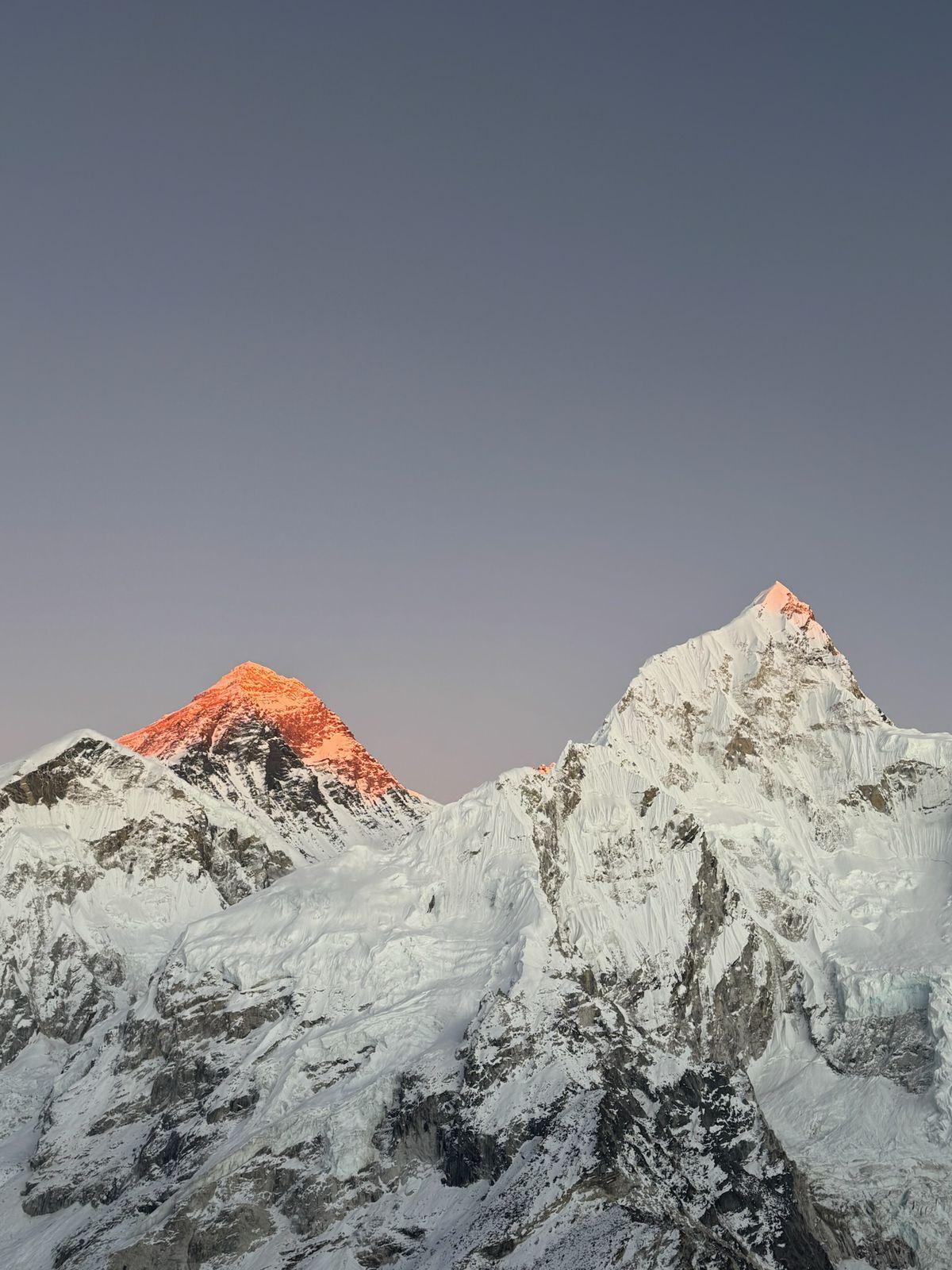
Every step brings you closer to the giants: Ama Dablam’s elegance, Lhotse’s walls, Nuptse’s ridges, and finally, Everest itself. At one point, as you stand near Kala Patthar, you’re surrounded by an amphitheatre of 6,000, 7,000, and 8,000-meter peaks, an experience that humbles everyone, no matter how many summits they’ve seen before.
The Everest Base Camp trek is also one of the most comfortable journeys in the high Himalaya. The tea houses along the way are warm and welcoming, with good food, hot showers, and the occasional bakery or espresso machine, proof that comfort and altitude can coexist.
For some, this is a bucket-list achievement. For others, it’s a pilgrimage. Either way, few places on Earth bring you this close, not just to Everest, but to the spirit of the mountains themselves.
Day 1
Arrival in Kathmandu
Trek Distance: —
Time Taken: —
Elevation Profile: 4,600 ft / 1,400 m
Arrive in Kathmandu, the vibrant capital of Nepal. Once you settle into your hotel, the day is kept easy, a chance to rest after travel, meet your trek leader, and attend a short evening briefing about the route and gear. If time allows, step out to explore the narrow lanes of Thamel, filled with cafés, prayer flags, and the scent of roasted coffee. It’s your first taste of mountain culture before heading to the Khumbu.
Day 2
Fly to Lukla and trek to Phakding
Trek Distance: ~8 km (Lukla to Phakding)
Time Taken: 3–4 hours
Elevation Profile: 9,317 ft / 2,840 m → 8,563 ft / 2,610 m
The adventure begins early. When Kathmandu airport gets busy, flights to Lukla are often rerouted from Ramechhap, a small airstrip about 4–5 hours’ drive from the city. This means you’ll leave Kathmandu around midnight for a night drive, a quiet prelude to the excitement ahead.
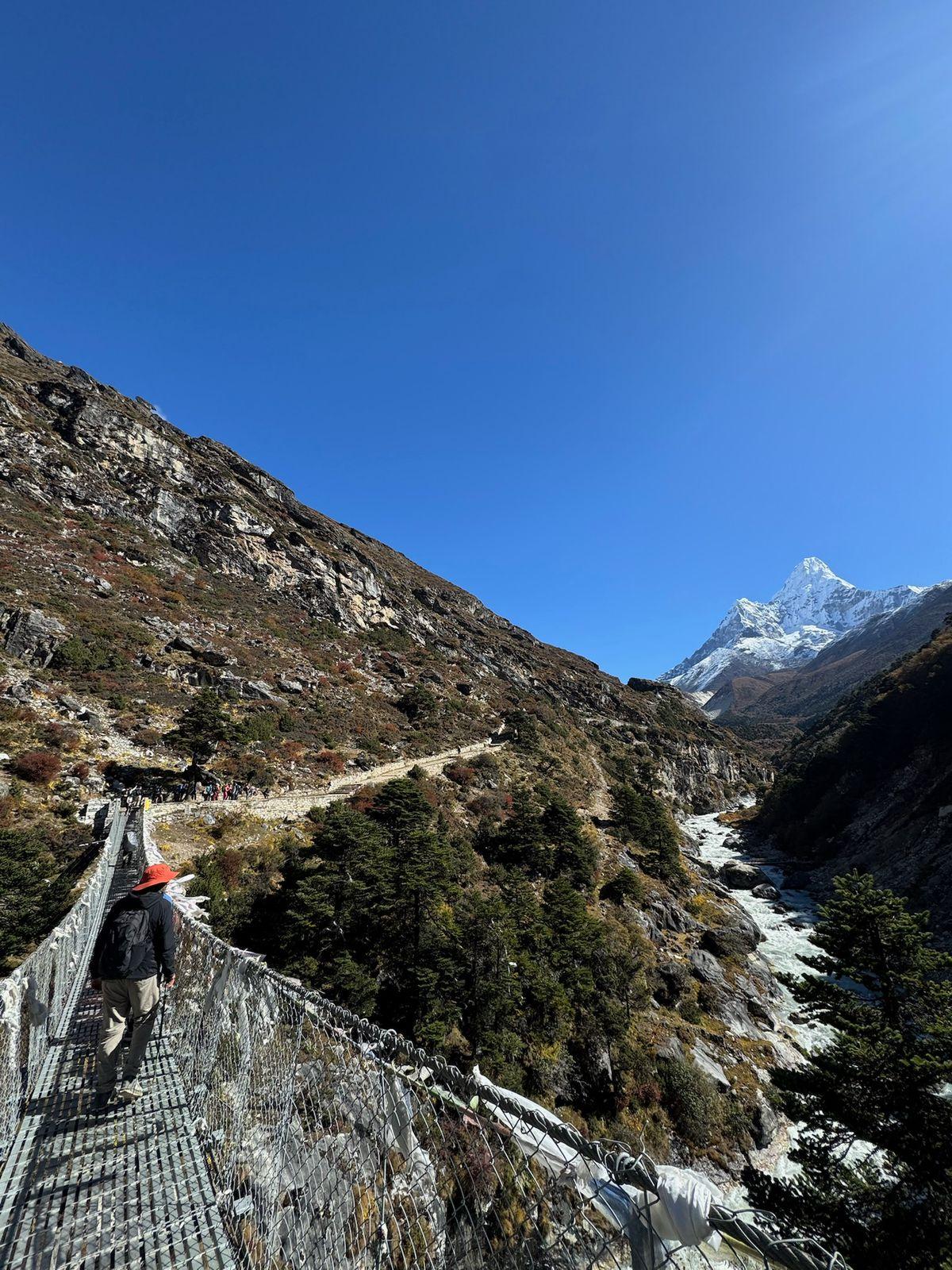
The 20-minute flight from Ramechhap or Kathmandu to Lukla is one you’ll never forget, with a short runway, soaring cliffs, and views of Himalayan ridgelines all around. After meeting your local team and sorting loads, begin your first walk through pine forests, mani walls, and suspension bridges draped in prayer flags. The trail descends gently beside the Dudh Koshi River before reaching Phakding, a charming riverside village and your first night in the Khumbu.
Day 3
Phakding to Namche Bazaar
Trek Distance: ~10 km (Phakding to Namche Bazaar)
Time Taken: 6–7 hours
Elevation Profile: 8,563 ft / 2,610 m → 11,286 ft / 3,440 m
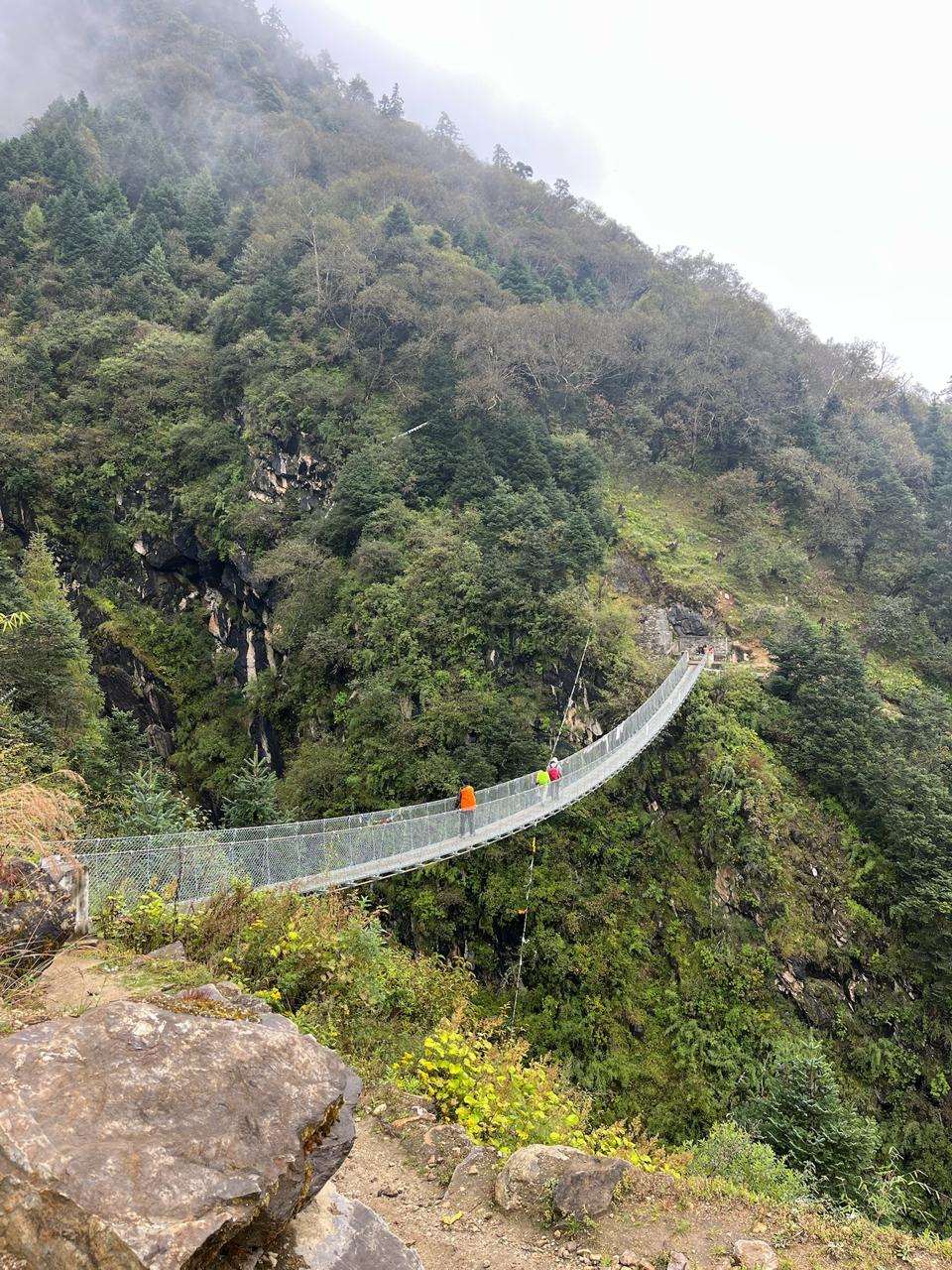
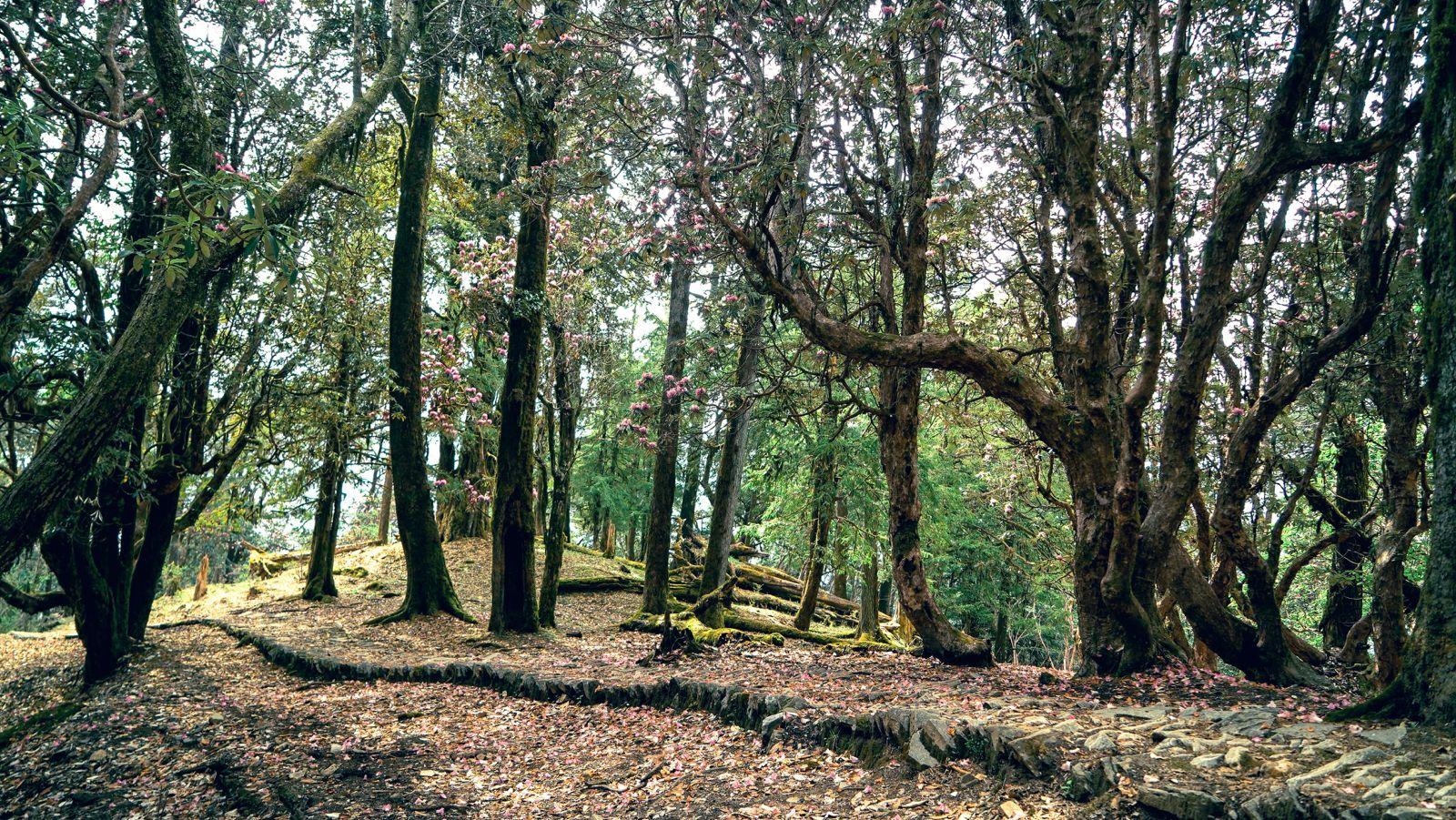
The trail follows the Dudh Koshi River, crossing it multiple times over long suspension bridges that sway gently in the wind. Small villages and prayer wheels mark the way as you climb gradually through pine and rhododendron forests. After lunch at Monjo, you enter the Sagarmatha National Park, where the real ascent begins, steep, winding, and relentless.
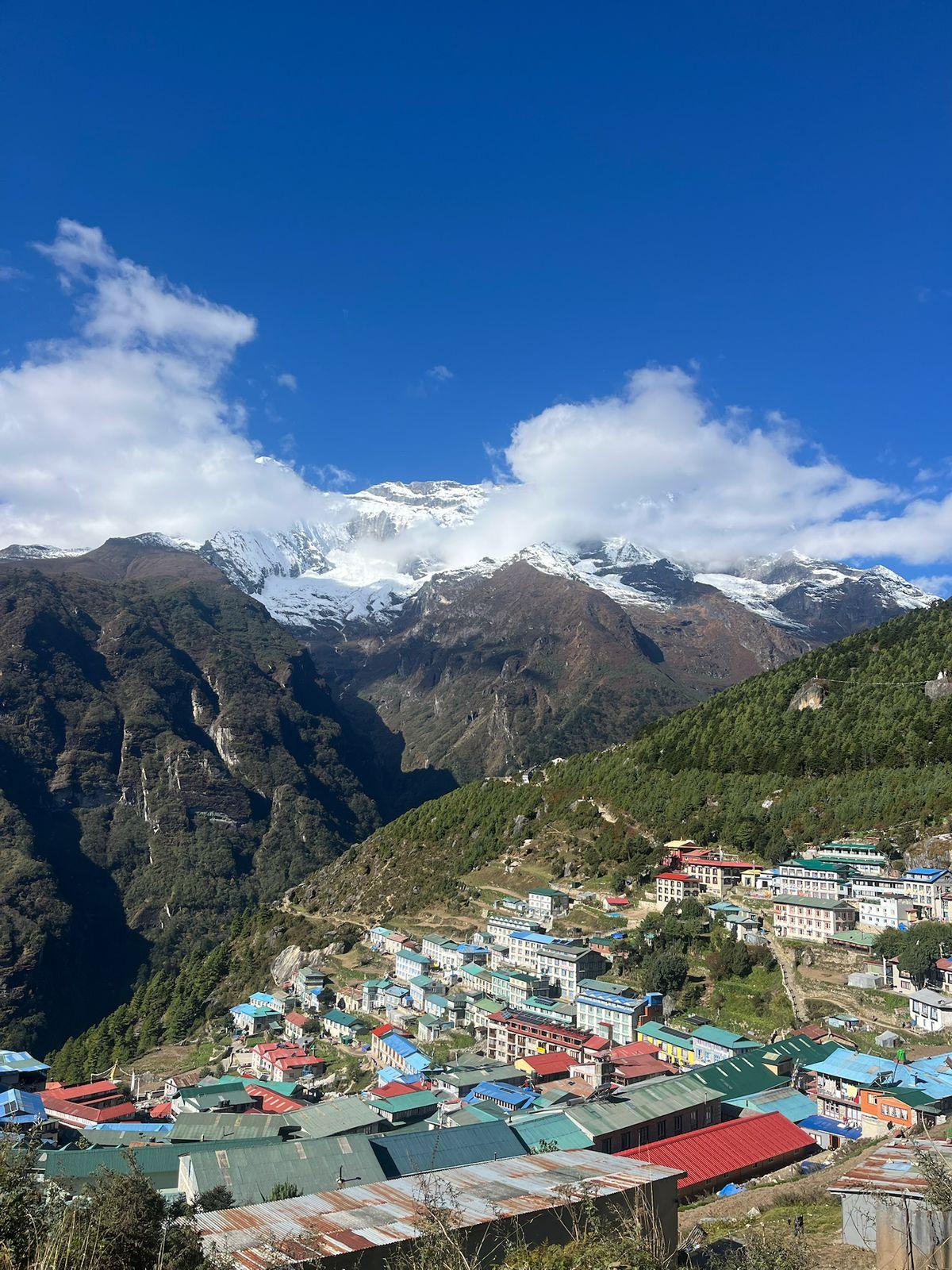
The final climb feels endless, but as you turn the last corner, Namche Bazaar unfolds below, a bowl-shaped village buzzing with life. It’s unlike any mountain settlement you’ve seen before. There are cafés, bakeries, bars, and even live music drifting through the streets. All the big gear brands are here, and yes, things cost a bit more, but the vibe is unbeatable. Namche is energy, altitude, and wilderness all rolled into one.
Day 4
Acclimatization at Namche Bazaar (Optional)
Trek Distance: ~5–6 km (round hike to Everest View Hotel)
Time Taken: 3–4 hours
Elevation Profile: 11,286 ft / 3,440 m → 12,730 ft / 3,880 m
If we take an extra day at Namche, it’s one of the most rewarding acclimatisation stops on the trail. After breakfast, you hike up to the Everest View Hotel, a vantage point that offers your first clear view of Everest, standing tall beside Lhotse, Ama Dablam, and Thamserku.
The trail winds through stone-paved paths and rhododendron forest before opening up to this spectacular viewpoint. On your way back, you can stop at the Khumjung Monastery, home to an ancient relic said to be a Yeti scalp, and visit the mountaineering museum, which beautifully captures the legacy of Sherpa climbers and early expeditions.
The rest of the day is easy, explore Namche’s narrow lanes, sip coffee at a bakery, or sit on a balcony watching clouds drift over the mountains.
Day 5
Namche Bazaar to Tyangbouche
Trek Distance: ~9 km (Namche Bazaar to Tengboche)
Time Taken: 5–6 hours
Elevation Profile: 11,286 ft / 3,440 m → 12,664 ft / 3,860 m
The day begins with a gentle, scenic trail that contours along the valley wall, offering one of the most beautiful walks on the entire route. The views of Everest, Lhotse, and Ama Dablam accompany you for most of the way. After an easy descent to Phunki Tenga, where you stop for lunch by the river, the trail climbs steadily through rhododendron and pine forests toward Tengboche.
Tengboche is home to the largest monastery in the Khumbu region, set against the dramatic backdrop of Ama Dablam. If you arrive by afternoon, you can attend the evening prayers, a peaceful, almost meditative experience as the chants echo through the valley.
The sunset from here is unforgettable, golden light hitting Ama Dablam and prayer flags fluttering in the cold breeze.
Day 6
Tyangbouche to Dingbouche
Trek Distance: ~12 km (Tengboche to Dingboche)
Time Taken: 6–7 hours
Elevation Profile: 12,664 ft / 3,860 m → 14,468 ft / 4,410 m
The trail begins with a short descent through pine and rhododendron forests to Deboche, before crossing the Imja Khola on a suspension bridge. As you climb up toward Pangboche, the views of Ama Dablam grow even grander. This is one of the most picturesque stretches of the entire trek.
Past Pangboche, the landscape begins to open up. Trees thin out, the air feels lighter, and stone-walled fields start to appear as you approach Dingboche, a windswept village nestled beneath Ama Dablam and Lhotse. You’re now well above the tree line, surrounded by mountains on every side.
Evenings here are crisp and quiet, the perfect place to slow down, rest, and watch the colours of the Himalaya change as the sun dips behind the peaks.
Day 7
Acclimatization day at Dingbouche
Trek Distance: ~5–6 km (round hike)
Time Taken: 3–4 hours
Elevation Profile: 14,468 ft / 4,410 m → 16,650 ft / 5,080 m
Unlike Namche, this acclimatisation day is non-negotiable; your body needs to adjust before heading higher. Dingboche may be smaller and quieter, but its setting is unmatched. The entire village is cradled in a high-altitude bowl, surrounded by giants; Ama Dablam, Lhotse, and Island Peak rise sharply above it.
In the morning, you hike up the ridge behind the village, a steep but rewarding climb with panoramic views of Ama Dablam, Thamserku, and Island Peak. Some trekkers extend this hike toward Island Peak Base Camp for additional altitude exposure.
The rest of the day is slow and restful. Dingboche has a few cosy cafés and bakeries, great places to sip coffee, watch clouds roll in, and enjoy the rare feeling of being deep in the Himalaya with nowhere else to rush to.
Day 8
Dingbouche to Lobuche
Trek Distance: ~11 km (Dingboche to Lobuche)
Time Taken: 5–6 hours
Elevation Profile: 14,468 ft / 4,410 m → 16,210 ft / 4,940 m
The landscape changes dramatically today, barren, rocky, and sculpted by glaciers. The trail climbs gently through alpine meadows before reaching Thukla, where most trekkers stop for tea or lunch before tackling the steep ascent ahead.
Just beyond Thukla lies one of the most emotional spots on the route, the Everest Memorial Ridge, a collection of stone chortens dedicated to climbers who lost their lives on Everest. With Pumori and Lobuche East towering in the background, it’s a place that makes everyone pause for a moment.
From here, the trail levels out as you follow the Khumbu Glacier moraine, eventually reaching Lobuche, a small settlement surrounded by snow-dusted ridges. The air feels thinner now, the evenings colder, a reminder that you’re inching closer to the base of the world’s highest mountain.
Day 9
Lobuche to Gorakshep and Sunset Hike to Kala Patthar
Trek Distance: ~10 km (Lobuche to Gorakshep + Kala Patthar round hike)
Time Taken: 6–7 hours
Elevation Profile: 16,210 ft / 4,940 m → 17,598 ft / 5,364 m (Kala Patthar summit 18,514 ft / 5,645 m)
From Lobuche, the trail follows the Khumbu Glacier, winding through the rugged terrain of ice and moraine. The air is thin, the walk deliberate, but the views of Nuptsé, Pumori, and Lingtren keep you company all along the way. After 3 hours, you reach Gorakshep, the final settlement on the Everest trail, a scattering of lodges perched in a valley of rock and wind.
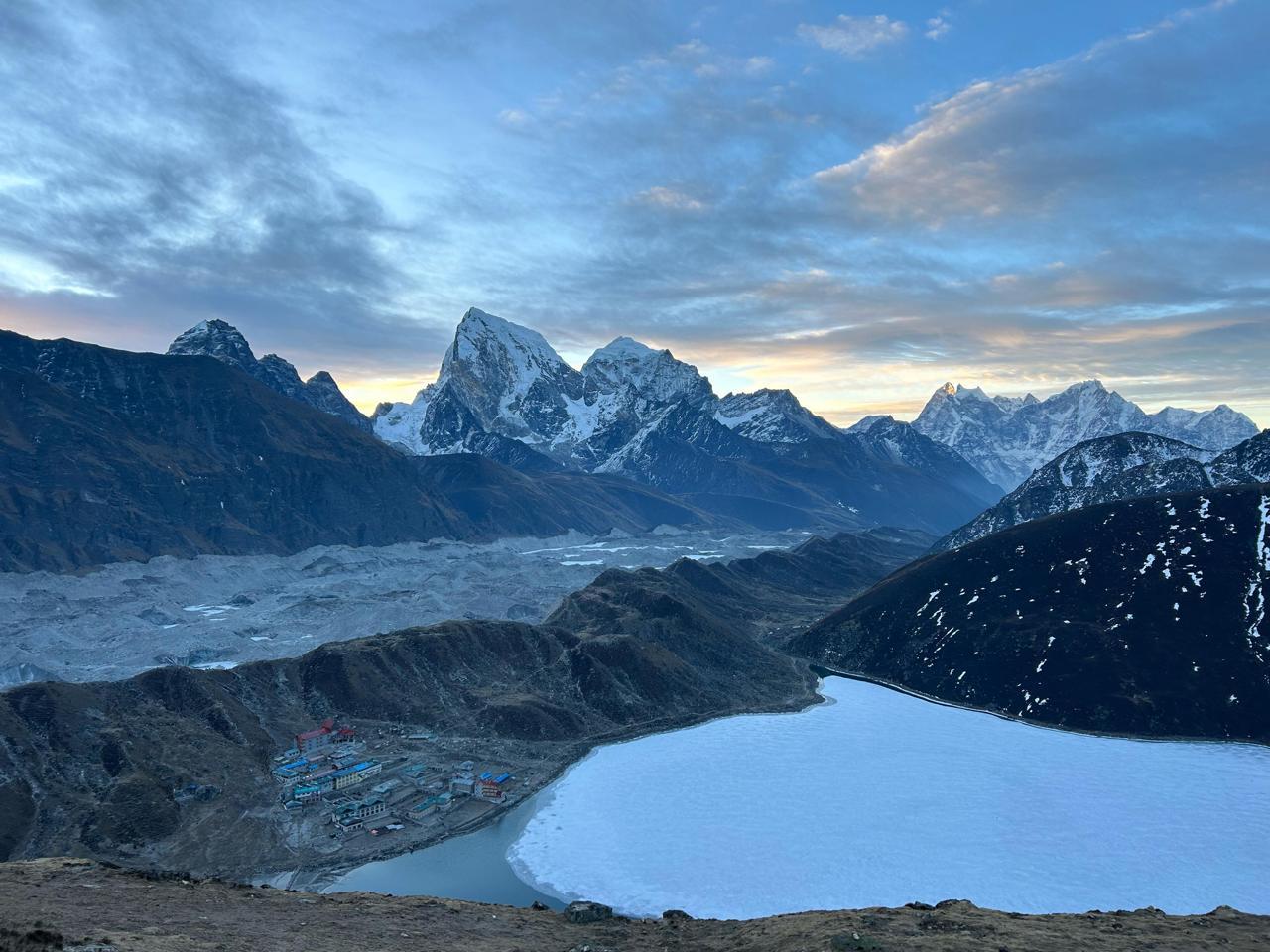
After a short rest and warm lunch, you head out again, this time for the sunset hike to Kala Patthar (5,645 m). It’s a steady, steep climb that rewards you with one of the most extraordinary views on the planet. As the sun drops behind Everest and Lhotse, the peaks turn from silver to gold to crimson. Below, the entire valley glows in shades of blue and orange.
The sunset here feels almost unreal, quiet, humbling, and timeless. You descend carefully back to Gorakshep for dinner and an early rest.
Day 10
Trek to Everest Base Camp and Descend to Pheriche
Trek Distance: ~15 km (Gorakshep → Everest Base Camp → Pheriche)
Time Taken: 8–9 hours
Elevation Profile: 17,598 ft / 5,364 m → 14,340 ft / 4,370 m
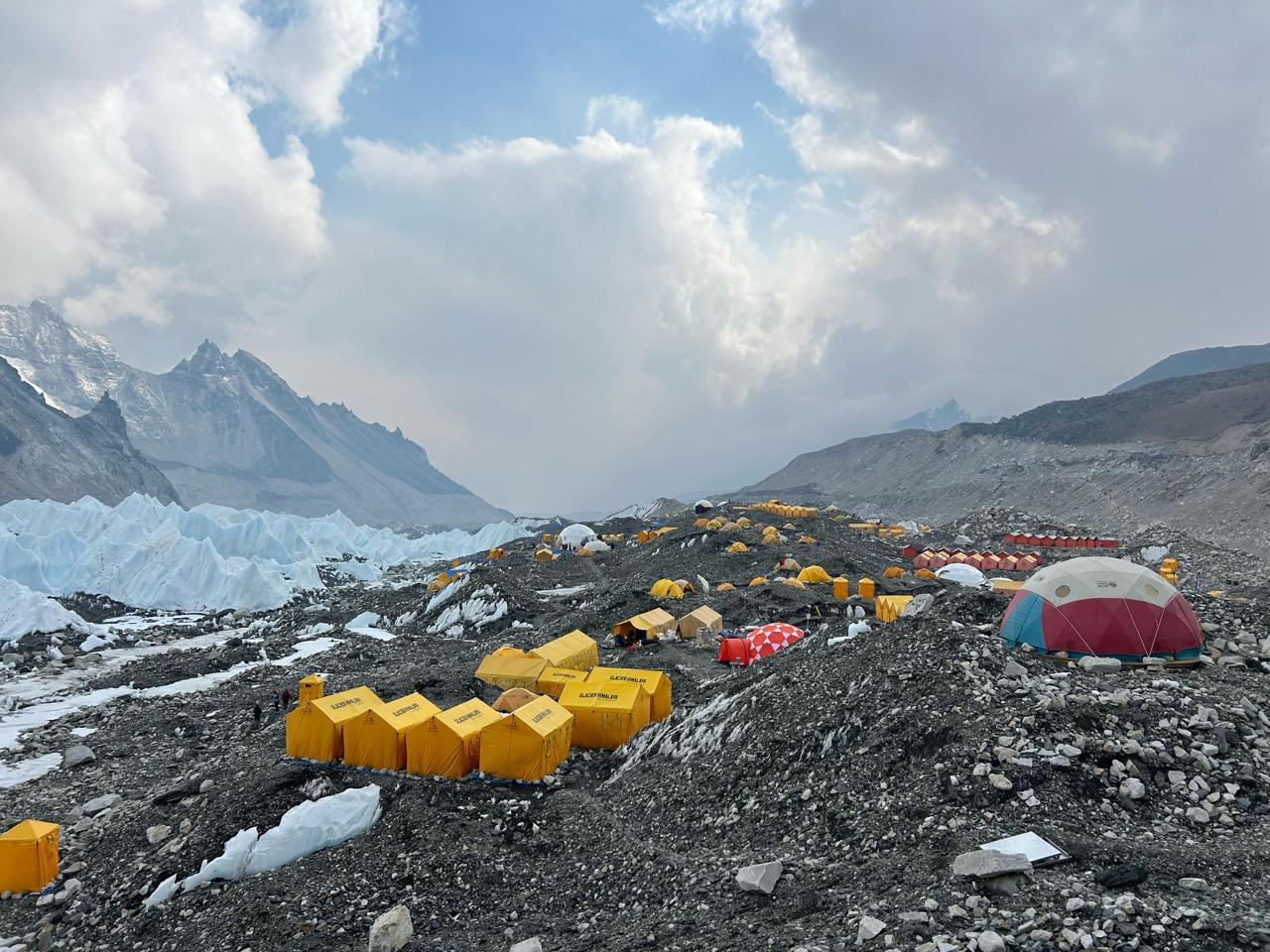
After yesterday’s sunset at Kala Patthar, today’s the day you finally set foot on Everest Base Camp. The trail starts early, winding along the Khumbu Glacier, a mix of rock, ice, and grit underfoot. The pace is slow and steady as you climb the last stretch toward Base Camp, marked by prayer flags fluttering against the icefall.
Standing at 5,364 m, surrounded by peaks like Pumori and Nuptse, it’s hard to believe you’ve walked all the way here. The Khumbu Icefall, glittering under the morning sun, is both breathtaking and intimidating, a frozen reminder of where every Everest climb begins.
After soaking in the moment (and a few well-earned photos), you retrace your steps to Gorakshep, have a warm meal, and begin your descent toward Pheriche. The air feels thicker, your lungs happier, and the comfort of lower altitude starts to sink in.
Evenings at Pheriche are peaceful, a quiet tea house, good food, and that deep sense of satisfaction that comes only after the hardest day is done.
Day 11
Pheriche to Namche Bazaar
Trek Distance: ~20 km (Pheriche to Namche Bazaar)
Time Taken: 6–7 hours
Elevation Profile: 14,340 ft / 4,370 m → 11,286 ft / 3,440 m
The return feels lighter, both in air and spirit. From Pheriche, the trail descends steadily through Pangboche and Tengboche, crossing back into rhododendron forests and green valleys that now feel almost unfamiliar after days among rock and ice.
The views of Ama Dablam stay with you for most of the way, changing shape as you descend. After a relaxed lunch at Tengboche or Phunki Tenga, the final climb and long downhill trail bring you back into Namche Bazaar by evening.
Back at a lower altitude, it’s time to breathe easy, take a long, hot shower, and maybe even step into a café or bar for a celebratory coffee or beer. After days in the high mountains, Namche feels almost like civilisation again, with bright lights, music, and warmth.
Day 12
Namche Bazaar to Lukla
Trek Distance: ~19 km (Namche Bazaar to Lukla)
Time Taken: 6–7 hours
Elevation Profile: 11,286 ft / 3,440 m → 9,317 ft / 2,840 m
It’s a long and nostalgic day, the final stretch of the journey. The trail drops steeply from Namche, crossing a series of suspension bridges over the Dudh Koshi River and passing familiar villages that now feel different on the way back.
The forests grow thicker, the air warmer, and prayer flags mark every bend of the trail. It’s hard not to look back, toward the direction where Everest stands, hidden but never forgotten.
By afternoon, you reach Lukla, where the trek ends just as it began. There’s time to celebrate with your guides and porters, share stories from the trail, and raise a toast to the days spent in the shadow of the world’s tallest mountains.
Evening in Lukla has its own rhythm, laughter, good food, and that quiet pride of having completed one of the most iconic walks on Earth.
Day 13
Fly back to Kathmandu
Trek Distance: —
Time Taken: 30-minute flight (weather permitting)
Elevation Profile: 9,317 ft / 2,840 m → 4,600 ft / 1,400 m
An early morning flight takes you from Lukla back to Kathmandu, marking the end of your Himalayan journey. If the weather is clear, the flight offers one last breathtaking view of the Khumbu Valley and the snow-clad peaks you’ve just walked among.
Back in Kathmandu, the warmth of the city feels almost surreal, traffic, food, and comfort after days in the wilderness. You’ll check into your hotel, take a long shower, and perhaps step out in the evening for a quiet meal or to explore the cafés and shops of Thamel.
It’s a day to unwind, reflect, and let it all sink in: the landscapes, the fatigue, the laughter, and the stillness of standing beneath Everest.
Our Expectations from the participants
We believe treks like Everest Base Camp are not just about fitness; they’re about attitude, preparation, and respect for the mountains. Here’s what we expect from everyone who joins us:
Commitment to preparation: Be willing to engage in consistent physical training for at least two months before the trek. We’ll provide a structured fitness plan and guide you through it.
Comfort with long walking days: Be ready to walk 10–20 km a day for 6–9 hours on varied terrain. Some days will be easier, some will test your patience; that’s part of the experience.
Adaptability and patience: The Himalayas move at their own pace. Weather, logistics, or flight schedules may change; staying flexible is key.
Respect for local culture: You’ll be walking through Sherpa villages and monasteries, and approach every space with curiosity and humility.
Team spirit: Treks like these are best experienced together. Be open to sharing, helping, and creating a positive group dynamic.
Personal responsibility: Carry your own essentials, follow your leader’s safety instructions, and take care of your hydration, nutrition, and rest.
With the right mindset and preparation, Everest Base Camp isn’t just achievable, it’s gratifying.
Minimum Fitness Requirement
Everest Base Camp is a Level 3 trek on our difficulty scale, achievable for anyone who trains consistently and respects the altitude. You don’t need to be an athlete, but you do need a steady foundation of endurance, strength, and patience.
Here’s what we look for in participants:
- Endurance: Ability to walk continuously uphill and downhill for several hours while carrying a 6–8 kg backpack.
- Cardiovascular fitness: You should be able to comfortably handle long walking days, up to 8–10 hours, on the higher sections of Gorakshep, as well as Kala Patthar.
- Training consistency: Follow a fitness routine for 6–8 weeks before the trek, including:
- Cardio sessions (3–5 times a week): Running, brisk walking, cycling, swimming, or stair climbing for 45–60 minutes.
- Strength training (2–3 times a week): Focus on your core, legs, glutes, and back.
- Weekend hikes: If possible, include long walks or hikes with a loaded backpack to simulate trek conditions.
- Mental preparedness: EBC is as much a test of patience and rhythm as of strength. Staying positive, eating well, and pacing yourself make all the difference.
If you’re unsure where to start, don’t worry. Once you sign up, you’ll receive a customised training plan tailored to your fitness level and timeline.
Inclusion
Exclusion
How difficult is the Everest Base Camp trek?
What’s the highest altitude we’ll reach?
How many days does the trek take?
How is it different from other treks like ABC or Manaslu?
Is a special permit required?
Sagarmatha National Park Permit
Khumbu Pasang Lhamu Rural Municipality Entry Permit
Both are arranged by Odyssey.
What kind of accommodation can I expect?
What about food and water?
For a balanced meal, dal bhat is the most reliable — freshly made, nutritious, and refillable.
Boiled or filtered water is available daily; you can also carry purification tablets or a reusable bottle.
How cold does it get?
Nighttime (especially near Gorakshep): -5°C to -10°C
Rooms are unheated, but every tea house provides thick blankets and warm dining areas.
Is there Wi-Fi or mobile connectivity?
How do I manage cash and payments?
For daily expenses (food, snacks, Wi-Fi, charging), keep a budget of ₹2,000–₹2,500 INR per day (approx. 3,200–4,000 NPR).
Do I need trek insurance?
Will I feel altitude sickness?
If required, we descend immediately; safety always comes first.
What’s the best time to do the Everest Base Camp trek?
Spring (March–May): Warmer days, blooming rhododendrons, and pre-monsoon calm.
Winter (Dec–Feb): Clear but very cold; fewer crowds.
SELECT DATE TO REGISTER

Thank You!
Your form has been submitted successfully. We'll get back to you soon.
₹ 58,799 + 5% GST
