

Tucked quietly in the shadow of the famous Annapurna Base Camp trail, the Mardi Himal Trek is Nepal’s best-kept secret, a short, soulful journey that packs all the drama, solitude, and grandeur of the Himalayas into just a few days.
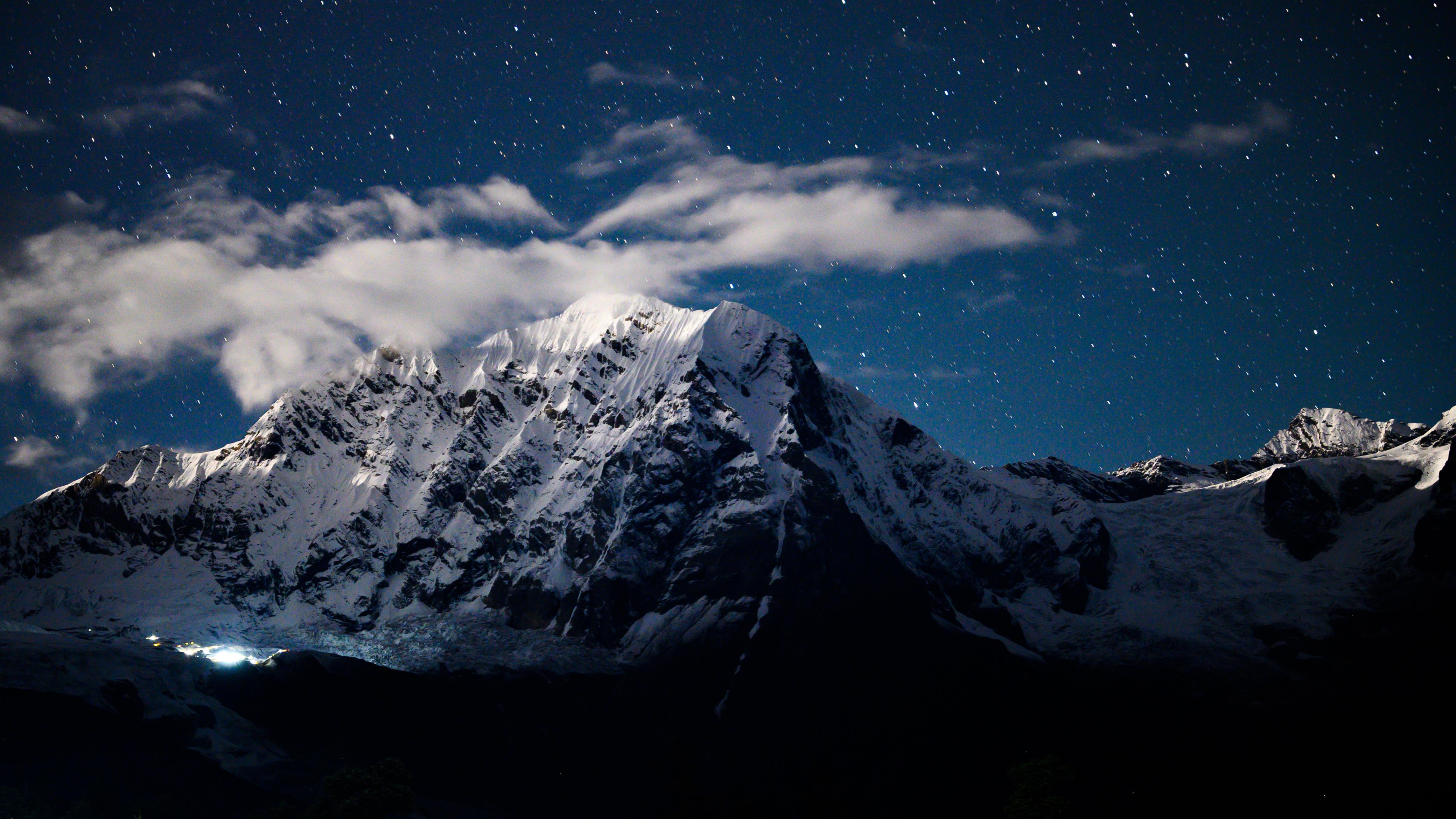
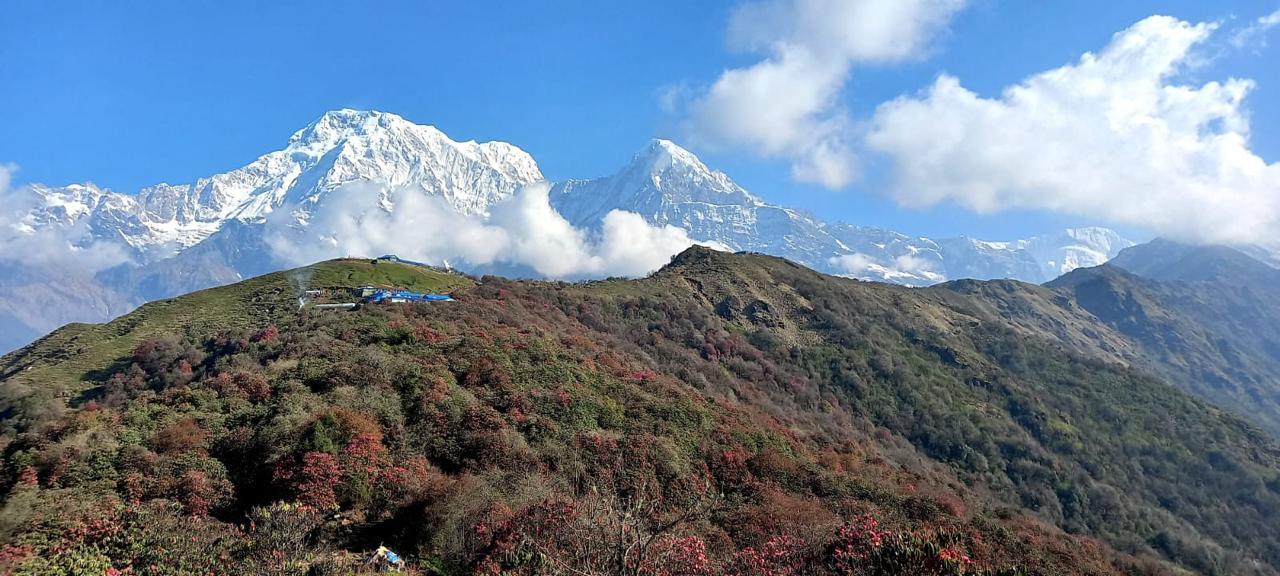
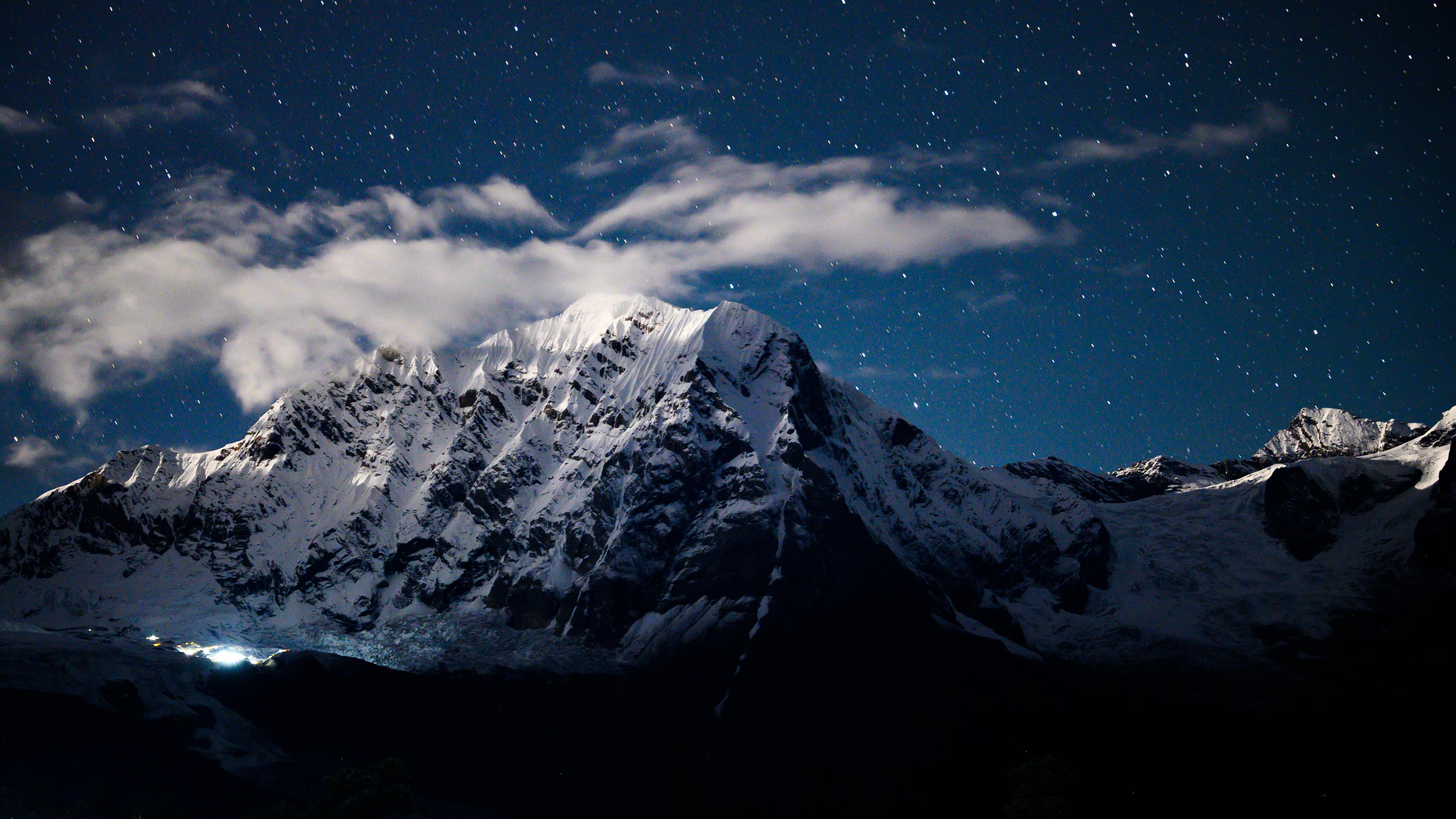
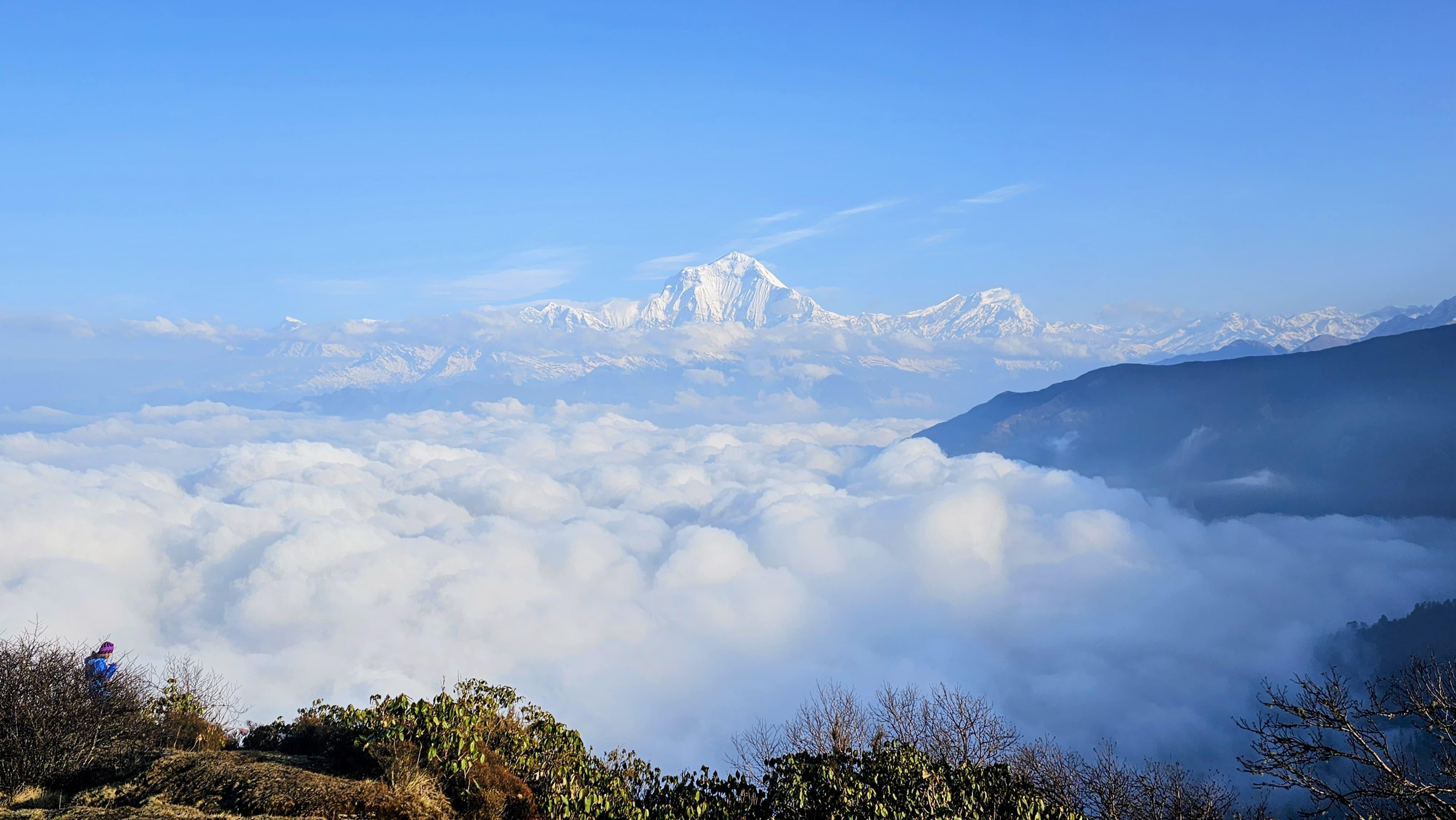
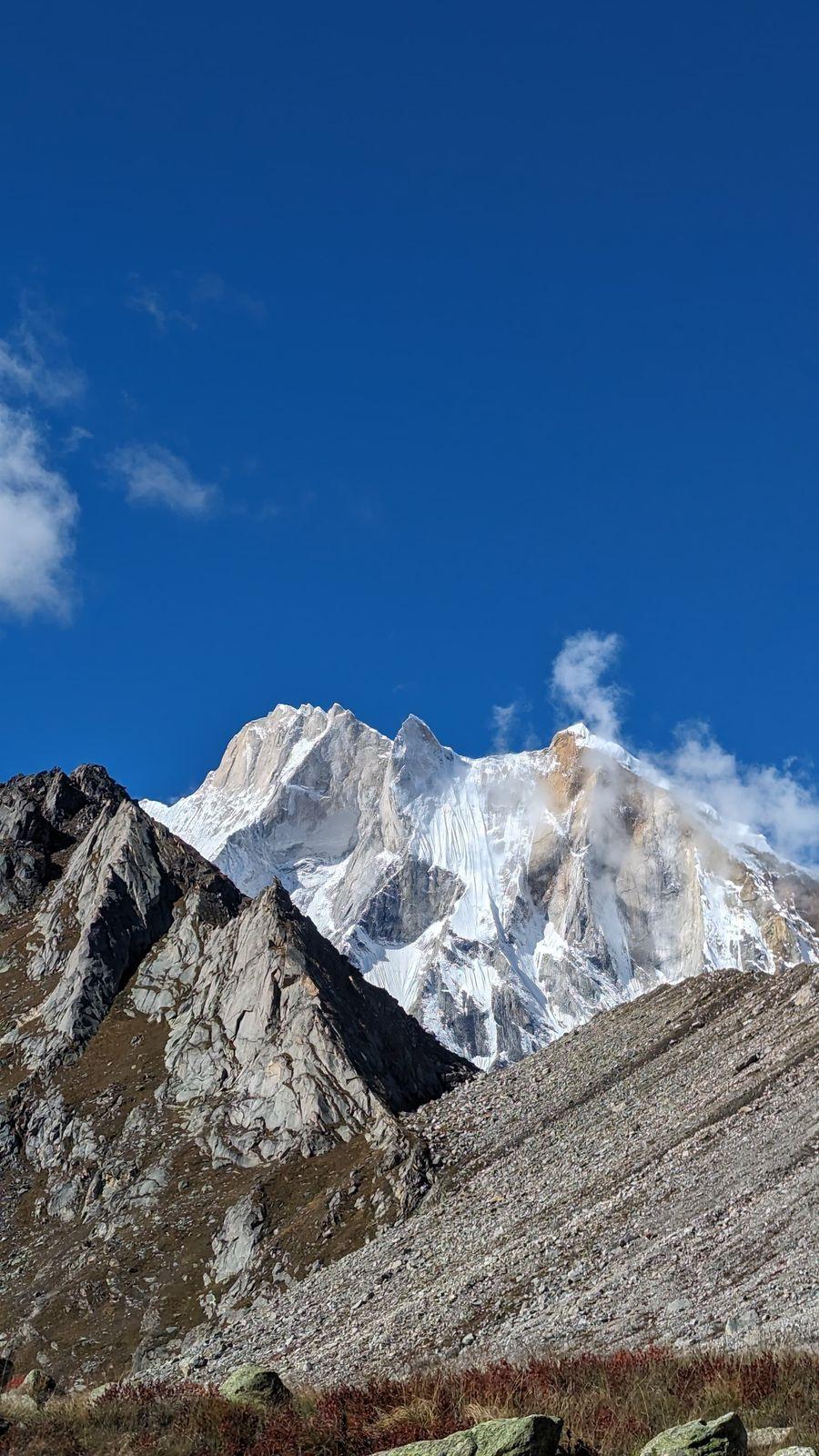
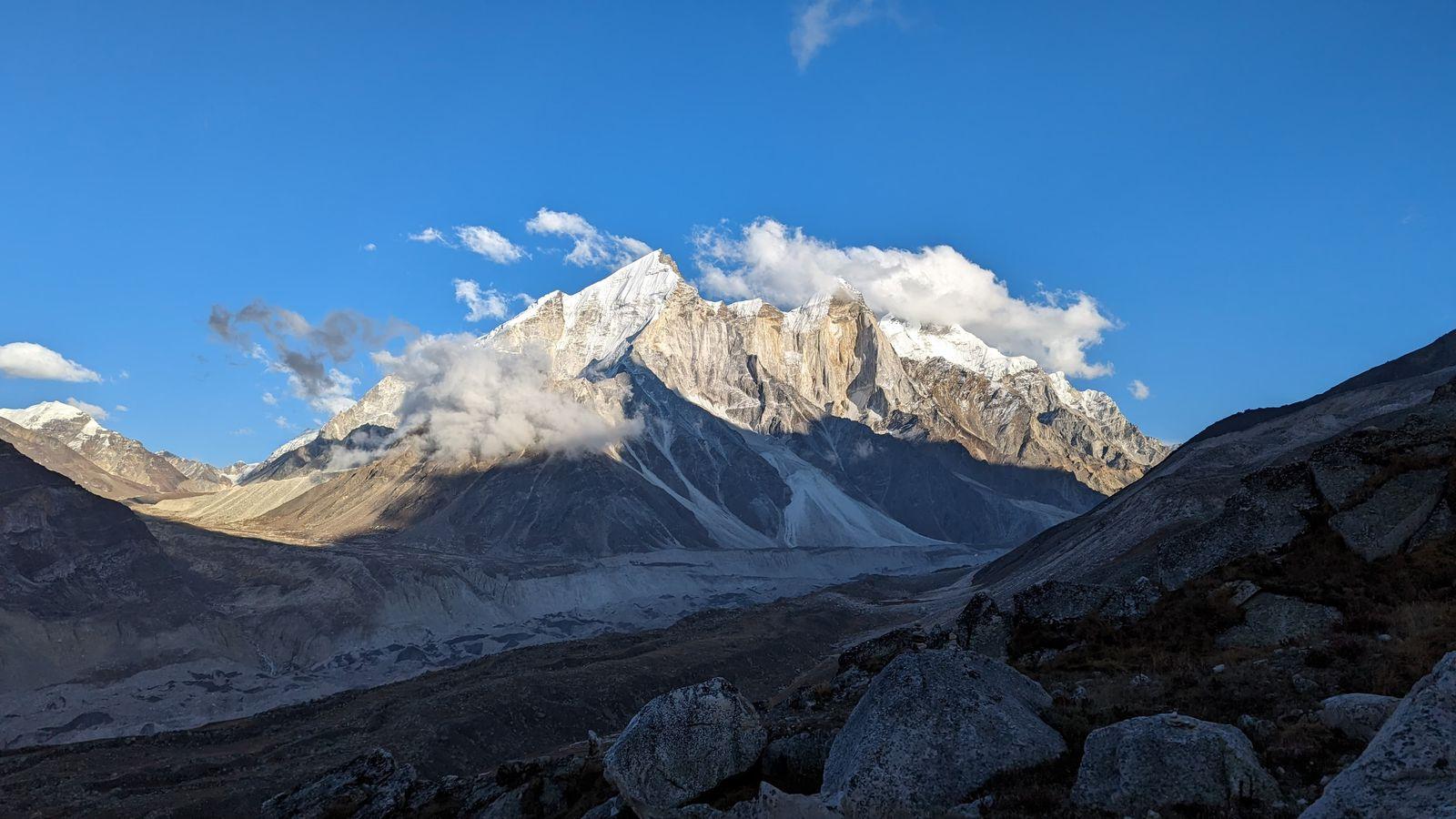
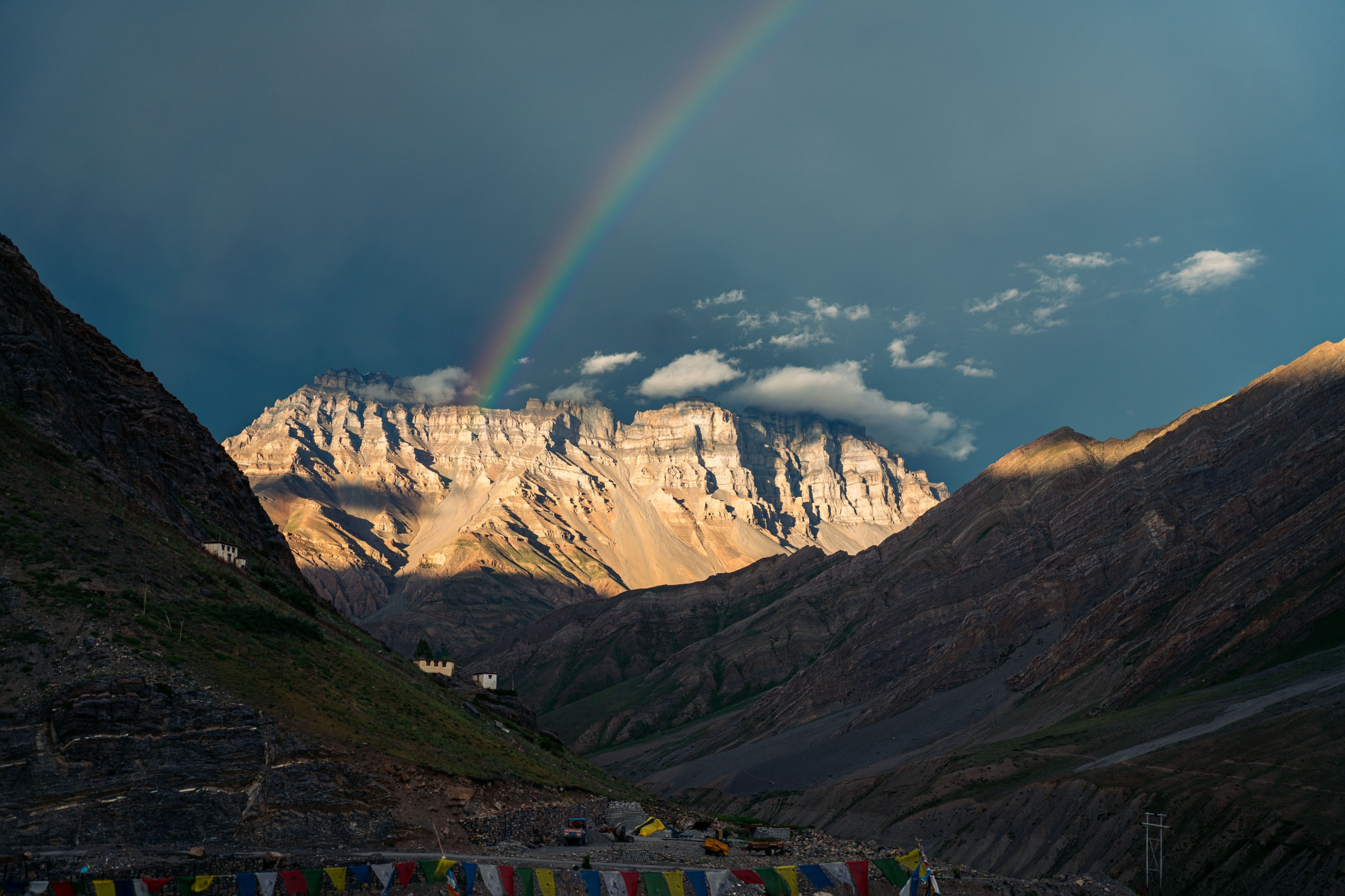
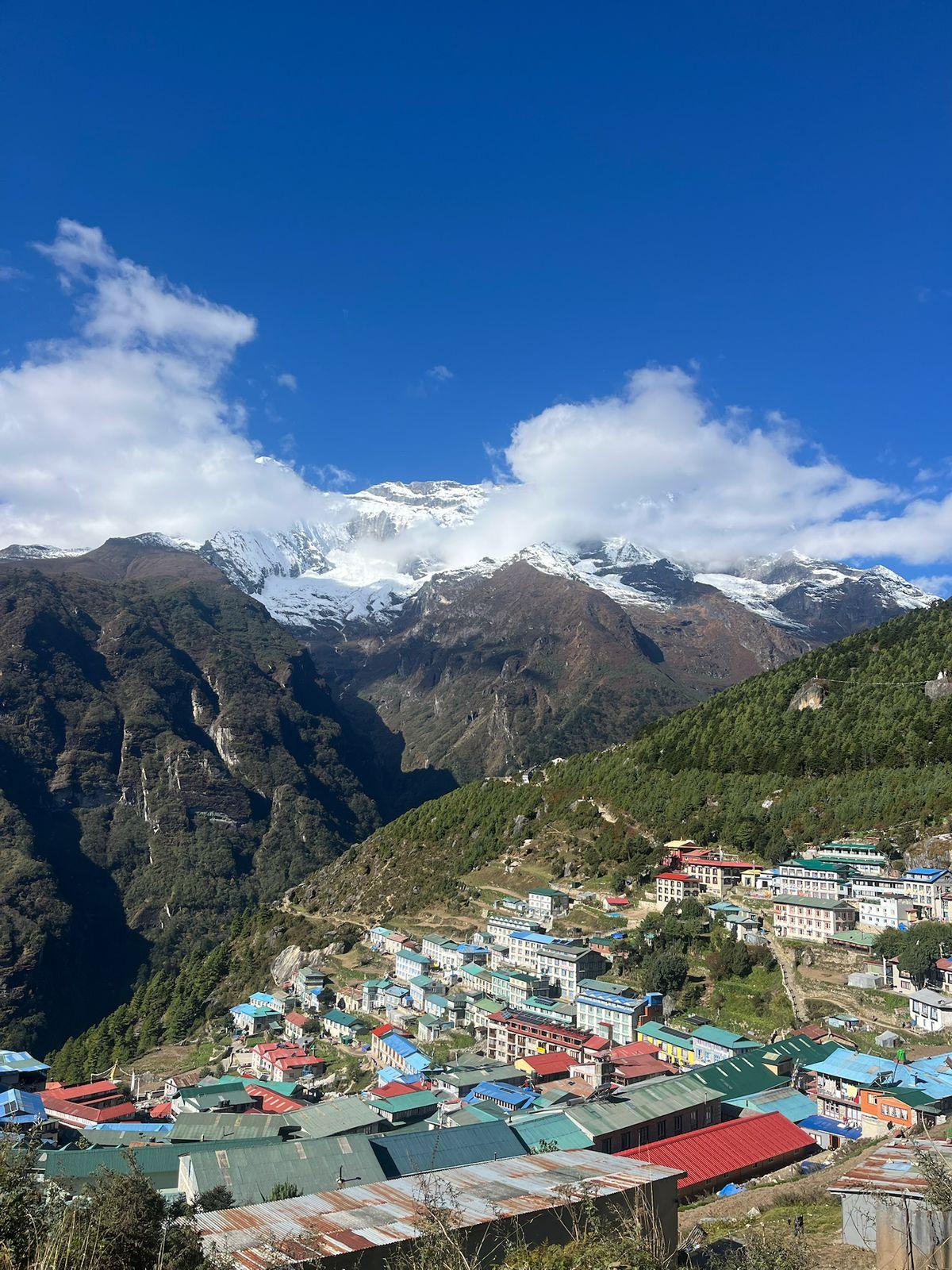
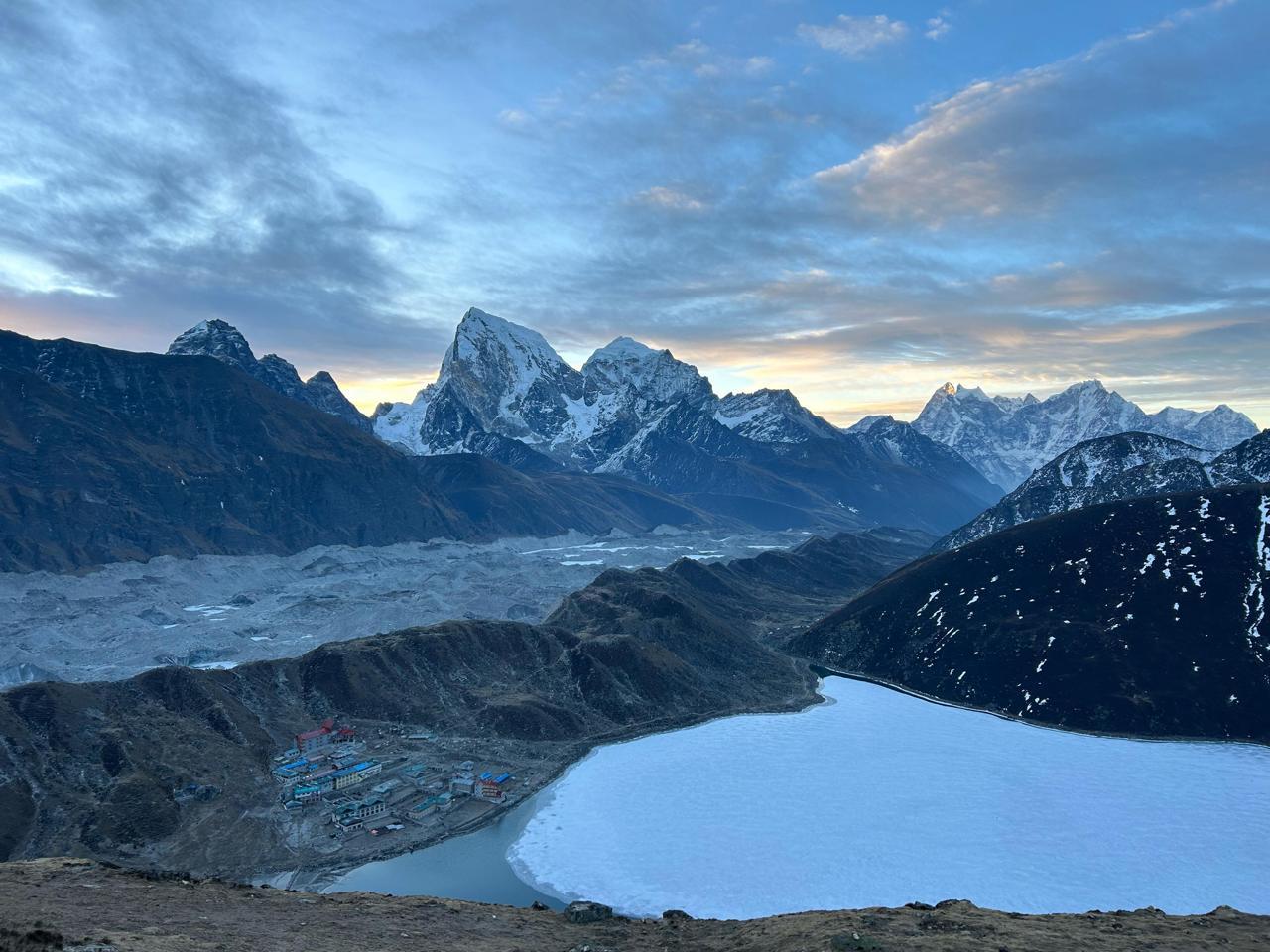
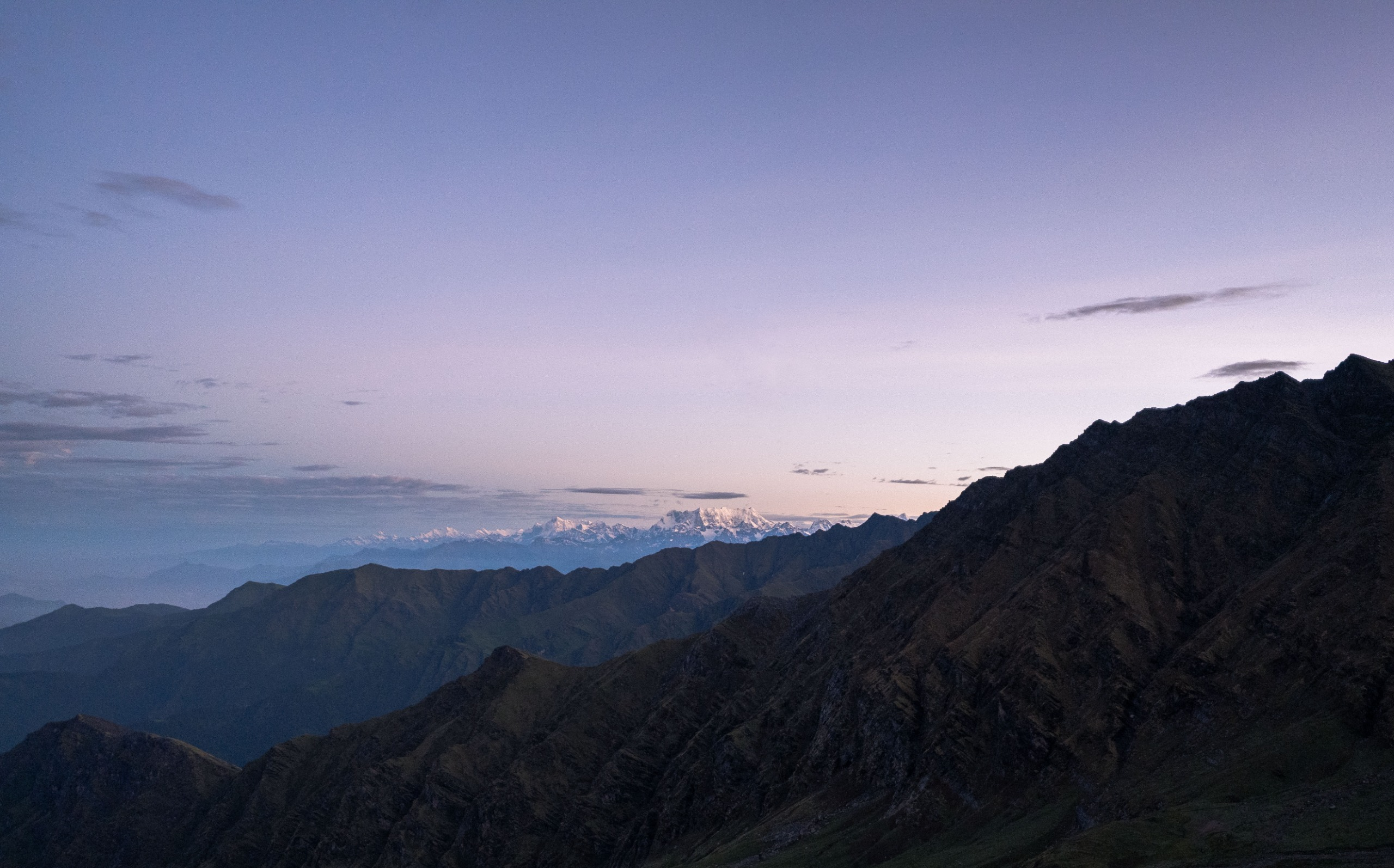
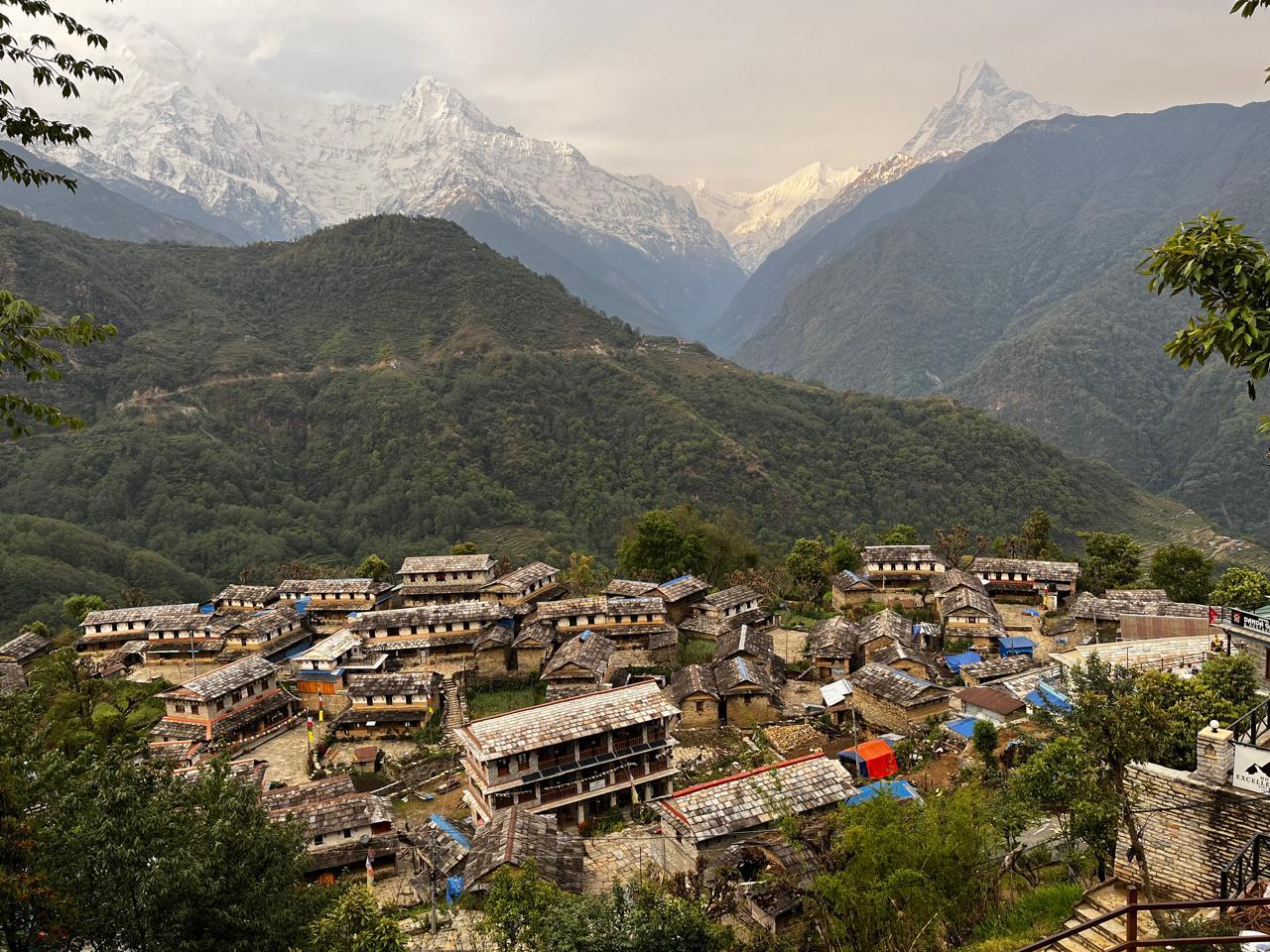
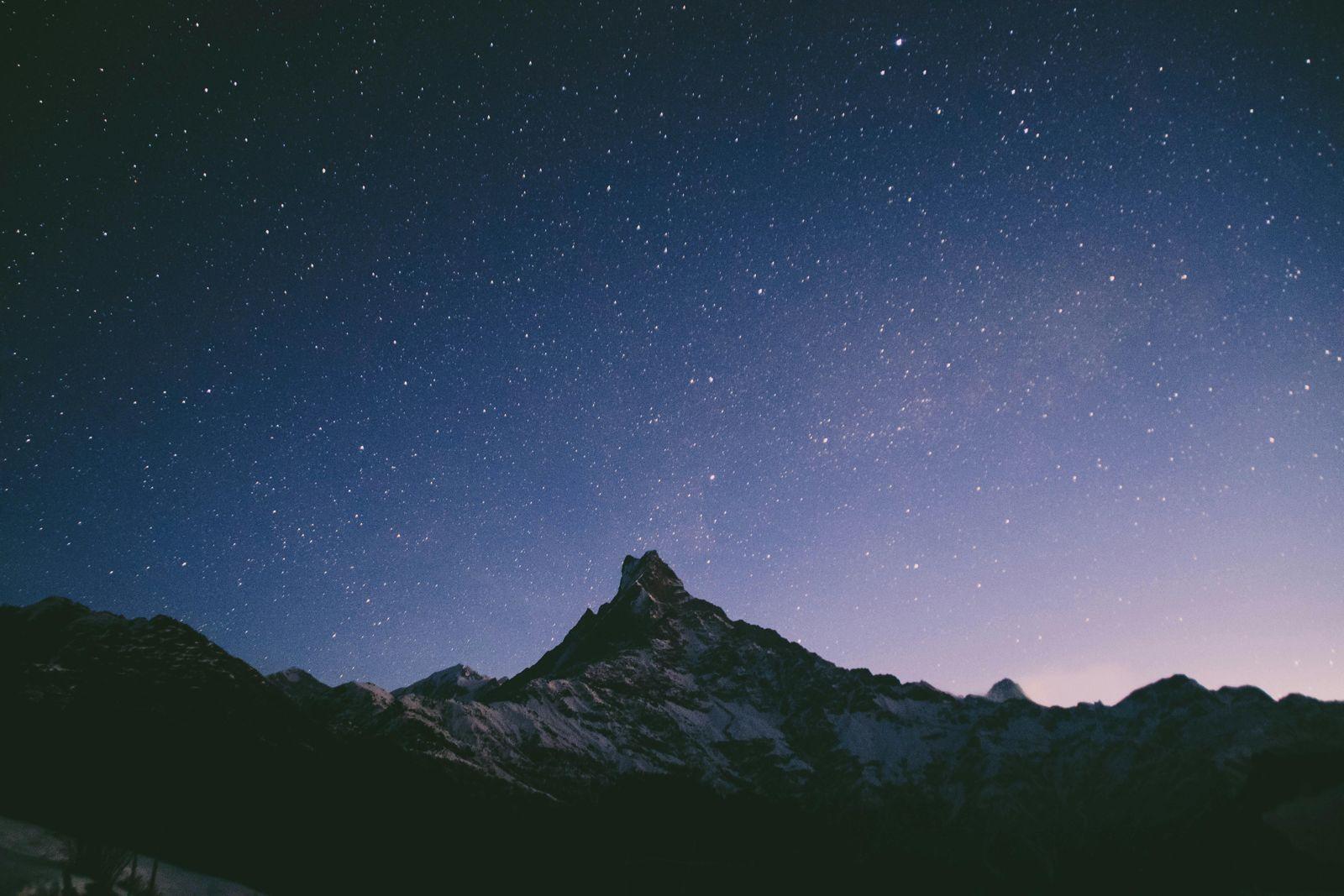
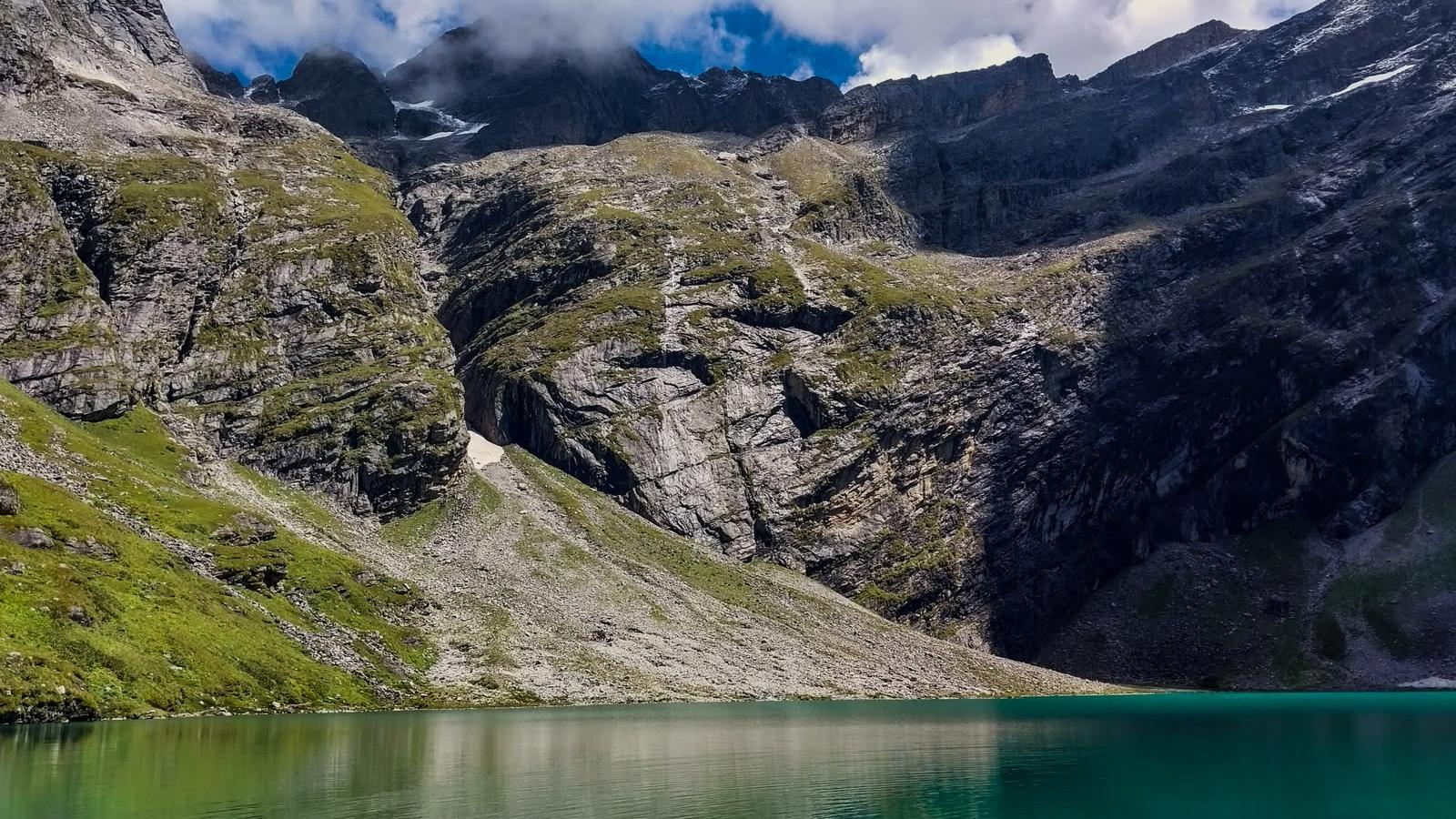
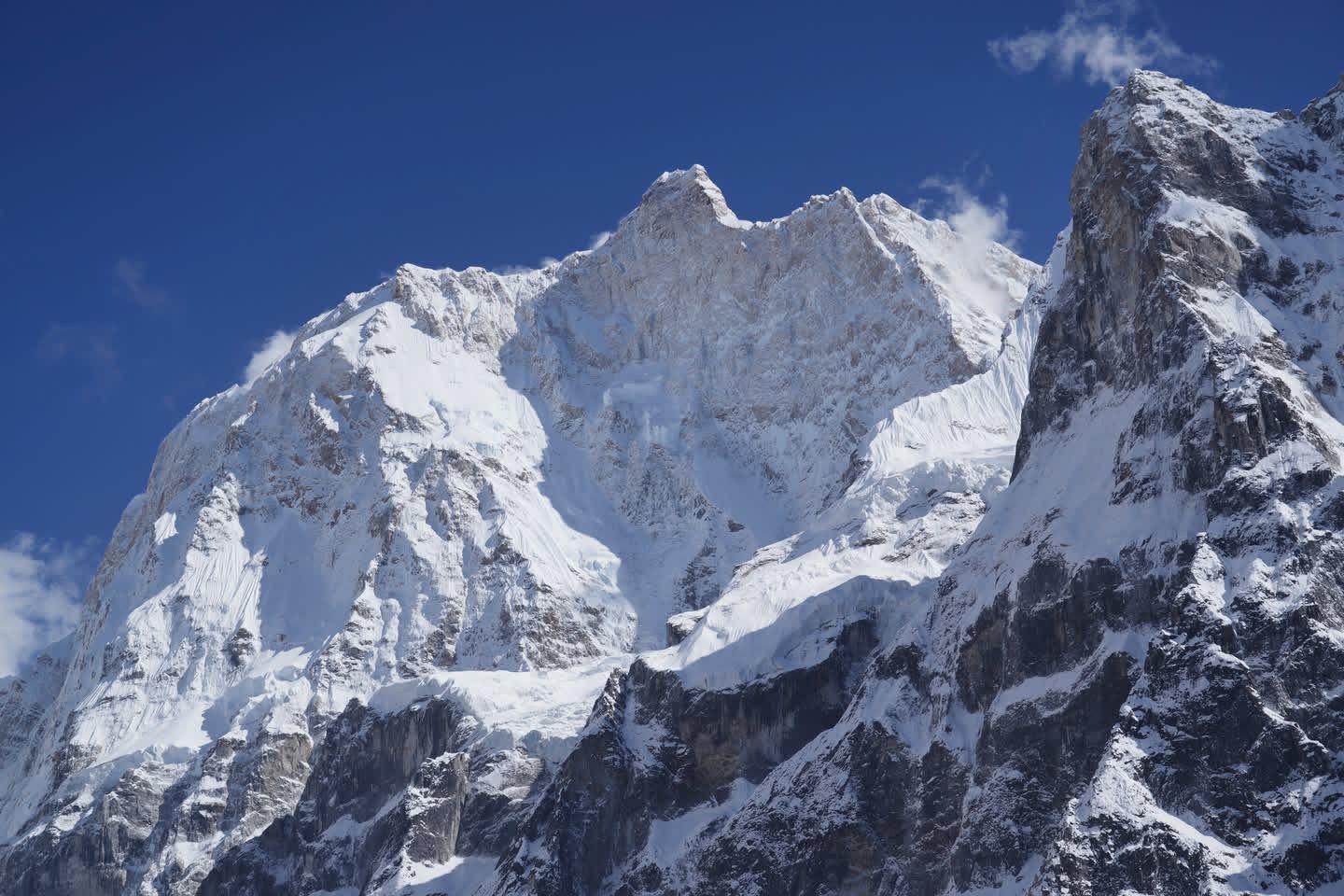
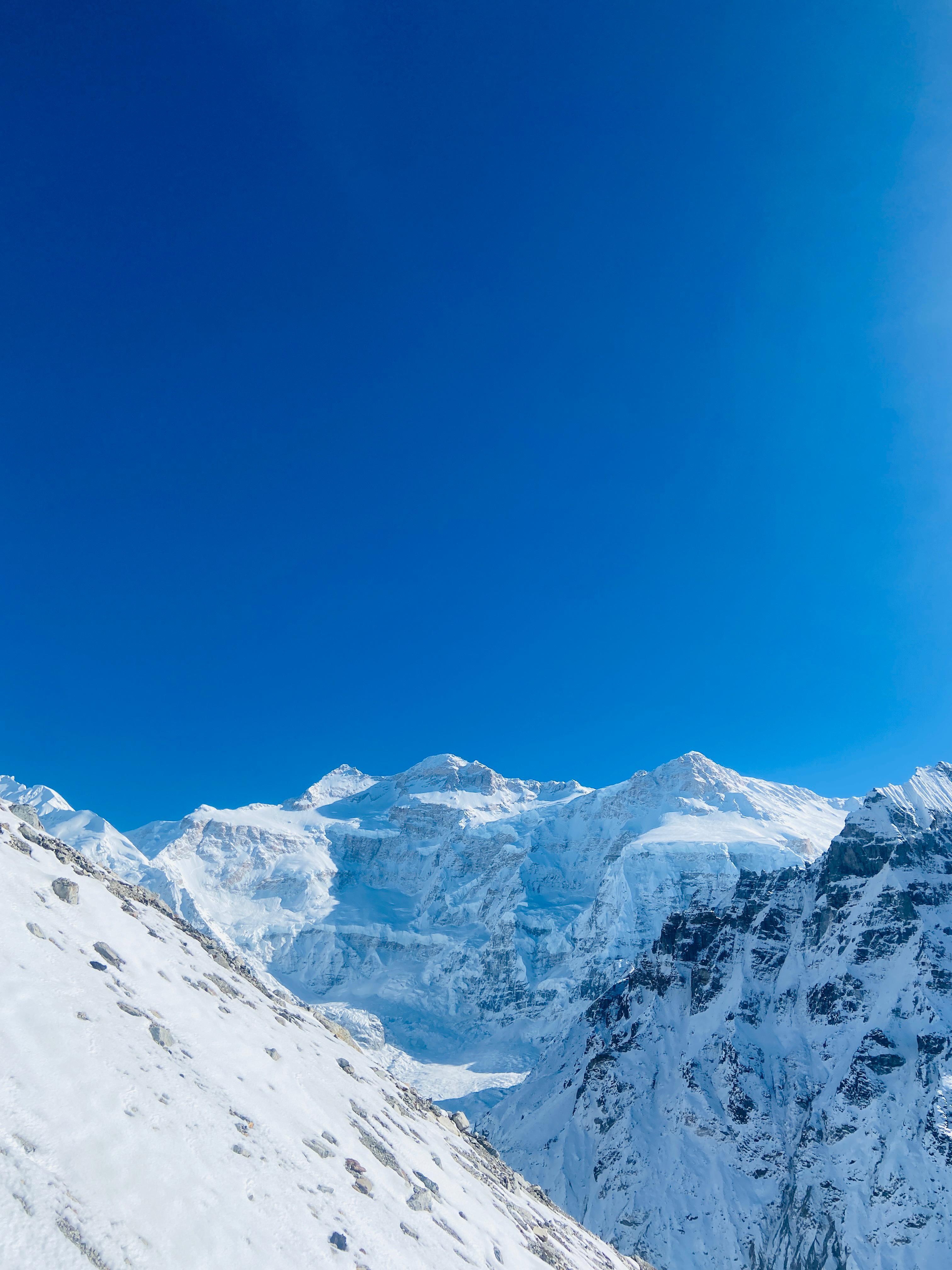
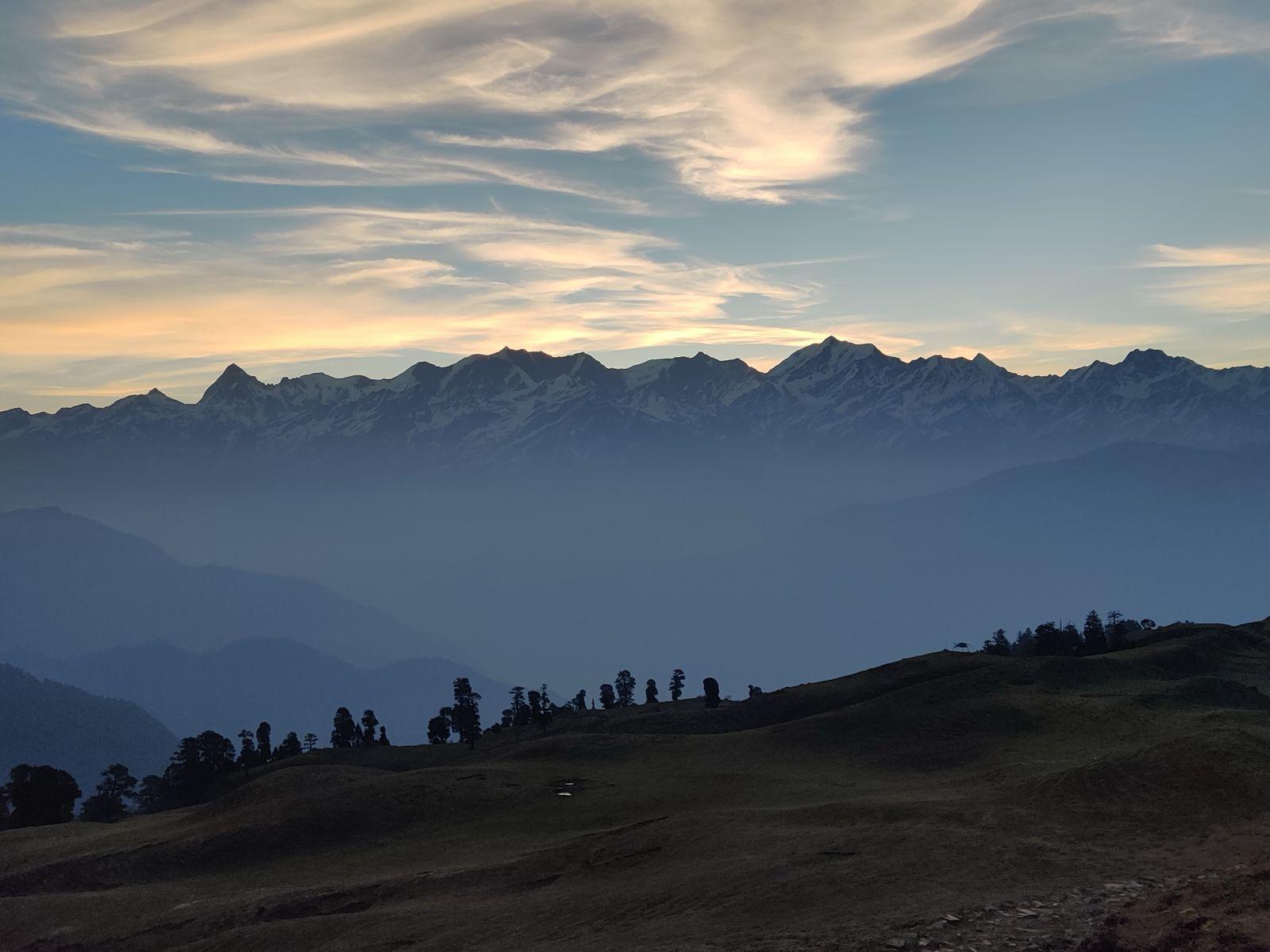
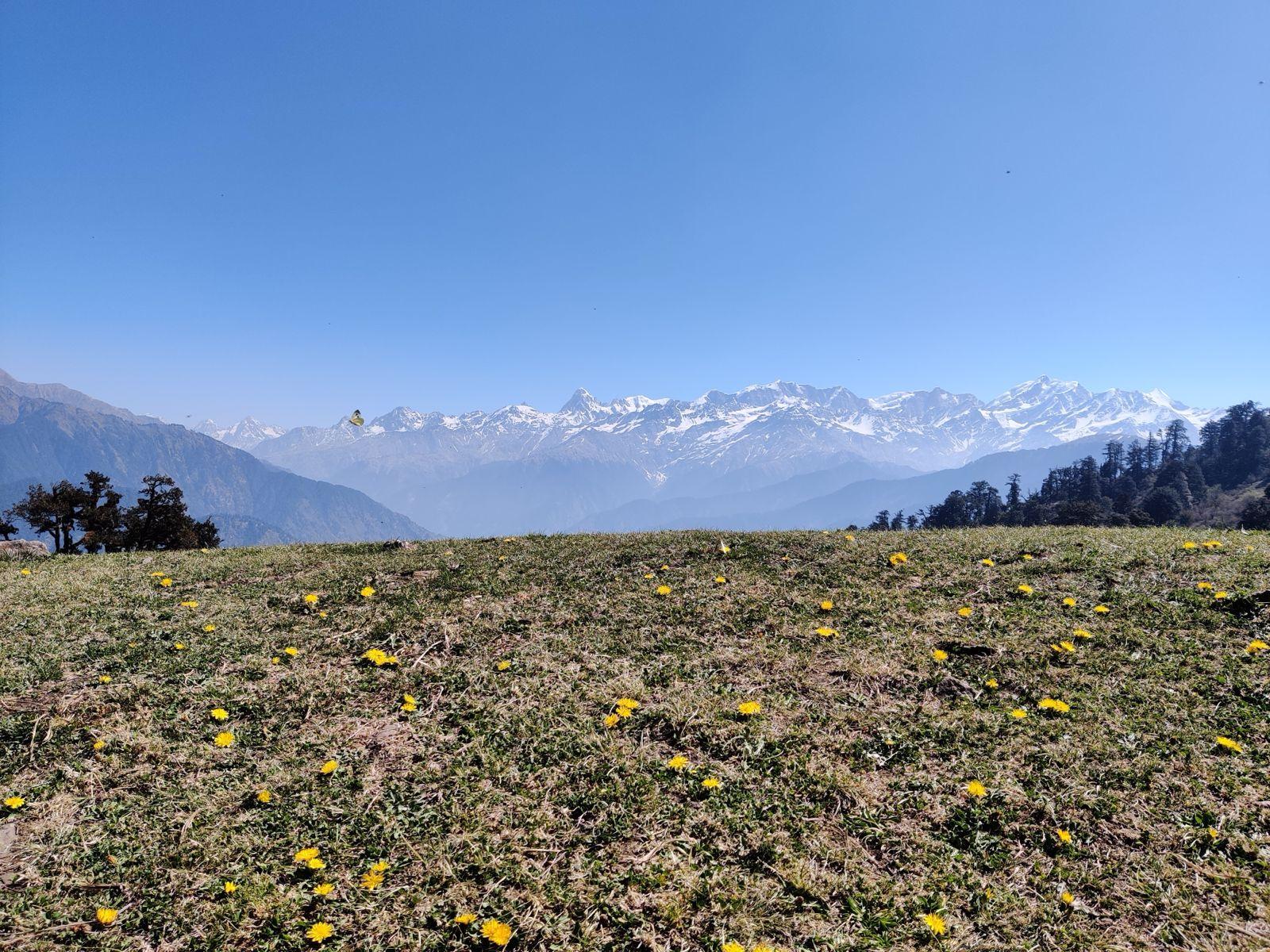
Starting from Pokhara, the trail winds through lush rhododendron forests, tranquil Gurung villages, and undisturbed alpine meadows before rising onto a high, windswept ridge that feels like the edge of the world. From here, the panorama is almost surreal: Machhapuchhre (Fishtail), Annapurna South, Hiunchuli, and Mardi Himal loom so close you can trace the glacial contours with your eyes.
Unlike the more commercialized treks in the Annapurna region, Mardi Himal retains a sense of remoteness and discovery.
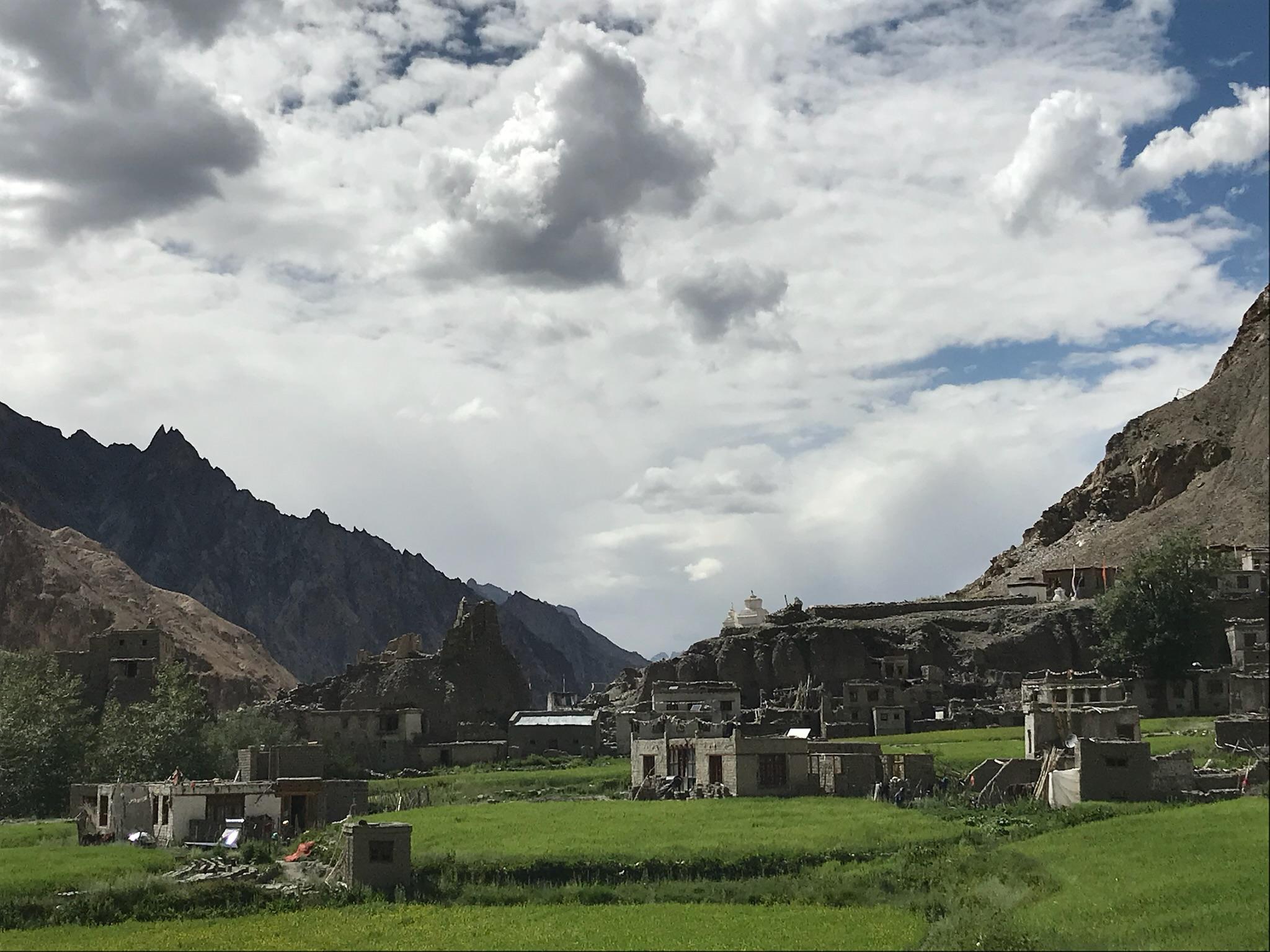
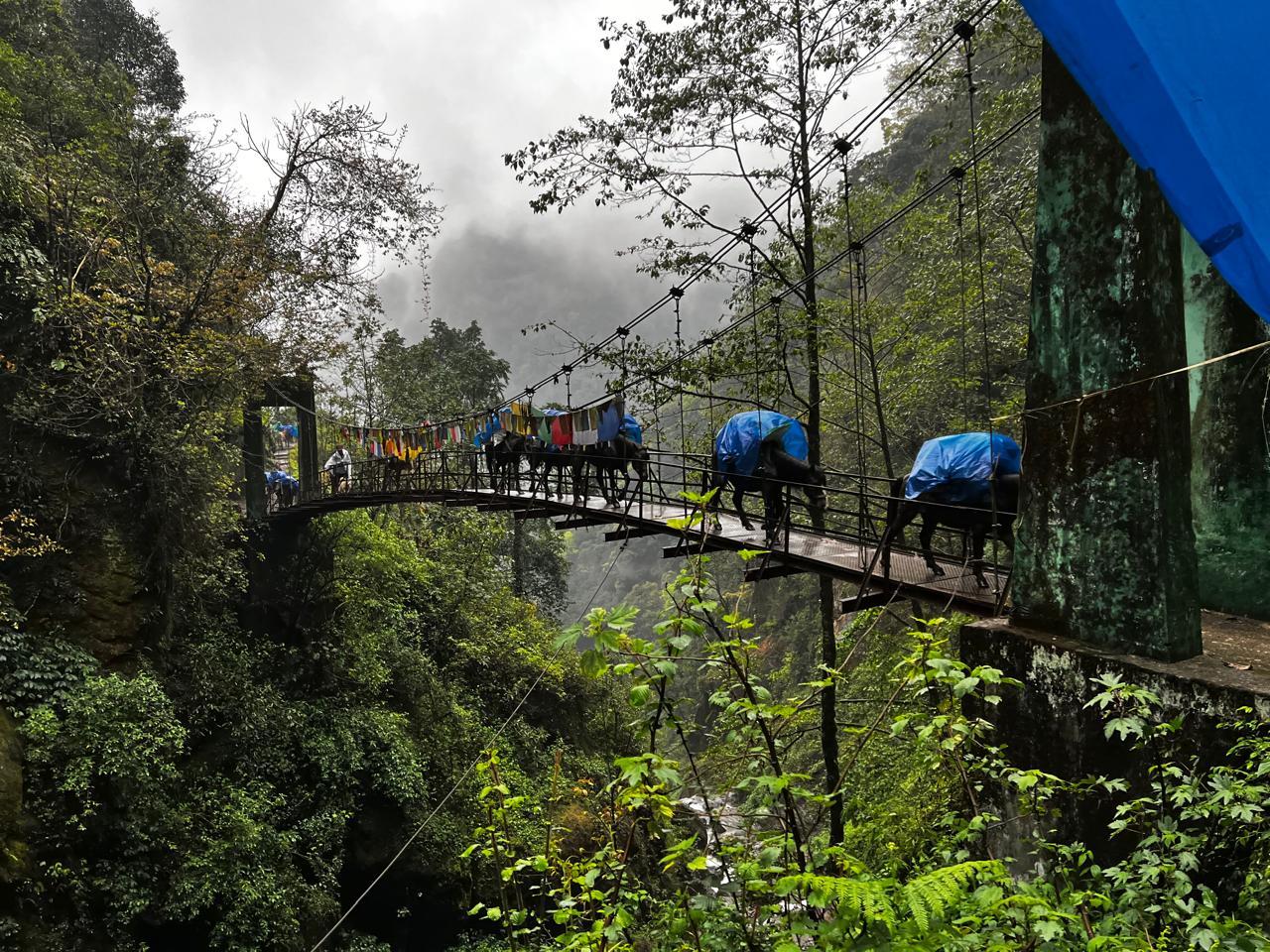
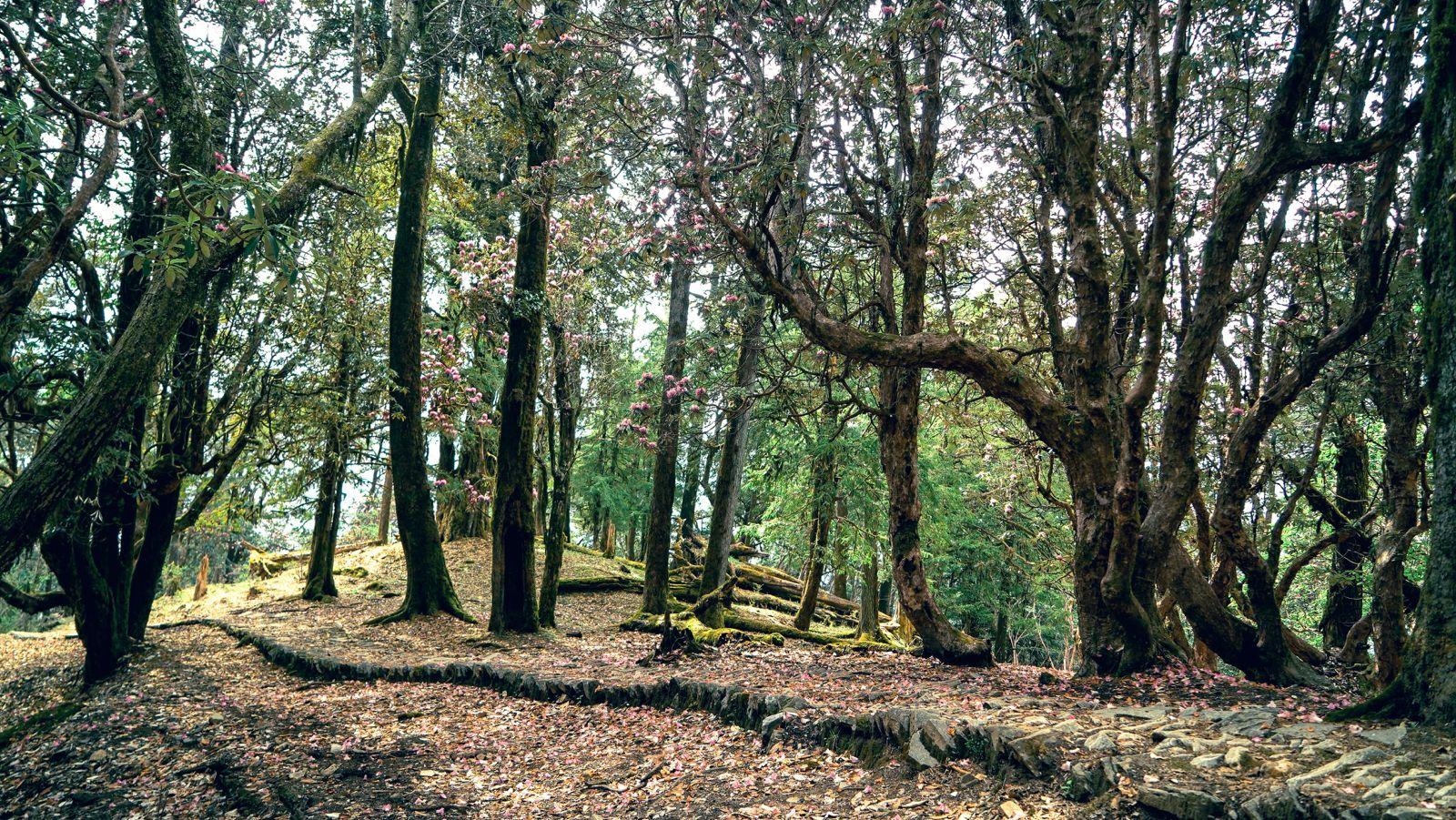
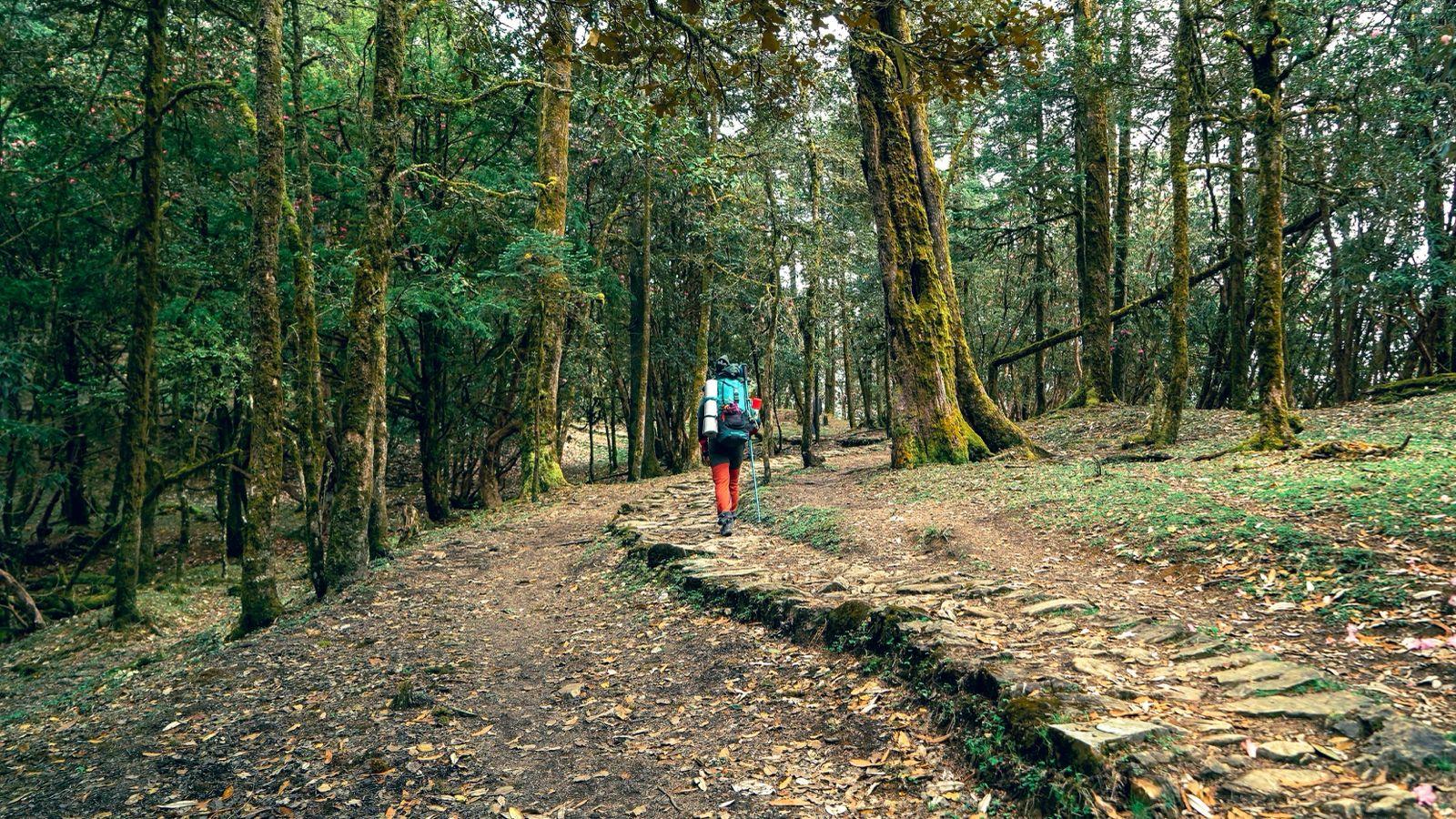
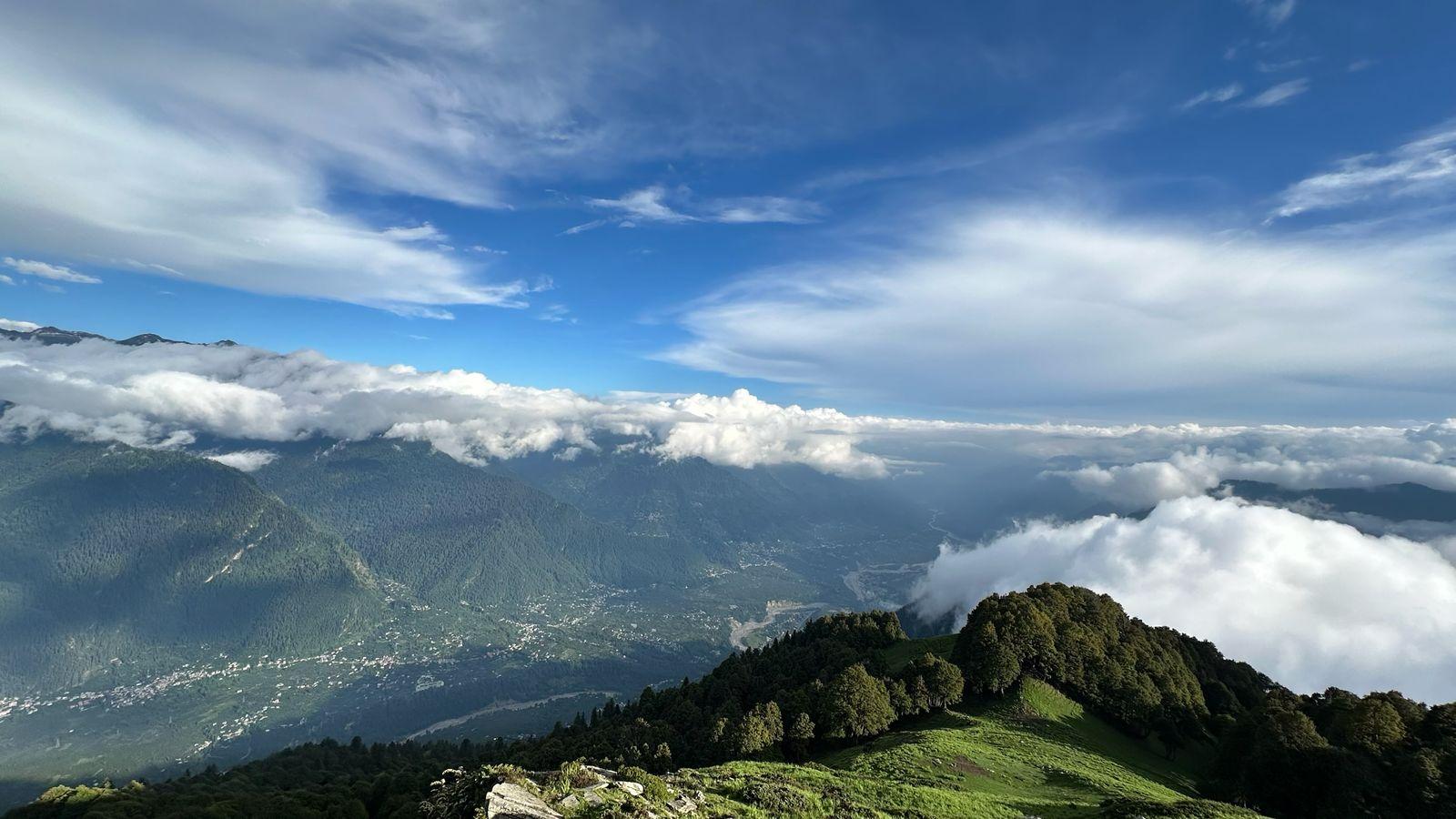
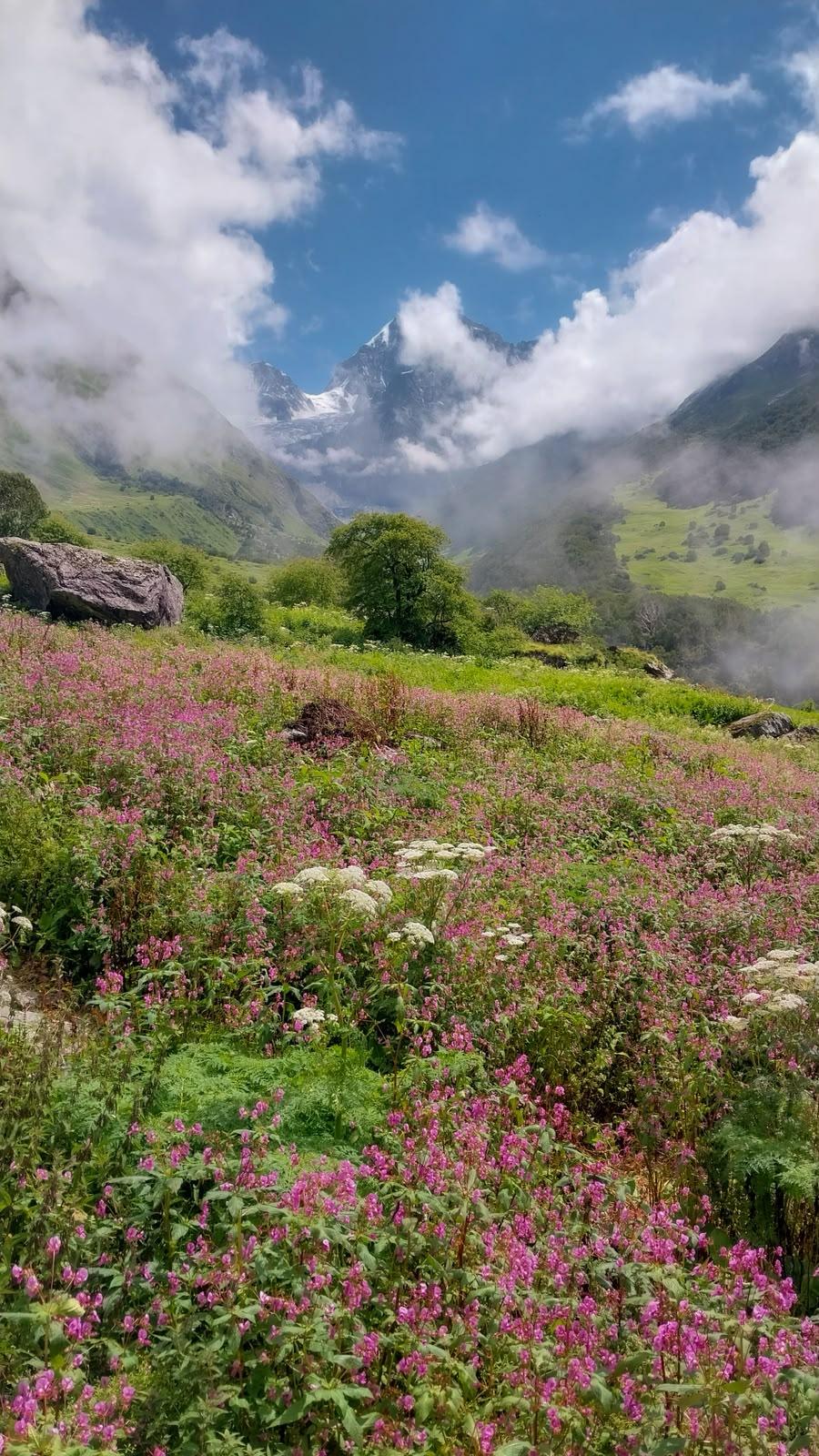
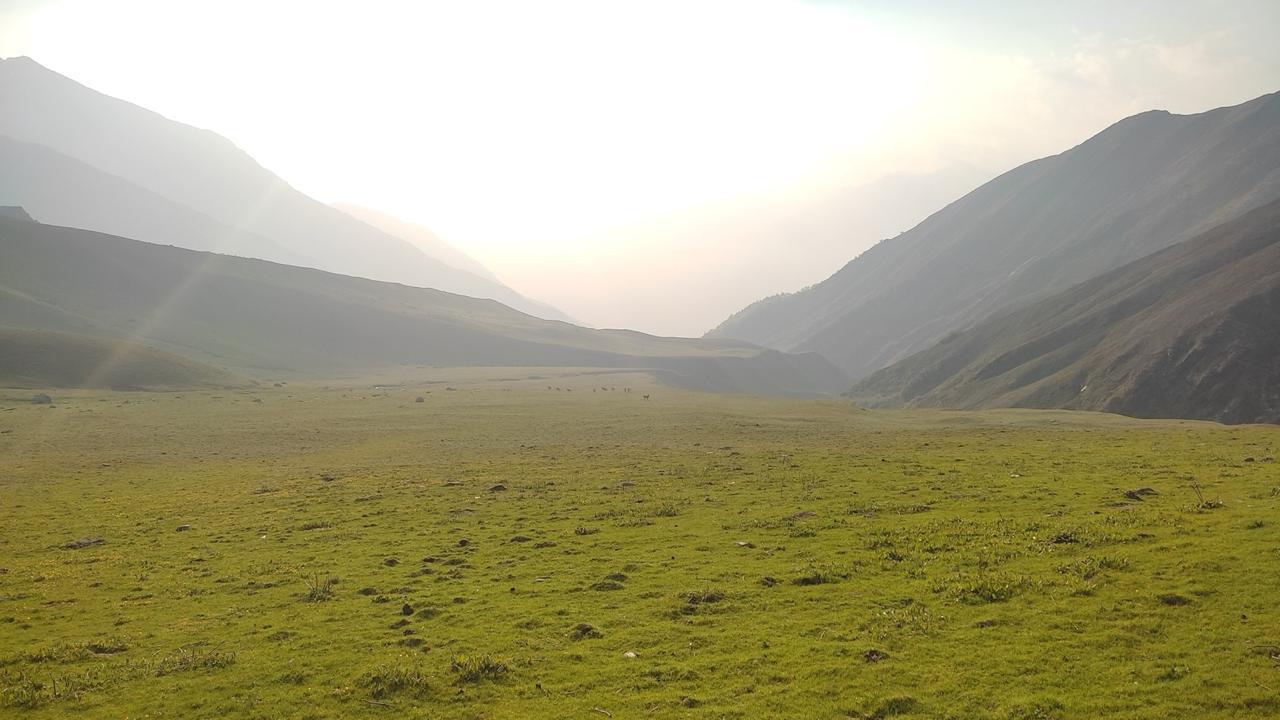
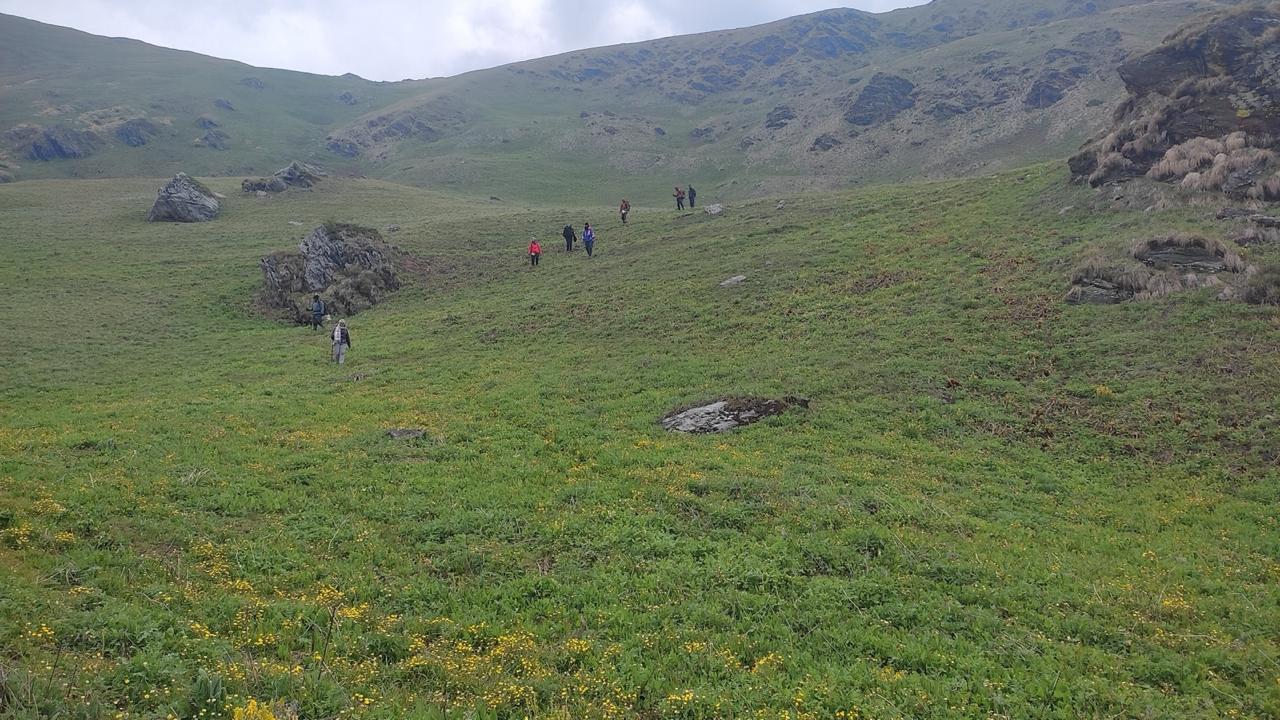
The lower reaches are painted in greens, moss-covered trees, fern-lined trails, and bursts of crimson rhododendrons in spring. As you climb higher, the forest fades into open ridges and pastures where yaks graze and clouds drift below your feet. The transition from subtropical warmth to alpine chill happens quickly, offering trekkers a fascinating glimpse into Nepal’s rich ecological layers.
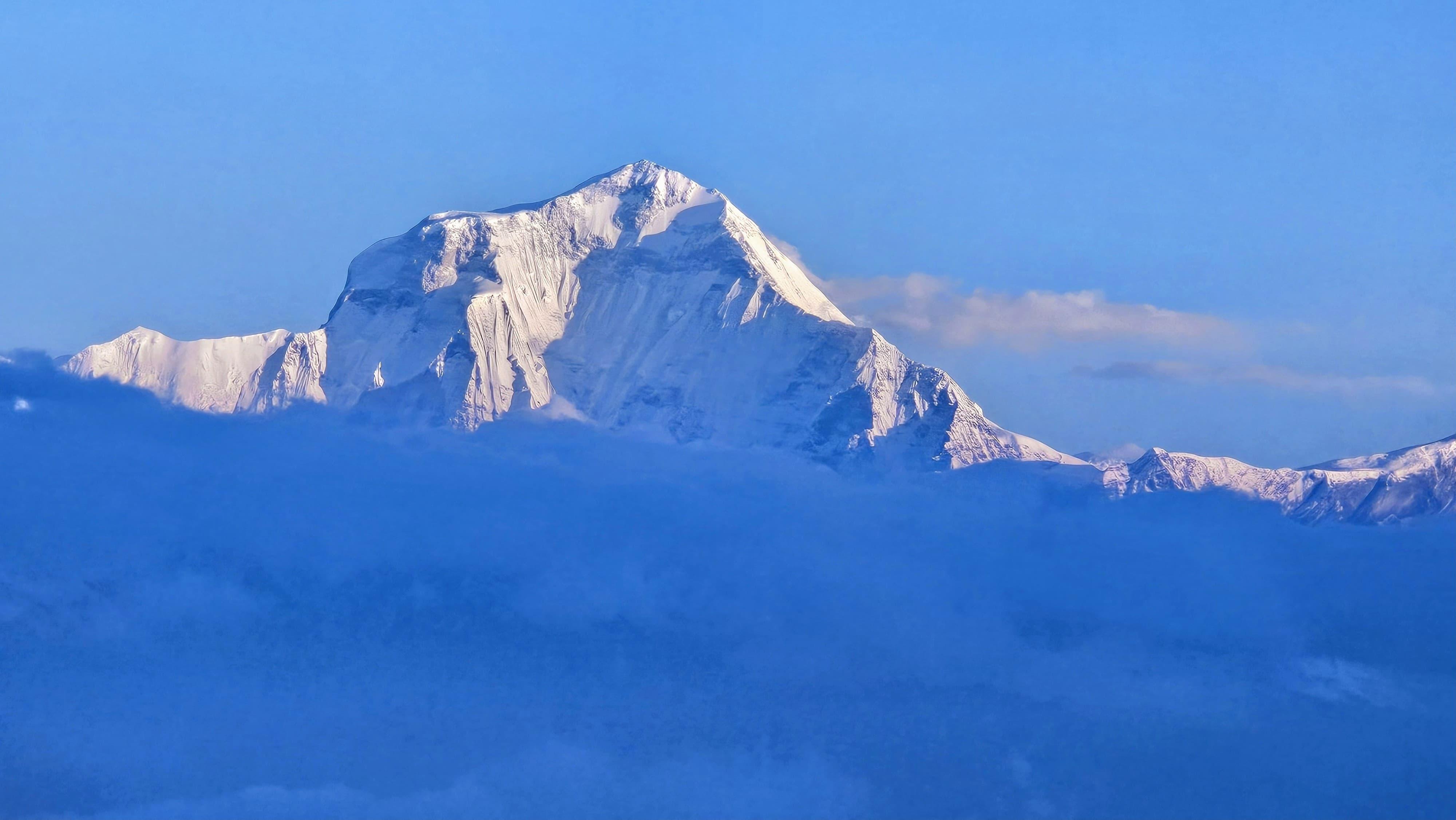
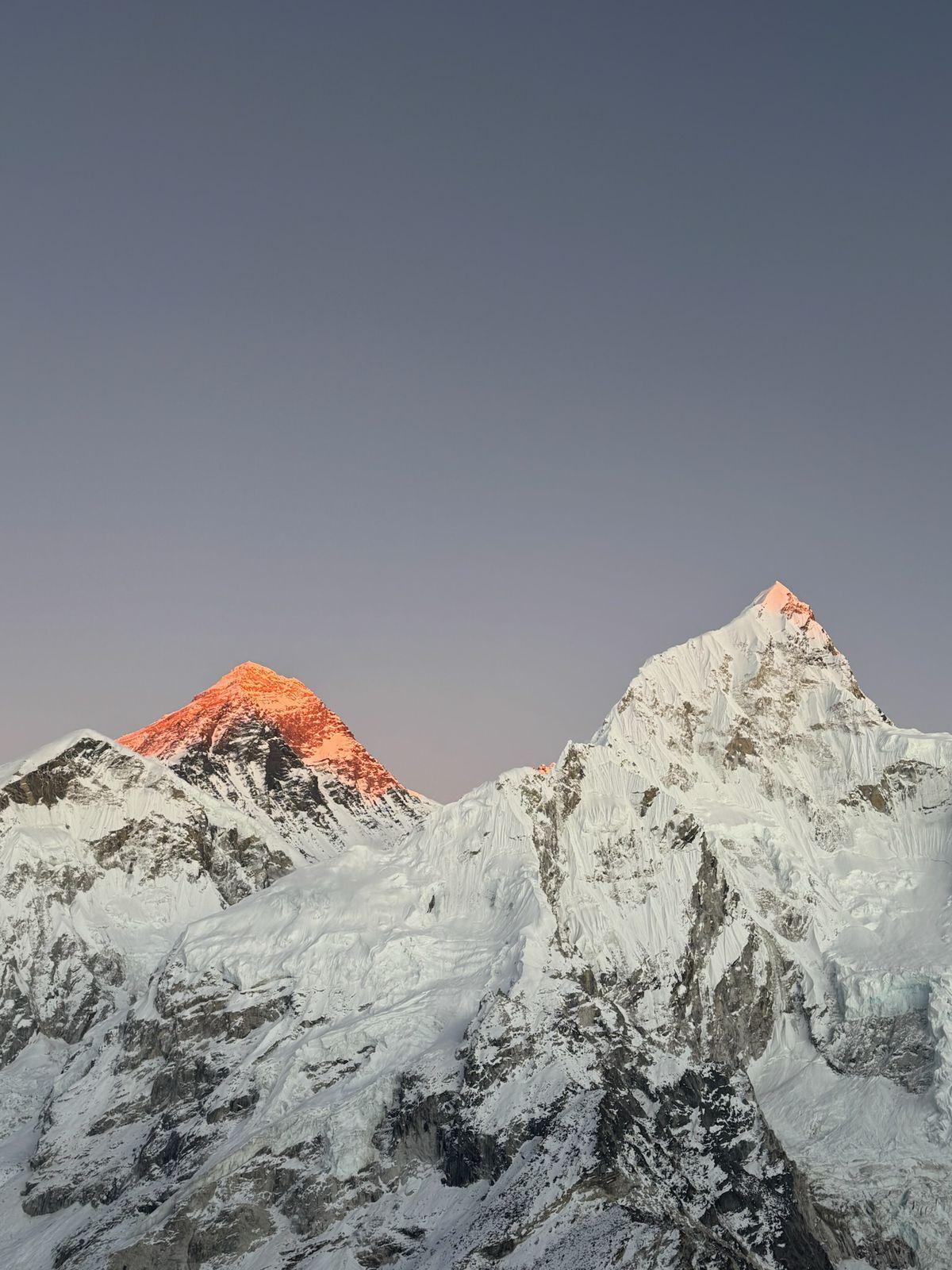
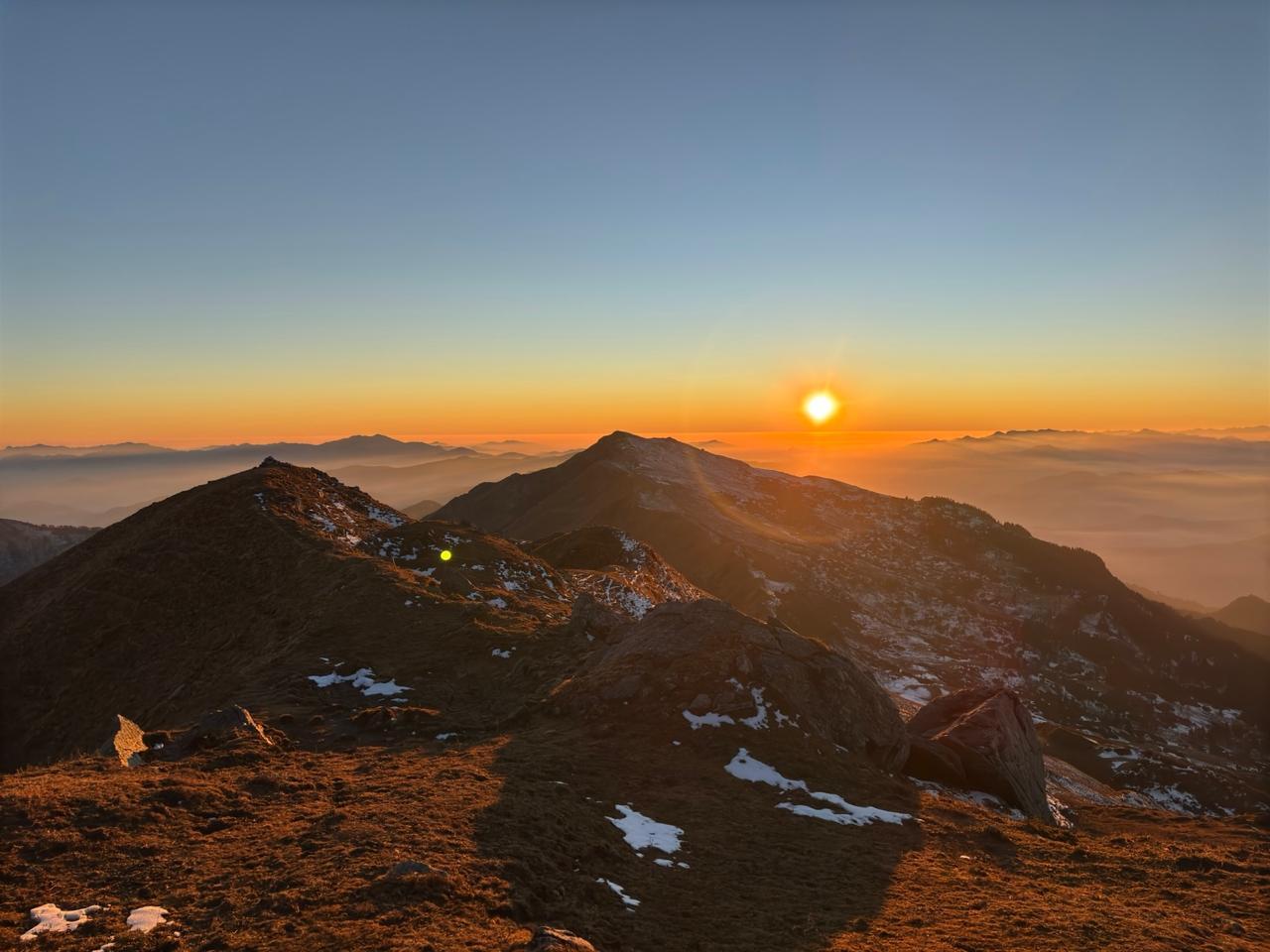
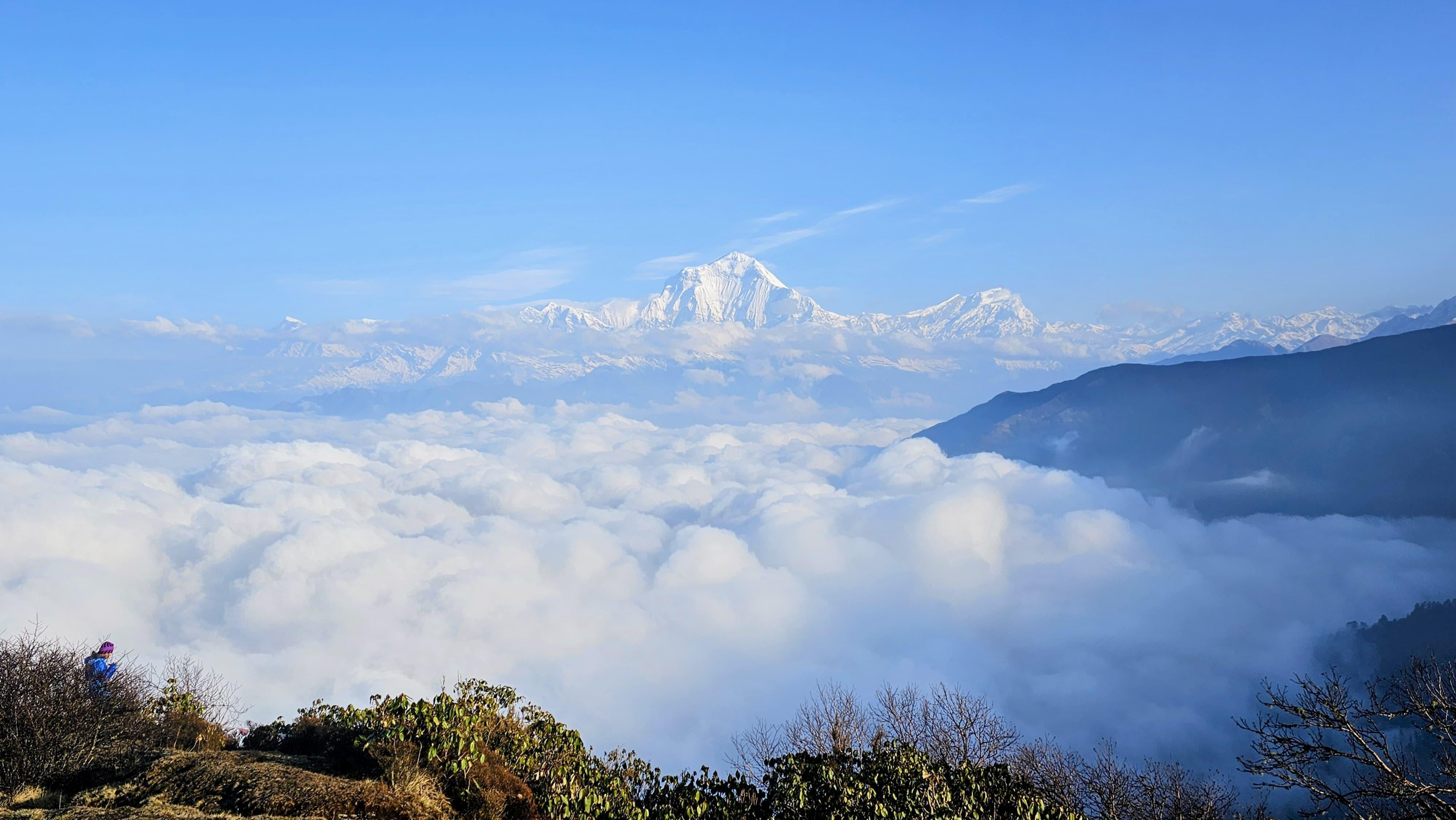
Each day brings a new perspective: the soft mist of Forest Camp, the sweeping ridges of High Camp, and finally, the spine-tingling morning at Mardi Himal Base Camp (4,500 m) where the world seems to fall away beneath you. The sunrise from here paints the peaks in hues of gold and rose, a sight so powerful it silences entire groups.
Yet Mardi Himal is more than scenery. It’s about rhythm, walking through quiet trails, pausing for tea in wooden lodges, listening to the wind and your own heartbeat. The route rewards both seasoned trekkers and first-timers seeking something intimate and awe-inspiring. With its moderate difficulty, warm hospitality, and rare solitude, this trek captures the very essence of adventure: raw, reflective, and breathtakingly beautiful.
Day 1
Pokhara to Dhampus ; Trek to Lovely Hill
Trek Distance: ~3-4 hours trekking (after ~1.5 hrs drive from Pokhara)
Time Taken: Drive ~1.5 hrs to Dhampus; then 3-4 hrs trek
Elevation Gain: From Dhampus (~1,600-1,700 m) to Lovely Hill (~2,150 m)
Description:
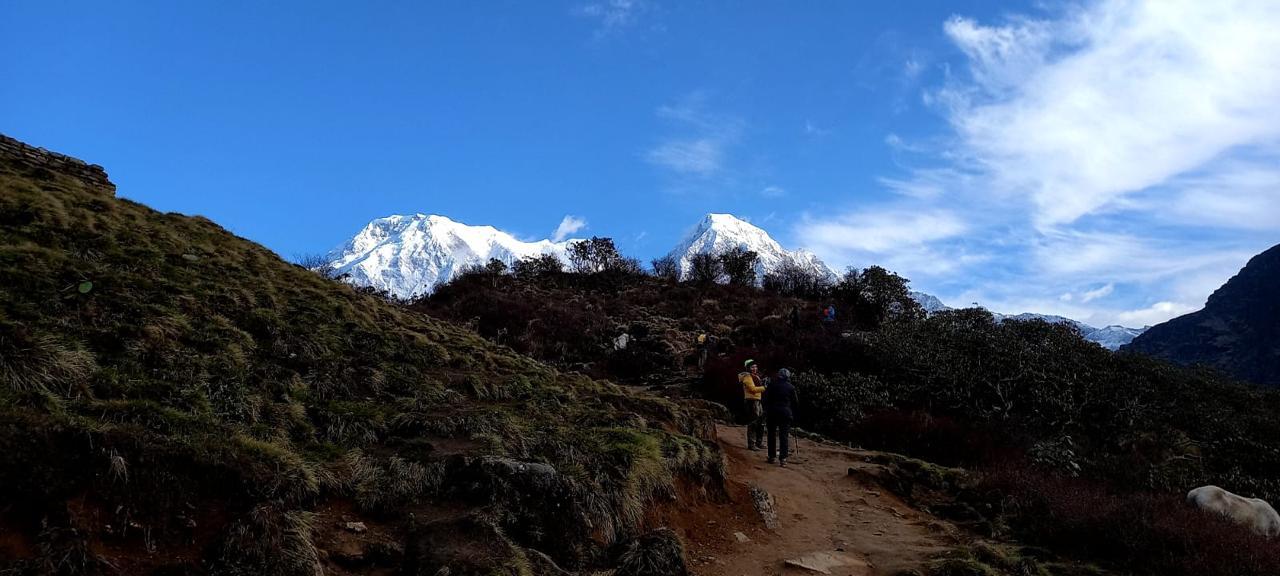
You depart Pokhara in fresh morning light, winding through foothills into the Annapurna region. At Dhampus your trailhead begins: green hills, fluttering prayer flags, the smell of pine and rhododendron in the air. The hike is gentle at first, offering a chance to settle in and synchronize your rhythm with the mountains. As you ascend to Lovely Hill, the skies widen, Annapurna’s peaks begin to peek through the forest canopy, and by evening you’re perched at 2,150 m — with a view of ridges fading into dusk. Lodge stay, dinner, orientation by the firelight.
Day 2
Lovely Hill to Rest Camp
Trek Distance: ~4-6km
Time Taken: ~6 hours
Elevation Gain: ~+400-500 m from previous night
Description:
You start after breakfast, the trail gradually climbing through mixed forest. The air gets crisper; occasional clearings let you glimpse that soaring skyline. Lunch might be at a small teahouse perched above the tree-line. Post-lunch the slope steepens, the rhododendrons thin, and you arrive at Rest Camp (~2,560 m) in the afternoon. The lodge looks out over slopes dropping away — you feel you’ve stepped into the wilderness. Evening’s crisp, stars bright, the mountain silhouettes sharp.
Day 3
Rest Camp to High Camp
Trek Distance: ~12km
Time Taken: ~5-6 hours
Elevation Gain: ~ +1000 m approx
Description:
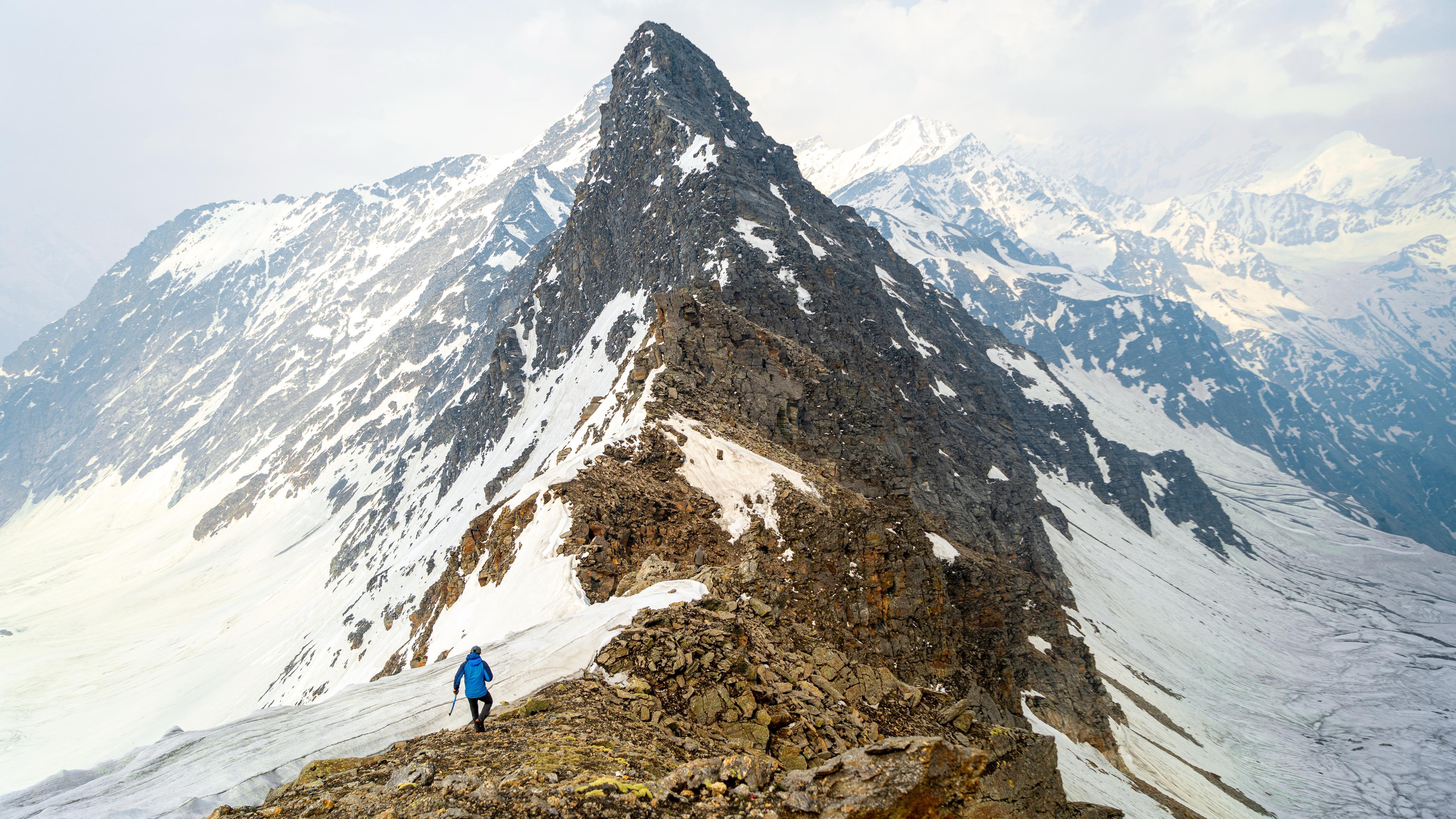
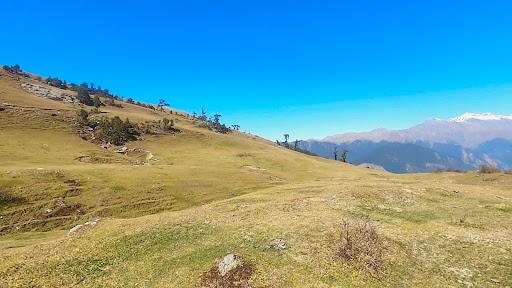
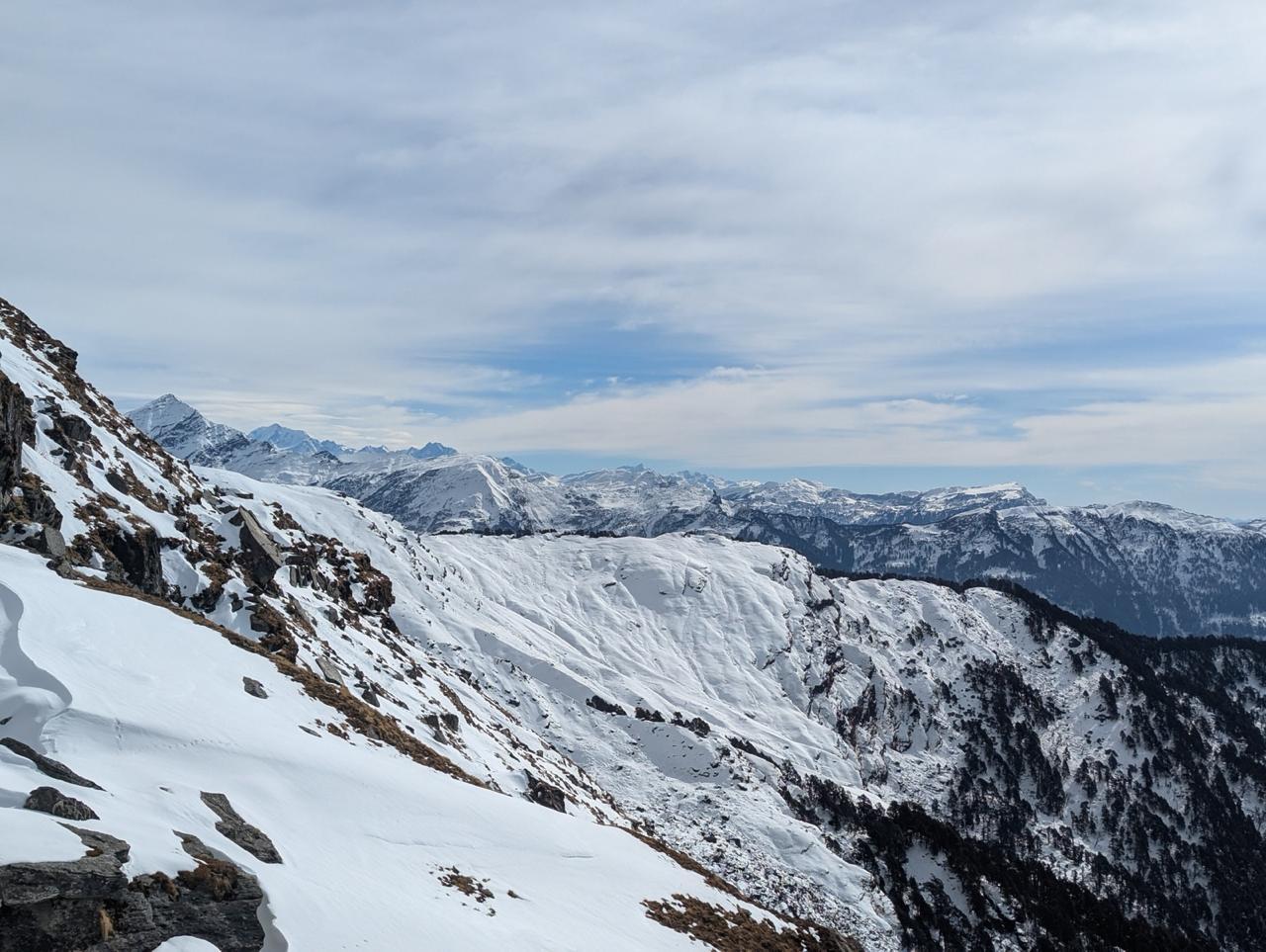
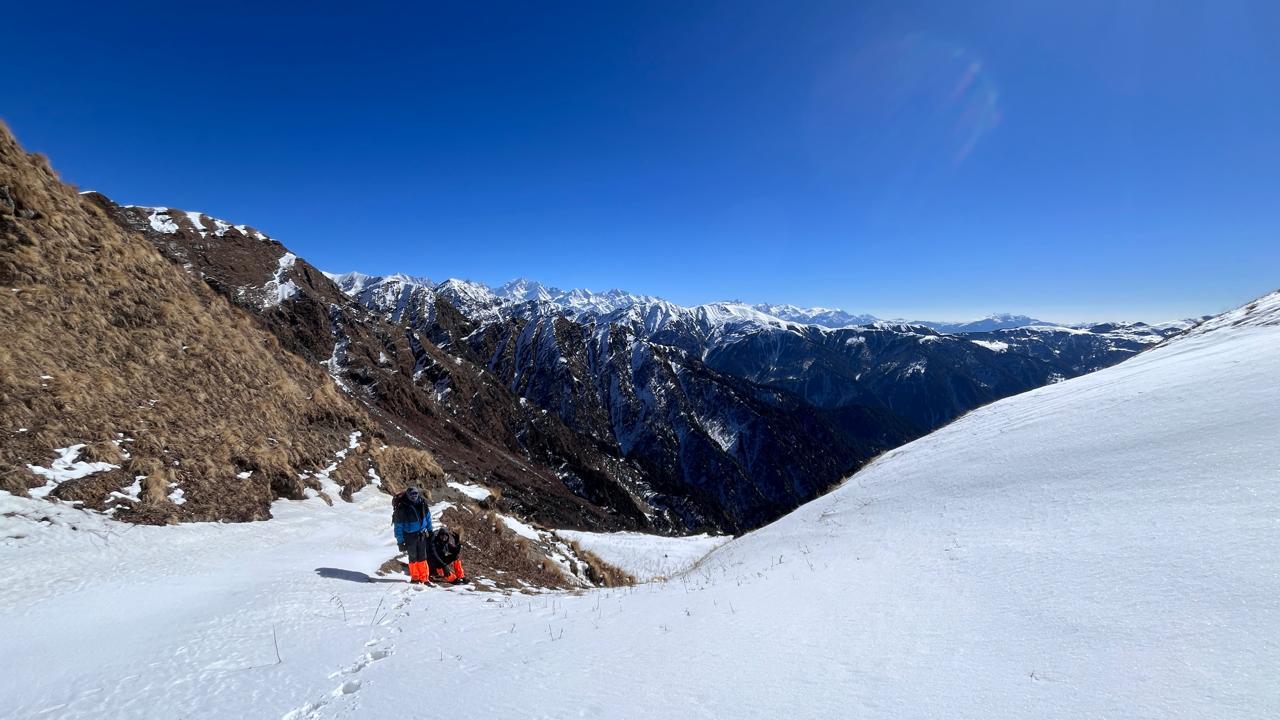
This is the day the forest recedes fully and the ridge opens. You climb steadily through alpine meadows, shrubs dwarfing into ground-hugging plants. The ridgeline trail offers sharper views of Machhapuchhre’s elegant peak and the Annapurnas stretching in a sweep. By late afternoon you reach High Camp (~3,550 m). Celebrate this achievement as you sip tea, watch the sun dip beneath the peaks, and feel the altitude in the air — thin, crisp, invigorating.
Day 4
Climb to Mardi Viewpoint/Base Camp & descend to Badal Danda
Trek Distance: ~14km (Round trip + descent)
Time Taken: ~10 hours total including ascent and descent
Elevation Gain & Loss: +~650-950 m ascent to ~4,200-4,500m, then -~1,300m descent to ~3,200m
Description:
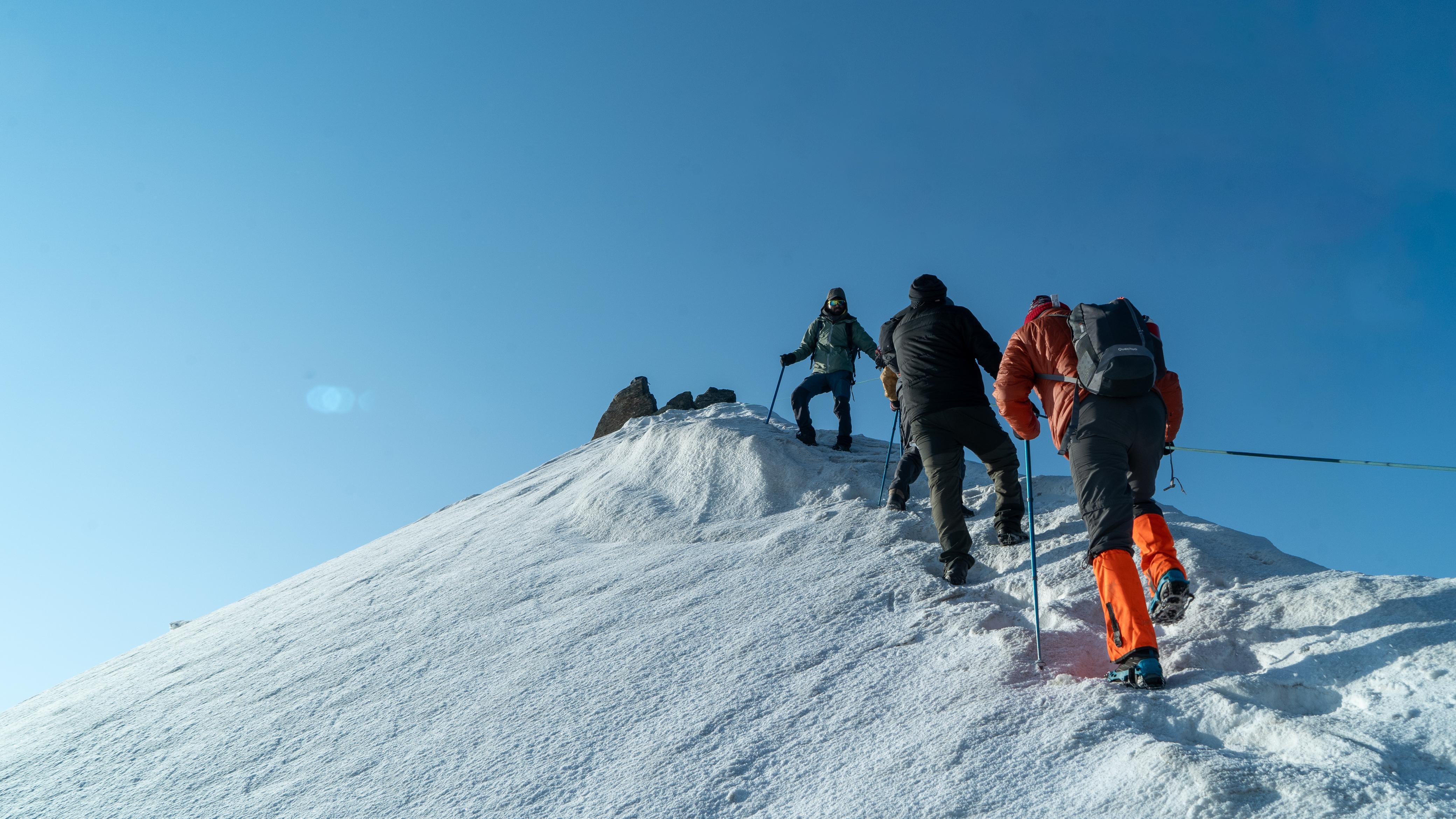
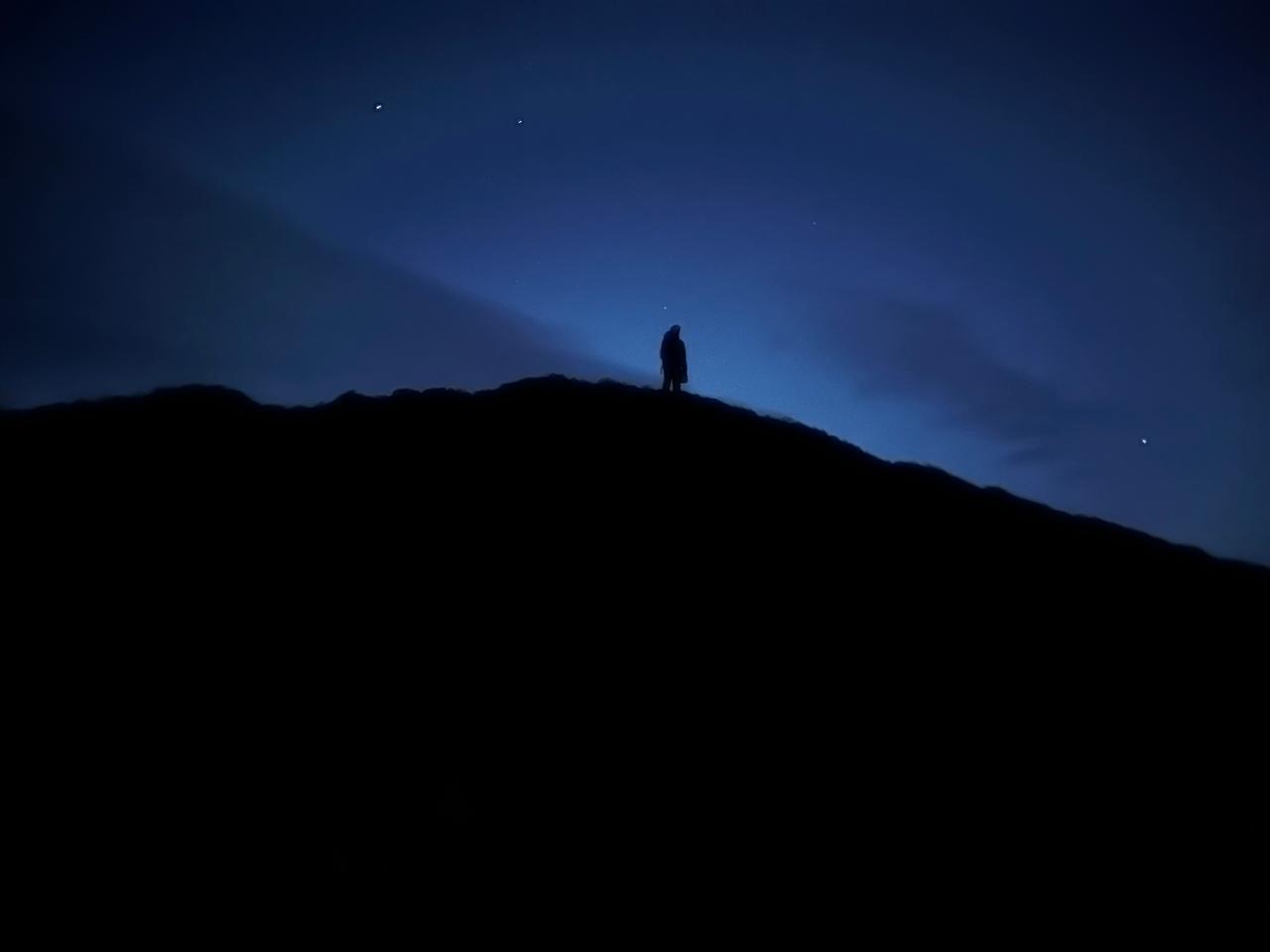
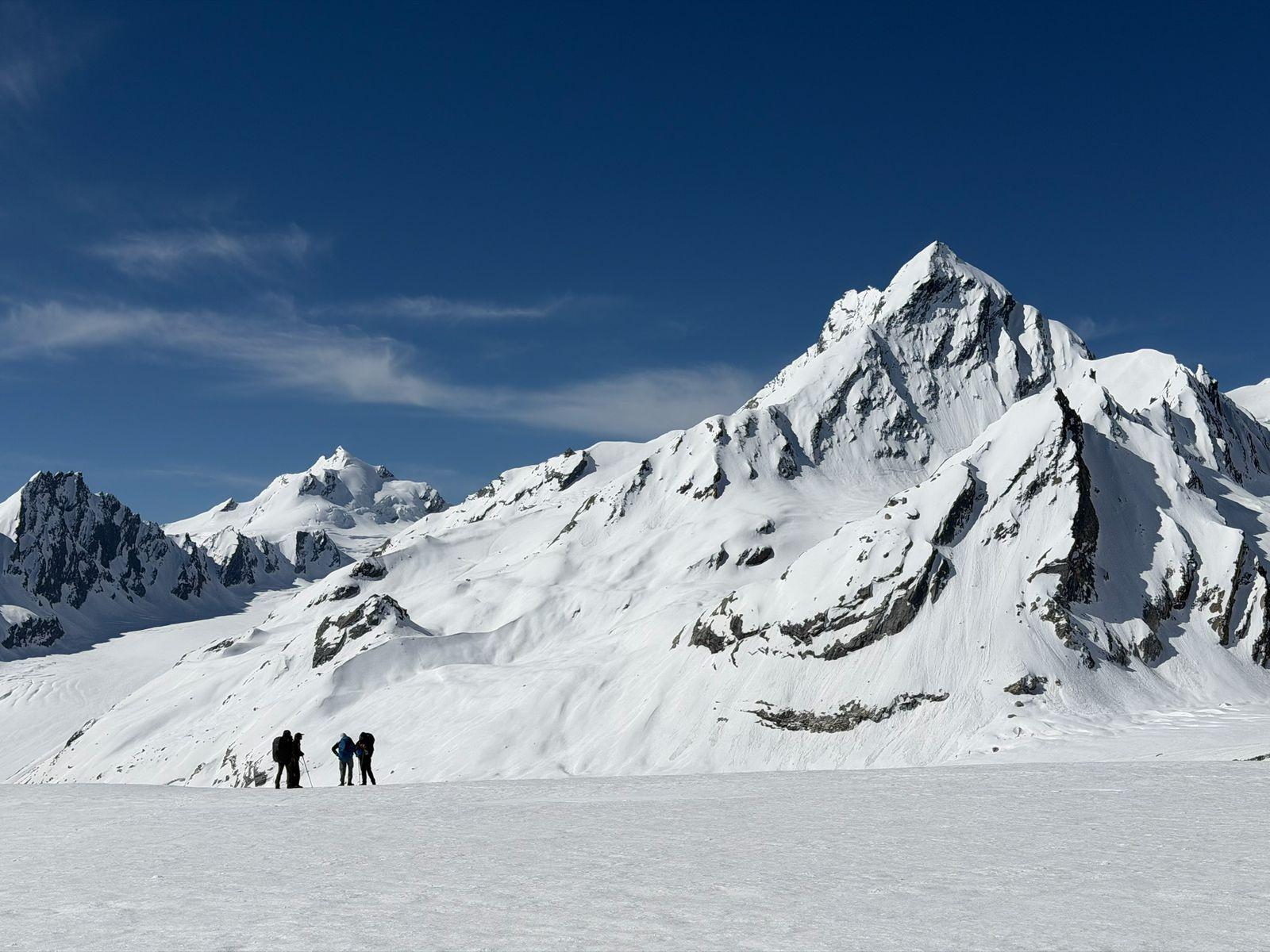
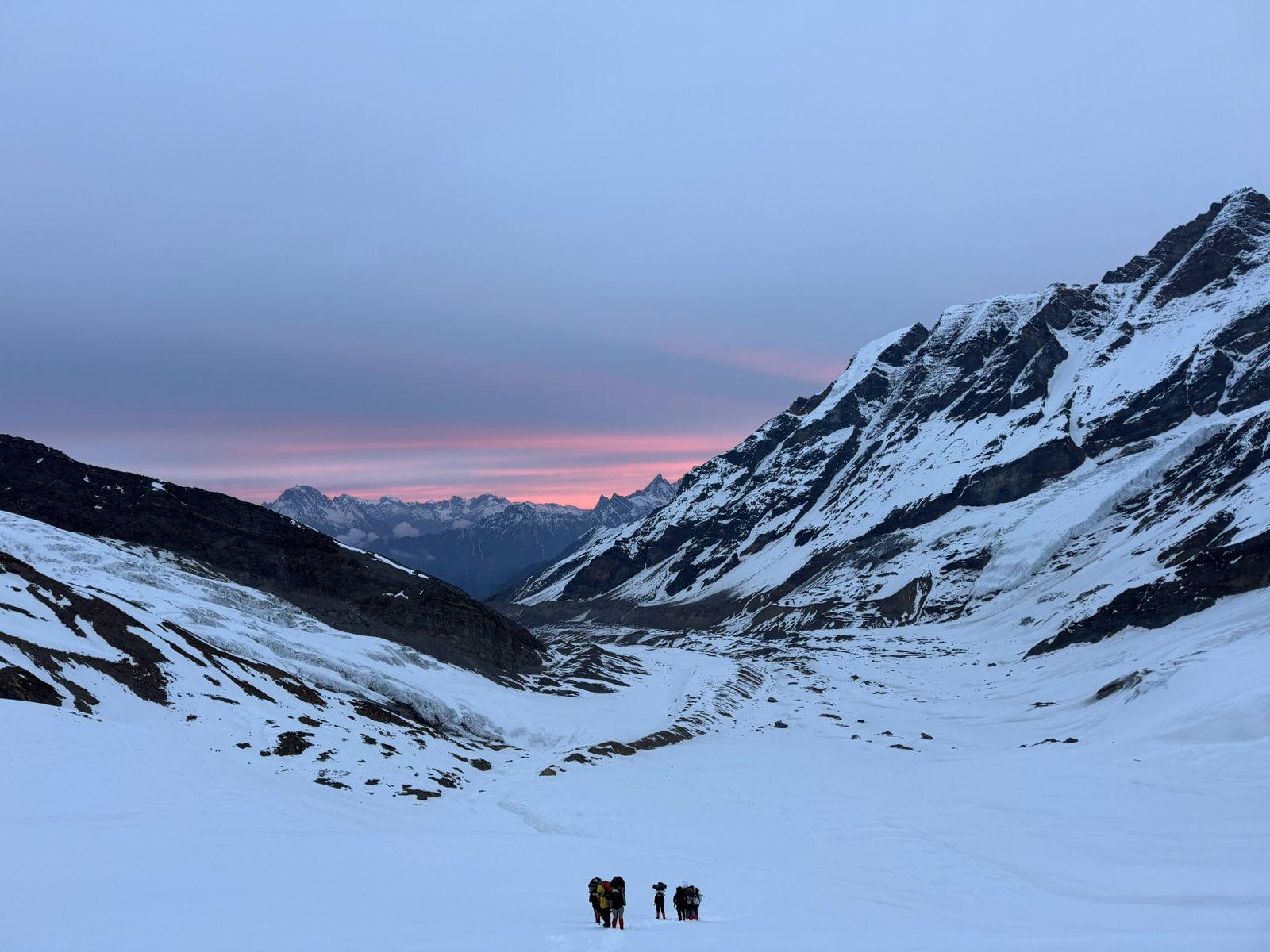
Start pre-dawn with headlamps on, the sky still dusky. The final ridge climb is rewarded with panorama after panorama: Machhapuchhre’s sharp tip, Annapurna South’s bulk, the cloud sea beneath you. At the viewpoint or base camp you pause, letting the breadth of mountain wilderness sink in — you’ve reached a high-point few do in so short a time. After capturing the moment, you descend to Badal Danda (~3,200 m) for the night. The descent brings different energy: walking down from the heights, carrying the mountain still inside you. Night at lodge, recovery, storytelling around dinner.
Day 5
Badal Danda to Siding ; Drive back to Pokhara
Trek Distance: ~10km trek
Time Taken: ~6 hours walking + ~2 hrs drive back to Pokhara
Elevation Loss: ~-1,450 m or more from Badal Danda to Siding
Description:
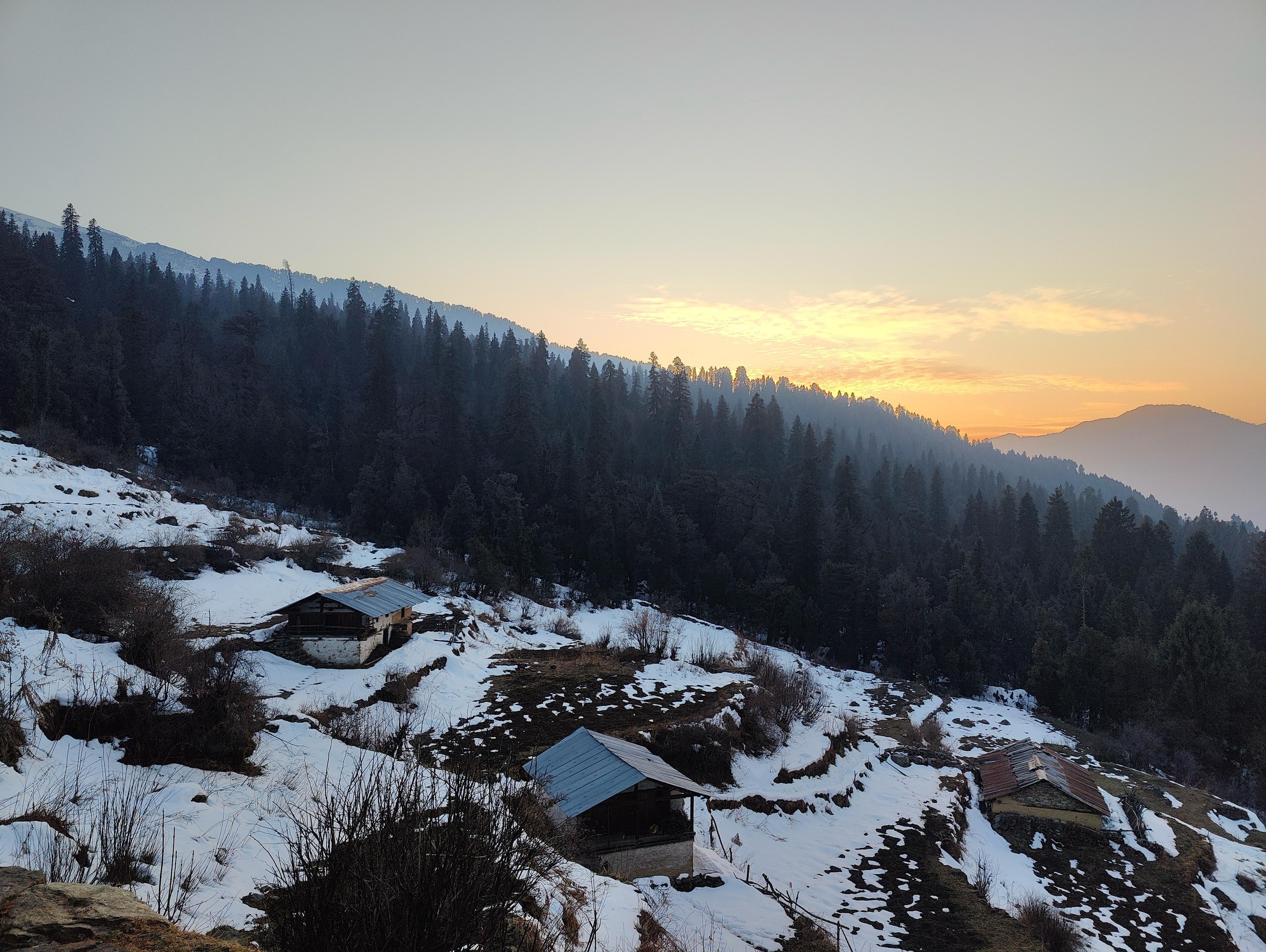
Your final morning in the mountains begins with a mellow descent through forest, farmland and village trails. The air becomes warmer, the green return more lush. In Siding (~1,750 m) you take a short rest before boarding the vehicle back to Pokhara. Roll into town mid-afternoon, lakeside views, hot shower, the relief and triumph of completing a high mountain ridge trek. Evening can be celebration: you earned it.
Fitness Required
- Participants should be able to run continuously at least for 120 minutes at a Zone 2 pace.
- Must have a prior high-altitude trek experience.
- Must be regular with strength and cardio routine.
Our expectation from Participants
- No major medical history or injuries 2 months before the trek.
- Minimum of 3 months consistent fitness regime.
- Thorough medical check from an MBBS doctor and medical clearance certificate to be submitted.
- Good quality trekking gears (Jackets, shoes, Rucksack etc)
Disclaimer
This is a remote and challenging expedition with inherent risks. By joining this trek, you acknowledge and accept the following:
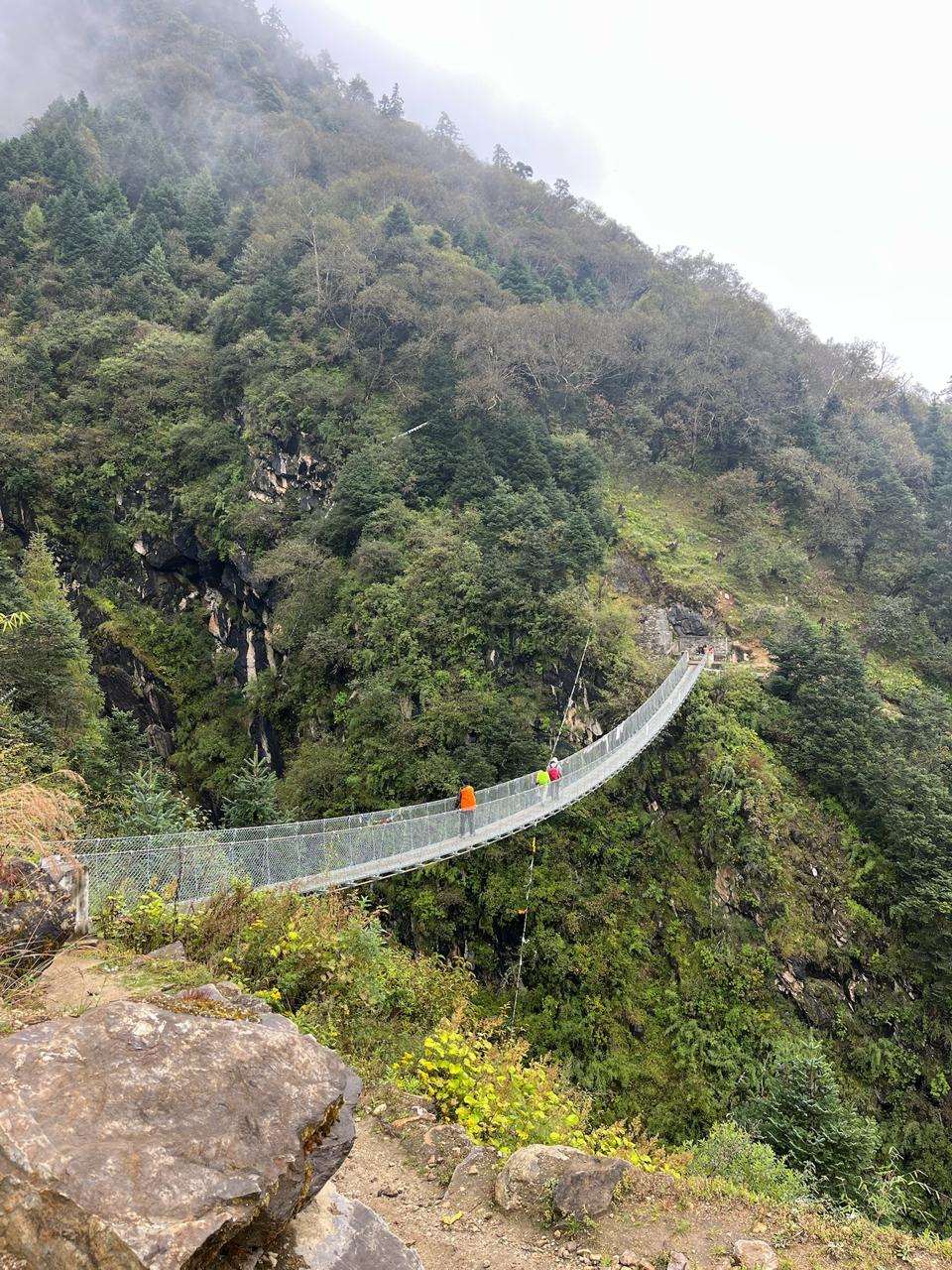
- Itinerary is Subject to Change: The trek is highly dependent on weather and trail conditions. The trek leader’s decision on any itinerary changes, including fording rivers or route alterations, will be final in the interest of safety.
- Medical Responsibility: While Odyssey provides a trained trek leader and a medical kit, you are responsible for your own health. Any pre-existing medical conditions must be disclosed prior to the trek.
- Altitude Sickness Risk: This is a high-altitude trek going above 15,000 feet, and there is an inherent risk of Acute Mountain Sickness (AMS). Acclimatization is a slow process, and there is no guarantee of reaching the summit.
- No Retreat: Due to the point-to-point nature of the trek, there are no easy exit points once you begin. Any evacuation from the trail would be complex and time-consuming.
Inclusion
Exclusion
Where is the Mardi Himal Trek located?
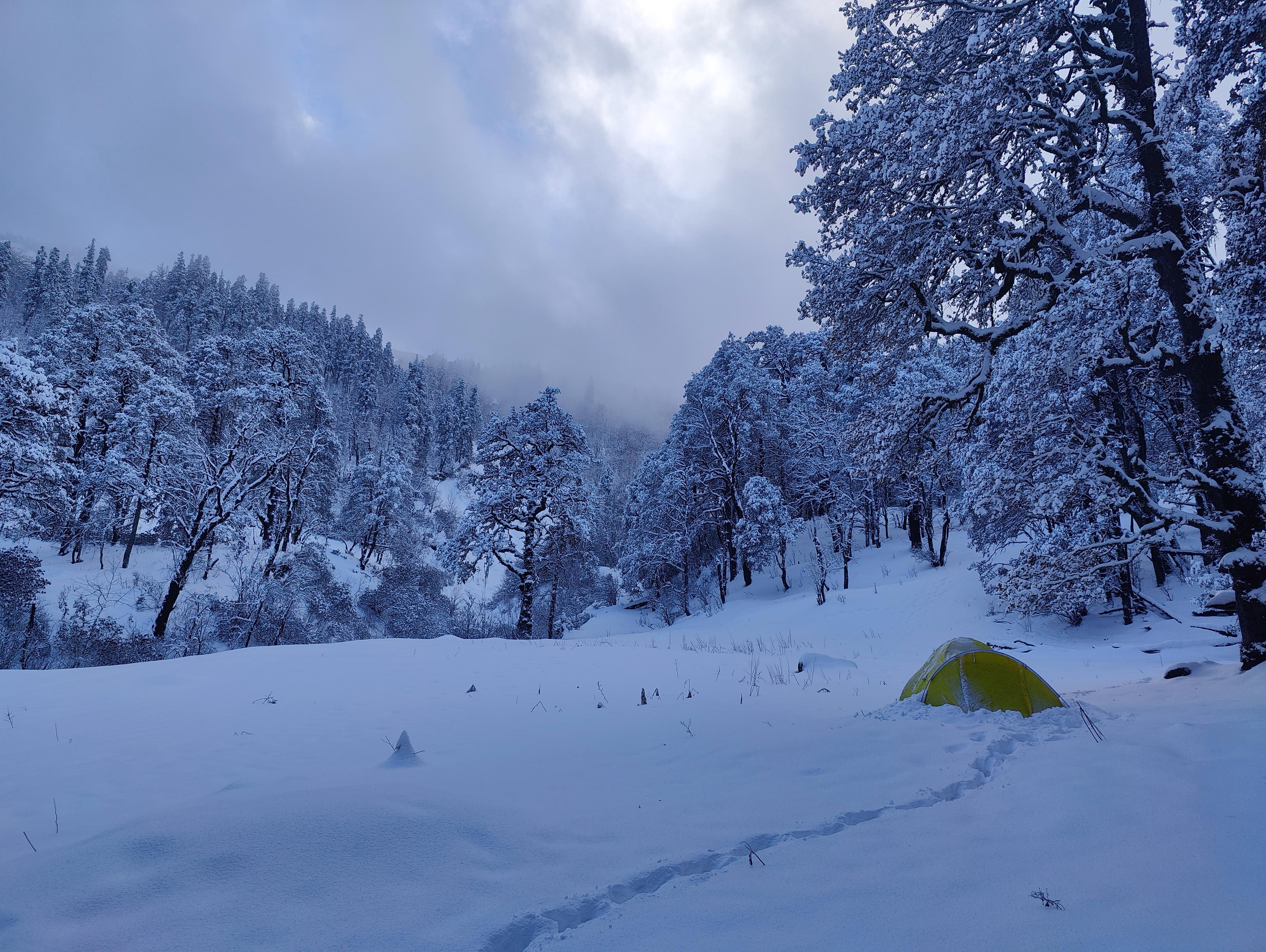
Why is the Mardi Himal Trek special in winter?
How difficult is the trek in winter?
What is the best time to do the Mardi Himal Trek in winter?
Do I need previous trekking experience?
What kind of weather should I expect?
What gear should I bring for a winter trek?
A -10°C to -15°C rated sleeping bag
Layered clothing system (base, fleece, down jacket, shell)
Waterproof trekking boots with good grip
Gaiters, gloves, balaclava, and sunglasses
Trekking poles for snowy sections
Microspikes (recommended for icy patches)
Your packing list should balance warmth and weight — every gram counts when you’re climbing above 3,000 m.
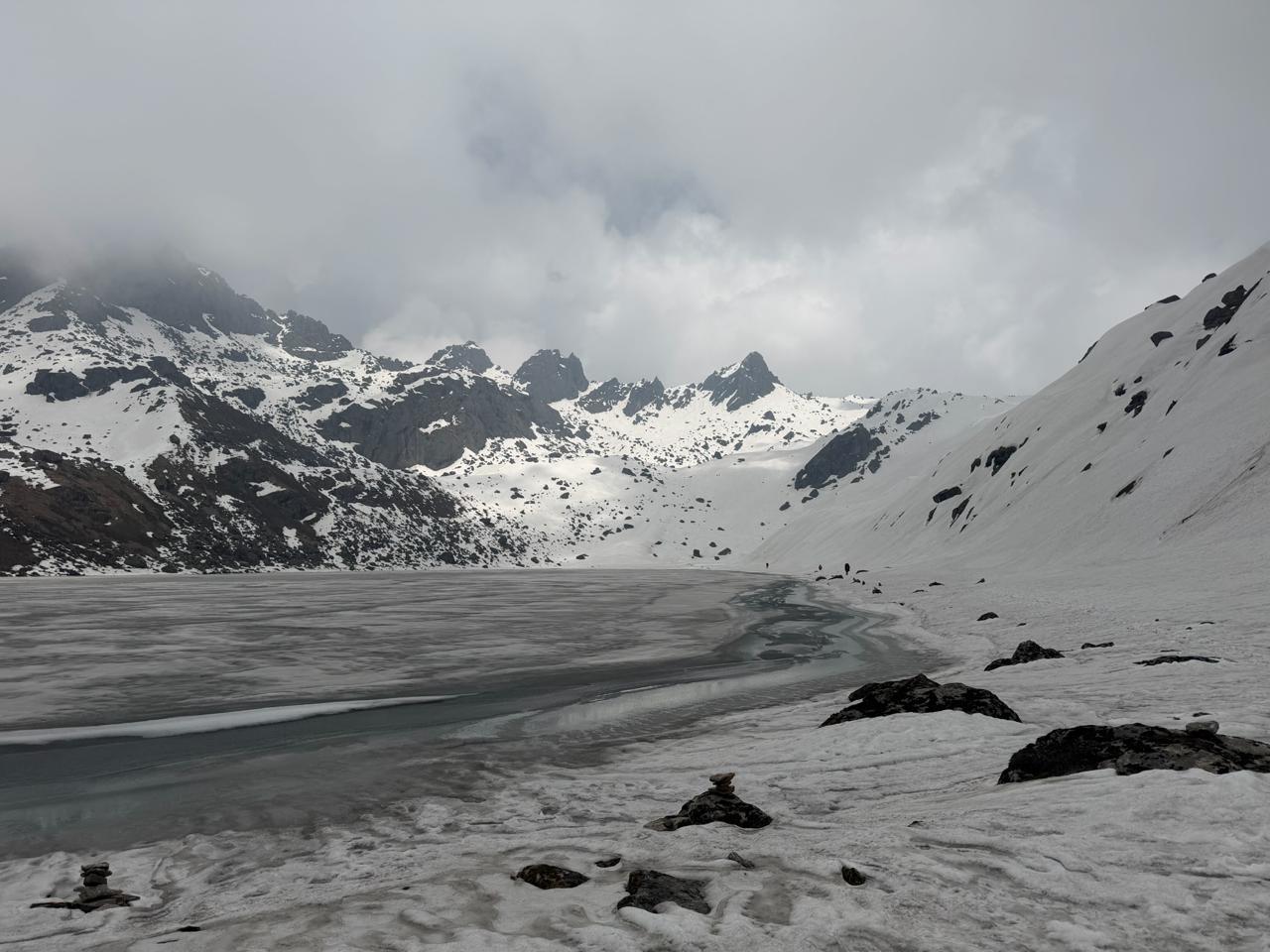
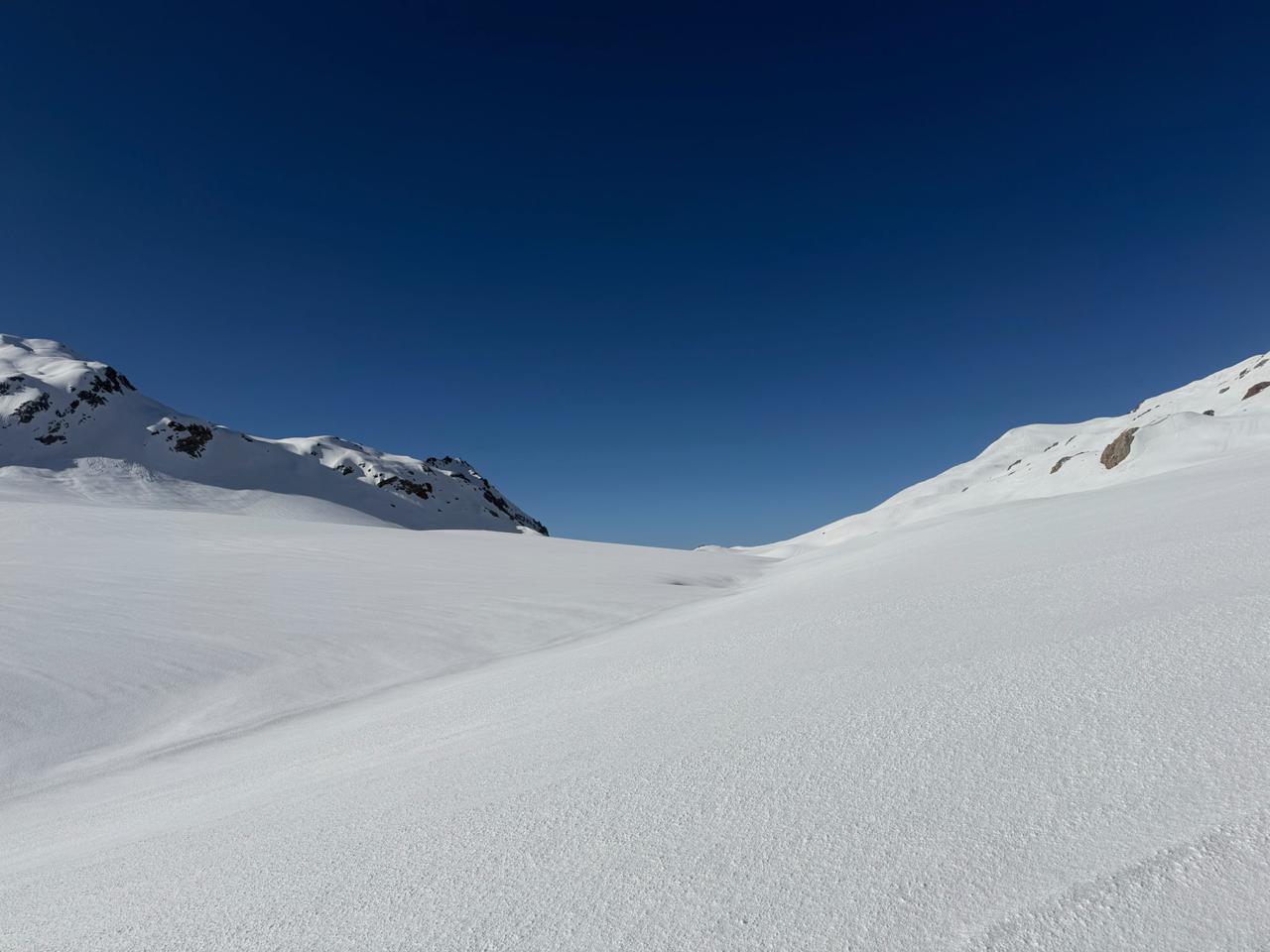
Will there be snow on the trail?
How high does the trek go?
How is altitude managed on this trek?
What are the accommodations like?
Is running water available in winter?
How safe is Mardi Himal Trek in winter?
What are the food options during the trek?
What is the electricity and network availability?
What about permits?
Annapurna Conservation Area Permit (ACAP)
TIMS Card (Trekkers’ Information Management System)
These are arranged prior to departure and included in Odyssey’s logistics.
Can I charge my electronics during the trek?
How do we reach the starting point of the trek?
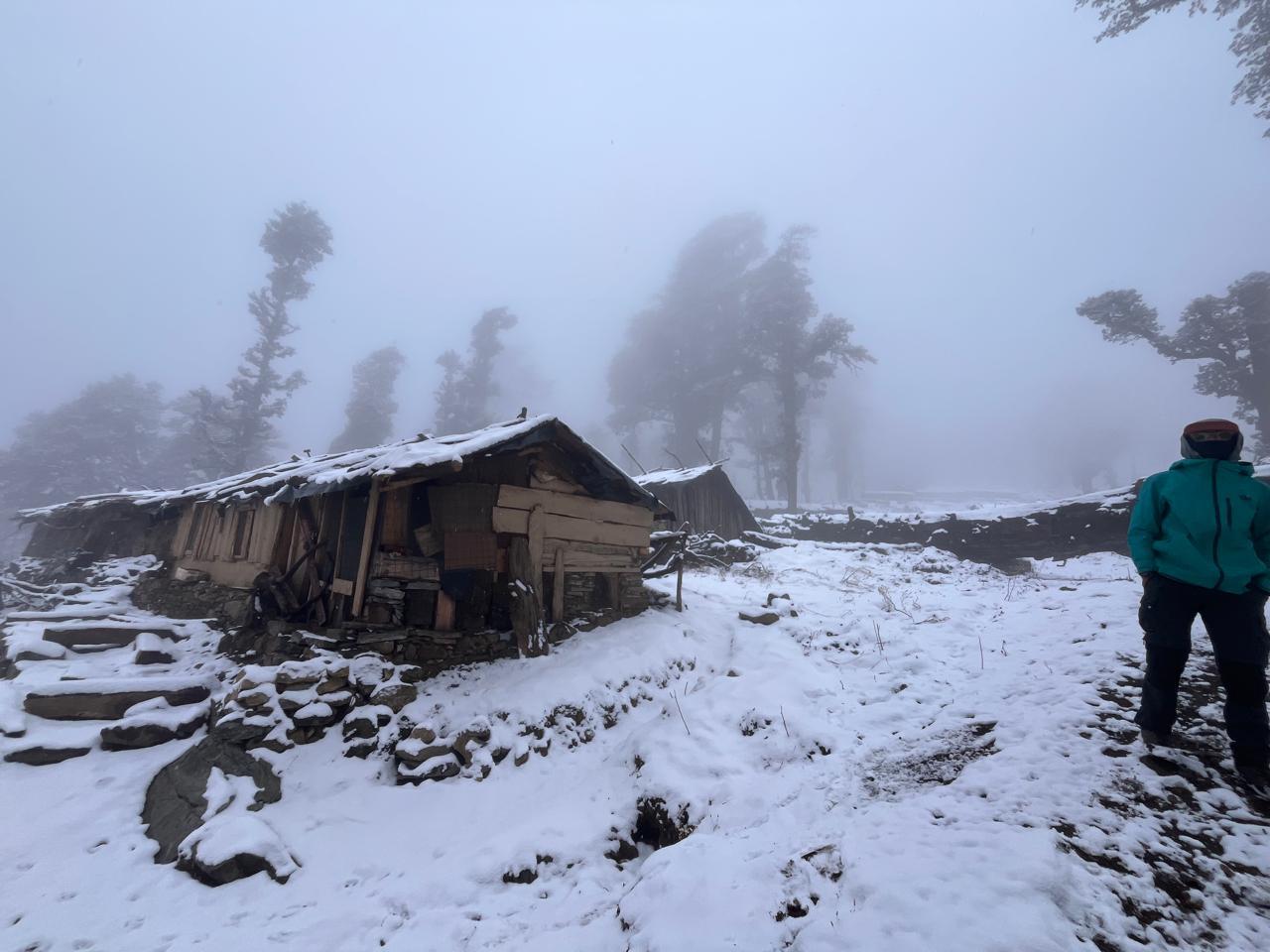
What happens if there’s heavy snowfall?
SELECT DATE TO REGISTER

Thank You!
Your form has been submitted successfully. We'll get back to you soon.
On Request
