



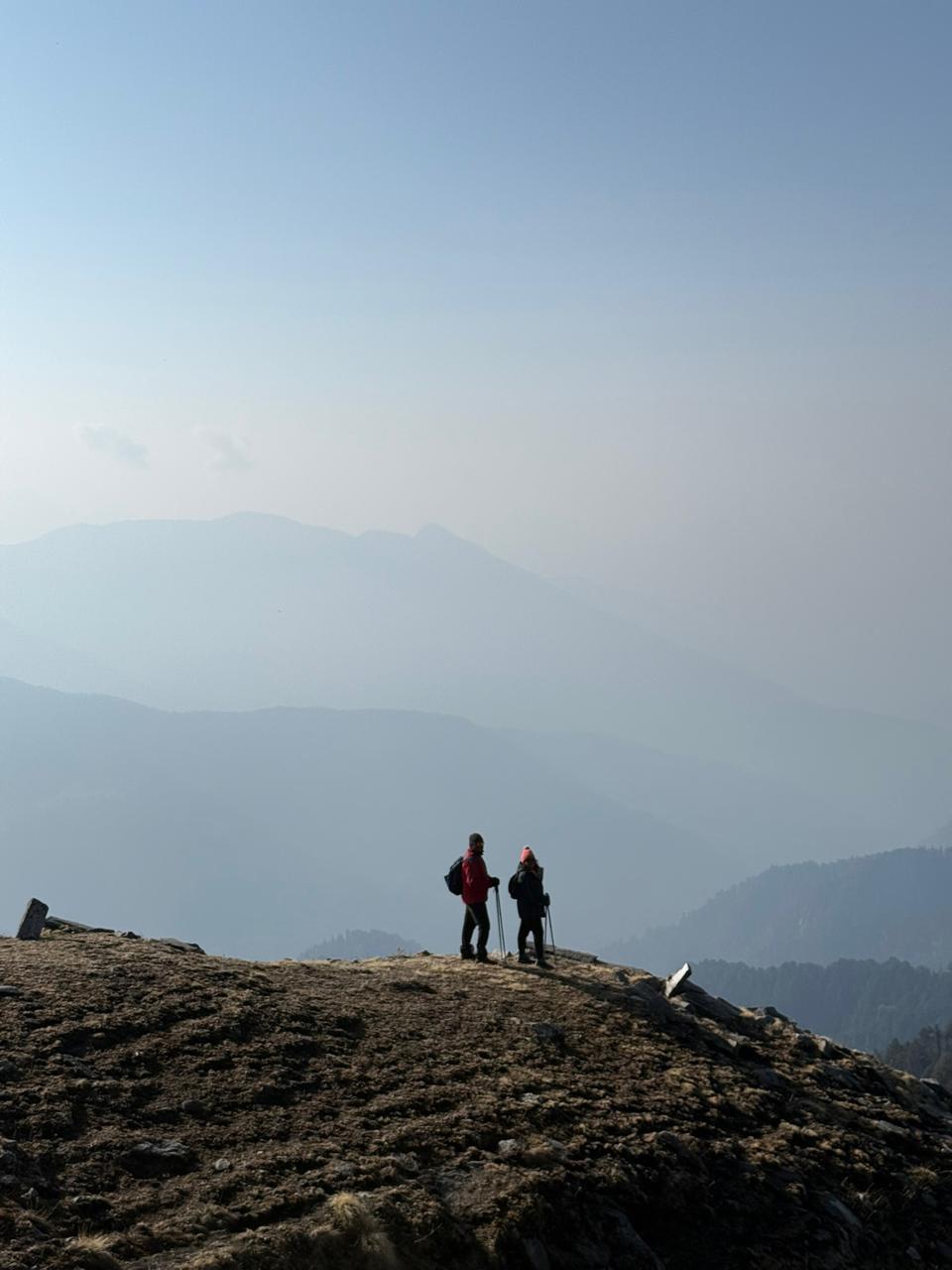


You’ve probably heard of Kedarkantha, the popular winter trek where hundreds of people line up in the dark to summit at sunrise. But this Kedarkantha is something entirely different.
This is Kedarkantha via Devjani, a trail so quiet and hidden that even most locals haven’t walked it. It winds through untouched forests, skips the crowded campsites, and takes you on a route where you’re unlikely to meet anyone except the occasional shepherd passing through with their flock.
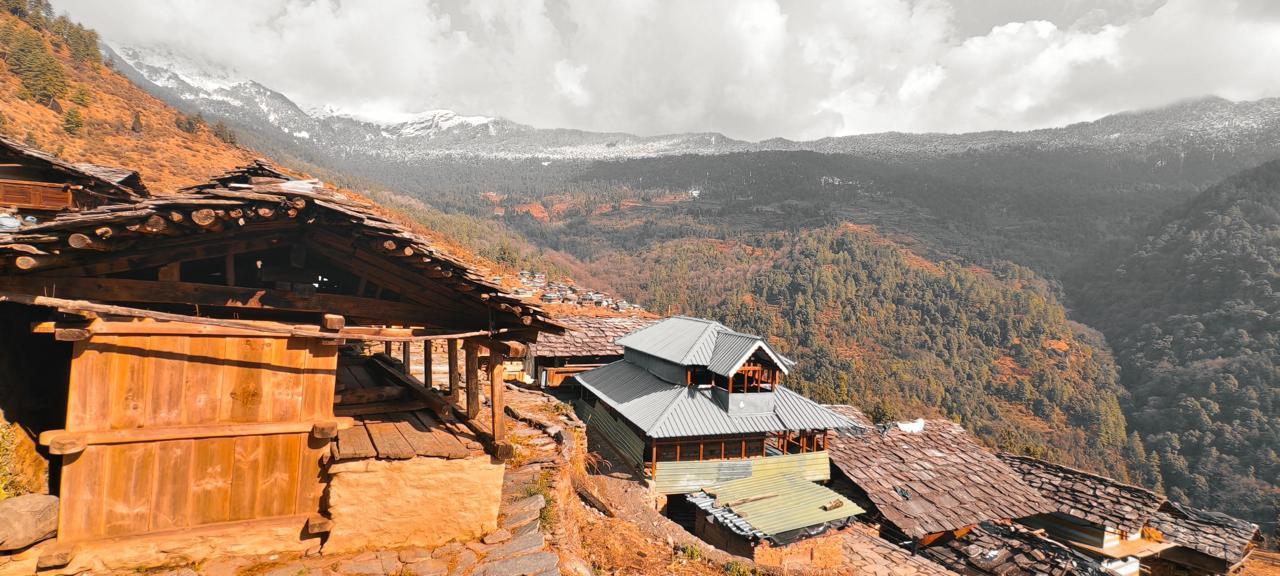
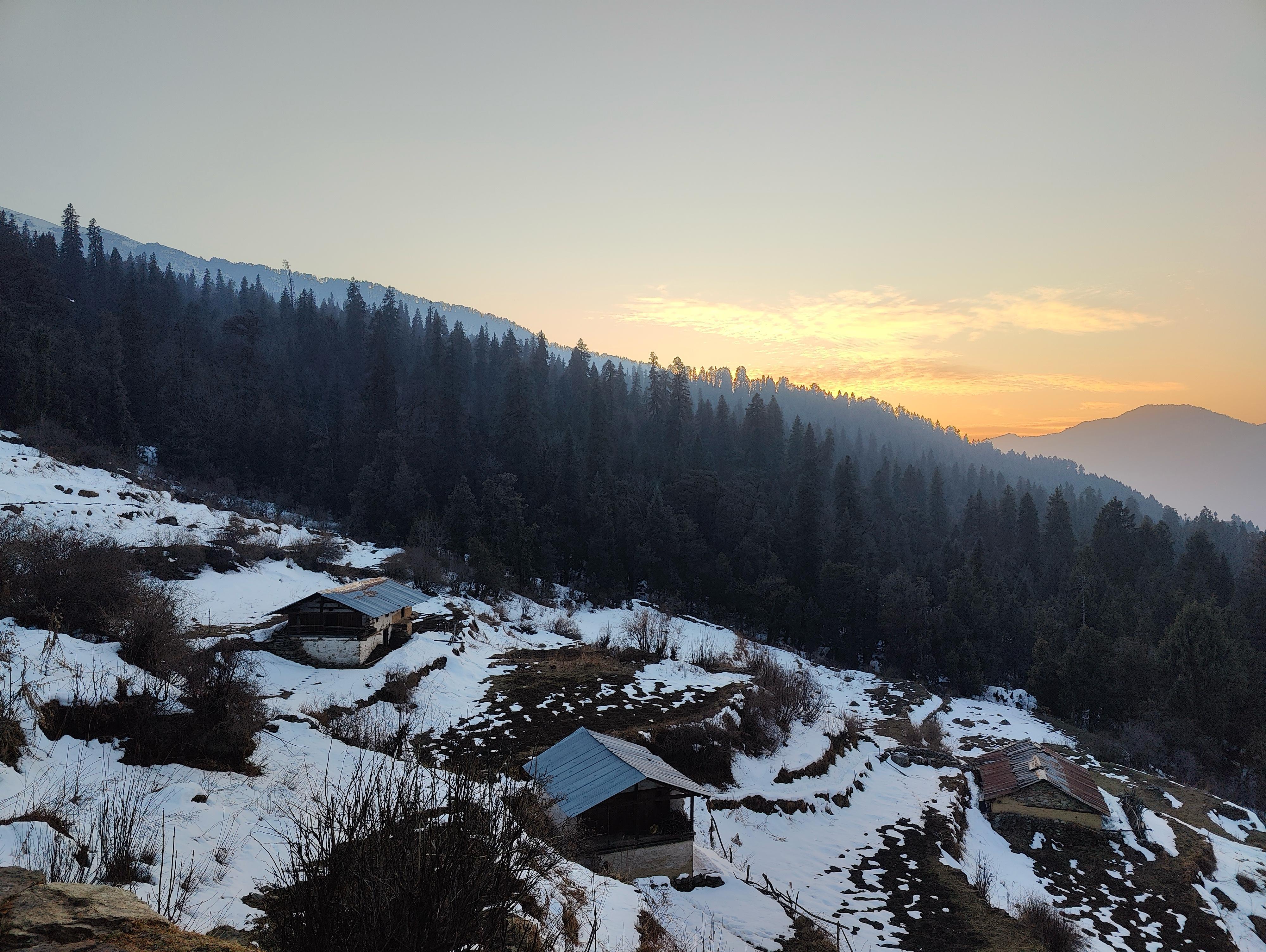
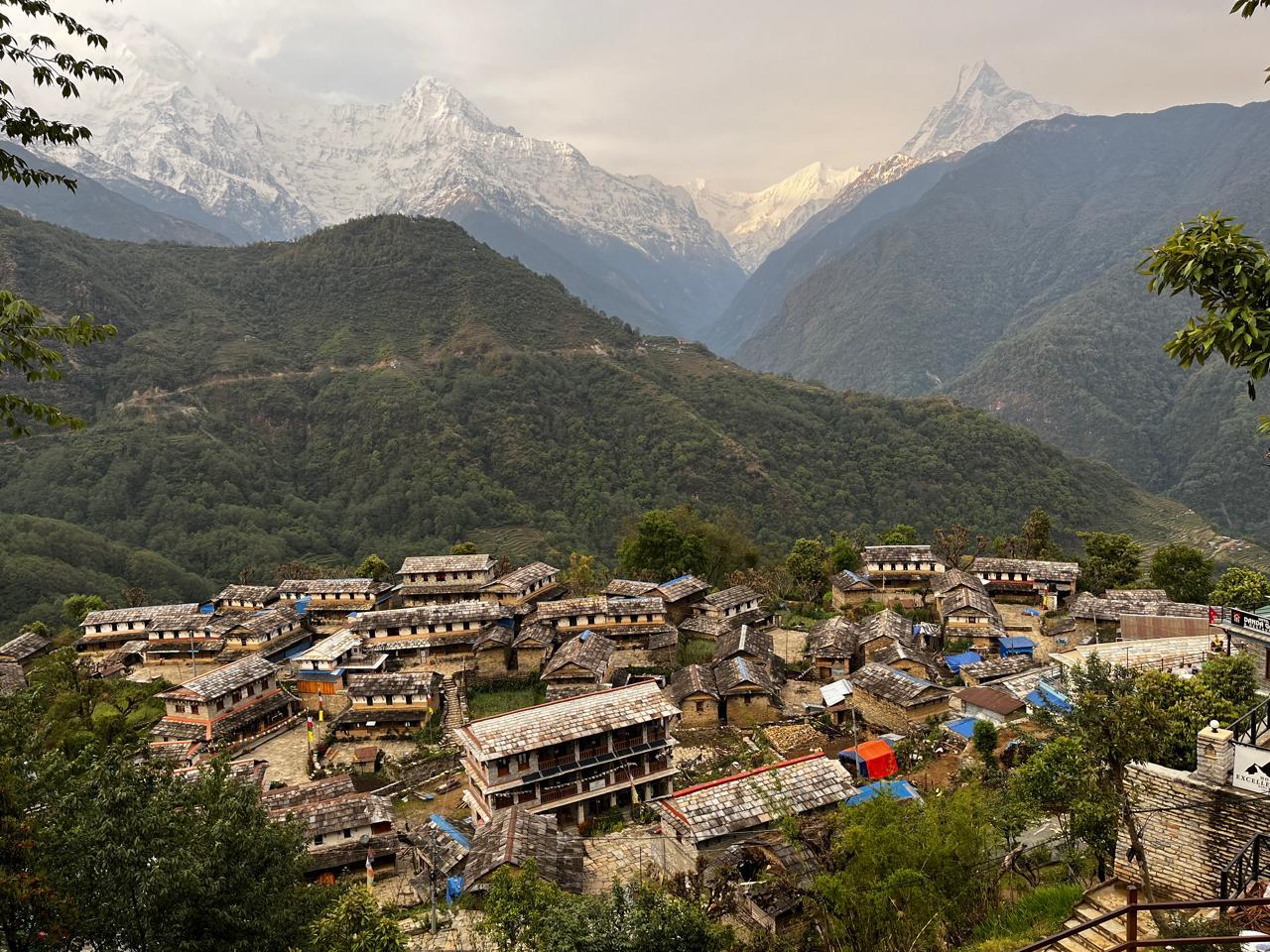
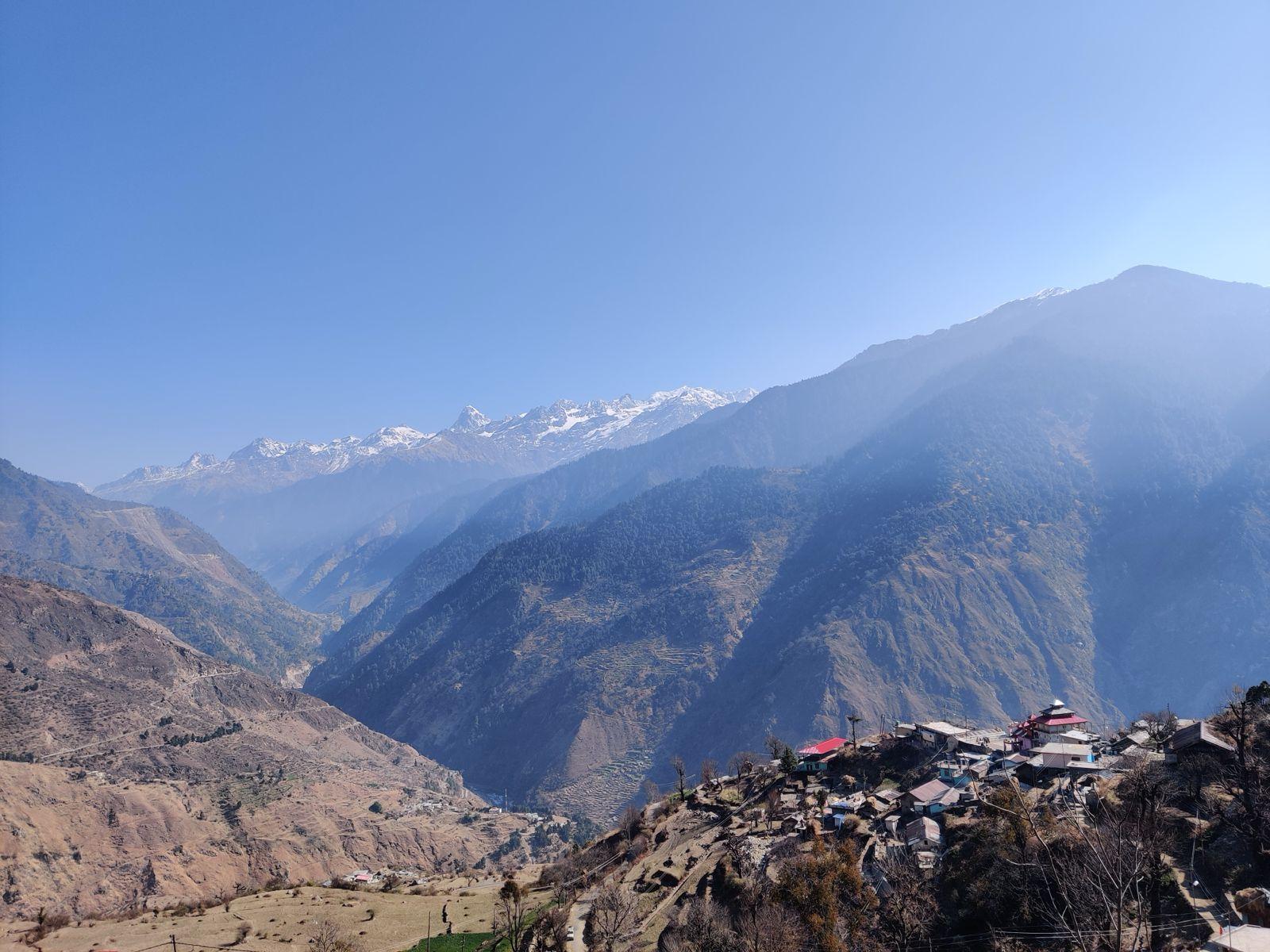
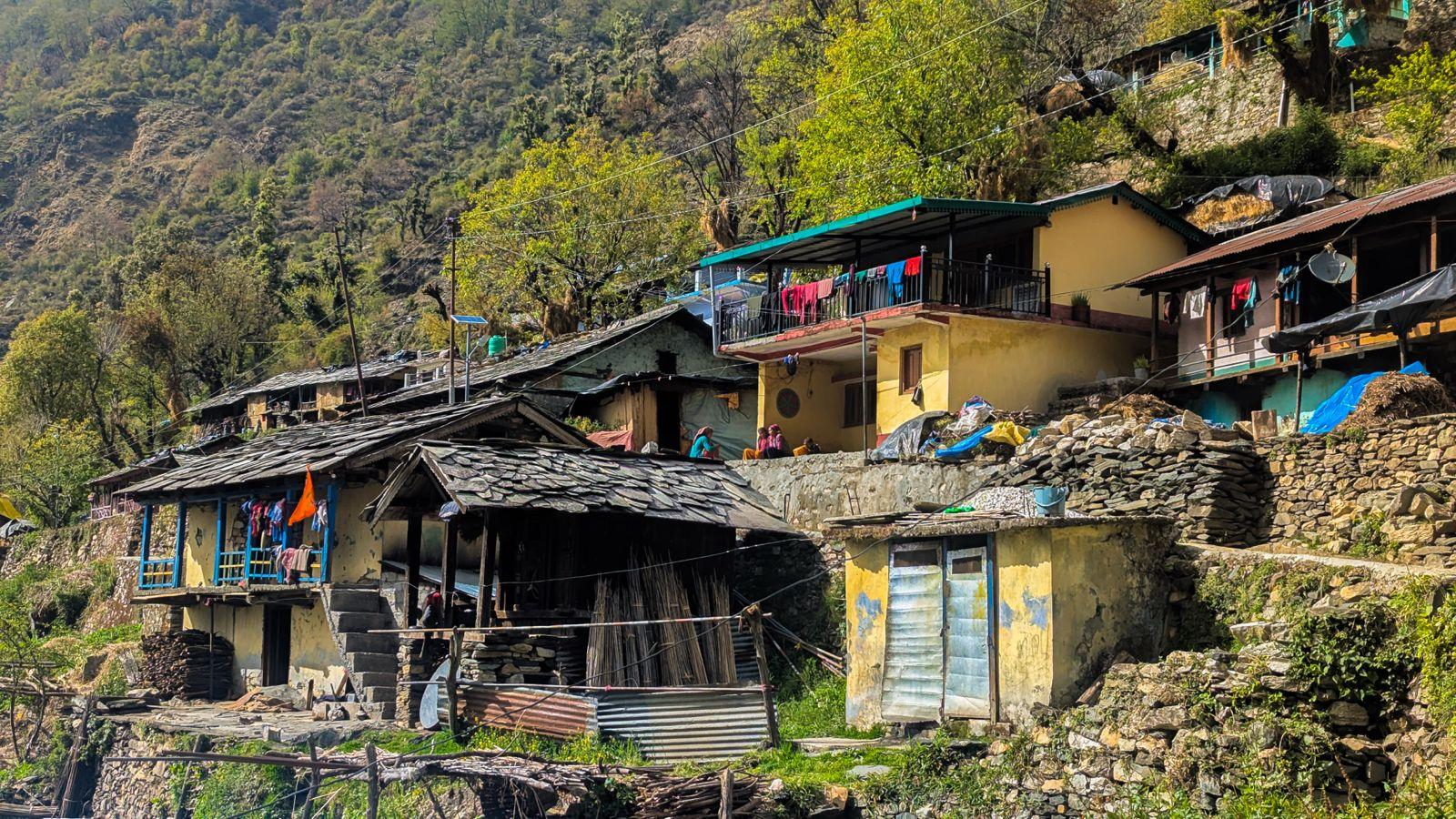
The journey begins in Devjani, a tiny village nestled deep in the mountains. With just a few scattered homes and no shops or traffic, it feels like a place where time has slowed down. You’ll spend your first night in a simple homestay, warmed by the scent of wood smoke, mountain food, and silence.
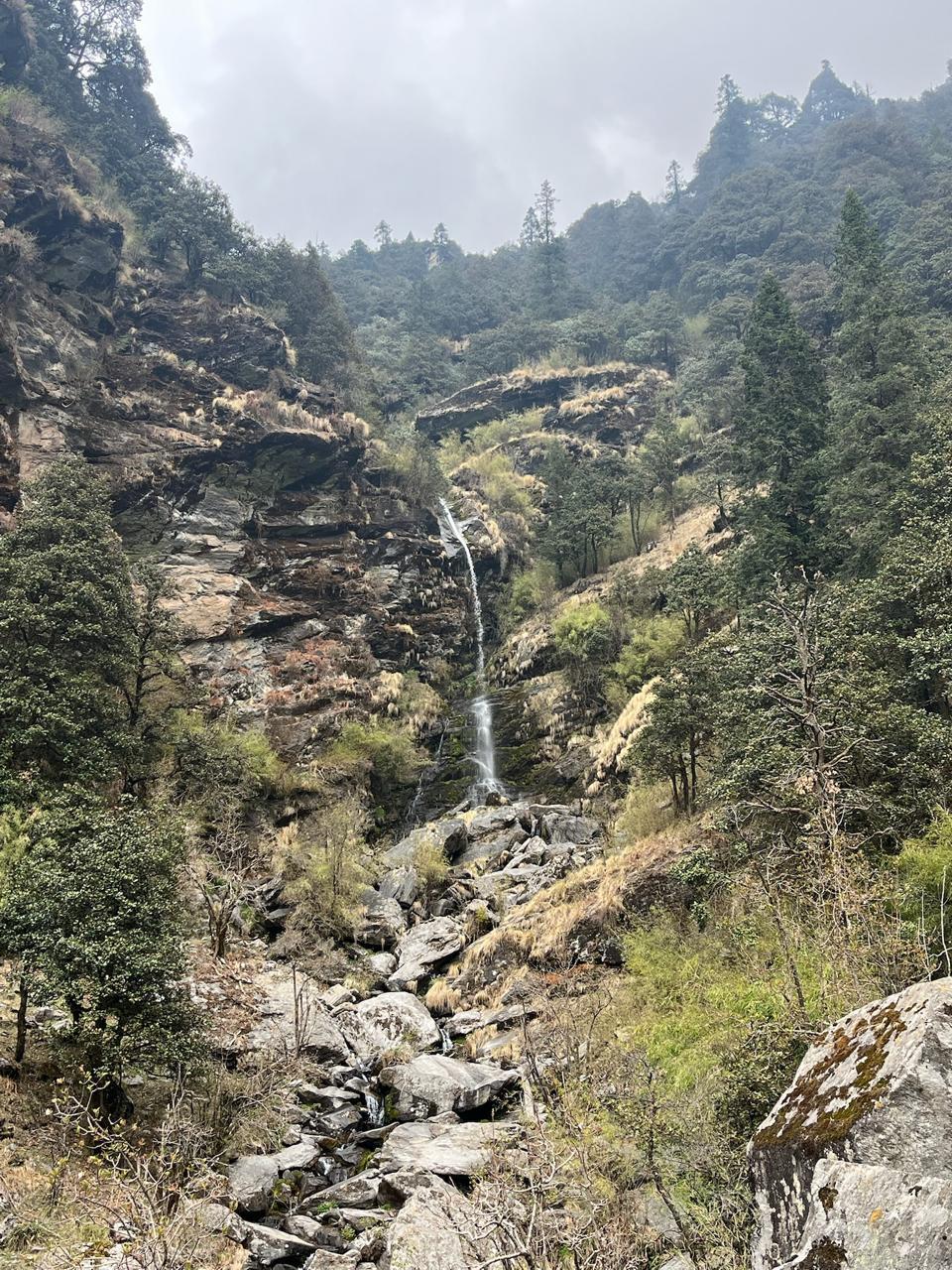
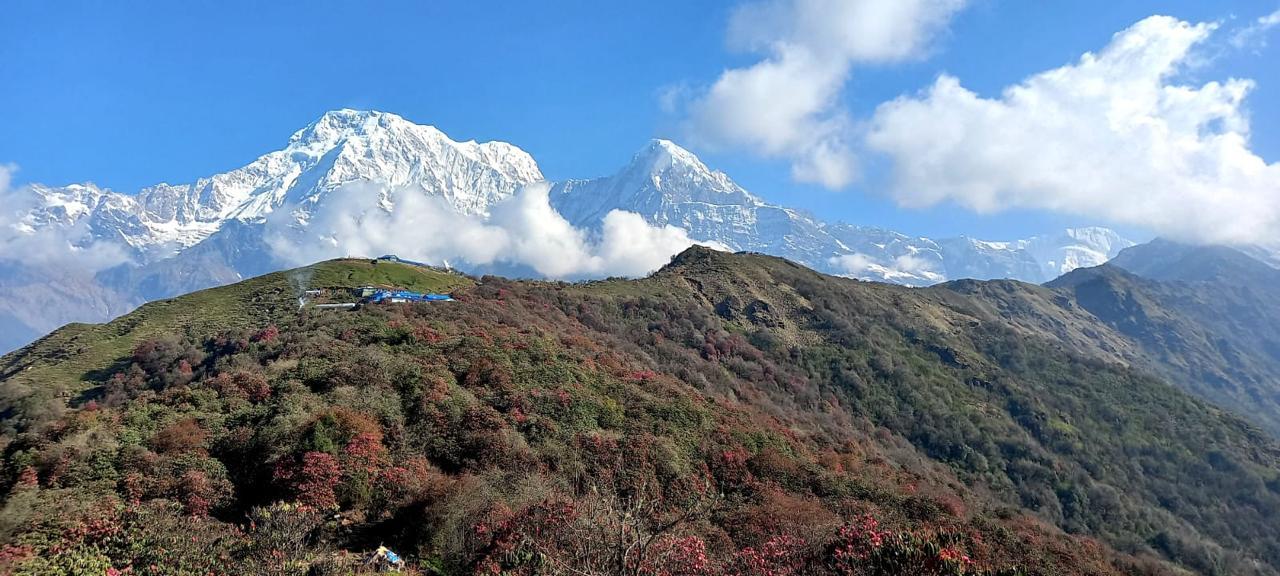
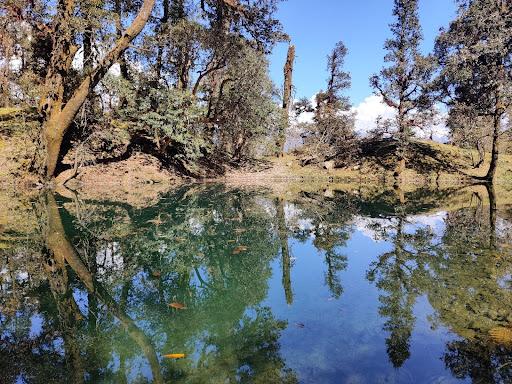
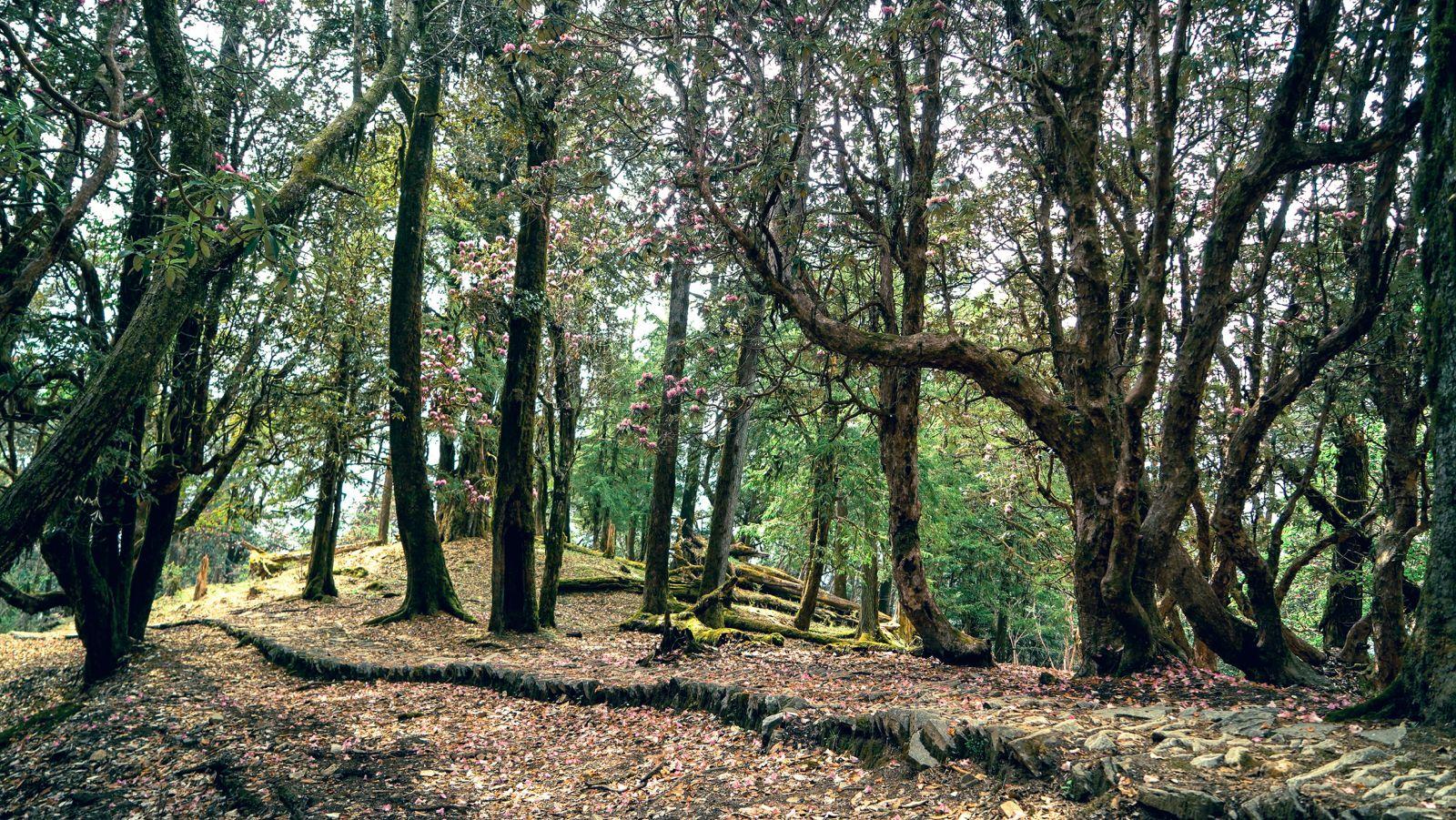
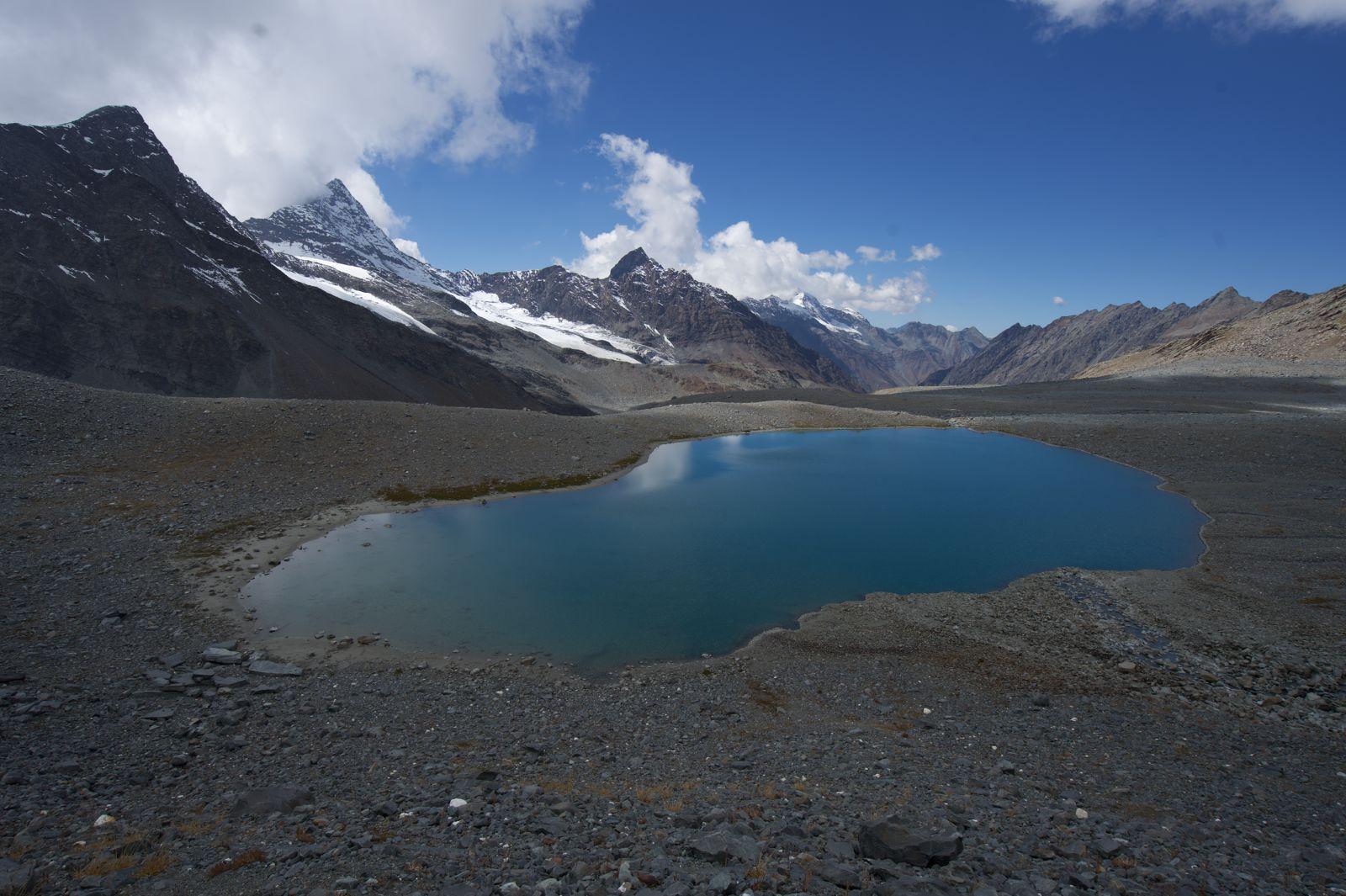
From here, the trail slips into dense forests of oak, pine, and rhododendrons. There are no markers or other groups camping here. It'll just be us, some clearings, waterfalls, and wild meadows that seem to appear at the right moment.
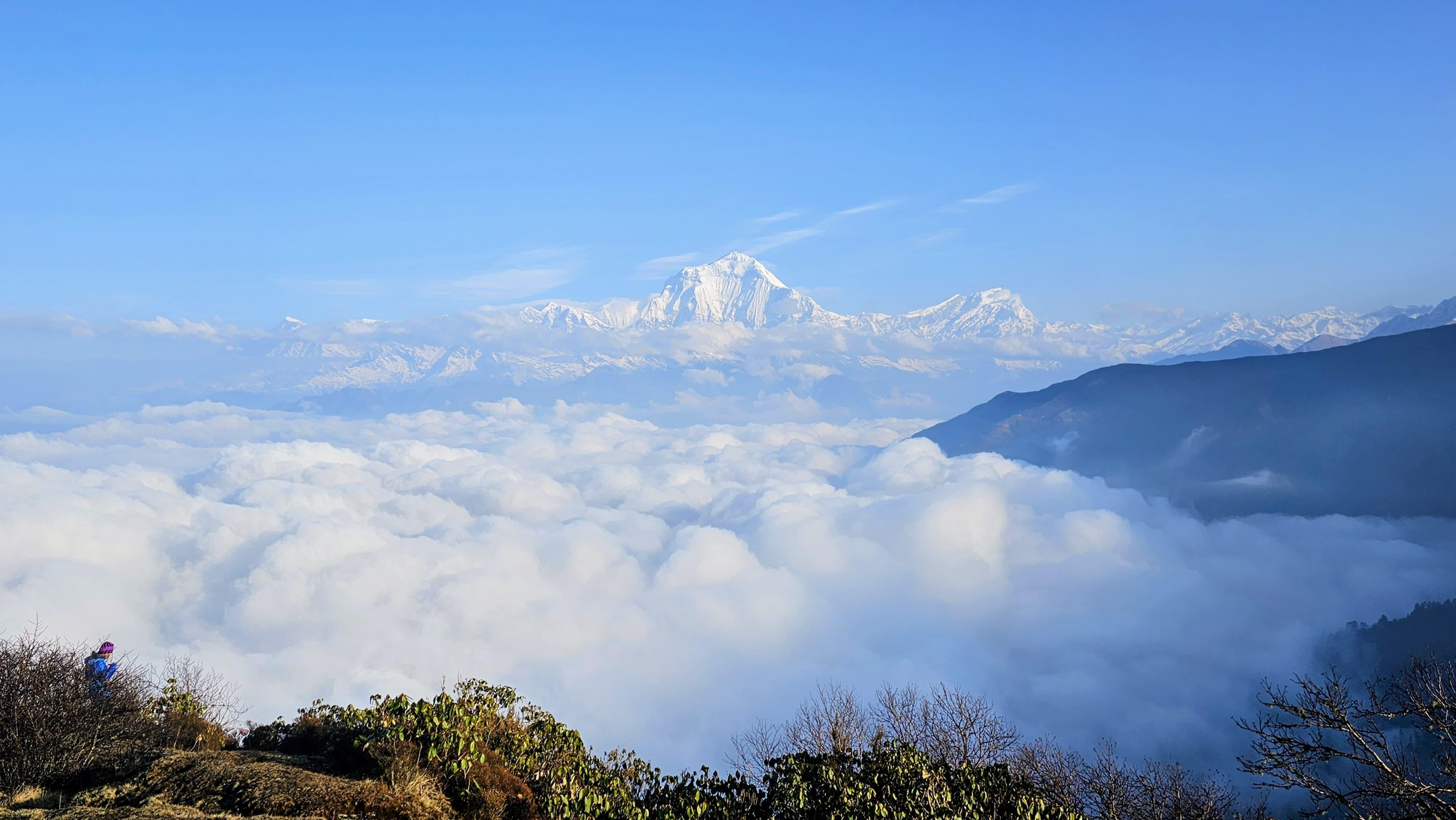
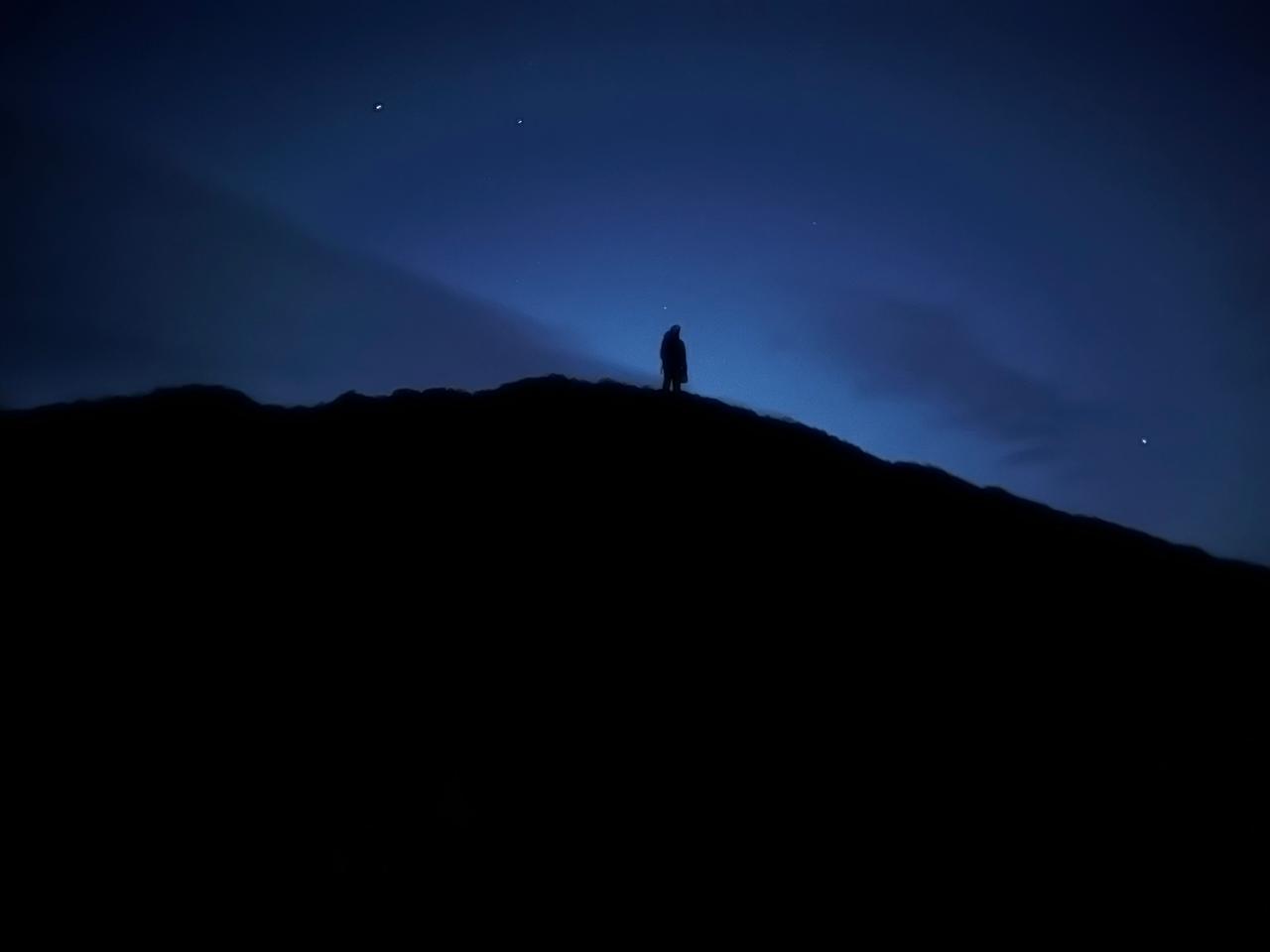
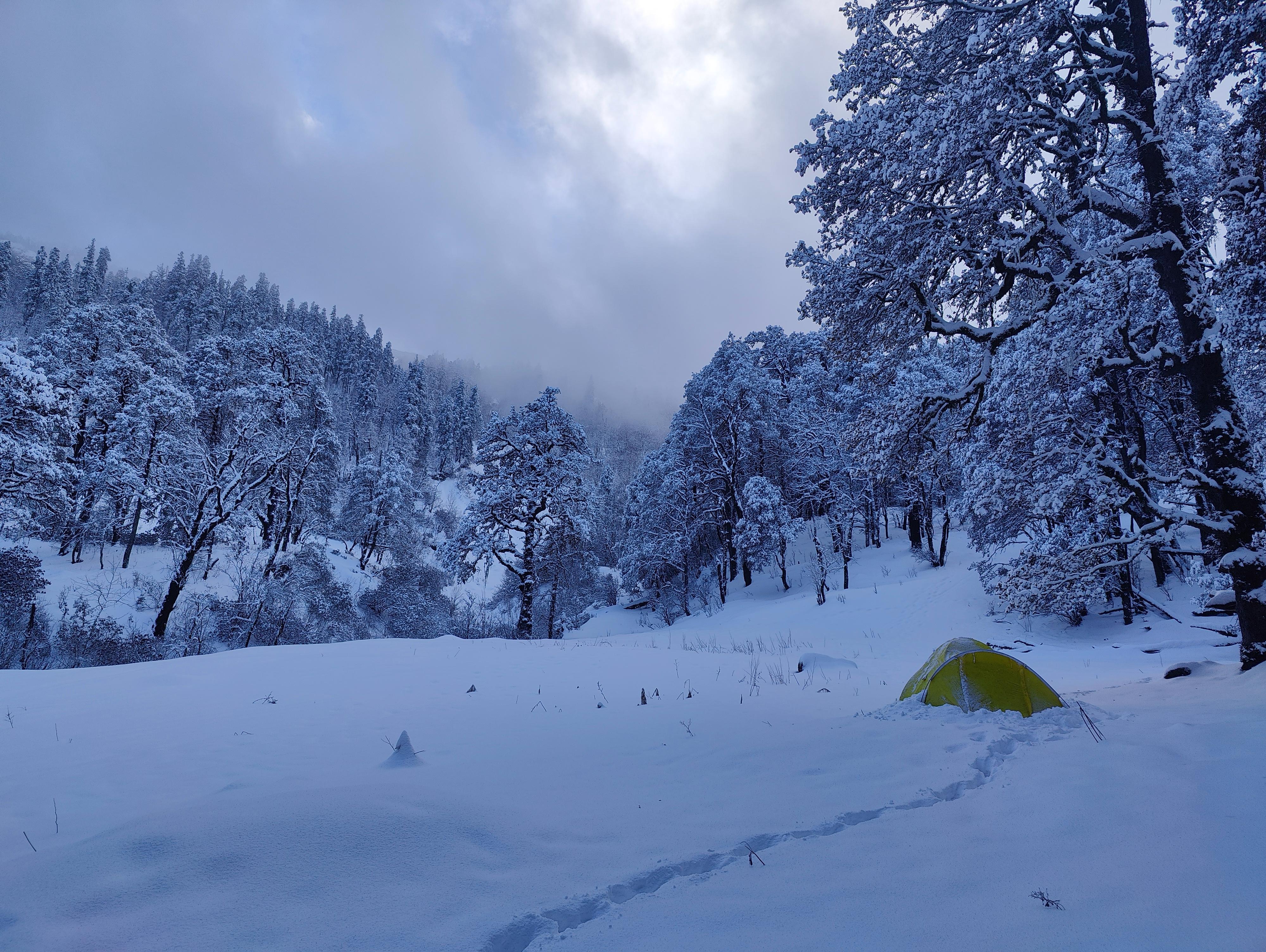
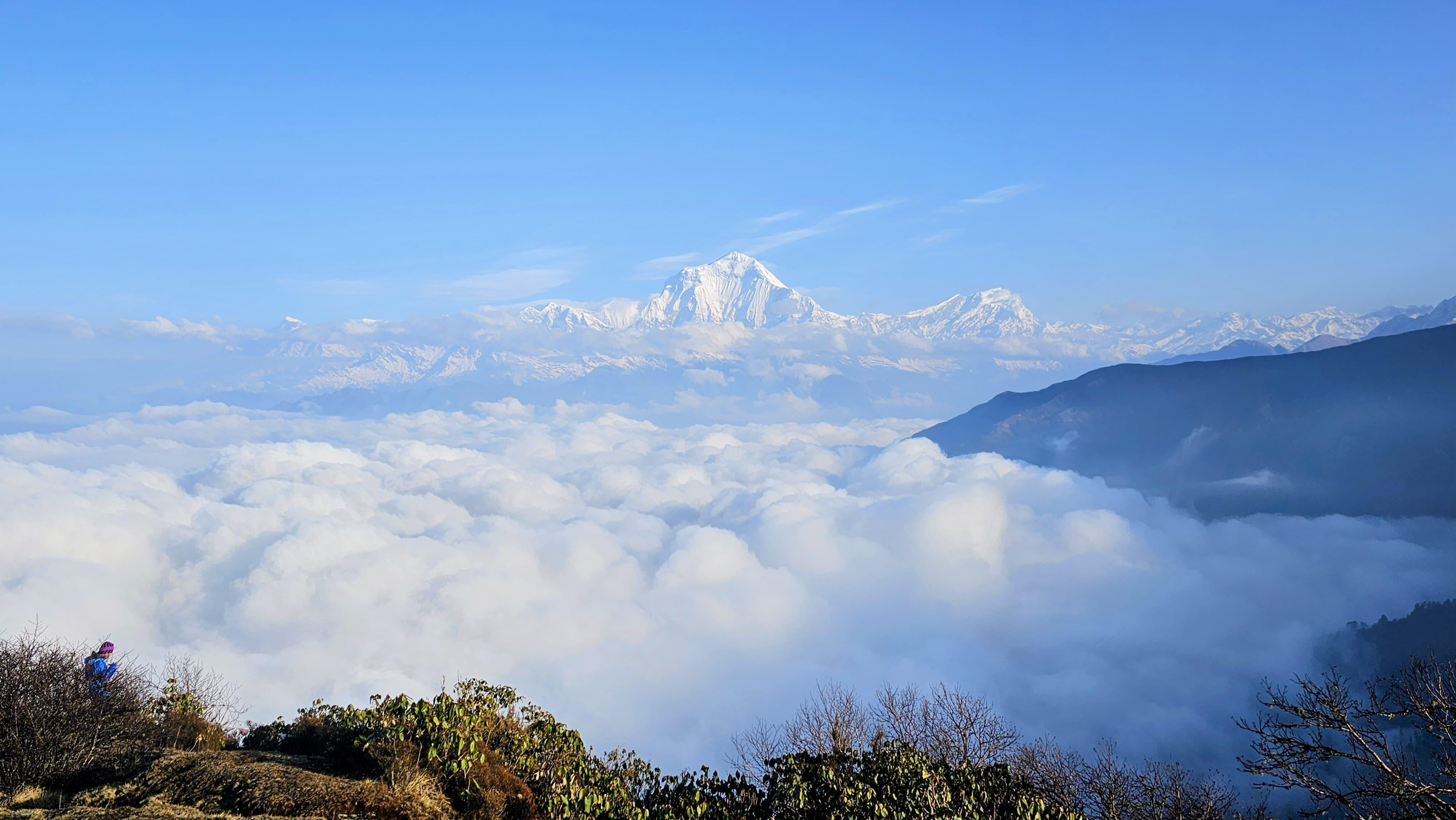
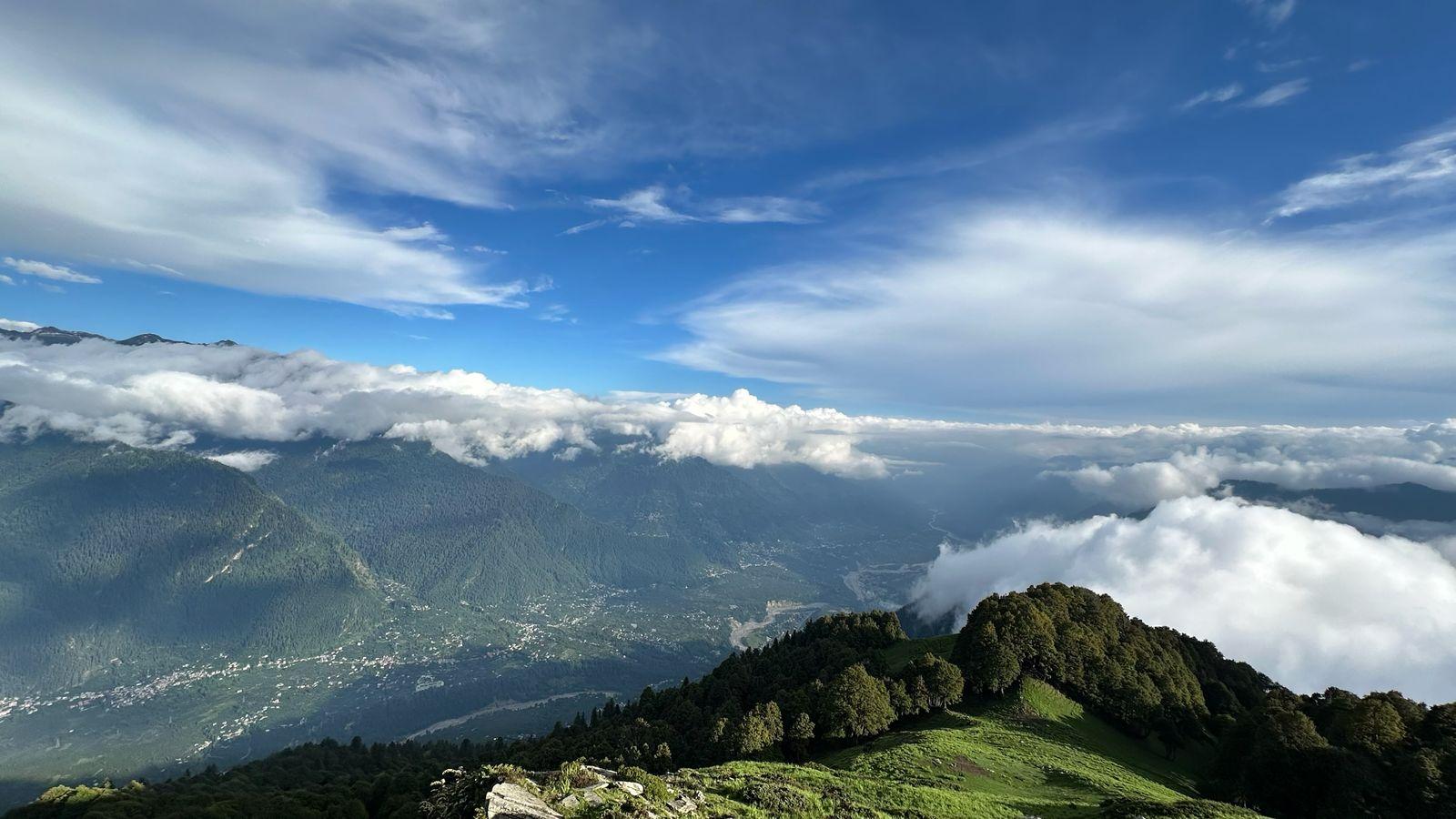
Eventually, you reach a high camp just beneath the Kedarkantha ridge, with clouds drifting below and the summit above
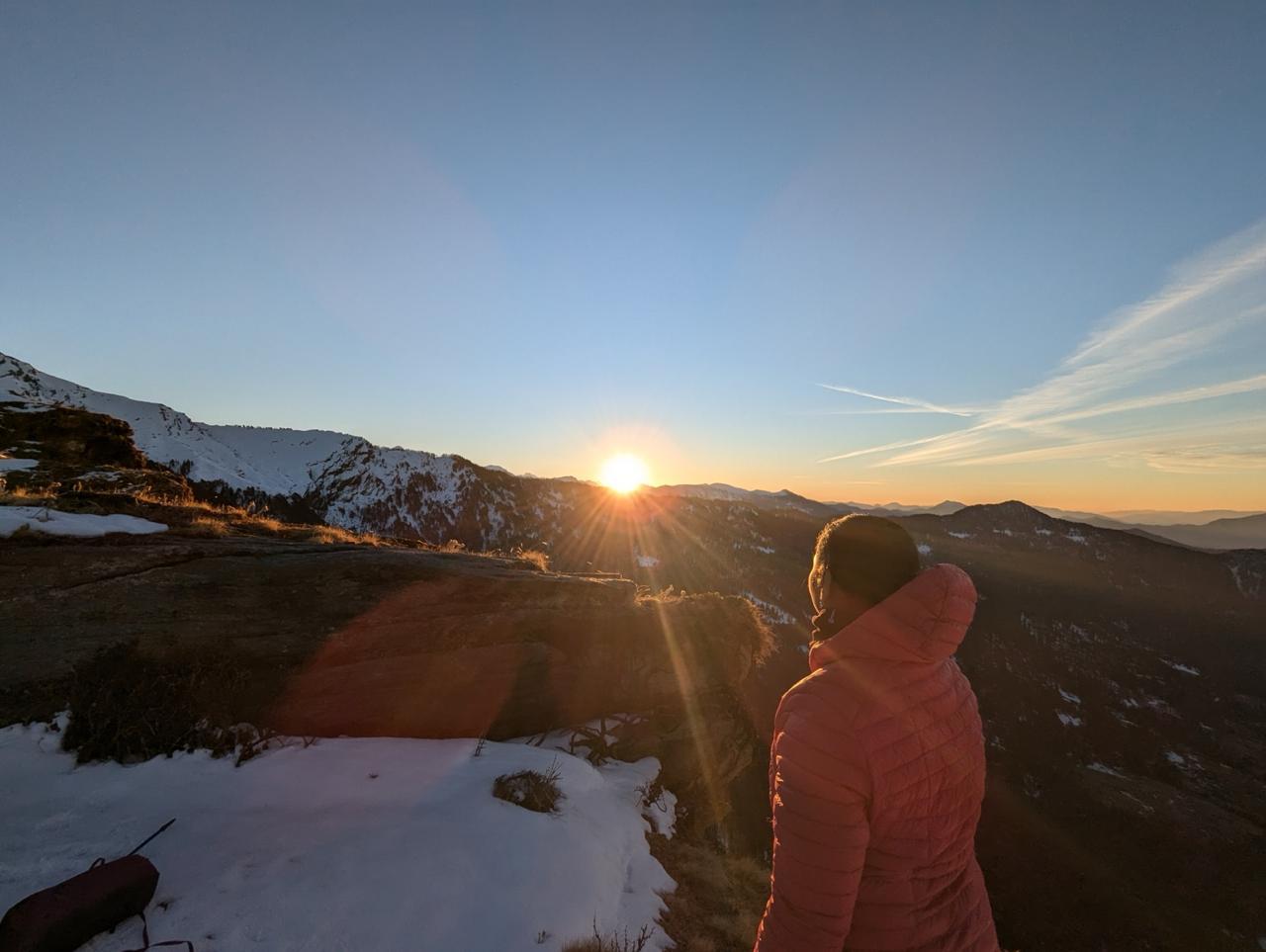
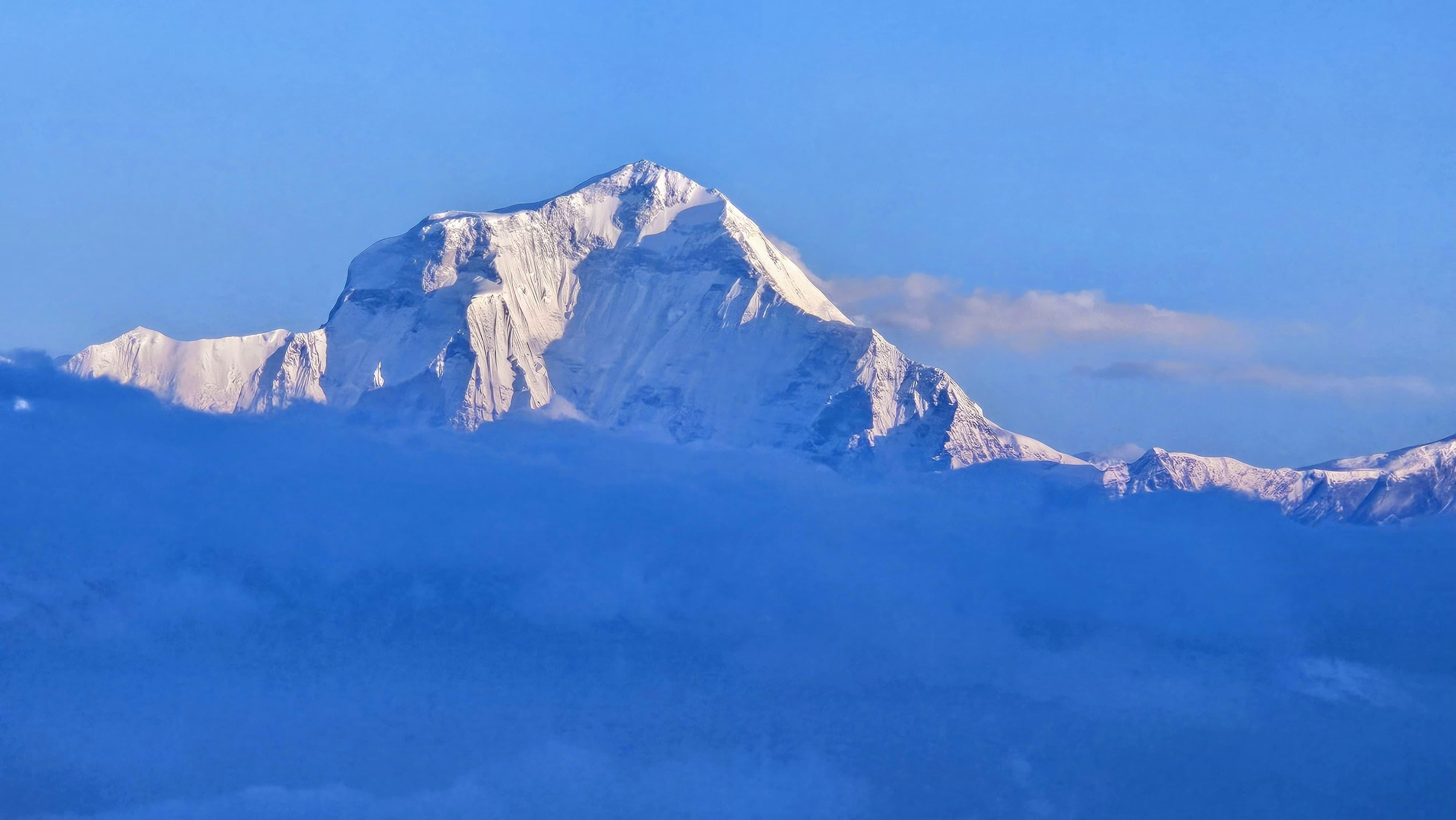
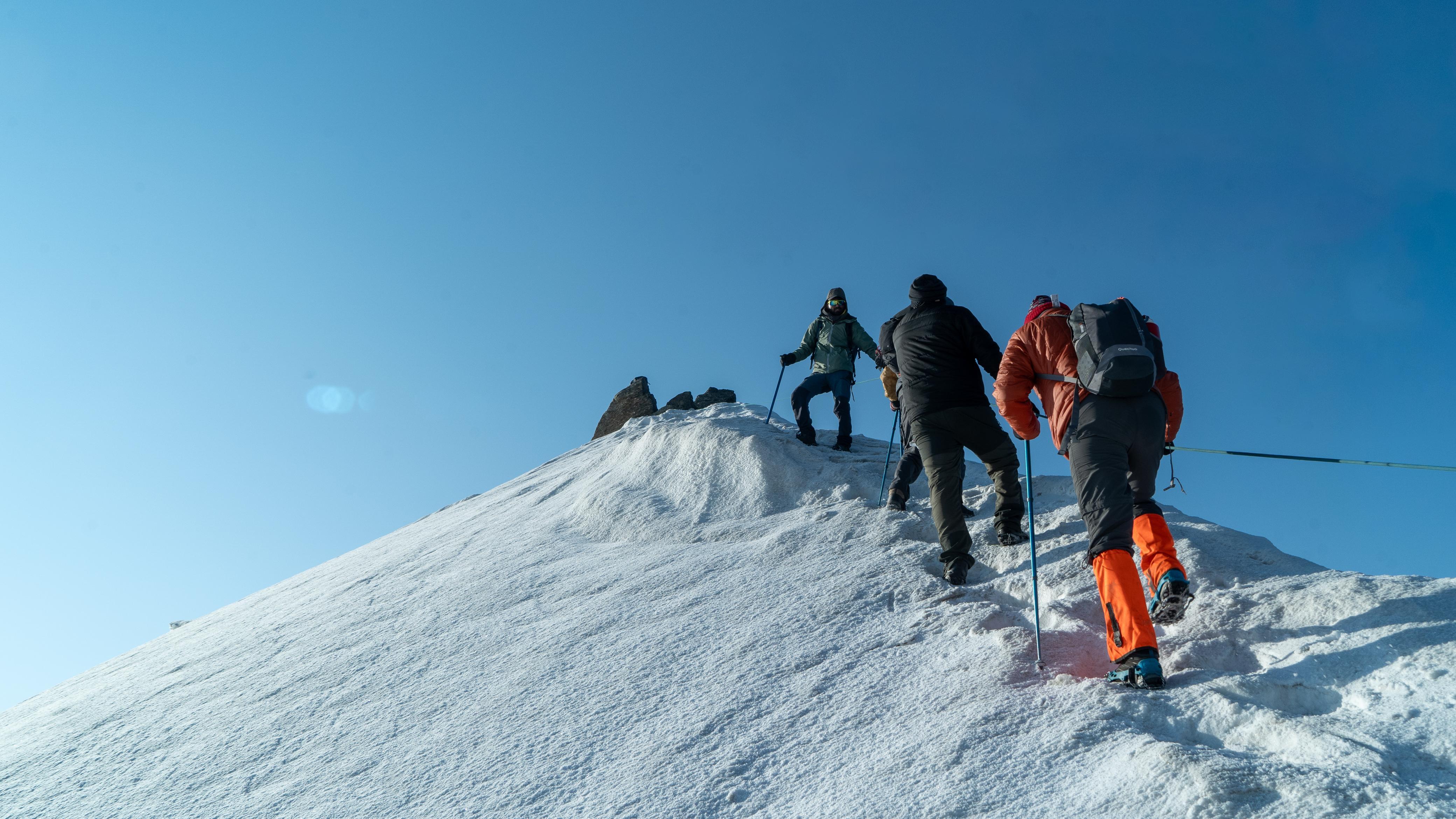
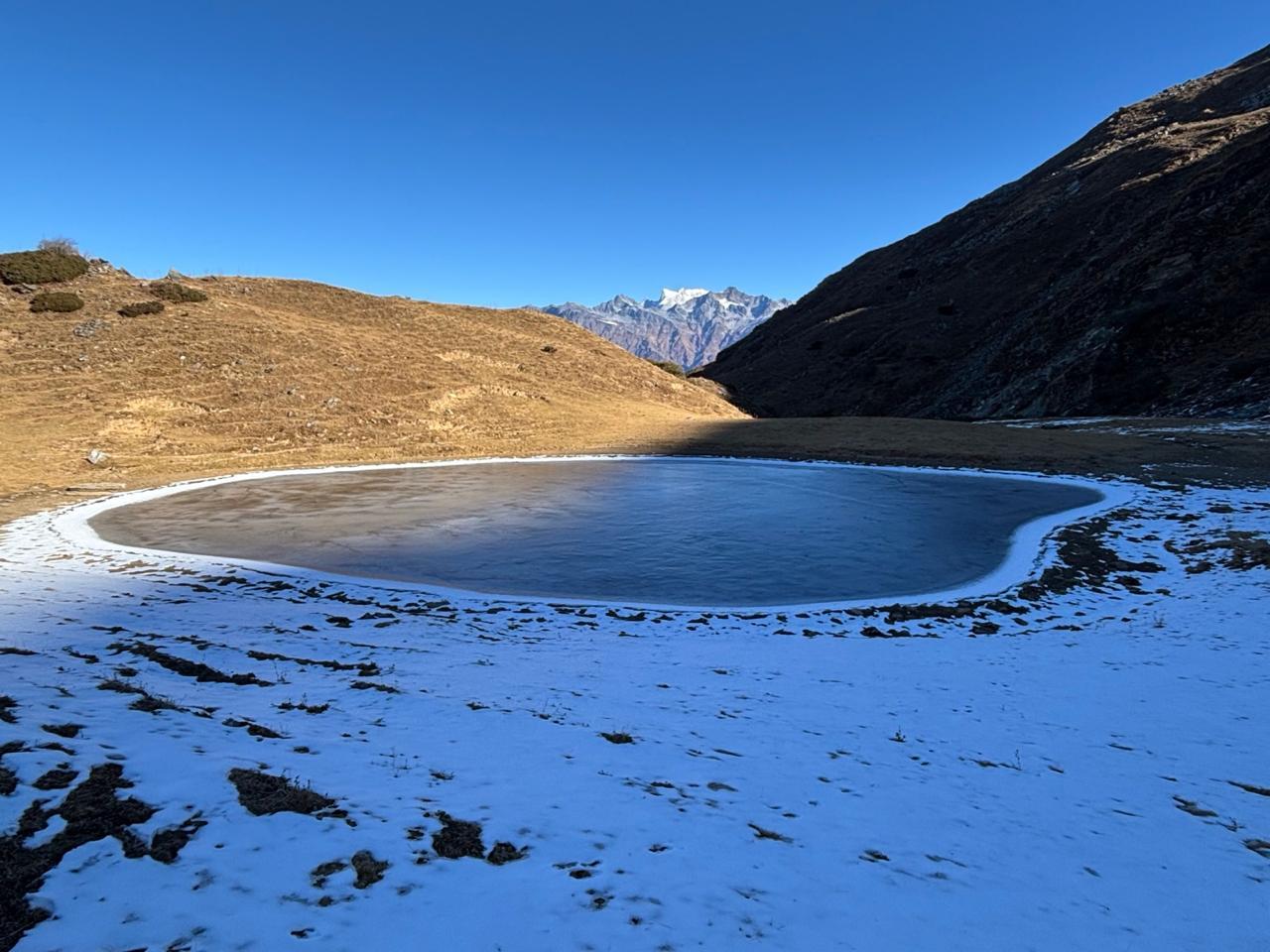
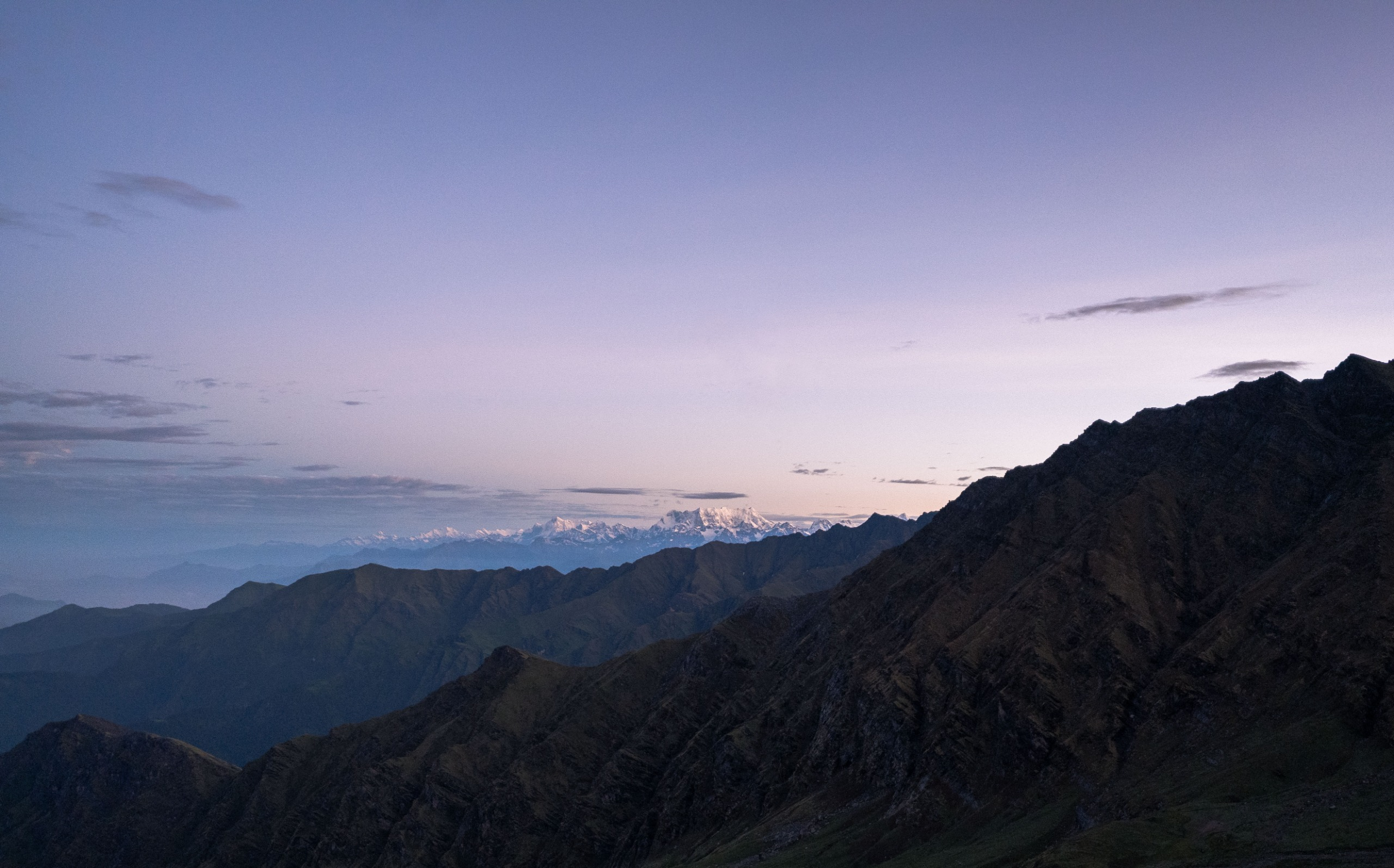
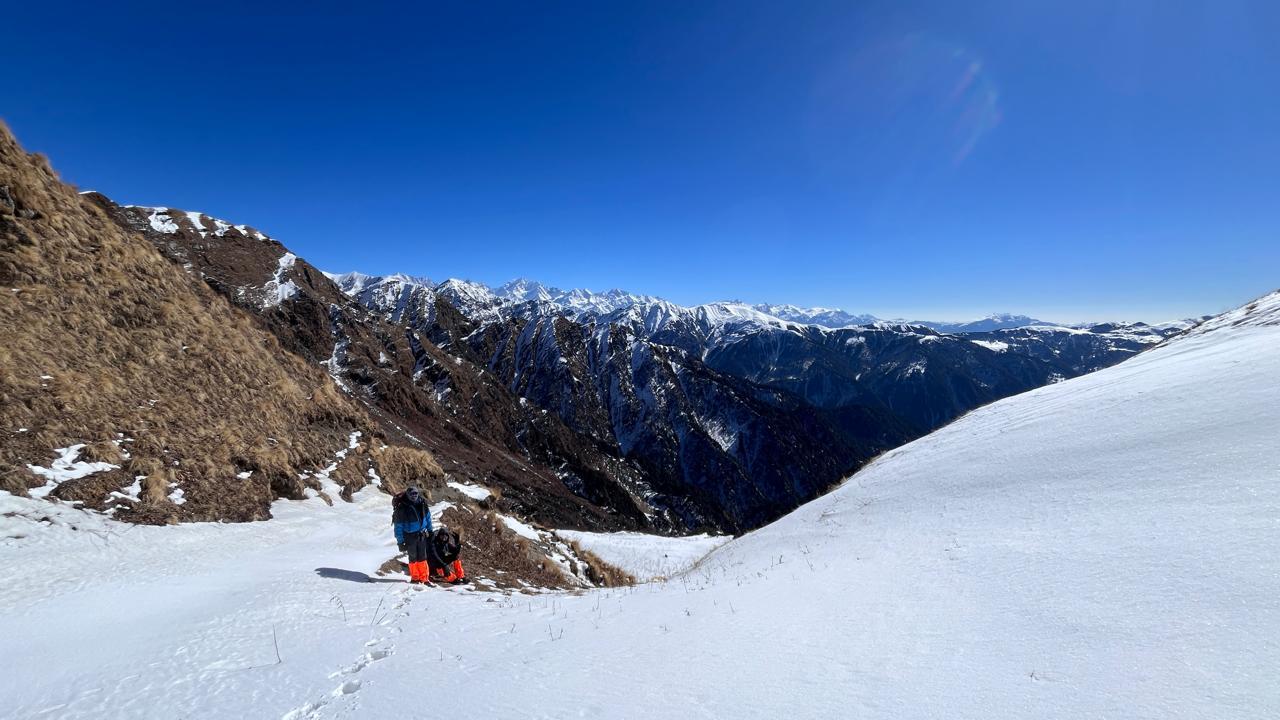
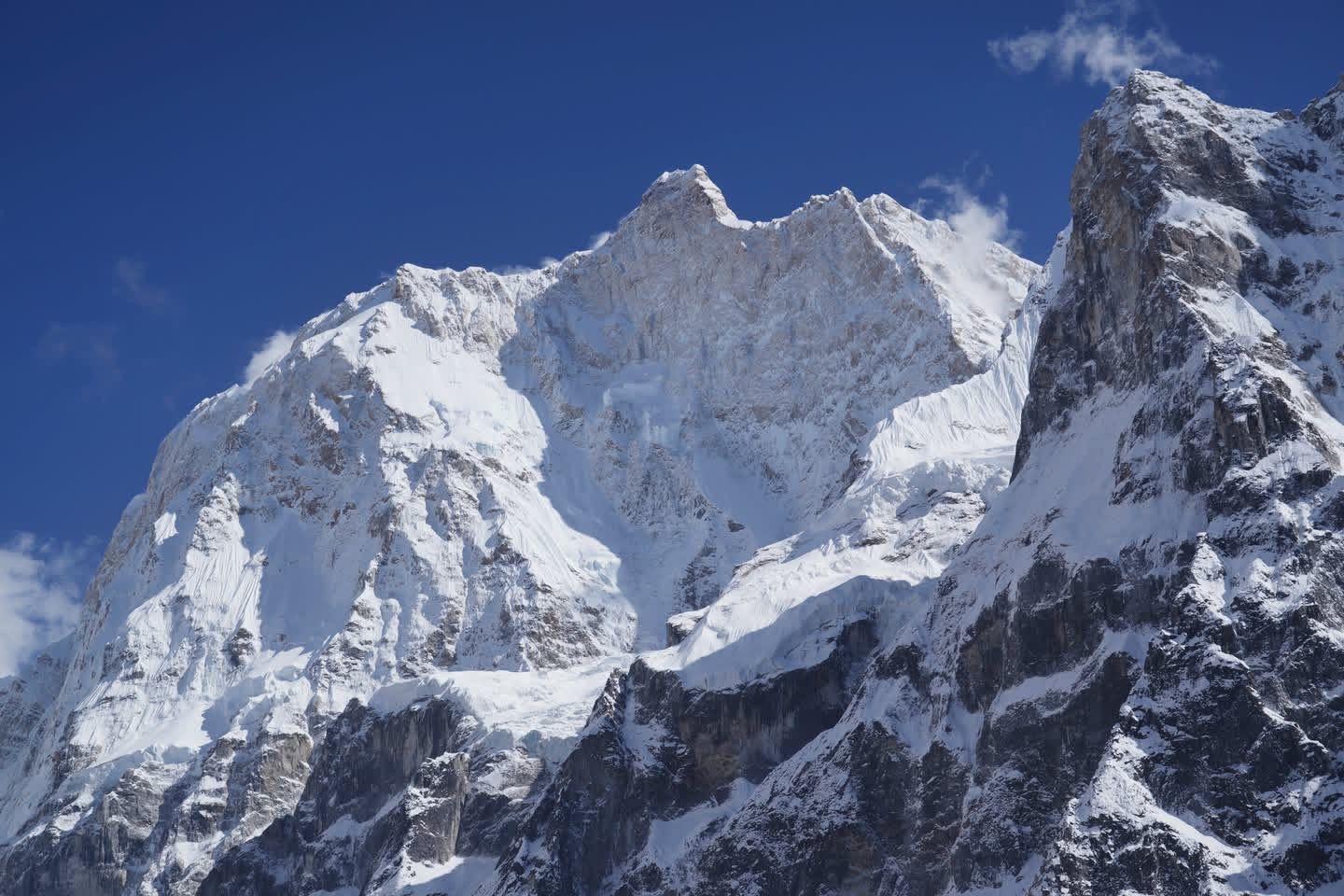
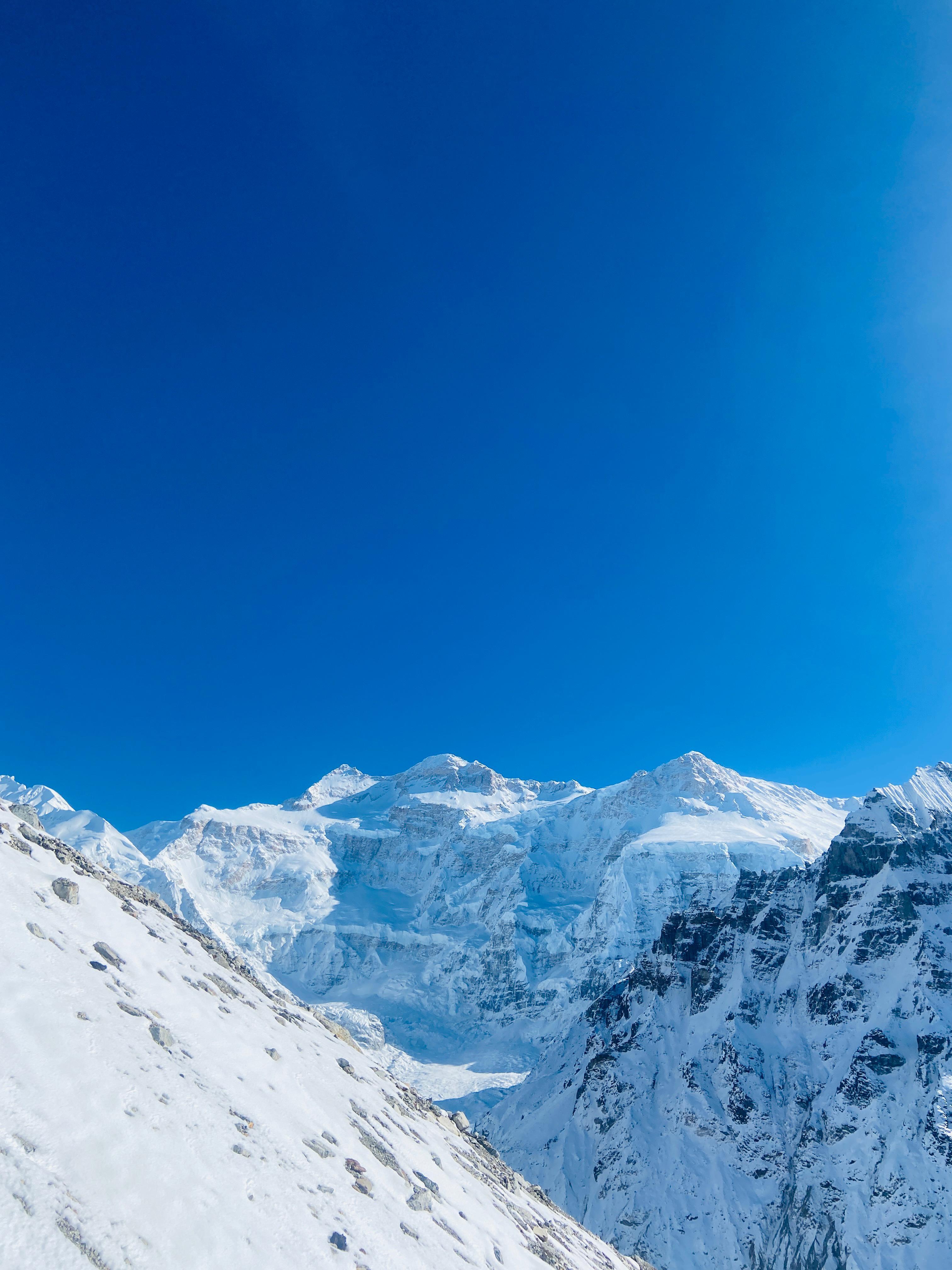
By the time you hit the summit at 12,500 ft, it’s not just another Himalayan view. It’s your reward, without any summit traffic or rush. Just you and your team standing where few ever do, looking out at snow-draped peaks with a full heart.
If you’ve done Kedarkantha before, this trail will surprise you.
If you haven’t, then this is how it was meant to be.
Day 1
Drive from Dehradun to Devjani
Drive Distance: ~180 km
Time Taken: 7 hours
Elevation Profile: 2,100 ft to 6,200 ft
You begin your journey from Dehradun early in the morning, driving through the lush pine forests and winding mountain roads of Uttarkashi district. The route offers scenic views of terraced fields, riverside villages, and tall Himalayan ridgelines. You stop along the way for tea and simple meals. Devjani, your base for the night, is a remote Garhwali village with traditional slate-roofed homes and warm, hospitable locals. You stay in a homestay and get your first taste of Himalayan village life. It’s a beautiful cultural immersion as you settle in, with the river's sound echoing through the valley.
Day 2
Devjani to Jungle Camp
Trek Distance: ~4.5 km
Time Taken: 4–5 hours
Elevation Profile: 6,200 ft to 8,000 ft
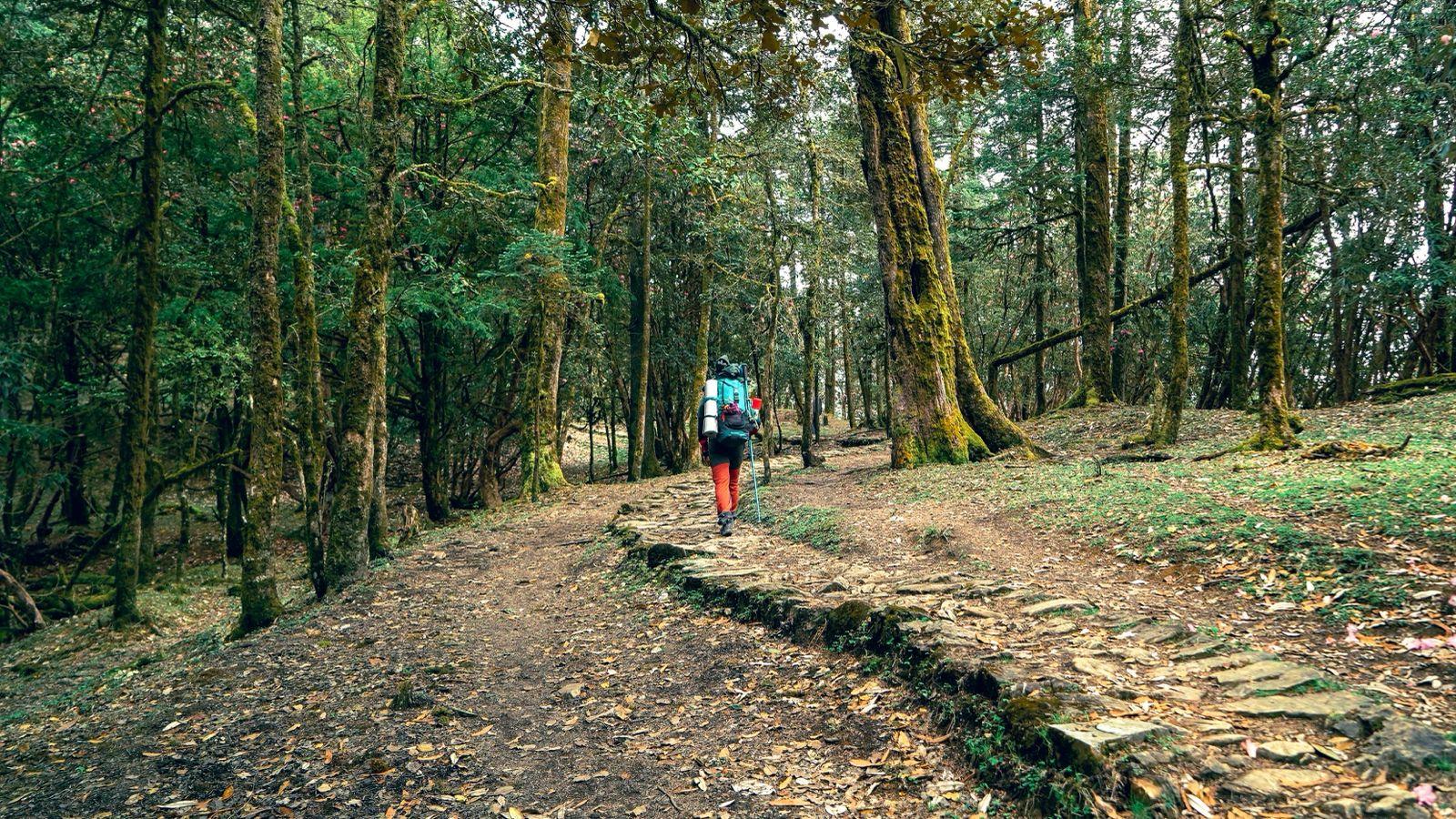
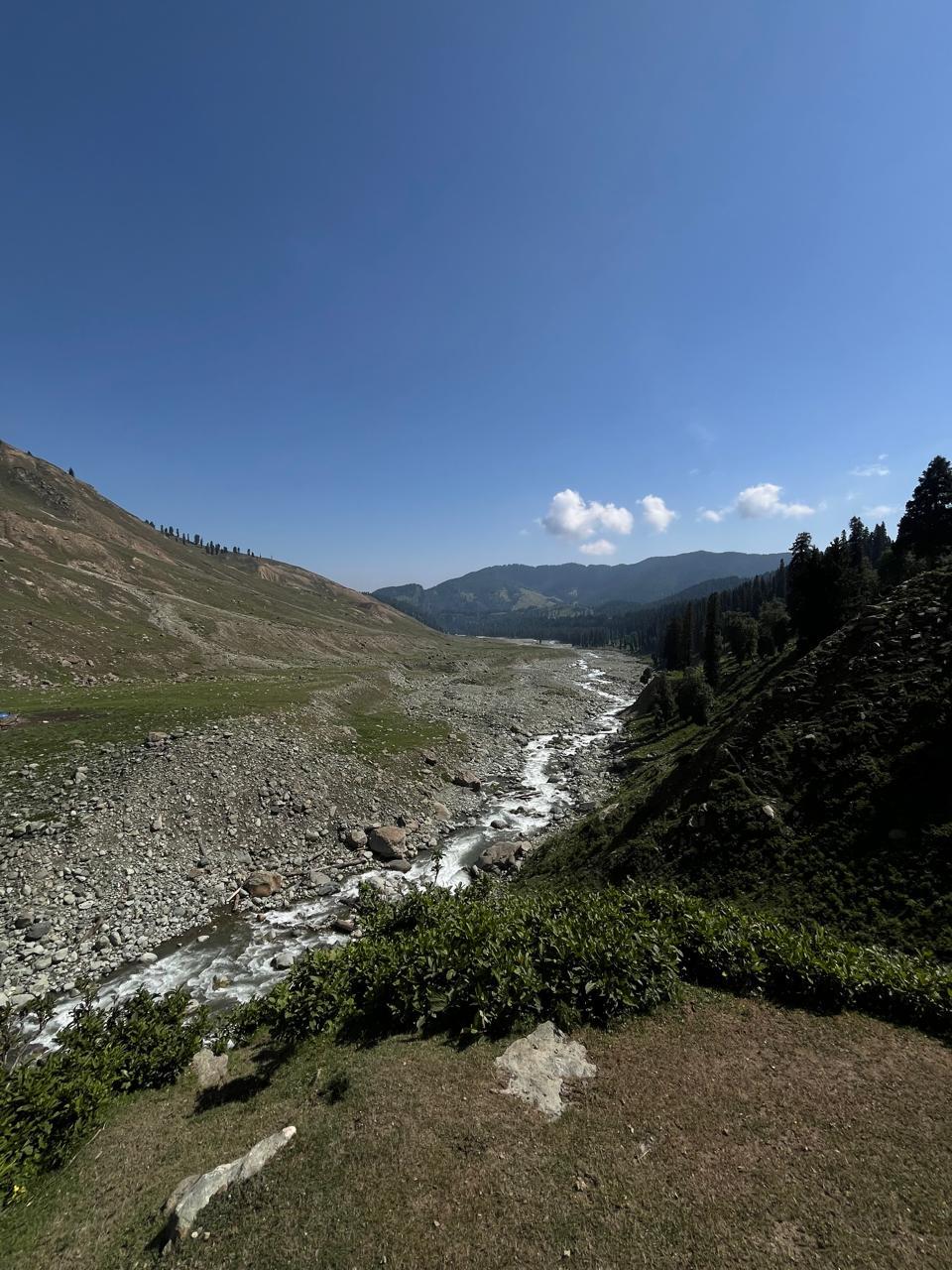
We begin the walk by leaving behind the last few homes of Devjani and slipping into a quiet forest of oak, chestnut, and rhododendron. The trail winds gently uphill, cushioned by leaves and pine needles, with filtered sunlight dancing through the trees.
After a slow, steady climb, the forest opens into a peaceful clearing deep in the woods, where the Jungle Camp is set. In the background, a slim waterfall tumbles down a distant slope, visible through breaks in the trees.
Day 3
Jungle Camp to Ridge Camp
Trek Distance: ~4.5 km
Time Taken: 6–8 hours
Elevation Profile: 8,000 ft to 10,480 ft
We leave the forested camp behind and begin a steady, often steep ascent that gradually pulls us above the treeline. The trees thin, the air sharpens, and the landscape opens in every direction.
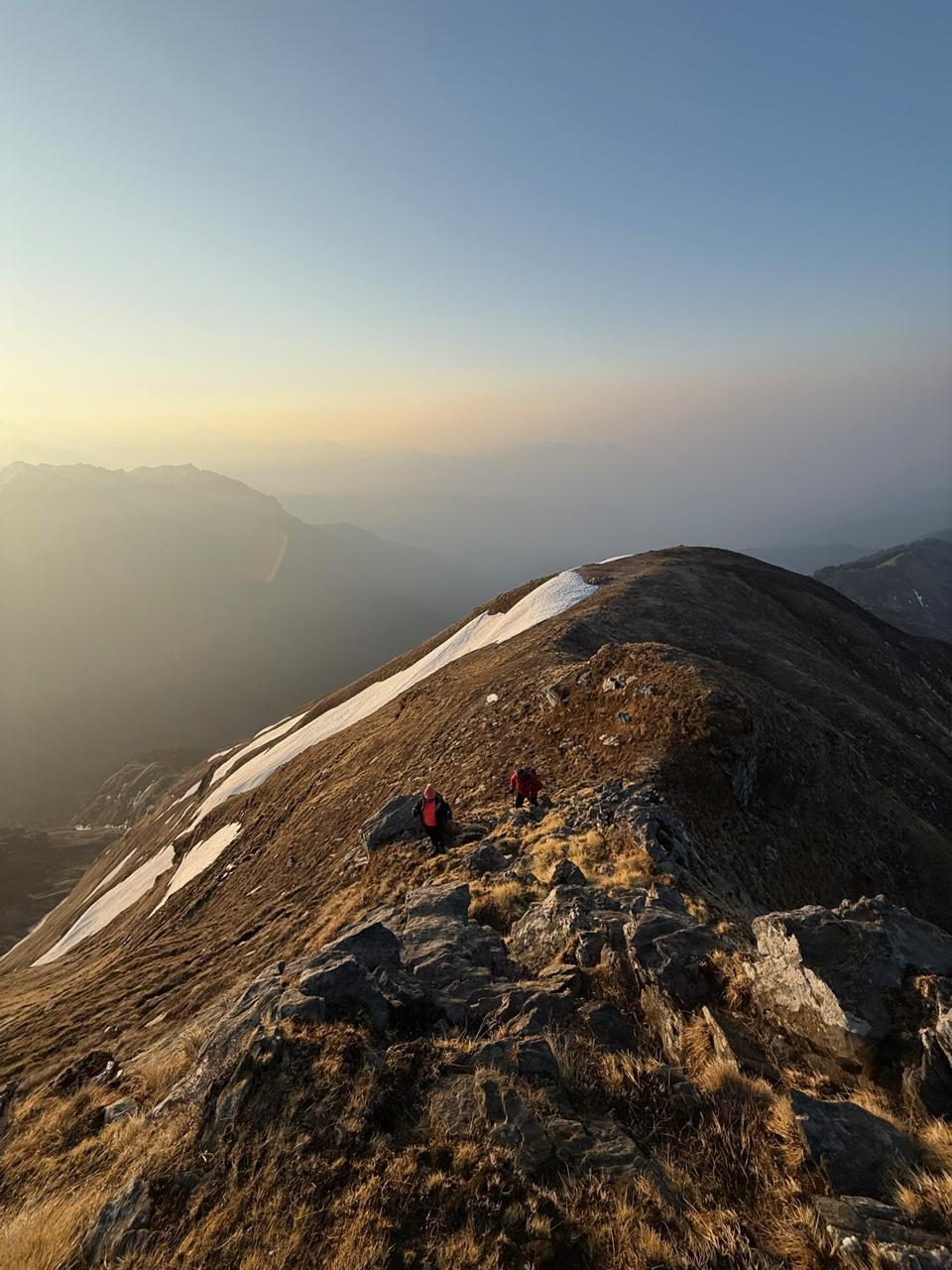
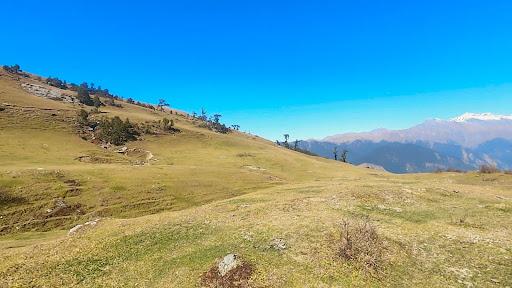
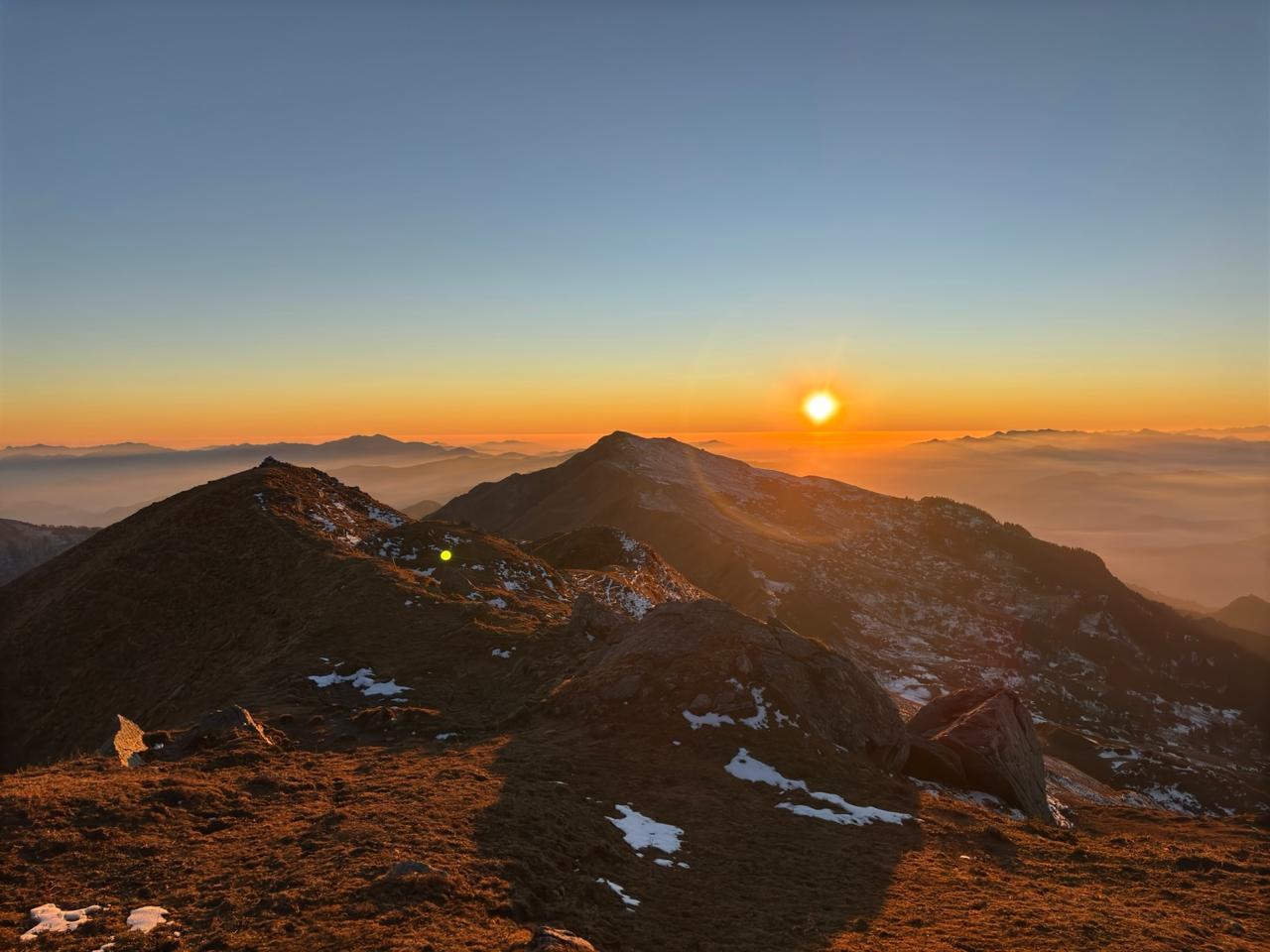
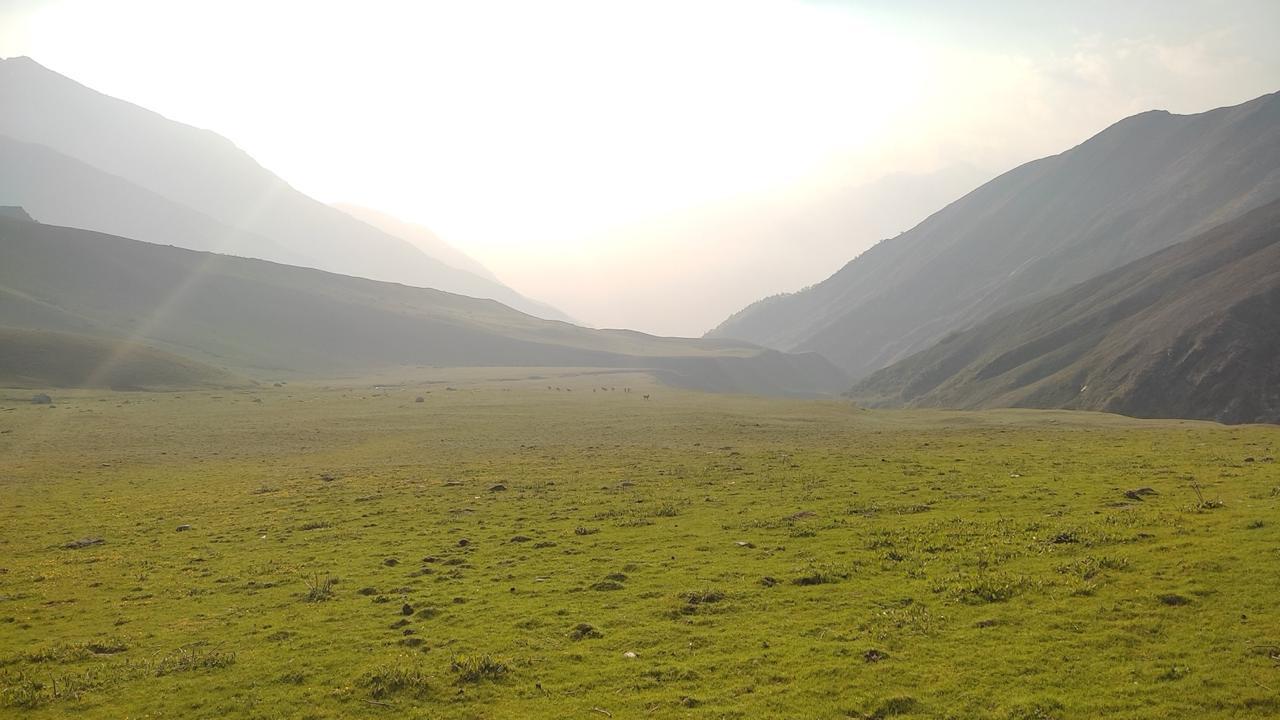
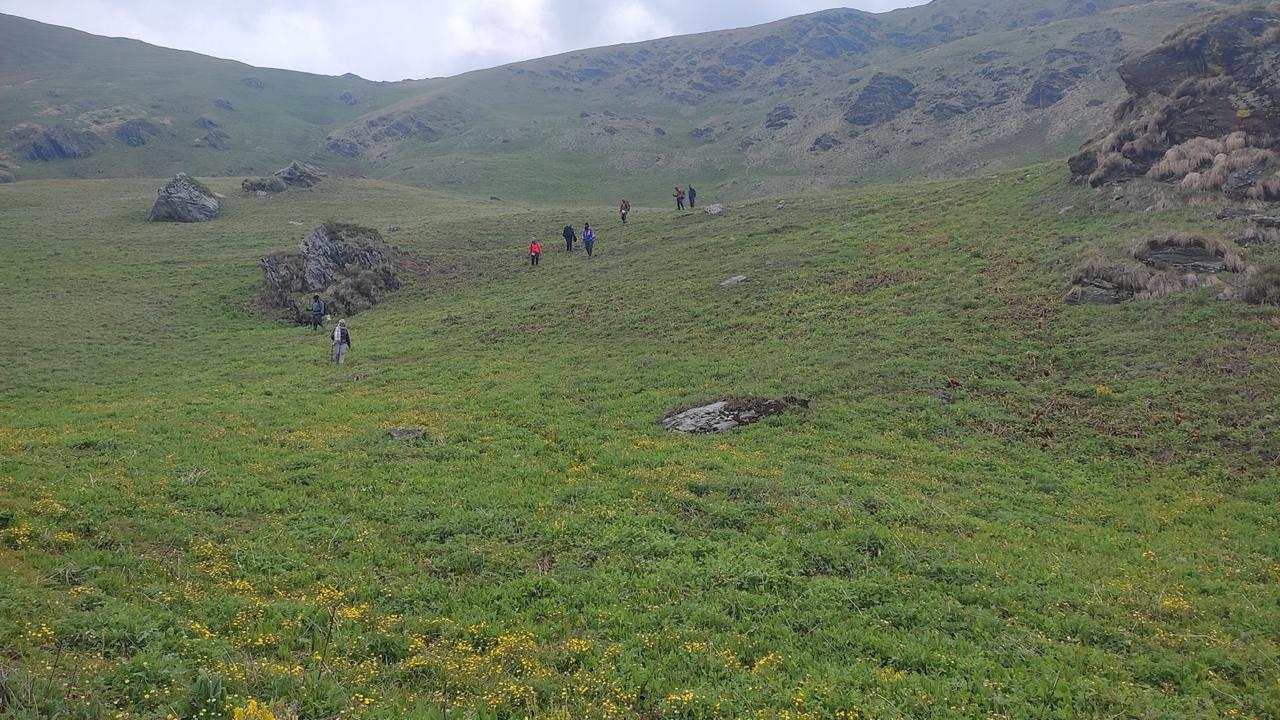
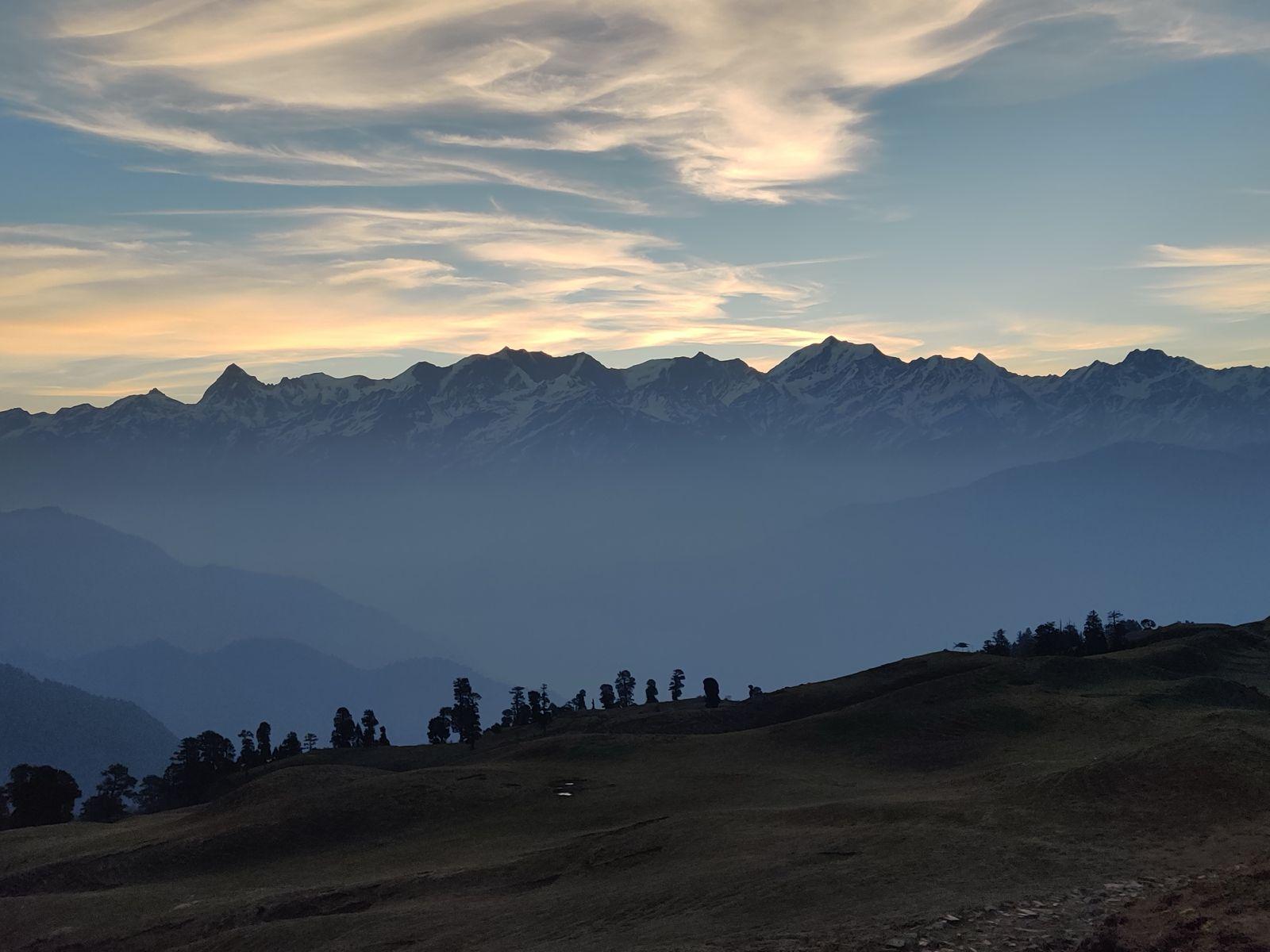
As we gain elevation, the climb leads us to a broad ridgeline, and just beyond it, our second campsite. It’s set on a meadow high above the valleys, with an incredible view of distant villages, rolling slopes, and layers of Himalayan peaks on the horizon. On days, you can see clouds drifting below you.
The wind can pick up in the evenings, so be prepared for flapping tents and bring warm layers. But the light here, especially around sunset, is magical.
Day 4
Summit day and descent
Trek Distance: ~13 km round trip
Time Taken: 9–11 hours
Elevation Profile: 10,480 ft to 12,500 ft, then down to 6,200 ft
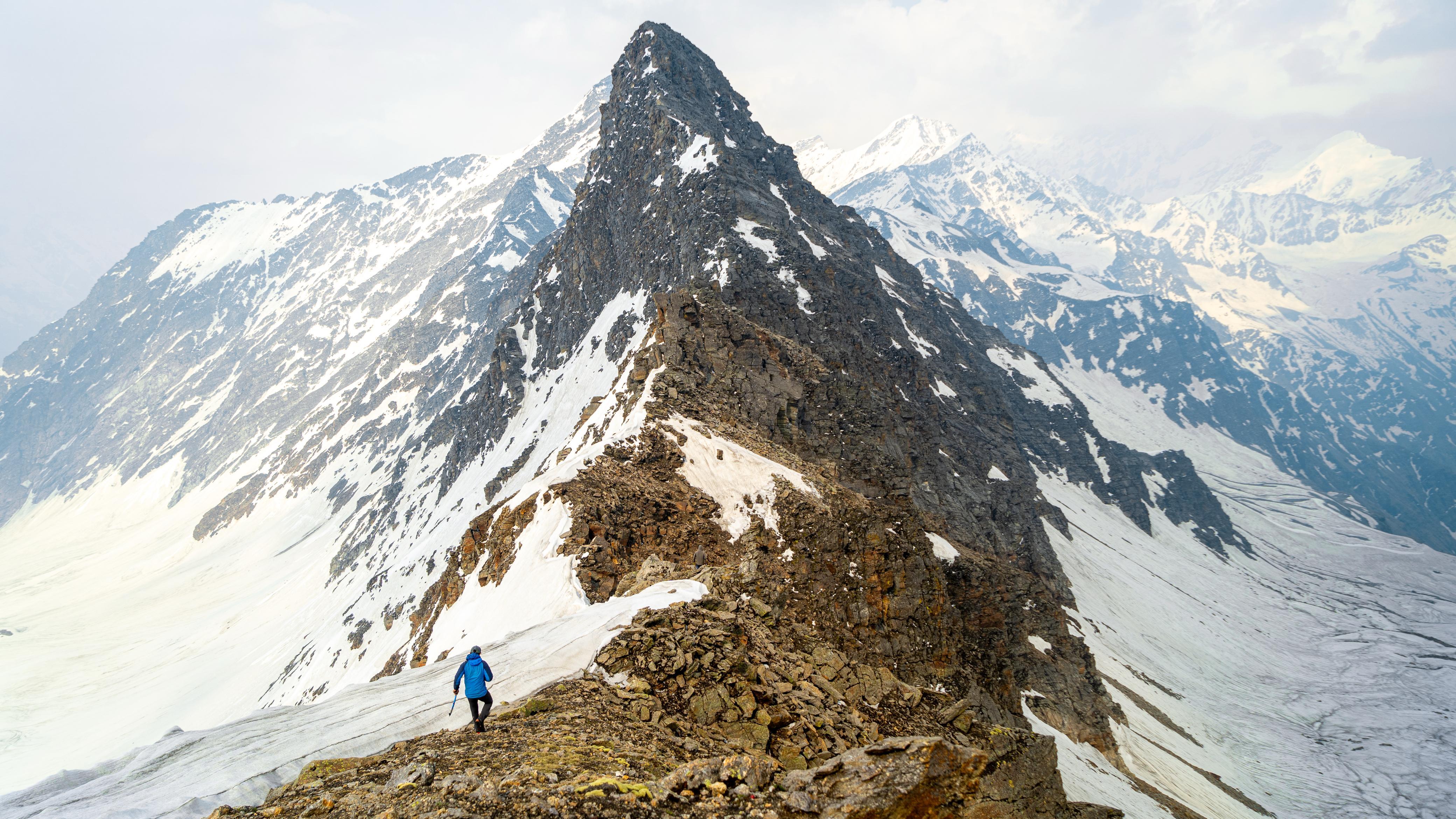
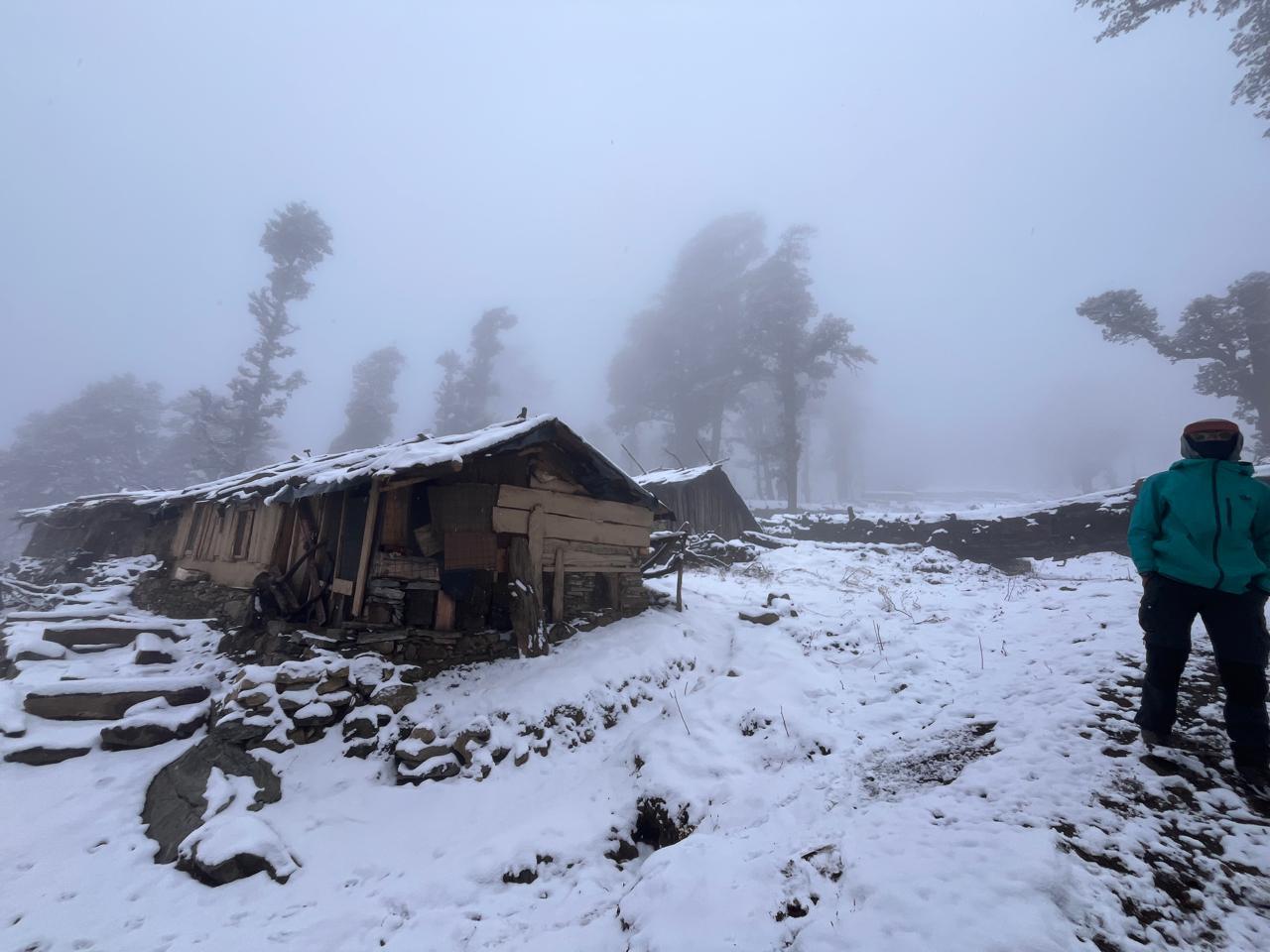
You can attempt the summit at sunrise or sunset, depending on how the team feels and the day's conditions. Our leaders will decide with you. Once you leave the treeline, you enter the meadow and walk along the ridge to the top, something few other routes offer.
If we summit at sunrise: after time at the top, we descend past Ridge Camp and through the forest back to Devjani for a warm night at the homestay.
If we summit at sunset: we return to Ridge Camp for the night, descend to Devjani the next morning, and drive straight on to Dehradun.
Day 5
Drive from Devjani to Dehradun
Drive Distance: ~180 km
Time Taken: 7 hours (plus a ~4-hour descent from Ridge Camp if we summited at sunset)
After a sunrise summit: we leave Devjani early, as early as 6 am, and reach Dehradun by early afternoon.
After a sunset summit: we descend from Ridge Camp to Devjani in the morning and drive straight on, reaching Dehradun by evening.
Return travel: Book flights after 9 pm or the next day. For Delhi and other cities, overnight buses and trains are available from Dehradun.
Fitness Requirement
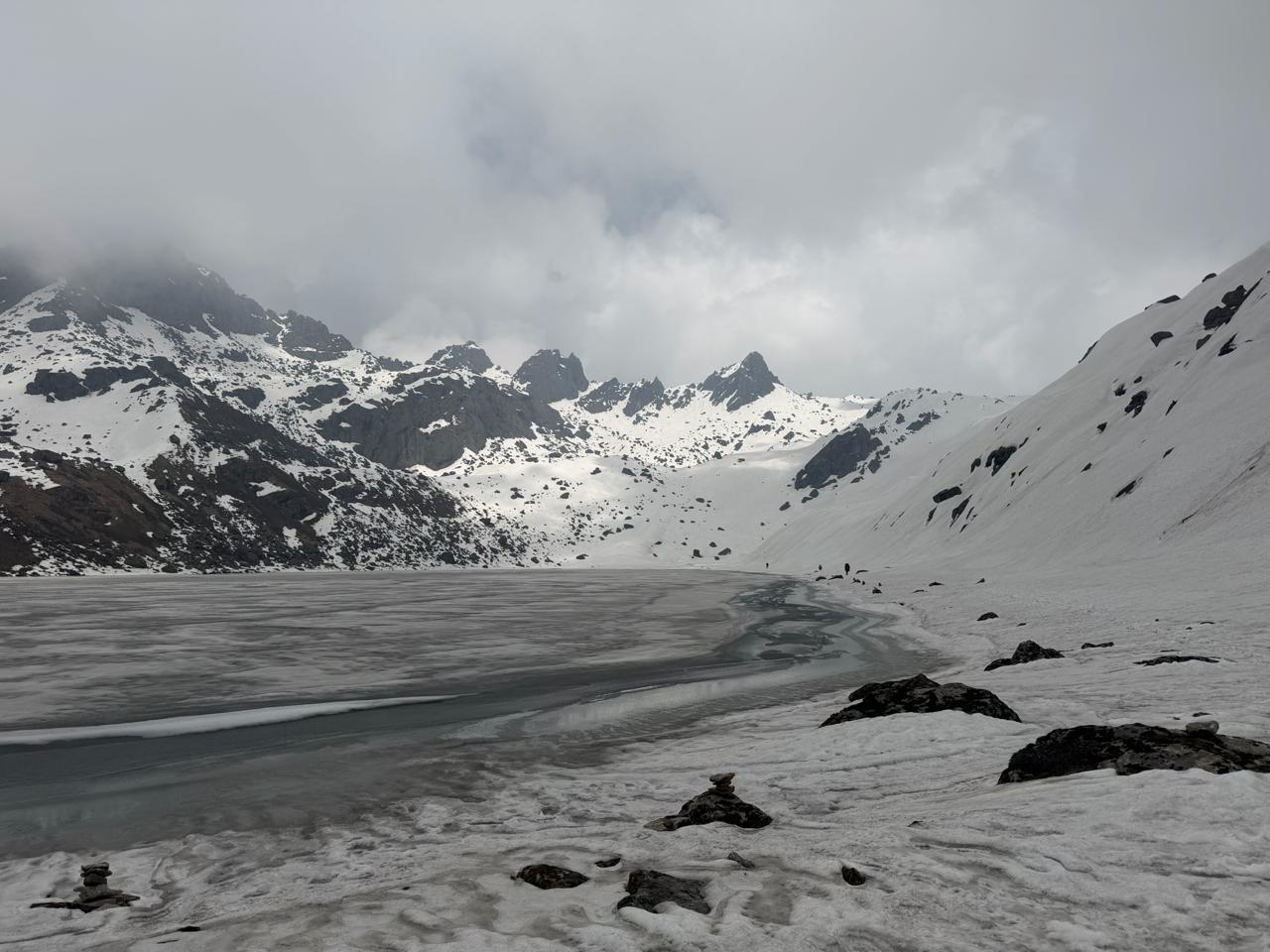
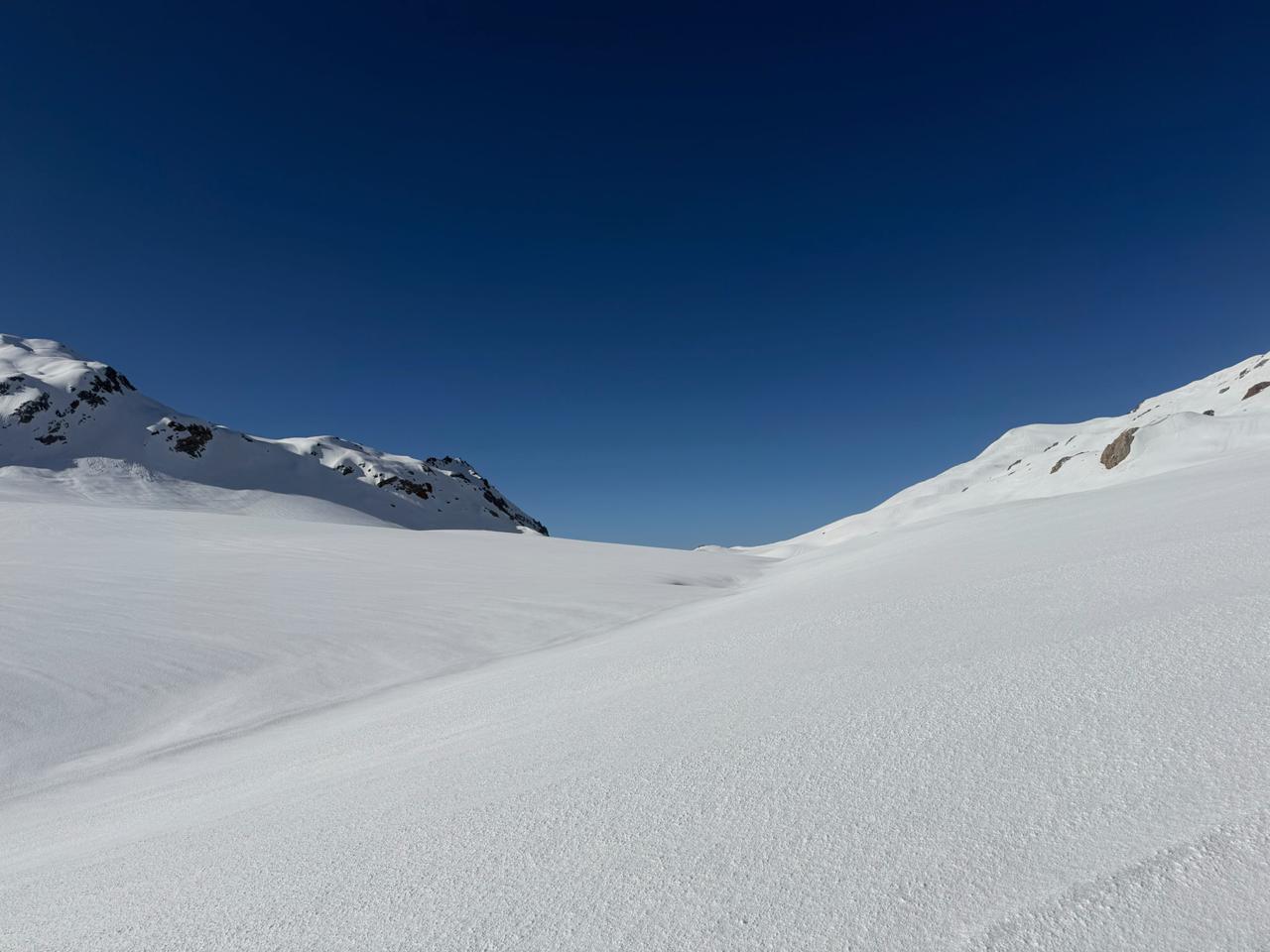
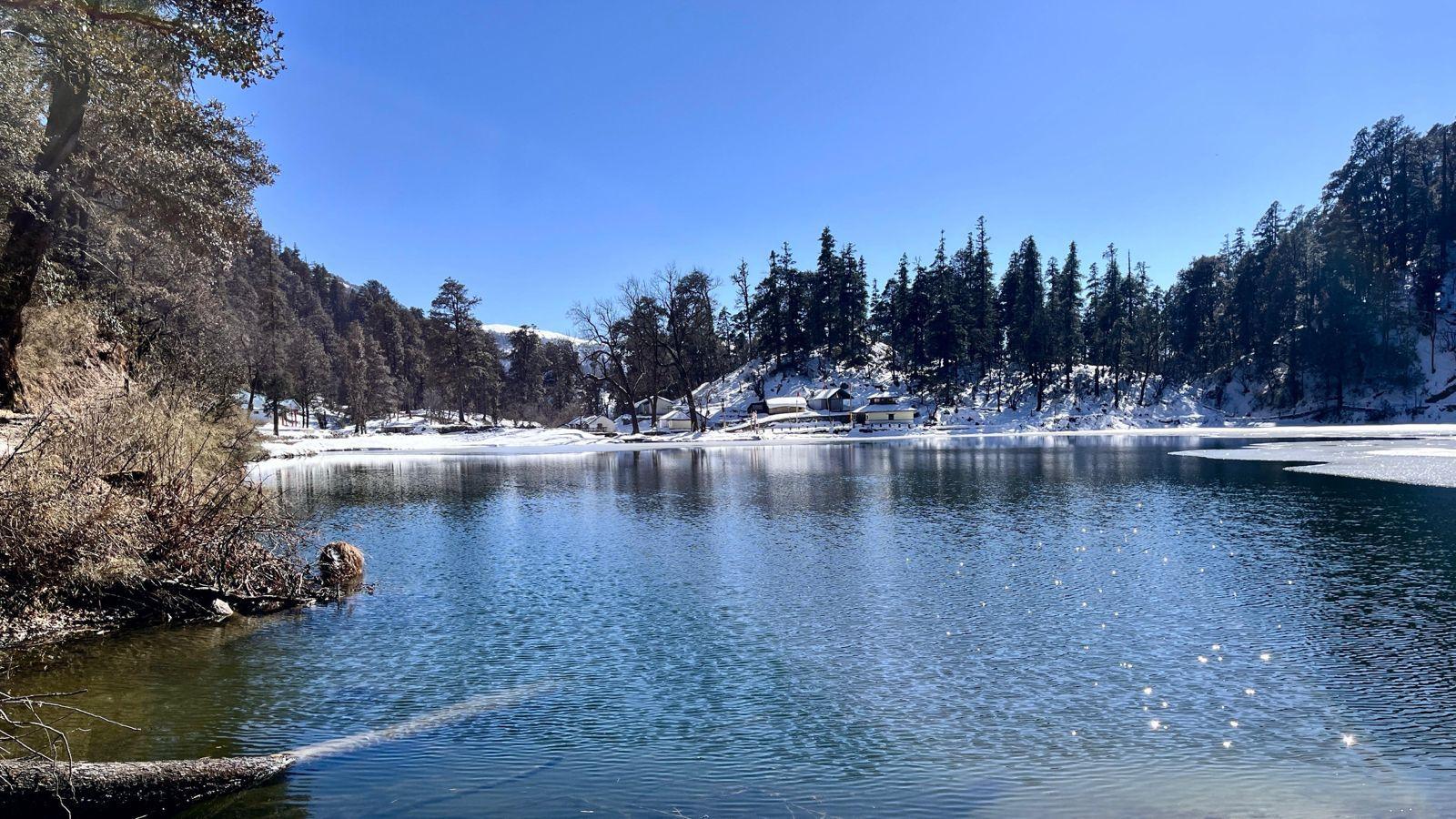
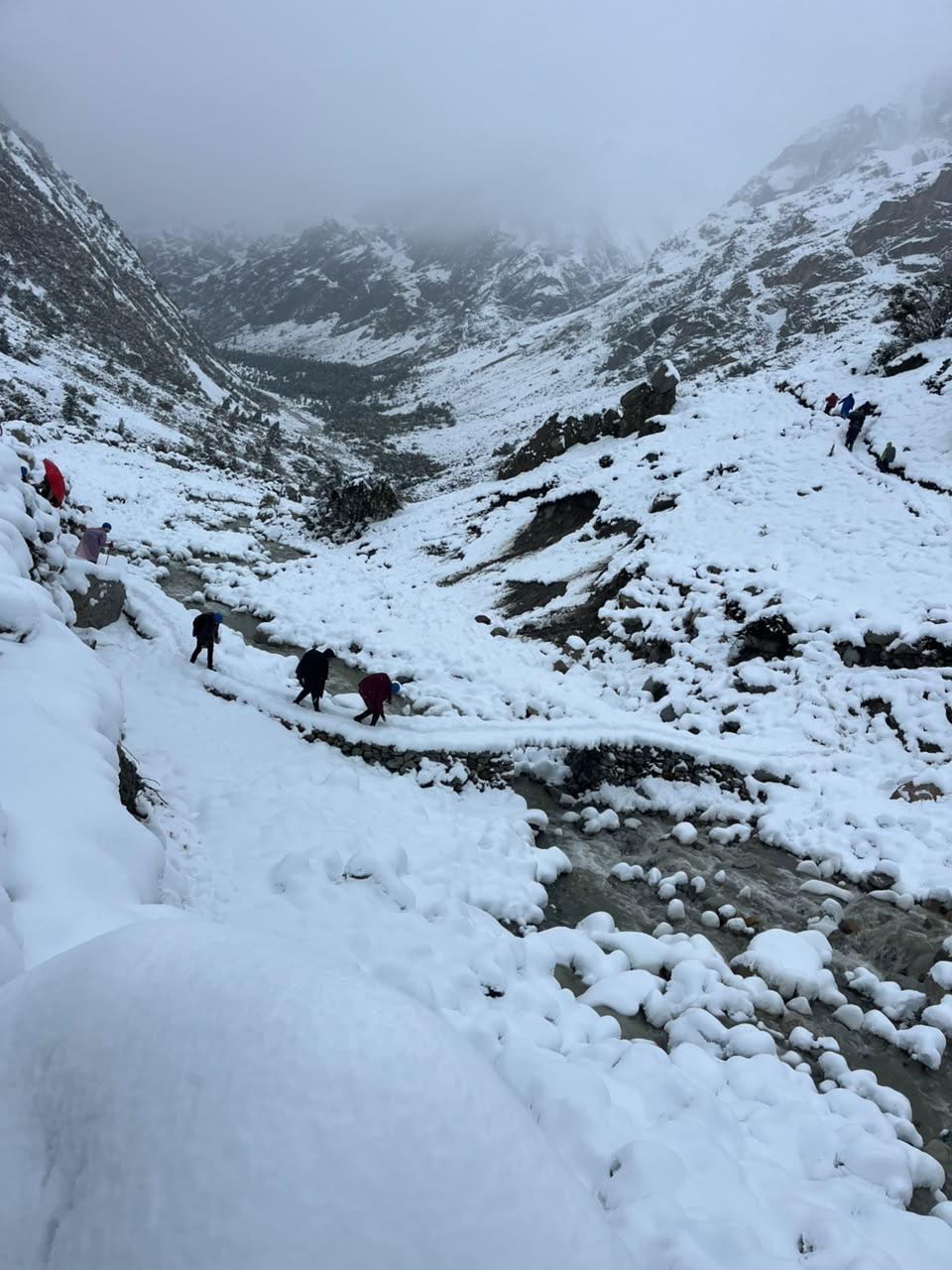
Kedarkantha takes you to 12,500 ft in winter, with snow on the upper sections and a long summit day. To enjoy it rather than just get through it, you need a consistent fitness routine leading up to the trek, one that includes:
- Aerobic training: walking, running, cycling or stair climbing
- Strength training: legs and core in particular
- Mobility work: ankles, knees and hips
Never trekked before? Talk to us. We’ll help you build a training structure that gets you ready.
Our expectations from the participants
- Keep backpack weight under 7 kg
- Bring proper layers and shoes as per season checklist
- Respect the outdoors and follow Leave No Trace principles
- Come with the right spirit and love for the outdoors
Inclusion
Exclusion
How cold does it get at night?
Will there be snow?
How does summit day work?
Is the summit guaranteed on January 1st for the New Year batch?
Are there toilets at the campsites?
Will my phone work on the trek?
Where can I charge my phone?
What are the sharing arrangements?
What happens if someone can’t continue?
How do I reach Dehradun?
Can I offload my backpack?
How do I prepare? Will you send a packing list?
What is the cancellation policy?
Why this route instead of the regular Kedarkantha trek?
SELECT DATE TO REGISTER

Thank You!
Your form has been submitted successfully. We'll get back to you soon.
₹ 14,999 + 5% GST
